
Choosing a Parker mechanical pencil is a decision that elevates daily writing from a mundane task to a tactile pleasure. Known worldwide for their classic engineering, elegant profiles, and reliable mechanisms, these writing instruments are designed to last for decades. However, because different models cater to distinct hand sizes, writing postures, and professional settings, finding the perfect match requires looking closely at how each pencil is built.
To find the right model quickly, use this direct, conditional decision framework:
- Choose the Parker Jotter if you are a student, dynamic note-taker, or professional who values a lightweight, highly durable, and pocket-friendly writing tool with a classic, slim silhouette.
- Choose the Parker IM if you are an office professional who prefers a balanced, medium-weight pencil with a modern, tapered metal body and an ergonomic grip designed for long writing sessions.
- Choose the Parker Sonnet if you want an executive-level writing instrument, a sophisticated gift, or a luxury tool featuring premium finishes like high-gloss lacquer or chiseled metal, paired with a perfectly balanced weight distribution.
- Choose the Parker Urban if you are a creative professional or designer seeking a bold, contemporary statement piece with a unique, asymmetrical bullet-shaped barrel that naturally guides your finger placement.
Ultimately, your ideal choice depends on verifying the specific model’s weight, barrel diameter, and lead size (typically 0.5mm or 0.7mm) against your personal writing habits and hand size.
Products mentioned in this guide
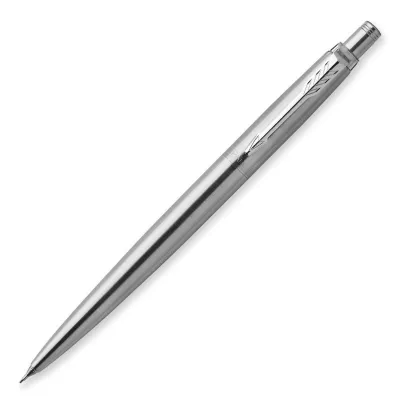
Prices are valid at publication and may change. Please refer to the product page for the latest price.
Key Decision Factors: Weight, Grip, and Writing Feel
To select a mechanical pencil that feels like a natural extension of your hand, you must look beyond aesthetics. The physical construction of the pencil directly influences writing fatigue, line consistency, and overall comfort during extended use. Evaluating these three core ergonomic factors will help you narrow down your choices.
Body Material and Weight Distribution
The materials used in a pencil’s barrel determine its overall weight and where that weight sits in your hand. Parker utilizes a range of materials, from lightweight acrylic resins to heavy-duty metals like stainless steel and brass.
Lightweight resin or plastic bodies, which are common in entry-level Jotter models, offer exceptional agility. They require very little muscular effort to maneuver, making them ideal for rapid note-taking, brainstorming sessions, and fast-paced lectures. However, because they are light, you may find yourself applying more downward hand pressure to keep the pencil stable on the page.
Conversely, metal bodies made of stainless steel or brass provide a lower, more grounded center of gravity. This added weight allows the pencil to rest naturally in the web of your hand, using gravity to assist in pressing the lead against the paper. This reduces the need to grip the pencil tightly, which can prevent hand cramps. When browsing different SKUs, always check the exact material specifications, as some collections offer both lightweight synthetic barrels and heavier all-metal alternatives.
Grip Section Design and Ergonomics
The grip section is your primary point of contact with the writing instrument. Its diameter, shape, and texture dictate how tightly you must hold the pencil to maintain control, especially in warm or humid climates where fingers can easily slip.
Tapered grip profiles, like those on the Parker IM, naturally guide your fingers toward the tip without forcing a rigid hand posture. This gradual slope accommodates various gripping styles, whether you hold your pencil close to the point or higher up the barrel.
Textured, brushed, or ridged metal grips provide physical traction, which is highly beneficial for preventing slippage during long writing sessions. Smooth metal or high-gloss lacquer finishes, while visually striking, offer less natural traction. If you frequently write in warm environments, choosing a model with a brushed metal or textured resin grip will ensure a secure hold without requiring a tiring, high-pressure grip.
Click Mechanism Feedback and Balance
The internal click mechanism of a mechanical pencil is a key indicator of its build quality. A high-quality mechanism should provide crisp, audible, and tactile feedback when pressed, advancing a precise, consistent length of lead every time. If the mechanism feels mushy or advances too much lead at once, the lead is far more likely to snap under normal writing pressure.
Balance is equally critical. A front-heavy pencil naturally coaxes the tip downward, making it feel highly responsive and precise for technical drawing or fine print. An evenly balanced pencil feels neutral and versatile, adapting easily to cursive writing, quick sketching, and general notation. Consider your typical writing angle and posture: if you write with a steep, vertical hand position, a front-heavy pencil will feel exceptionally stable; if you write at a more relaxed, sloped angle, an evenly balanced model will feel more natural.
Comparing Popular Parker Mechanical Pencil Series
Parker has curated several distinct families of writing instruments, each designed with a specific user profile and aesthetic philosophy in mind. Understanding the unique characteristics of these core series will help you identify which one aligns with your lifestyle.

Parker Jotter: Lightweight and Reliable for Daily Notes
The Parker Jotter is one of the most recognizable writing instruments in history, celebrated for its utilitarian design and pocket-friendly durability since its introduction in the mid-20th century. The mechanical pencil version retains this iconic, slender silhouette, complete with the famous arrow-shaped pocket clip.
Typically weighing between 11 and 15 grams depending on the exact material configuration, the Jotter is exceptionally lightweight. This makes it a favorite among students, journalists, and professionals who need a dependable tool that can be slipped into a pocket or notebook loop without adding bulk. Its click mechanism is incredibly robust, designed to withstand hundreds of thousands of clicks over its lifespan.
When choosing a Jotter, pay close attention to the barrel materials. The classic Jotter features a colorful plastic or resin lower barrel paired with a stainless steel cap, offering a highly agile, lightweight feel. For those who prefer a slightly more substantial, premium feel, the Jotter “Flighter” version is constructed entirely of stainless steel, providing a brushed texture that improves grip while adding a satisfying, durable weight.
Parker IM: Balanced Ergonomics for Professional Use
Designed as a modern workhorse for the professional world, the Parker IM series strikes an ideal balance between daily utility and executive style. It is physically larger and heavier than the Jotter, making it highly suited for individuals who find slim pencils uncomfortable to hold for long periods.
Constructed primarily with a brass core, the Parker IM has a reassuring weight that averages around 25 to 30 grams. This weight is distributed evenly along its tapered, cylindrical body, creating a neutral balance point that makes writing feel smooth and deliberate. The grip section is slightly wider than the Jotter’s, reducing the finger pinch that often leads to hand fatigue during long meetings or document reviews.
The aesthetic of the IM series is clean and professional, often featuring polished chrome or gold-plated trims paired with classic lacquer finishes in black, blue, or gunmetal. It is an excellent step-up instrument for young professionals, corporate workers, and anyone who wants a highly polished, reliable writing tool that commands respect in a boardroom without a luxury price tag.
Parker Sonnet: Premium Materials and Executive Comfort
The Parker Sonnet represents the brand’s dedication to classic elegance, meticulous craftsmanship, and high-end materials. Hand-assembled and finished with exquisite attention to detail, the Sonnet is designed for those who view their writing instruments as both functional tools and personal style statements.
The Sonnet features a timeless, slender-to-medium profile that sits comfortably in hands of almost any size. Its weight distribution is incredibly refined, achieved through the precise pairing of heavy brass inner barrels with premium exterior finishes. These finishes range from deep, multi-layered high-gloss lacquers to precious metals, including sterling silver chiseled with the iconic crosshatch “Ciselé” pattern.
Writing with a Sonnet is a highly deliberate, luxurious experience. The smooth transitions between the barrel, trim rings, and grip section ensure there are no sharp edges to irritate your fingers. Because of its premium construction and elegant packaging, the Sonnet is widely regarded as the ultimate choice for milestone gifts, executive desks, and signing important documents.
Parker Urban: Contemporary Design and Unique Profiles
For those who find traditional cylindrical writing instruments uninspiring, the Parker Urban offers a bold departure from conventional design. Characterized by its distinctive, asymmetrical, and bullet-shaped silhouette, the Urban is engineered to stand out.
The curved barrel of the Urban is wider in the middle and tapers dramatically toward both ends. This unique geometry is not merely aesthetic; it shifts the pencil’s center of gravity forward, naturally guiding your fingers into an ergonomic, relaxed hold near the tip. This forward-weight bias allows for highly expressive, fluid strokes, making it a popular choice among designers, architects, and creative professionals.
Because the Urban’s grip profile is highly unconventional, it may require a brief adjustment period if you are accustomed to straight-sided pencils. However, those who adapt to its curves often find it incredibly comfortable for long sketching or writing sessions. It is the perfect model for individuals who want a modern, dynamic writing tool that reflects their creative lifestyle.
Matching Lead Sizes and Refills to Your Writing Habits
Once you have selected the perfect pencil body, the next step is choosing the correct lead diameter and hardness grade. The right combination of lead and paper ensures a smooth, smudge-free writing experience that complements your natural hand pressure.
0.5mm vs. 0.7mm Lead Diameters
Parker mechanical pencils are typically configured to accept either 0.5mm or 0.7mm lead. Because the internal clutch mechanism is precision-engineered for a specific diameter, these sizes are not interchangeable within the same pencil body. Always verify the lead size engraved on the pencil’s cap, inner mechanism, or packaging before purchasing refills.
- 0.5mm Lead: This size produces crisp, ultra-fine lines. It is highly suited for technical drafting, precise mathematical calculations, accounting ledger work, and individuals with very small, neat handwriting. However, because the lead is thin, it requires a relatively light, controlled writing pressure to prevent frequent breakage.
- 0.7mm Lead: This size is significantly more robust and resistant to snapping. It is the ideal choice for general everyday note-taking, fast sketching, writing signatures, and individuals who naturally apply heavy downward pressure. The lines produced are slightly broader and darker, making them highly legible on standard office paper.
Lead Hardness Grades and Paper Compatibility
The hardness of graphite lead is measured on a scale ranging from H (hard) to B (black/soft), with HB representing the standard medium grade. Choosing the right hardness grade can dramatically improve your writing comfort, especially when dealing with different paper qualities.
- HB (Standard): This is the default grade supplied with most Parker pencils. It offers an excellent balance of darkness, smoothness, and wear resistance, making it suitable for almost all everyday writing tasks.
- B or 2B (Soft/Dark): Soft leads contain more graphite and less clay binder, resulting in an incredibly smooth, buttery writing feel that requires almost no downward pressure to produce a rich, dark line. However, soft leads wear down more quickly and are prone to smudging. In warm, humid environments like the Philippines, paper naturally absorbs ambient moisture from the air; this dampness can cause soft 2B leads to smudge easily, particularly for left-handed writers whose hands drag across the written text.
- H or 2H (Hard/Light): Hard leads produce light, clean, and highly smudge-resistant lines that do not wear down quickly. They are excellent for precise drafting or writing on thin, porous paper where soft leads might bleed or smudge. The trade-off is a slightly scratchy feel on the page, requiring more physical effort to write legibly.
How to Verify Authenticity and Choose Reliable Retailers
Because Parker is a highly prestigious brand, counterfeit products are common in the global marketplace, particularly on unverified online platforms. Purchasing a counterfeit not only deprives you of Parker’s legendary durability but also leaves you with a fragile, poorly aligned internal mechanism that jams constantly. Protecting your investment requires careful verification.
Purchase Through Authorized Channels
To guarantee you are purchasing a genuine Parker mechanical pencil, always buy from official brand boutiques, long-standing physical stationery stores, or official flagship stores on major e-commerce platforms. Be highly skeptical of third-party listings offering premium models, like the Sonnet or Urban, at prices that seem unusually low. If a price is significantly below the standard market rate of established retailers, it is highly likely to be a counterfeit.
Inspect the Physical Product and Packaging
When you receive your Parker mechanical pencil, perform a thorough physical inspection before discarding the packaging:
- Packaging Quality: Genuine Parker products arrive in high-quality, sturdy gift boxes featuring clean, crisp branding, aligned logos, and precise color printing. Flimsy cardboard boxes with blurry text or spelling errors are immediate red flags.
- Engravings and Alignment: Inspect the iconic arrow clip and the metal band around the middle of the pencil. Genuine Parker pencils feature clean, laser-etched or deeply engraved logos and country-of-origin markings. Counterfeits often have shallow, uneven, or blurry engravings.
- The Click Test: Press the clicker cap several times. A genuine Parker pencil will have a smooth, crisp, and consistent mechanical action. If the click feels gritty, excessively stiff, or completely silent, the internal clutch may be a cheap imitation.
- Documentation: Genuine Parker writing instruments are accompanied by an official warranty card or a detailed instruction and care leaflet printed on high-quality paper.
Refill Authenticity
Just like the pencils themselves, genuine Parker lead refills are sold in high-quality, branded packaging with clear labeling and safety seals. Using cheap, poorly manufactured third-party leads that vary in diameter can ruin your pencil’s internal clutch. Investing in authentic refills ensures your pencil continues to perform flawlessly for years.
Frequently Asked Questions (FAQ)
Can I use third-party lead refills in Parker mechanical pencils?
Yes, you can use third-party lead refills, provided they match the exact ISO-standard diameter (such as 0.5mm or 0.7mm) specified for your Parker pencil model. However, to ensure optimal performance, it is highly recommended to use reputable stationery brands. Cheap, unbranded leads often suffer from inconsistent diameters and high brittleness, which can cause them to slip through the clutch or break inside the sleeve, leading to frustrating jams.
How do I safely clear a lead jam without damaging the mechanism?
If your pencil’s lead becomes jammed, do not use excessive force or push sharp metal objects like sewing needles into the tip, as this can permanently bend the delicate brass clutch. Instead, follow these safe, reversible steps:
- Remove the push-button cap and the eraser to check if your model includes a built-in clearing pin (a thin wire attached to the underside of the eraser).
- If a pin is present, hold down the clicker to open the internal clutch, then gently insert the pin into the tip of the pencil to push the broken lead fragment back into the chamber.
- If no pin is available, hold the pencil vertically over a desk, press and hold the clicker down to open the clutch, and gently tap the side of the pencil barrel. This will usually cause the broken fragment to slide out of the tip naturally.
Community discussion
Share your experience or ask a question. Comments are reviewed before publication.