
When planning a jewelry-making project or a DIY craft, knowing exactly how many pearl beads are in a pack is essential to avoid running out of materials mid-design. Typically, a pack of pearl beads can contain anywhere from a dozen large statement pearls to several hundred tiny seed pearls. This quantity is not a fixed standard; instead, it is determined by a combination of bead diameter, the material used, and whether the manufacturer packages the items by weight or by an exact count. Understanding these variables allows you to purchase the correct amount of supplies for your necklaces, bracelets, or bridal accessories without overspending.
How Bead Size Dictates Pack Quantity
The physical size of a pearl bead is the most significant factor determining how many pieces fit into a standard package. Because packaging sizes are often standardized for shipping and display, larger beads naturally occupy more physical space, resulting in fewer pieces per pack. For instance, a pack of large 12mm or 14mm statement pearls might only contain 10 to 15 pieces, whereas a pack of small 4mm or 6mm pearls of the same weight or package volume can easily contain over a hundred beads. This inverse relationship means you must always align your project requirements with the specific millimeter measurements of the beads.
When browsing online marketplaces or local craft stores, it is crucial to check the product specifications for the exact bead diameter in millimeters. Relying solely on product photos or thumbnail images can be highly misleading, as close-up photography often makes small beads appear much larger than they are in reality. Without a physical reference point, such as a ruler or a coin in the image, you might mistakenly assume a pack contains large pearls when it actually contains tiny spacer beads. Always verify the millimeter size listed in the description to set accurate expectations for the quantity you will receive.
Products mentioned in this guide
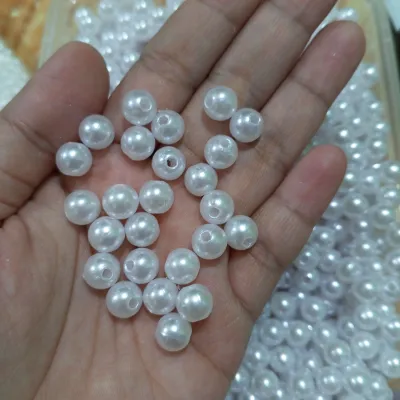
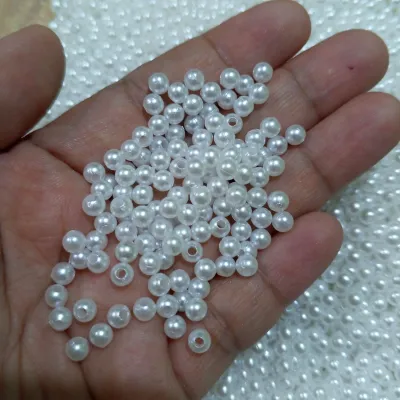
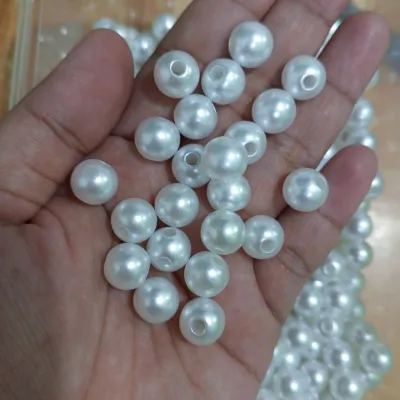
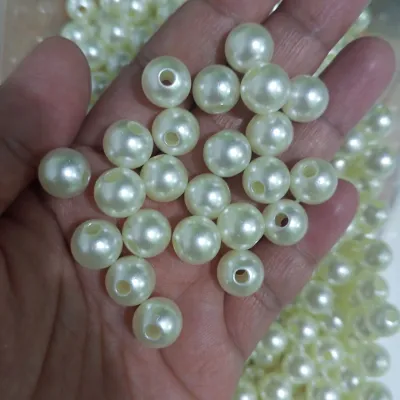
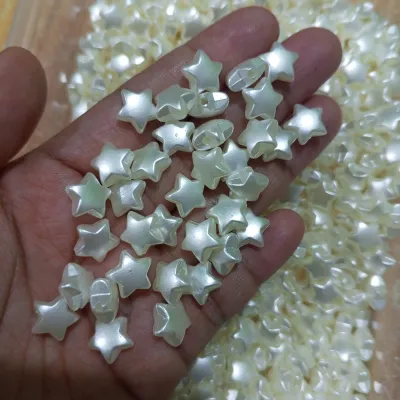
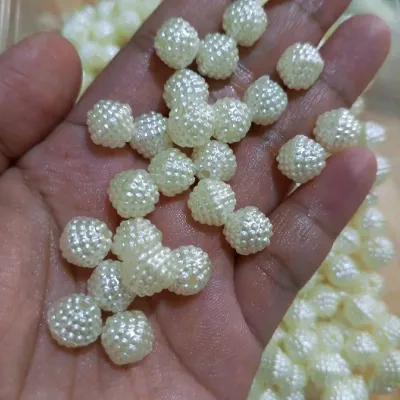
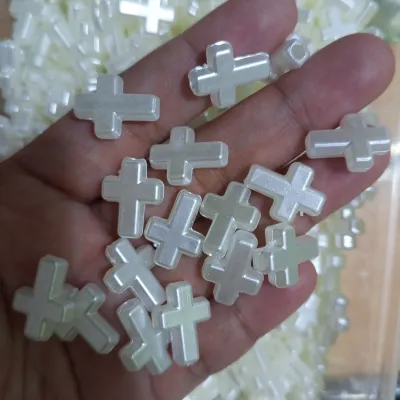
Prices are valid at publication and may change. Please refer to the product page for the latest price.
Material and Weight vs. Count Packaging
Pearl beads are packaged using two primary methods: by exact count or by weight. Pre-counted packs are highly common for uniform, mass-produced options like glass pearls or synthetic plastic pearls. Because these beads are manufactured to identical specifications, packaging machines or manual sorters can easily group them into precise quantities, such as 50 or 100 pieces per bag. This method gives crafters peace of mind, as you know the exact number of components available for your design.

In contrast, many natural freshwater pearls, irregular baroque pearls, or bulk faux pearls are sold by weight, often measured in grams. When buying by weight, the density of the material plays a massive role in the final bead count. Solid glass pearls are relatively heavy, meaning a 50-gram pack will contain significantly fewer beads than a 50-gram pack of lightweight, hollow plastic pearls of the exact same size. Before finalizing your purchase, carefully inspect the product label or online listing to confirm whether the primary unit of measure is “pieces” or “grams” so you can estimate the actual yield accurately.
How to Verify Bead Counts Before Buying
To prevent the frustration of running out of beads before your project is complete, you must learn to read the fine print on craft packaging. Look closely for qualifying terms such as “approximate count,” “sold by weight,” or “minimum weight.” These phrases indicate that the manufacturer does not guarantee an exact number of beads, and the actual count may vary slightly from pack to pack. If a listing states “approximate count of 100,” prepare for the possibility of receiving slightly fewer or slightly more.
A reliable rule of thumb for any beading project is to purchase a 10% to 20% surplus of materials. This extra buffer accounts for potential manufacturing defects, such as blocked drill holes, chipped pearlescent coatings, or breakage during the crafting process. It also covers any minor shortages in weight-based packaging. Additionally, take a moment to read user reviews on ecommerce platforms. Other crafters frequently post the actual counts they received or share photos of the beads next to a ruler, providing invaluable real-world feedback on the accuracy of the seller’s descriptions.
Calculating the Right Pack Size for Your Project
Estimating the exact number of pearl beads needed for a specific design requires a simple mathematical calculation. First, determine the total desired length of your finished piece in millimeters. For example, a standard bracelet is typically around 180 millimeters long. Divide this total length by the diameter of the pearl bead you plan to use. If you are using 8mm pearls, dividing 180 by 8 gives you a base estimate of approximately 23 beads. You should then add a small allowance for knots, spacer beads, or clasps to finalize your count.
For more complex designs, the calculation must scale accordingly. Multi-strand necklaces, wrap bracelets, or layered designs require you to calculate the bead count for a single strand and then multiply that figure by the total number of strands in the piece. If you are designing a three-strand necklace where each strand is 450 millimeters long, you will need to calculate the beads for one 450mm strand and multiply the result by three.
Finally, remember to subtract the space occupied by non-pearl components. Items such as metal clasps, crimp beads, jump rings, and decorative spacer beads all take up physical length along the wire or thread. By measuring these findings beforehand, you can reduce the total length that actually requires pearl beads, ensuring you do not buy more packs than necessary for your creative vision.
Frequently Asked Questions (FAQ)
Do all pearl bead packs contain the exact number of beads advertised?
No, not all pearl bead packs contain an exact count. Pre-counted packs of uniform synthetic pearls generally guarantee a specific number, and manufacturers often include one or two extra beads to compensate for any minor defects. However, bulk packs, seed beads, and natural freshwater pearls are almost always sold by weight, meaning the advertised count is only a close estimate and can vary.
Why do some pearl bead packs sell by weight instead of count?
Selling by weight is the most practical method for beads that have natural variations in size, shape, and density, such as genuine freshwater pearls. Because no two natural pearls are identical, automated counting is difficult, making weight a more accurate measure of the material’s value. Additionally, extremely small beads are sold by weight because counting hundreds of tiny pieces manually or mechanically is inefficient for manufacturers.
Community discussion
Share your experience or ask a question. Comments are reviewed before publication.