
Finding the right writing instrument requires matching its physical characteristics to your daily tasks. The Pentel Sign Pen family offers several distinct variants, each tailored for specific applications ranging from bold office charting to delicate hand lettering. To choose the ideal model, you must evaluate the tip style—whether standard, fine, or brush—and verify how the ink interacts with your preferred paper.
Selecting the right pen involves understanding how tip mechanics and ink behavior respond to your writing style. In tropical climates like the Philippines, environmental factors such as high humidity can also influence ink drying times and paper absorption. By comparing the physical attributes of each variant, you can find a tool that delivers clean, reliable lines for your specific projects.
Core Pentel Sign Pen Variants and Their Primary Uses
The Standard Sign Pen is the classic fiber-tip model that established the lineup’s reputation for reliability. It features a firm, durable acrylic fiber tip that delivers a bold, consistent line suitable for writing large headings, creating clear charts, and filling in broad areas of color. The tip retains its shape well under moderate writing pressure, making it a dependable choice for everyday office tasks and quick brainstorming sessions.
Products mentioned in this guide
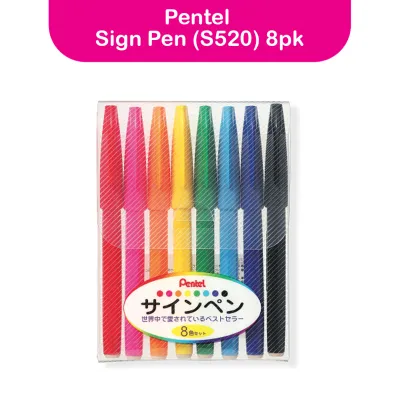
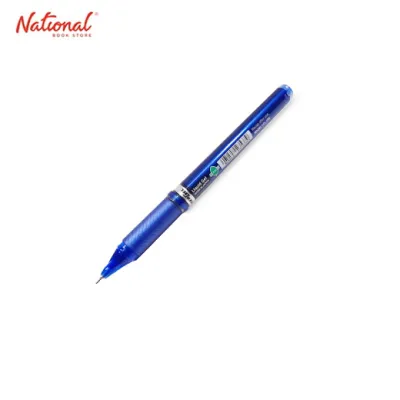
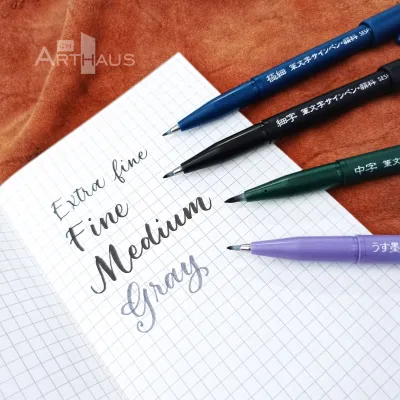
6 Lazada user ratings
Ease of Use:The little kid in me is so happy with all these. Thank u seller and thank u, Lazada!
Prices are valid at publication and may change. Please refer to the product page for the latest price.
For tasks requiring greater precision, the Sign Pen Fine offers a narrower tip profile. This design is engineered specifically for detailed work, such as writing in compact planners, filling out multi-part forms, or executing intricate technical sketches. The finer tip allows for clean, legible characters even in tight spaces, preventing the ink from crowding your letters on the page.
The Brush Sign Pen features a flexible, brush-like tip designed for expressive writing and illustration. The tip responds dynamically to changes in hand pressure, allowing you to transition smoothly from thin hairline strokes to thick, bold sweeps. It is highly favored for modern calligraphy, brush lettering, and artistic sketching where line variation adds depth and character.
When shopping at local stationery stores or online marketplaces, always rely on the physical product packaging and the text printed directly on the pen barrel to identify the exact model and tip type. Avoid assuming fixed millimeter measurements, as tip wear, writing angle, and paper absorption will naturally alter the actual line width you observe on the page.
Key Dimensions for Comparing Pentel Sign Pens
The physical structure of the nib dictates how the pen behaves on paper. A rigid fiber tip provides excellent stroke consistency, ensuring that every line remains uniform regardless of how hard you press. In contrast, a flexible brush tip demands more control, as the line width varies based on your hand’s angle and pressure. Understanding this distinction helps you choose a pen that matches your natural writing speed and style.

Pentel Sign Pens utilize different ink formulations depending on the specific model. It is essential to check the barrel label or packaging to determine whether a pen uses water-based dye ink or pigment-based ink. Water-based inks generally offer vibrant colors and smooth flow but may bleed on thin paper or smudge if they encounter moisture. Pigment-based inks, often found in specialized drawing or archival variants, provide greater water resistance and fade resistance once fully dry.
The physical design of the pen affects comfort during long writing sessions. The classic rounded barrel is lightweight and easy to hold, but its slim profile may cause hand fatigue during extended use. Consider the cap design as well; a secure snap-on cap prevents the ink from drying out and can often be posted on the back of the pen to balance its weight. In warm, humid conditions, a lightweight plastic barrel is easy to wipe clean and comfortable to hold even if your hands become slightly damp.
Decision Framework: Which Variant Fits Your Task?
If your daily routine involves writing bold meeting notes, labeling folders, or sketching out quick diagrams on whiteboards or butcher paper, the standard tip is your most reliable option. Its firm nib ensures that your writing remains highly visible from a distance, making it excellent for collaborative work, teaching, or organizing physical files.
When working with compact personal organizers, pocket journals, or detailed financial ledgers, the fine tip is the practical choice for maintaining legibility. It allows you to squeeze detailed notes into small grid boxes without the ink spreading and blurring the text. Artists also benefit from the fine tip when adding cross-hatching or fine details to ink drawings.
For those practicing calligraphy, bullet journaling, or freehand illustration, the brush variant offers the necessary flexibility to create dynamic art. The springy nib allows for elegant transitions between thick downstrokes and thin upstrokes, which is essential for traditional script lettering. It also serves as an excellent tool for adding organic, hand-drawn elements to greeting cards or personal diaries.
Before making a final purchase, verify if your project demands specific archival, waterproof, or fade-resistant properties. These performance characteristics are not universal across all sign pens and depend entirely on the exact ink formulation printed on the product label. If you are signing official documents or creating artwork intended for long-term display, look for explicit indicators of pigment-based or archival-quality ink on the packaging.
Verifying Ink and Paper Compatibility
To avoid disappointing results, always review the manufacturer’s packaging for specific paper weight recommendations and surface compatibility warnings. Some high-flow fiber tips perform best on thicker, uncoated paper stocks, while others may feather or bleed through standard lightweight copy paper.
Because paper manufacturing processes vary widely, the most reliable way to ensure compatibility is to perform a simple patch test. Find an inconspicuous area on your target paper—such as the back page of a journal—and draw a few test lines. Observe whether the ink feathers along the edges of the strokes or bleeds through to the opposite side of the sheet.
In humid environments, ink drying times can be significantly longer than expected. After drawing your test lines, wait a few seconds and gently run a finger over the ink to check for smudging. This physical test helps you determine how long you must let your work dry before turning the page or applying highlights, ensuring your final document remains clean and professional.
Frequently Asked Questions (FAQ)
Can You Refill a Pentel Sign Pen?
To determine if your pen can be refilled, always check the specific model’s packaging or official documentation for explicit refill instructions. While many standard felt-tip sign pens are designed as single-use disposable items to keep them lightweight and affordable, certain brush or specialty models are engineered to accept proprietary ink cartridges or replacement nibs. Using unauthorized third-party inks or attempting to force ink into a disposable barrel can damage the fiber feed system and lead to leaks.
How Should You Store Sign Pens to Prevent Drying Out?
Proper storage is crucial for maintaining the lifespan of felt-tip and brush pens. Always store your pens horizontally or tip-down, strictly following the orientation advised on the manufacturer’s packaging to keep the ink flowing correctly to the nib. Ensure the cap is securely clicked or screwed on immediately after every use to maintain an airtight seal. Additionally, keep your pens away from direct sunlight and extreme temperature fluctuations, which can alter ink viscosity and cause premature drying, especially in warm tropical climates.
Community discussion
Share your experience or ask a question. Comments are reviewed before publication.