
Finding the perfect pen is a highly personal journey that depends on how your hand moves, how hard you press, and the type of paper you use. The Pilot Acroball has earned a dedicated following in the stationery community due to its hybrid ink, which blends the fast-drying reliability of a traditional ballpoint with the vibrant, low-friction glide of a gel pen. However, choosing the right tip size—0.5mm, 0.7mm, or 1.0mm—is crucial to achieving your desired writing experience.
To find your ideal match, you must evaluate your natural handwriting size and the environments where you write most often. If you have compact, intricate handwriting or frequently fill out small forms, the 0.5mm fine tip provides the clean precision you need. For those who want a reliable, everyday workhorse that balances smoothness with line control, the 0.7mm medium tip is the standard recommendation. If you prefer a bold, expressive line that glides effortlessly across the page with minimal resistance, the 1.0mm bold tip is the best fit.
Quick Selection Guide: Matching Acroball Tip Sizes to Your Handwriting
Selecting the right tip size is easiest when you analyze your daily writing habits. Your handwriting scale, the speed at which you write, and the pressure you apply to the page all dictate how the hybrid ink behaves. By matching these factors to the correct tip, you can avoid common issues like ink smudging, paper tearing, or illegible, cramped letters.
Products mentioned in this guide
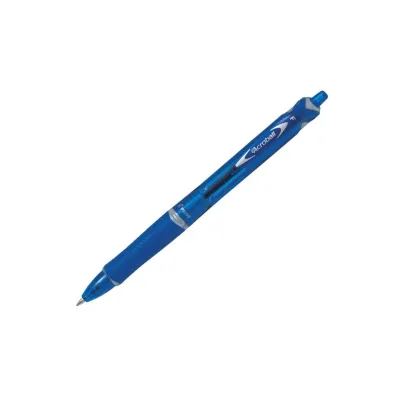
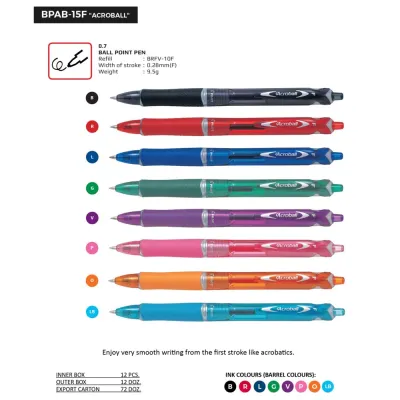
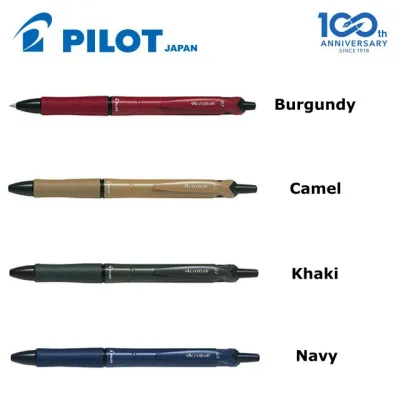
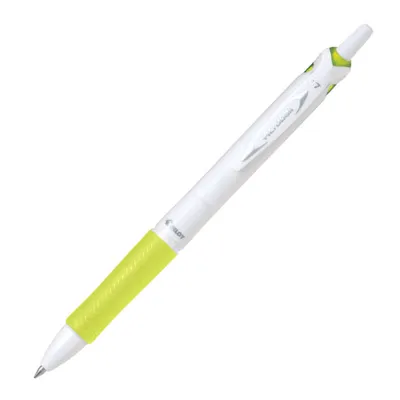
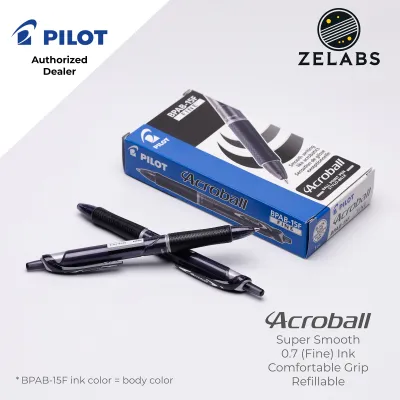
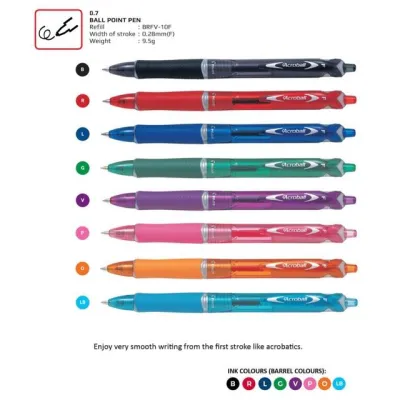
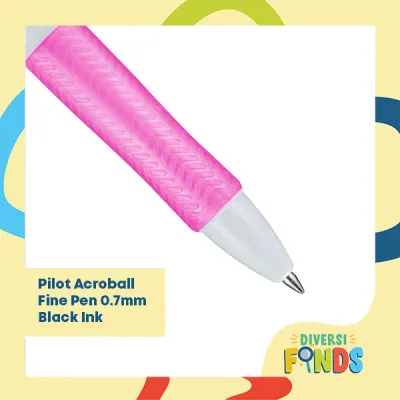
Prices are valid at publication and may change. Please refer to the product page for the latest price.
The 0.5mm (Fine) variant is highly recommended for writers with small, precise print who need to fit a lot of information into tight spaces. This size is ideal for pocket planners, detailed margin notes, and complex characters. Because it deposits a minimal amount of ink, it dries almost instantly, making it a favorite for left-handed writers who worry about smudging. However, the smaller tip provides more feedback from the paper, which some writers may perceive as a textured or slightly scratchy feel.
The 0.7mm (Medium) variant serves as the balanced standard for general note-taking, journaling, and office work. It offers a highly consistent line width that fits comfortably within standard ruled notebook lines. This size provides a smoother glide than the 0.5mm while maintaining excellent line control. It is highly versatile, performing reliably on a wide range of paper qualities without excessive bleed-through.
The 1.0mm (Bold) variant is designed for those who prioritize maximum smoothness and a rich, dark line. It is excellent for signatures, quick brainstorming sessions, and large, cursive handwriting. The larger ball bearing allows the hybrid ink to flow generously, reducing friction to an absolute minimum. The trade-off is a longer drying time and a higher risk of ink seeping through thin or highly absorbent paper.
Understanding the 0.5mm, 0.7mm, and 1.0mm Acroball Tips
To appreciate how each Acroball tip performs, it helps to understand the mechanics of the hybrid ink and ball assembly. The Acroball uses a low-viscosity ink that requires less pressure to flow compared to traditional ballpoint pens. This unique formulation behaves differently depending on the physical size of the tungsten carbide ball housing at the tip.

The 0.5mm fine tip houses a very small ball bearing that restricts the ink flow to a thin, precise stream. This design is perfect for maintaining legibility when writing in small grids or compact diaries. Because the contact area with the paper is small, you will feel more of the paper’s natural texture. If you use rough, low-grade paper, this feedback can feel pronounced, so it is best paired with smooth, high-density paper stocks.
The 0.7mm medium tip is the most popular choice because it optimizes the flow of the hybrid ink. The ball bearing is large enough to roll smoothly over standard wood-pulp paper fibers, yet small enough to prevent your letters from bleeding together. It is highly forgiving of varying writing angles and pressures, making it a dependable choice for students and professionals who need to write quickly without skipping.
The 1.0mm bold tip is engineered for a luxurious, frictionless writing experience. The larger ball bearing rolls easily, releasing a generous layer of ink that cushions the metal tip against the paper. This results in a highly saturated line that stands out clearly on the page. However, because it deposits more ink, you must test it on your preferred notebooks to ensure the paper can handle the volume without feathering.
How to Match Tip Size to Your Writing Pressure and Paper
Beyond personal preference, physical variables like your writing pressure and the paper you use daily will heavily influence how each Acroball tip performs. Understanding these interactions allows you to select a tip size that complements your natural style rather than fighting against it.
Your handwriting scale is the first physical metric to consider. Take a ruler and measure the height of your lowercase letters, such as “a” or “e.” If your letters consistently measure under 3mm, a 0.5mm tip is essential to keep the loops of your letters open and legible. If your letters are between 3mm and 6mm, the 0.7mm tip will fill the space beautifully. For handwriting that exceeds 6mm, a 1.0mm tip ensures your lines match the bold scale of your letters.
Your writing pressure also dictates how the pen responds. If you are a heavy-handed writer who presses firmly into the page, a smaller tip like the 0.5mm can dig into the paper fibers, causing clogs or inconsistent ink flow. Heavy pressure with a 1.0mm tip can cause excessive ink deposition, leading to smudging. If you have a light, swift writing style, a larger tip size like the 0.7mm or 1.0mm will ensure consistent ink transfer without requiring extra downward force.
Paper compatibility is especially important in tropical climates like the Philippines, where high relative humidity can cause paper to absorb moisture from the air. Damp paper fibers become highly absorbent, acting like a sponge. This increases the risk of feathering and bleed-through. If you write on standard school notebooks or thin copy paper in humid conditions, a 0.5mm or 0.7mm tip is safer because they deposit less ink and dry faster. If you want to use a 1.0mm tip, verify that your paper has a coated, smooth finish to prevent the ink from spreading.
Choosing the Right Acroball Pen Format and Refills
Once you have determined your ideal tip size, the next step is selecting the right pen body format and ensuring long-term usability through compatible refills. The Acroball series offers several configurations that affect the pen’s balance, grip, and overall writing comfort.
The standard single-color retractable Acroball features a contoured rubber grip with a tire-tread texture. This grip provides excellent control and reduces hand fatigue during long writing sessions, which is particularly helpful if your hands tend to slip in warm weather. Multi-function pen formats, which house two, three, or four ink colors in a single barrel, have a slightly wider body. This wider profile can alter the pen’s center of gravity, making it feel different in the hand compared to the slim single-color version.
To keep your pen writing smoothly for years, you must identify the correct refill codes. Pilot uses specific codes for its Acroball refills, such as the BRFV series for standard single-color pens and the BVRF series for multi-color pens. Always check the code printed on your original refill cartridge before purchasing a replacement. While you can often swap different tip sizes within the same refill family—such as replacing a 0.7mm refill with a 0.5mm refill in the same pen body—you cannot swap refills between single-color and multi-function bodies due to differences in cartridge length.
Consider the physical weight and balance of the pen body as well. A lightweight plastic body is easy to maneuver for quick notes, while a slightly heavier barrel can help stabilize your hand if you write with a very light touch. Testing different formats allows you to find the perfect combination of tip size, grip comfort, and body weight for your daily writing routine.
Frequently Asked Questions (FAQ)
Can I use a 1.0mm Acroball on standard notebook paper?
Yes, but you should perform a quick test first. Standard notebook paper, especially budget-friendly or school-grade options, tends to be thin and highly porous. Because the 1.0mm bold tip deposits a larger volume of hybrid ink, it is more likely to cause ghosting or actual bleed-through. To check compatibility, write a few words on a back page of your notebook. If you notice the ink spreading outward or soaking through to the next sheet, you may want to switch to a 0.7mm tip or upgrade to a notebook with thicker paper.
Why does my 0.5mm Acroball feel scratchy compared to the 0.7mm?
The sensation of scratchiness is a physical consequence of the smaller ball bearing. A 0.5mm tip has a much smaller surface area in contact with the paper, which means it encounters more friction as it glides over the microscopic ridges of the paper fibers. Additionally, because it lays down a thinner layer of ink, there is less lubrication between the metal tip and the paper. If your 0.5mm pen feels too scratchy, try adjusting your writing angle to be more upright, or switch to a smoother, coated paper stock.
Are Acroball refills compatible with other Pilot pen bodies?
Acroball refills are designed specifically for the Acroball series, but some standard-size refills may fit other Pilot pen bodies that share the same internal dimensions. However, you should always verify the exact refill code before attempting to swap them. Forcing an incompatible refill into a different pen body can damage the retraction mechanism or cause the tip to align incorrectly, leading to ink leaks or a loose, unstable writing feel.
Community discussion
Share your experience or ask a question. Comments are reviewed before publication.