
Finding the ideal writing feel with colored mechanical pencil leads requires balancing your personal writing style with the physical properties of the lead itself. The Pilot Color Eno lineup is highly regarded by students, journalers, and sketchers for its vibrant hues and clean erasability, but the ‘best’ variant is not a one-size-fits-all choice. Instead, your perfect match depends entirely on your writing pressure, the texture of your paper, and your specific daily tasks. Generally, softer lead grades offer a smoother, gliding sensation with rich color deposition, making them excellent for creative layouts and shading. Conversely, harder grades provide sharper lines, greater structural precision, and better smudge resistance, which are essential for detailed annotations and fast-paced note-taking. To find your ideal setup, you must evaluate how these physical characteristics interact with your preferred stationery tools and environment.
Understanding the Pilot Color Eno Lineup
Colored mechanical pencil leads are engineered differently than standard graphite leads. While traditional graphite relies on a mix of clay and carbon, colored leads like the Pilot Color Eno series utilize a blend of synthetic pigments, waxes, and polymer binders. The ratio of these ingredients directly dictates the hardness of the core. A higher concentration of polymer binder yields a harder lead that resists breaking under heavy pressure, whereas a higher proportion of wax and pigment results in a softer, more delicate core that transfers color to the page with minimal effort.
The physical diameter of the lead also plays a crucial role in how these hardness grades perform. The Pilot Color Eno series is most commonly recognized in its 0.7mm diameter, a size that offers a practical balance between line precision and structural strength. When a soft formulation is paired with a 0.7mm diameter, the lead remains relatively robust while still delivering a smooth, crayon-like glide. If you use a harder formulation, the 0.7mm tip maintains a crisp, fine point for a longer duration without wearing down too quickly.
Products mentioned in this guide
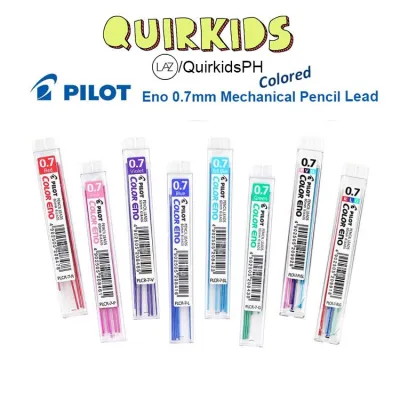
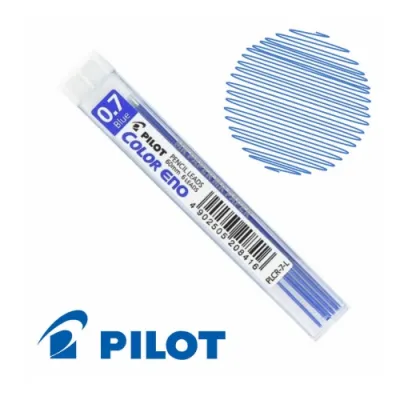
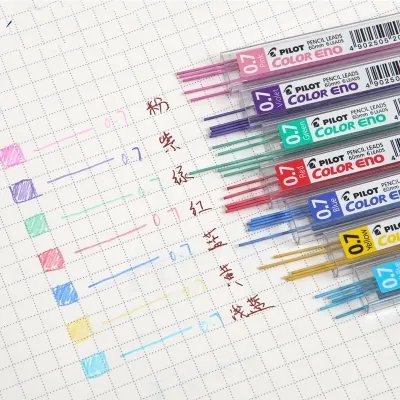
Prices are valid at publication and may change. Please refer to the product page for the latest price.
Because product availability and specific hardness selections can vary across different regions and local stationery shops, it is always wise to verify the exact options currently offered. You can check the packaging labels or official online marketplace listings to see which specific hardness grades are in stock. Some regional distributions may focus primarily on a standard medium hardness, while others might offer a broader spectrum of soft and hard variants to cater to specialized drafting or artistic needs.
Smoothness vs. Precision: How Each Hardness Writes
When evaluating the writing feel of different hardness grades, the two primary performance metrics to consider are glide smoothness and line precision. Softer grades excel at providing a low-friction writing experience. As the lead moves across the page, the wax-heavy binder melts slightly under the friction of your hand, depositing a thick, opaque layer of pigment. This makes softer variants feel incredibly smooth, almost like a fine-point crayon or a premium colored pencil. They are highly responsive to light pressure, allowing you to blend colors or shade areas with ease, though they do require more frequent advancement as the tip wears down rapidly.

Harder grades, on the other hand, prioritize structural integrity and crispness. When you write with a harder variant, the lead resists crumbling and maintains its shape even under firm downward pressure. This results in highly precise, clean lines that are ideal for writing small characters, drawing complex diagrams, or adding marginalia to textbooks. Furthermore, because harder leads deposit less loose wax and pigment on the paper’s surface, they are significantly less prone to smudging. This is a major advantage if you are left-handed or if you frequently close your notebooks and worry about color transferring to the opposite page.
The paper you choose also heavily influences how these leads feel in hand. In tropical climates like the Philippines, ambient humidity can cause paper fibers to absorb moisture, making the surface slightly softer and more fibrous. On smooth, low-tooth paper, a soft lead might feel exceptionally slick, but it can occasionally slip or leave uneven clumps of color. On highly textured or toothy paper, a hard lead will provide noticeable tactile feedback—often described as a pleasant ‘scratchiness’—which gives you greater control over your strokes but may feel too resistant for those who prefer an effortless glide. Testing your chosen hardness on your go-to notebook paper is the most reliable way to gauge its true performance.
Which Hardness Fits Your Writing or Drawing Style?
To streamline your decision-making process, it helps to align the lead’s physical properties with your specific daily activities. You should choose softer grades if your primary tasks involve bullet journaling, mind-mapping, or sketching. If you naturally write with a light hand, a softer core will allow you to achieve vibrant, saturated colors without needing to press down hard, reducing hand fatigue during long writing sessions. These variants are also ideal if you enjoy layering different colors to create gradients or custom shades in your planner.
Conversely, you should choose harder grades if your routine consists of technical annotations, mathematical graphing, or rapid note-taking. If you tend to be a heavy-handed writer who frequently snaps standard mechanical pencil leads, the added structural strength of a harder core will save you from constant interruptions. Harder leads are also the preferred choice for those with very small, compact handwriting, as the tip remains sharp enough to prevent letters from filling in or becoming illegible blobs of color.
If you are transitioning from standard graphite leads to colored mechanical leads for the first time, you must verify your expectations beforehand. Colored polymer cores feel fundamentally different from graphite; they generally have more drag, wear down faster, and do not behave in the exact same way under pressure. This transition often requires a brief adjustment period where you may need to lighten your writing pressure or experiment with different paper types to find a comfortable rhythm.
Verifying Lead Size and Mechanical Pencil Compatibility
Before purchasing any refill leads, it is essential to ensure they are fully compatible with your existing writing instruments. Loading the wrong size or type of lead can lead to frustrating jams, broken cores, or damage to the internal clutch mechanism of your pencil. Always inspect your mechanical pencil’s barrel, grip, or metal tip to locate the engraved or printed diameter specification, which is typically indicated in millimeters (such as 0.7mm).
When shopping for refills, pay close attention to the labeling on the Pilot Color Eno packaging. The refill tubes clearly display the lead diameter, the specific color, and any hardness indicators on the front label. Ensuring these details match your pencil’s specifications is crucial, as attempting to force a 0.7mm lead into a pencil designed for 0.5mm or 0.9mm leads will immediately clog the feed tube.
If you are unsure about the compatibility of your pencil, or if the markings on the barrel have worn off over time, stop and consult the manufacturer’s guidelines or product documentation. Some mechanical pencils are optimized specifically for standard graphite and may feature clutch mechanisms that grip colored polymer leads poorly, leading to slippage. Verifying these details beforehand ensures a seamless writing experience and protects your stationery investment.
Frequently Asked Questions (FAQ)
Can I mix different hardness grades in the same mechanical pencil?
While it is physically possible to load different leads into a single pencil, doing so carries mechanical risks. If you accidentally mix leads of different diameters, even by a fraction of a millimeter, you risk causing clutch slippage or severe internal jams that can be difficult to clear. Even if the leads are of the exact same diameter, mixing different hardness grades in the same chamber can lead to an inconsistent writing experience. As the pencil advances from a soft lead to a hard lead, the sudden change in resistance, glide, and color output can disrupt your writing flow and result in highly uneven line weights on your page. It is best to dedicate one pencil to a single hardness grade to maintain consistency.
Does lead hardness affect the color vibrancy of Pilot Color Eno?
Yes, lead hardness has a direct, observable impact on the color vibrancy of your writing. Softer leads contain a higher ratio of pigment and wax binder, which allows them to deposit a thicker, more opaque layer on the paper with minimal pressure. This results in highly vibrant, rich colors that stand out clearly on both white and toned paper. Harder leads, because of their denser polymer structure, deposit less material per stroke. Consequently, the lines may appear lighter or more pastel-like. If you attempt to press harder to force a deeper color from a hard lead, you run a high risk of snapping the core or denting the paper surface, so it is better to choose a softer grade if maximum color intensity is your goal.

Community discussion
Share your experience or ask a question. Comments are reviewed before publication.