
Quick Answer: Which Fine-Tip Pen Fits Your Needs?
Choosing between the Pilot G-Tec-C4 0.4 and the Uni-ball Signo 0.38 depends entirely on your personal writing pressure, hand angle, and the paper you use daily. If you write with a light, delicate touch and require absolute, razor-sharp precision for tiny characters or intricate diagrams, the Pilot G-Tec-C4 0.4 is an exceptional choice. Its needle-point design provides an unobstructed view of the page, allowing you to squeeze legible text into the tightest margins.
Conversely, if you tend to apply moderate to heavy pressure or prefer a smoother, more fluid glide across the page, the Uni-ball Signo 0.38 is typically the better fit. Its conical micro-tip offers a sturdier feel that resists bending while delivering a consistent, saturated line. Ultimately, the ideal pen is the one that matches your physical writing style and performs reliably on your preferred notebook paper.
Writing Experience and Line Quality on Paper
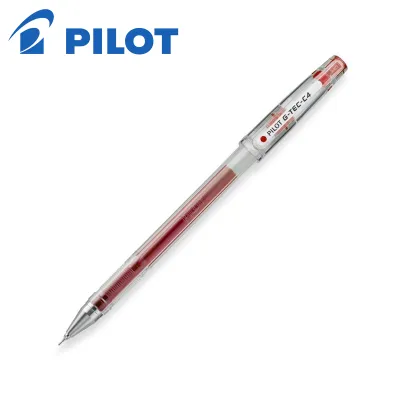
The physical structure of a pen tip dictates how it interacts with paper fibers and how much feedback is transmitted to your hand. The Pilot G-Tec-C4 features a needle point, where a tiny ball is housed at the end of a slender, straight metal tube. This design minimizes the contact area between the metal housing and the paper, offering a highly precise point of contact. For writers who produce microscopic script or detailed technical drawings, this needle-point construction ensures that every stroke remains distinct and crisp. However, because the tip is so narrow, it can feel somewhat scratchy if you write at a steep angle or on rough, textured paper.
Products mentioned in this guide
Prices are valid at publication and may change. Please refer to the product page for the latest price.

The Uni-ball Signo 0.38 utilizes a micro-tip, which features a traditional conical shape that tapers gradually toward the ball. This conical structure distributes writing pressure more evenly across the metal housing, reducing the sensation of drag. As a result, the Signo 0.38 generally glides more smoothly over paper, providing a cushioned feedback that many find comfortable for long writing sessions. The line produced by the Signo 0.38 tends to look slightly fuller and more saturated, which can make your handwriting appear bolder and more legible from a distance.
Your individual writing pressure plays a decisive role in how these tips perform. Heavy-handed writers may find that the G-Tec-C4 digs into the paper, creating physical grooves and restricting the rotation of the ball. This can lead to a scratchy sensation and inconsistent ink delivery. A lighter hand allows the needle point to float effortlessly across the page, leaving a clean, unbroken line. The Signo 0.38 is far more forgiving of varied pressure, maintaining its smooth glide even when your hand tenses up during fast-paced lectures or meetings.
Paper quality and environmental conditions also heavily influence your writing experience. In humid tropical climates like the Philippines, paper fibers naturally absorb moisture from the air, making them softer and more absorbent. When using ultra-fine gel pens on standard school notebooks or low-weight copy paper, a highly saturated ink can spread, turning a fine line into a blurry stroke. To achieve the best results, you should pair these pens with high-density, smooth paper that resists ink absorption, ensuring your small handwriting remains sharp and legible.
Ink Flow, Drying Time, and Smudge Resistance
Gel ink is a water-based suspension that requires the paper to absorb the liquid vehicle so the pigment can bind to the surface. The Pilot G-Tec-C4 uses a highly fluid gel formulation designed to flow through its narrow needle channel with minimal resistance. This results in a very clean, thin line that often dries relatively quickly because less ink volume is deposited onto the page. This rapid drying behavior is highly beneficial for keeping your notes clean and free of accidental smears.
The Uni-ball Signo 0.38 is known for its rich, highly saturated pigment ink. While this produces exceptionally vibrant, solid lines, it also means a slightly higher volume of ink is laid down on the page. On coated or high-density papers, this extra volume can sit on the surface longer before fully drying, increasing the risk of accidental smudges if your hand brushes against the fresh text. You can observe this difference by comparing how the two inks look under a bright light immediately after writing.
For left-handed writers, smudge resistance is a critical factor in daily usability. As the left hand moves from left to right across the page, it can easily drag across freshly written text. To prevent ruined notes, you can perform a simple drying-time test: write a single line of text, wait three seconds, and gently swipe your finger across it. If you observe smearing, you may need to pair your pen with more absorbent, uncoated paper or adjust your hand posture to write from a different angle.
When shopping, always inspect the manufacturer packaging or official product descriptions for specific claims regarding ink properties. Look for terms like quick-dry, smudge-resistant, or document-proof. Because environmental factors like high humidity can delay drying times, verifying these claims on your actual writing media is always the safest approach before purchasing pens in bulk.
Tip Durability and Ink Archival Properties
The physical durability of a fine-tip pen is directly tied to its tip design. The slender tube of the G-Tec-C4’s needle point is inherently more vulnerable to physical damage. If the pen is dropped uncapped onto a hard floor, or if it is pressed down with excessive force, the metal tube can bend or the tiny ball can become misaligned. Once bent, the ink flow is permanently disrupted, and the pen will skip or stop writing entirely.
In contrast, the conical micro-tip of the Signo 0.38 offers superior structural resistance. The broader base of the cone absorbs shocks more effectively, making it a more durable option for students who carry pens loose in bags or write on unstable surfaces. It is less likely to fail after a minor drop, though any fine-tip instrument should still be handled with care.
For archival purposes—such as signing legal documents, keeping journals, or writing permanent records—ink formulation is paramount. Many Uni-ball Signo models feature pigment-based ink formulated to resist water, fading, and chemical washing. You can verify these archival properties by checking the pen barrel or packaging for certifications such as ISO 14145-2. The G-Tec-C4 also offers excellent water resistance once fully dry, but you should always perform a spot test with a drop of water on a sample page to confirm the ink’s stability on your specific paper.
Keep an eye out for observable signs of wear. If your pen begins to skip, produces a scratchy sound without leaving ink, or displays an inconsistent line width, it is likely time to replace the refill or the pen. These symptoms often indicate that paper fibers have clogged the ball socket or that the tip has suffered minor, invisible deformation from daily use.
Side-by-Side Specification Comparison
To help you make a quick decision, the table below summarizes the key physical and structural specifications of both pens.
| Feature | Pilot G-Tec-C4 0.4 | Uni-ball Signo 0.38 |
|---|---|---|
| Tip Size | 0.4 mm | 0.38 mm |
| Tip Type | Needle Point | Micro Tip (Conical) |
| Ink Type | Water-based Gel | Pigment-based Gel |
| Refill Model | BLS-GC4 | UMR-1 (for DX / UM-151) |
| Grip Design | Textured Plastic | Rubber Grip |
| Barrel Weight | Lightweight | Medium-Light |
The physical design of the pen body also affects your comfort during long writing sessions. The G-Tec-C4 features a slim, lightweight plastic barrel with a textured plastic grip area. This minimalist design is highly portable but may feel tiring if you prefer a cushioned hold. The Signo 0.38 (particularly the popular Signo DX variant) features a slightly wider barrel equipped with a comfortable rubber grip, providing better traction and reducing finger fatigue.
Note that exact pricing and availability in the Philippines will vary depending on the retailer, shipping fees, and current stock. To find the best deals, it is advisable to check local stationery stores, university bookstores, or authorized online distributors rather than relying on fixed price listings.
Final Decision Framework: Choose Based on Your Habits
To make your final decision, evaluate your daily writing habits against these specific criteria.
Choose Pilot G-Tec-C4 0.4 if:
- You have extremely small, compact handwriting and need to fit multiple lines of text into tiny planner grids or margin notes.
- You write with a very light, delicate hand and appreciate the absolute precision of a needle-point tip.
- You prefer a lightweight, slim pen body that fits easily into compact pencil cases or planner loops.
Choose Uni-ball Signo 0.38 if:
- You prefer a smoother, more fluid writing experience with minimal scratchiness on standard paper.
- You write with moderate to heavy hand pressure and need a durable conical tip that won't bend easily.
- You require a comfortable rubber grip for extended writing sessions, such as taking exams or journaling.
Verify first if:
- Your paper is highly absorbent or coated, as this will heavily influence drying times and line crispness.
- You need certified archival-quality ink for official documents, in which case you should check the specific model packaging for water-resistant and fade-resistant ratings.
Frequently Asked Questions (FAQ)
Can I use these fine-tip gel pens on glossy or coated paper?
Standard gel inks are water-based and rely on the porous nature of paper to dry and adhere. On glossy, heavily coated, or synthetic papers (such as photo paper, thermal receipts, or some high-end planner pages), the ink cannot penetrate the surface. This causes the ink to bead up, pool, or remain wet indefinitely, leading to immediate smudging.
Before writing important notes, always perform a quick smudge test. Write a small mark in an inconspicuous corner of the page, wait a few minutes, and gently rub it. If the ink smears or wipes away completely, you should switch to a specialized permanent marker or an oil-based ballpoint pen designed for non-porous surfaces.
How do I fix a skipping fine-tip gel pen?
Skipping is often caused by tiny paper fibers or dried ink clogging the delicate ball socket. Start by inspecting the tip under a bright light or a magnifying glass to check for visible debris. You can gently draw the tip across a clean rubber eraser or a piece of scrap paper at a 45-degree angle to help dislodge any trapped fibers.
Another safe method is to store the pen tip-down in a cup for a few hours, allowing gravity to pull the ink toward the ball. If these steps do not resolve the skipping, or if you notice that the metal tip is visibly bent or scratched, stop troubleshooting. Attempting to force ink flow from a physically damaged tip can tear your paper, so it is best to replace the refill or the pen entirely.

Community discussion
Share your experience or ask a question. Comments are reviewed before publication.