
Quick Answer: Is the Pilot Hi-TecPoint V7 RT the Right Choice?
Choosing the right writing instrument depends heavily on your daily writing environment, your paper choices, and your personal ink preferences. The Pilot Hi-TecPoint V7 RT is an exceptional choice if you prioritize an ultra-smooth, high-flow writing experience that closely mimics a fountain pen, combined with the click-and-go convenience of a retractable body. It delivers vibrant, saturated lines with almost zero hand fatigue, making it highly favored by students and professionals who write for extended periods.
However, this fluid performance comes with distinct physical trade-offs. The liquid ink used in the V7 RT has a very low viscosity, meaning it requires more drying time and is highly prone to bleeding or feathering on thin, low-grade paper. If you are left-handed, frequently write on cheap 70 GSM copy paper, or work in highly humid environments where ink dries slowly, a quick-drying gel ink alternative will likely serve you better. For those who use high-quality notebooks and want a premium, effortless glide, the V7 RT remains one of the finest options in its class.
Core Features of the Pilot Hi-TecPoint V7 RT
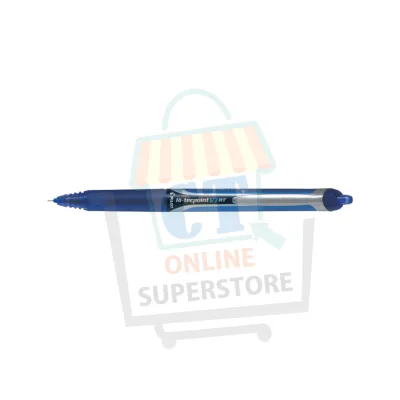
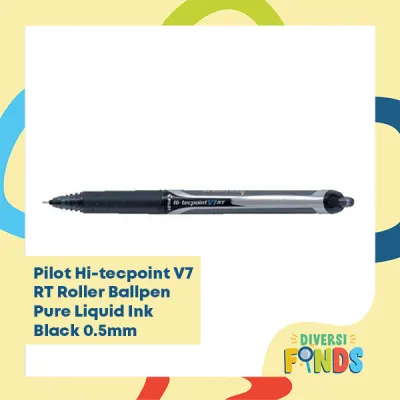
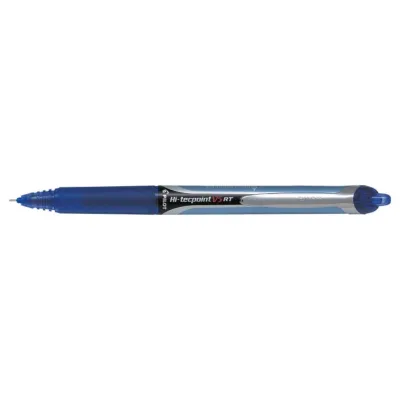
To understand why the Pilot Hi-TecPoint V7 RT occupies a unique space in the stationery market, one must look at its specific engineering. At the heart of this pen is its 0.7mm needle tip, a signature design of the Pilot Hi-TecPoint family. Unlike traditional conical tips, the needle tip consists of a slender, cylindrical metal tube that holds the rotating ball. This design provides an unobstructed view of the paper directly around the writing point, making it highly suitable for detailed diagrams, accounting ledgers, small handwriting, and precise technical line work.
Products mentioned in this guide
Prices are valid at publication and may change. Please refer to the product page for the latest price.

The ink formulation is pure liquid ink, which is water-based and incredibly fluid. This low viscosity allows the ink to flow instantly upon contact with the paper, requiring almost no downward physical pressure from your hand to write. The visual output is a deep, highly consistent, and vibrant line that does not skip or fade mid-stroke, a common frustration with cheaper ballpoint pens.
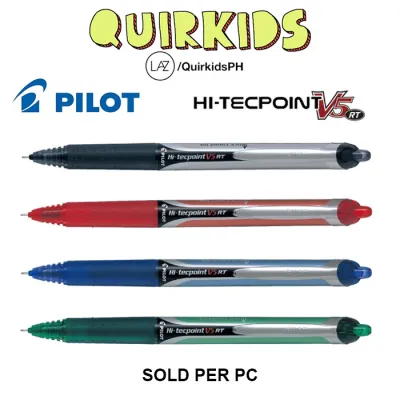
Because this is the “RT” (Retractable) version, Pilot has engineered a pocket-safe click mechanism. This eliminates the need for a separate cap, which is easily lost during busy workdays or lectures. The pen body features a sturdy plastic pocket clip and a clear, integrated ink-level window near the grip. This window allows you to monitor exactly how much liquid ink remains in the reservoir, preventing the sudden surprise of an empty pen during an exam or meeting. Additionally, a soft, rubberized grip section wraps the lower barrel, providing ergonomic support and preventing your fingers from slipping during long writing sessions.
How the V7 RT Compares to Other Retractable Rollerballs
The premium retractable pen market is highly competitive, generally split between liquid ink rollerballs and advanced gel ink pens. To make an informed purchase, you must understand how these two categories differ in chemistry, tip architecture, and overall performance.
Liquid Ink vs. Gel Ink Alternatives
The fundamental difference between the V7 RT and popular gel alternatives lies in ink chemistry. The V7 RT uses low-viscosity liquid ink, which behaves like fountain pen ink. It is highly fluid and relies on capillary action to draw the ink out of the reservoir and onto the paper. This results in a remarkably wet, smooth glide. The main drawback is that the water-based formula sinks deep into the paper fibers, which can cause the line to spread out (feathering) or soak completely through the sheet (bleed-through).
In contrast, gel ink pens—such as the Pentel EnerGel, Pilot G2, or Uni-ball Signo RT—use a high-viscosity gel that thins out only under the physical shear force of the spinning ball. Once the ink settles on the paper, it quickly returns to its viscous state. This allows gel ink to sit on top of the paper fibers rather than sinking deep into them. Consequently, gel pens dry much faster, resist water better once dry, and show significantly less bleed-through on thin paper, though they require slightly more writing pressure than liquid ink.
Tip Size and Line Width Variations
The physical structure of the tip also changes the writing sensation. The V7 RT’s needle tip is delicate and precise. Because the metal support is narrow, it allows you to see exactly where the ink meets the page, which is invaluable for drawing grids, writing complex characters, or editing tight lines of text. However, needle tips can feel slightly “scratchy” if you write at a very steep angle or apply excessive downward force, as the narrow metal sleeve can catch on the paper fibers.
Most gel ink competitors utilize a conical tip, which is shaped like a sturdy cone. Conical tips are structurally stronger, making them highly resistant to bending under heavy writing pressure. They offer a softer, more cushioned writing feel and glide easily over uneven or textured paper surfaces. Additionally, because liquid ink spreads slightly upon hitting the page, the 0.7mm line of the V7 RT actually writes a slightly broader, wetter line than a 0.7mm gel pen, making it look closer to a 0.8mm or 0.9mm stroke on standard paper.
Evaluating the Writing Experience and Daily Practicality
While technical specifications tell part of the story, a pen’s true value is revealed during daily use. Factors like paper compatibility, climate, and physical portability determine whether a pen becomes a trusted tool or a source of constant frustration.
Smoothness, Drying Time, and Paper Compatibility
The writing experience of the V7 RT is undeniably luxurious on the right medium. It glides across the page with virtually zero friction, making it a joy for fast draft writing or creative journaling. To get the best results, you should pair this pen with high-quality, high-density paper, typically 80 GSM (grams per square meter) or higher. On premium, coated paper, the liquid ink stays crisp, showing off its vibrant color without feathering.
However, on standard copy paper (often 70 GSM or lower) used in typical offices and schools, the liquid ink will spread, making your handwriting look thicker and causing noticeable bleed-through to the back of the page. Furthermore, environmental humidity plays a massive role. In tropical climates with high ambient humidity, water-based liquid inks evaporate much slower. On a humid day, the V7 RT’s ink can remain wet on the page for several seconds. If you are left-handed, your hand will likely smear the wet ink as it glides across the line.
Before committing to a bulk purchase of these pens for your office or school year, it is highly recommended to perform a simple diagnostic test. Purchase a single V7 RT and write a few lines on your most frequently used notebooks or office forms. Observe the drying time and check the reverse side of the paper for any ink spots. If the ink bleeds or smudges excessively under your local writing conditions, you should opt for a quick-dry gel alternative.
Pocket Safety and Retraction Mechanisms
The retractable mechanism of the V7 RT is highly reliable, offering excellent convenience for those who constantly clip their pens to shirt pockets, lanyards, or notebook spirals. The click mechanism is positive and firm, ensuring that the tip stays securely retracted when not in use. This design minimizes the risk of accidental ink stains on your clothing.
However, liquid ink pens have a physical vulnerability that gel pens do not: they are highly sensitive to rapid air pressure and temperature changes. Because the ink is thin and water-based, any expansion of air inside the reservoir can push the ink out through the feed. If you travel frequently by air, the pressure drops in aircraft cabins can cause liquid ink rollerballs to leak or pool inside the tip housing. Gel pens, with their thicker ink structure, are much more stable under these conditions. If you must travel with the V7 RT, it is best to store it tip-up in a secure case or pocket to prevent gravity from pulling expanding ink out of the tip.
Long-Term Value: Refills and Availability
When choosing a primary daily writing instrument, long-term maintenance costs and ease of sourcing replacement parts are just as important as the initial purchase price. The Pilot Hi-TecPoint V7 RT is a premium pen, typically retailing between ₱90 and ₱150 in the Philippines, depending on the store. Sourcing refills is the most economical and environmentally friendly way to keep using the pen.
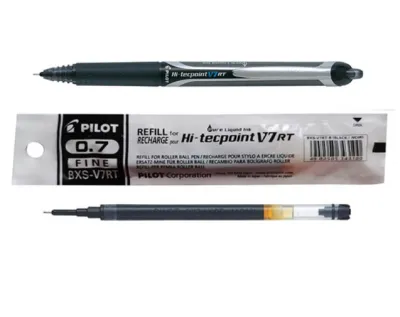
Fortunately, Pilot produces dedicated refills for the V7 RT. However, you must exercise caution when purchasing replacements. You must specifically buy the “V7 RT” liquid ink refill, which features a specialized plastic collar designed to hold the internal retraction spring of the pen body. Standard capped “V7 Hi-TecPoint” refills or cartridge-system refills will not fit the retractable RT body. These RT-specific refills are widely available in major stationery chains and official online brand stores on local ecommerce platforms, though they can sometimes be harder to find in smaller provincial brick-and-mortar shops.
In terms of cost-per-page, liquid ink pens generally have a higher consumption rate than gel or ballpoint pens. Because the liquid ink flows so freely, the pen deposits a larger volume of ink onto the page with every stroke. This means you will deplete a V7 RT refill faster than a comparable gel refill, such as a Pentel EnerGel or Pilot G2. If you write high volumes of notes daily, your long-term operating costs will be slightly higher with a liquid ink system. You should weigh this ongoing cost against the sheer comfort and smoothness that the liquid ink provides.
Final Decision Framework: Which Pen Should You Buy?
To make your final decision, evaluate your writing habits, paper choices, and typical environment against the following practical guidelines.
- Choose the Pilot Hi-TecPoint V7 RT if:
- You want a frictionless, gliding writing experience that mimics a fountain pen without the maintenance hassle.
- You write with a very light hand and want to eliminate finger and wrist fatigue during long writing sessions.
- You primarily write on high-quality, thick paper (80 GSM or higher) or keep a dedicated journal.
- You need a precise needle tip that allows for clean, unobstructed alignment with rulers, stencils, or tight grid lines.
- Choose a Gel Ink Retractable Alternative if:
- You are left-handed and require fast-drying ink to prevent your hand from smearing your writing.
- You must write on cheap, thin, or highly absorbent paper, such as standard office copy paper, newsprint, or school yellow pads.
- You require highly water-resistant or archival-safe ink that will not run if it gets wet or if you use a highlighter over it.
- You travel frequently on flights or work in environments with extreme temperature fluctuations where liquid ink might leak.
- Verify first if:
- Before fully adopting the V7 RT as your primary office or school pen, check if your local stationery store consistently stocks the specific "V7 RT" refills. Always purchase a single unit first to test how the liquid ink interacts with your favorite notebooks and daily paperwork under your local humidity levels. This simple step ensures you invest in a pen ecosystem that perfectly matches your daily writing life.
Community discussion
Share your experience or ask a question. Comments are reviewed before publication.