
Selecting the right writing instrument requires balancing your personal writing style with the technical specifications of the pen. For those who require bold, highly visible lines, the pilot sign pen v10 is a prominent choice that stands out in both professional and academic settings. This pen is engineered with a distinctive liquid ink system and a generous tip size, making it a favorite for signatures, grading, and expressive writing. However, its performance is not uniform across all mediums; environmental factors such as humidity and the specific paper you choose play a significant role in how the ink behaves on the page.
Understanding the mechanics of this pen helps you determine whether it aligns with your daily writing needs. By analyzing its tip size, ink formulation, and physical ergonomics, you can make an informed decision before purchasing. In the tropical climate of the Philippines, where atmospheric moisture can influence ink drying times and paper absorption, evaluating these technical features becomes even more essential for achieving a clean, smudge-free writing experience.
Decoding Tip Size: How It Translates to Line Width and Control
The “V10” designation signifies a 1.0 mm tip diameter, which classifies this pen as a broad or bold writer. Unlike ultra-fine gel pens or standard 0.7 mm medium ballpoints, a 1.0 mm tip deposits a wider, more substantial line of ink onto the page. This large tip size offers a distinct aesthetic advantage, providing high visibility that is ideal for bold signatures, editorial markups, and clear labeling. The broader tip also tends to glide more smoothly across the paper surface, as the larger surface area reduces the friction or “scratchy” sensation often associated with finer tips.
Products mentioned in this guide
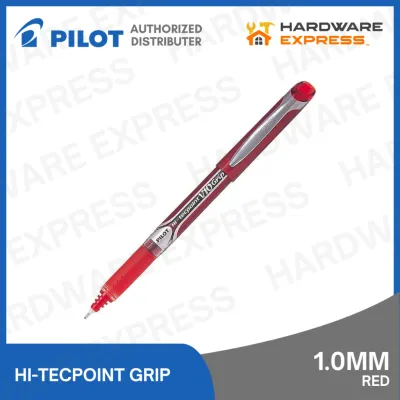
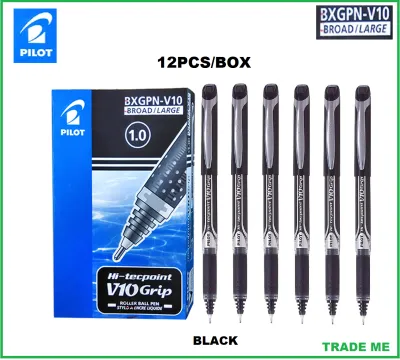
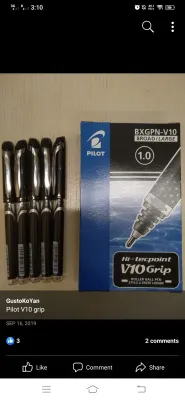
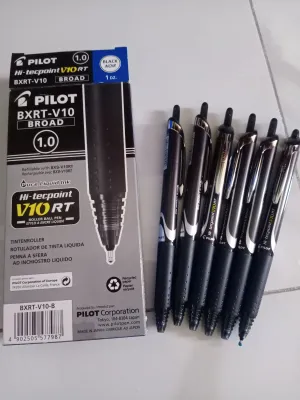
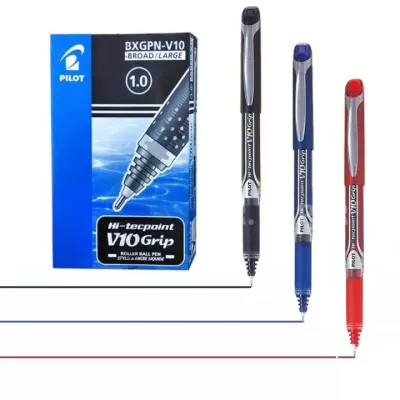
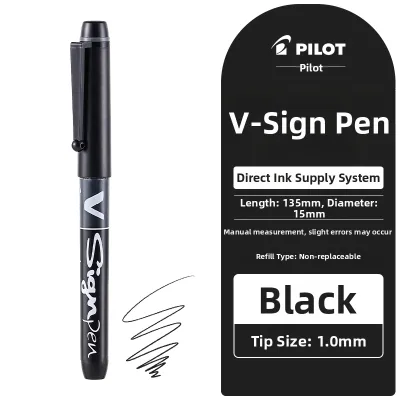
Prices are valid at publication and may change. Please refer to the product page for the latest price.
However, this increased line width requires a higher level of control from the writer. Because more ink is delivered to the page, writing too slowly or pressing down too hard can cause the line to widen beyond its intended boundaries. This behavior is highly dependent on paper texture. Rough, uncoated papers tend to act like a sponge, pulling more ink from the tip and causing the line to spread—a phenomenon known as feathering. Conversely, smooth, high-density papers preserve the sharp edges of the 1.0 mm stroke but require a lighter hand to maintain consistent line width.
To ensure the pen matches your specific handwriting style, it is highly recommended to perform a simple trial. Before purchasing the pen in bulk for office or school use, test a single unit on your preferred notebook or standard office copy paper. Write a few sentences at your natural writing speed to observe how the line width holds up. If your handwriting is naturally small and compact, a bold 1.0 mm line may cause the loops in letters like “e” and “o” to fill in, suggesting that a finer tip might be more appropriate for your daily work.
Ink Type and Paper Compatibility: What to Expect on the Page
The pilot sign pen v10 utilizes a water-based liquid ink formulation, which behaves very differently from paste-like ballpoint ink or viscous gel ink. Liquid ink is designed to flow freely and immediately upon contact with the page, requiring virtually zero writing pressure to produce a solid, vibrant line. This free-flowing nature is managed by a multi-ring ink regulator visible near the tip, which controls the flow to prevent sudden drops or leaks. While this ensures an incredibly smooth writing experience, it also means the ink is highly fluid and penetrates paper fibers deeply.

This high fluidity makes paper compatibility a critical factor in your writing experience. On standard, low-density 70gsm or 80gsm copy paper—commonly found in schools and offices across the Philippines—liquid ink is highly prone to bleed-through, where the ink seeps through to the back of the page. To avoid ruining the reverse side of your documents, pair this pen with thicker, high-quality paper, such as 100gsm premium copy paper or coated notebook pages. Coated papers keep the ink on the surface, preserving the rich color and preventing feathering, though they do alter the overall drying dynamic.
Because drying speed and bleed resistance depend entirely on the specific paper-and-ink combination, you can easily verify performance with a quick, observable test. Write a single word on your target paper, wait three seconds, and lightly run a dry finger across the stroke. In highly humid tropical environments, water-based liquid inks naturally evaporate slower than they do in dry climates. If the ink smudges during your test, you will need to allow a longer wait time before turning pages or folding documents, or consider switching to a more absorbent, high-density paper medium.
Barrel Design and Ergonomics: Evaluating Grip and Writing Comfort
The physical construction of a pen dictates how comfortable it remains during extended writing sessions. The pilot sign pen v10 features a classic cylindrical plastic barrel with a lightweight design. A key functional element of this barrel is the integrated ink viewer window, which allows you to monitor the remaining liquid ink level. This transparency eliminates the guesswork of when your pen will run out of ink, making it highly practical for students taking exams or professionals preparing for long signing sessions.
While the lightweight plastic body keeps hand fatigue to a minimum, the grip area is smooth and untextured. If you write in warm environments where hands can become damp, a smooth plastic grip may feel slightly slippery over time compared to rubberized or textured alternatives. Your comfort will depend heavily on your personal grip style; those who hold their pens with a tight, high-pressure pinch may find the hard plastic barrel less forgiving during long essays, whereas those with a relaxed, light grip will appreciate the effortless glide and low physical resistance.
Weight distribution also shifts depending on how you use the pen’s cap. Writing with the cap posted (snapped onto the back of the pen) shifts the center of gravity slightly rearward, which can provide a more deliberate, grounded feel that is excellent for controlled signatures. Writing unposted keeps the pen exceptionally light and forward-balanced, which is often preferred for rapid, continuous note-taking. Handling the pen physically is the best way to determine which configuration feels most natural in your hand.
Prioritizing Specs: Why the Pilot Sign Pen V10 Fits Specific Writing Styles
When deciding if this pen belongs in your daily toolkit, it is helpful to prioritize its technical specifications based on your primary tasks rather than aesthetic features like barrel color or clip design. The table below outlines how the pen’s core features align with different writing scenarios:
| Writing Scenario | Critical Specification | Performance Impact |
|---|---|---|
| Official Document Signing | 1.0 mm Bold Tip & Liquid Ink | Delivers a highly visible, authoritative signature that stands out on legal documents. |
| Rapid Lecture Note-Taking | High Ink Flow Rate | Smooth flow prevents hand strain, but requires fast-drying paper to avoid smudging. |
| Journaling & Creative Writing | Ink Regulator System | Ensures consistent ink delivery without skipping, preserving line quality on premium paper. |
For professionals who sign certificates, contracts, or official ledgers, the bold tip and consistent ink flow of the pilot sign pen v10 are highly advantageous. The bold line ensures that signatures are legible and difficult to alter, which is a key requirement for archival and legal documents. In this scenario, the slower drying speed on coated paper is a minor trade-off for the premium, dark line quality produced by the liquid ink.
Conversely, if your primary task is rapid note-taking in a fast-paced classroom or meeting, the high ink flow and bold line width may be secondary to drying speed. In these situations, a finer tip or a fast-drying gel pen might serve you better to prevent accidental smearing as you quickly write line after line. By focusing on how the 1.0 mm tip and liquid ink system interact with your daily tasks and paper choices, you can select the writing tool that truly enhances your productivity.
Frequently Asked Questions (FAQ)
Is this pen suitable for left-handed writers?
Left-handed writers should approach this pen with caution. Because left-handed writing involves pushing the pen across the page where the hand can easily drag over freshly written text, a bold 1.0 mm liquid ink pen poses a higher risk of smudging. To minimize this issue, left-handed users should pair the pen with highly absorbent, quick-drying paper or adjust their hand posture to write from an angle that avoids contact with the active line.
How should I store the pen to prevent the ink from drying out?
To maintain optimal ink flow and prevent the water-based ink from evaporating, always snap the cap securely onto the pen immediately after use. It is best to store the pen horizontally or tip-down in a pen cup. Storing the pen tip-up for extended periods can cause the liquid ink to pool away from the feed mechanism, which may result in a temporary dry spell or skipping when you next attempt to write.
Community discussion
Share your experience or ask a question. Comments are reviewed before publication.