
Quick Answer: Pilot V10 Grip vs Pilot V5
Choosing between the Pilot V10 Grip and the Pilot V5 is not a matter of finding a universally superior writing instrument, but rather identifying which pen aligns with your physical hand comfort and your specific line precision requirements. Your decision should rest on how long you write at a single stretch and how much detail your handwriting demands.
The Pilot V10 Grip is designed for writers who prioritize ergonomic support, slip resistance, and a cushioned feel during extended writing sessions. Its thicker barrel and rubberized grip zone reduce finger strain significantly. Conversely, the Pilot V5 is tailored for those who require maximum precision, producing exceptionally fine, crisp lines that are ideal for detailed note-taking, compact planners, and intricate mathematical or design work. It offers a traditional, lightweight, and sleek pen profile that glides effortlessly with minimal drag.
Evaluating Grip Comfort and Barrel Design
The physical interface between your fingers and the pen barrel dictates how long you can write before fatigue sets in. The Pilot V10 Grip and the Pilot V5 represent two entirely different design philosophies when it comes to ergonomics and hand comfort.
Products mentioned in this guide
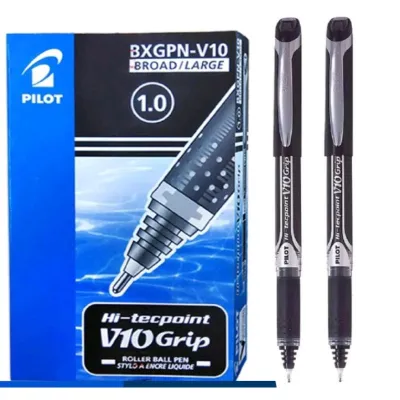
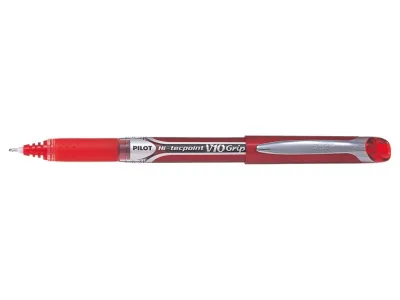
![[FPS FairPriceSupplies] Pilot V10 Grip Hi-tecpoint Roller Ball 1.0 Pen](https://img.lazcdn.com/g/p/78fb9c3bf3979348eb88a7bcf2ad477e.jpg_400x400q80.jpg_.webp)
Prices are valid at publication and may change. Please refer to the product page for the latest price.

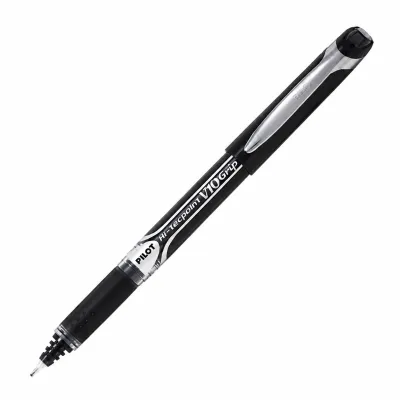
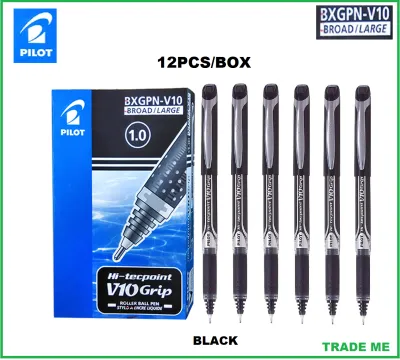
Featuring a dedicated, rubberized grip zone, the V10 Grip is built to cushion the fingers and distribute gripping pressure over a wider surface area. In warm, tropical climates like the Philippines, high humidity often leads to sweaty fingers during long writing sessions. The textured rubber material on the V10 Grip provides essential slip resistance, preventing your fingers from sliding down toward the tip and reducing the need to squeeze the pen tightly. This wider barrel diameter is particularly beneficial for individuals with larger hands or those who suffer from joint cramping during marathon writing tasks.
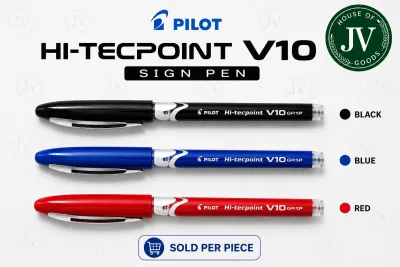
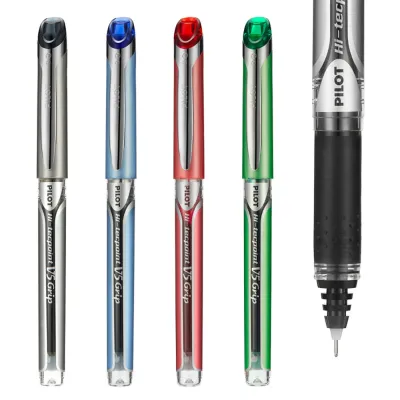
In contrast, the standard Pilot V5 features a classic, slim, and smooth plastic barrel. While it lacks a cushioned rubber sleeve, its lightweight construction offers a highly nimble writing experience. The slimmer profile allows for quick, agile strokes, making it a favorite for rapid brainstorming sessions or quick annotations. However, because the plastic surface offers less natural traction, writers who tend to hold their pens with a tight, high-pressure grip may experience finger fatigue more quickly than they would with the cushioned V10 Grip.
When evaluating these pens in a local stationery store or reviewing unboxing details, pay close attention to the balance point of each pen. A pen that feels top-heavy when the cap is posted on the back can strain the web of your hand. The V10 Grip maintains a solid, centered balance that grounds the hand, while the V5 remains incredibly light and almost unnoticeable in weight, appealing to those who prefer a minimalist writing tool.
Comparing Line Precision and Ink Behavior
Beyond how the pen feels in your hand, how the ink behaves on paper is the most critical factor in your daily writing satisfaction. The tip size and ink delivery systems of these two models create distinct visual results on the page.
The Pilot V5 is equipped with an extra-fine needlepoint tip, typically measuring 0.5 mm. This needlepoint design allows you to see exactly where the ink meets the paper, providing unparalleled precision for small handwriting, complex kanji or characters, and tight ledger lines. The Pilot V10 Grip, on the other hand, features a much bolder conical tip, typically measuring 1.0 mm. This broader tip produces a thick, highly saturated line that stands out dramatically on the page, making it excellent for signatures, headings, and bold editing marks.
Because both pens utilize liquid ink rather than paste-based ballpoint ink, they flow incredibly smoothly but react differently depending on the paper medium. In humid environments, paper fibers naturally absorb ambient moisture from the air, which can amplify ink feathering and bleed-through. To find the perfect match for your favorite notebooks, consider performing these simple observable trials:
- The Drying Speed Test: Draw a series of quick lines on your target paper and run your finger across them at one-second intervals. Because the V10 Grip deposits a larger volume of liquid ink, it will naturally require a longer drying time than the fine line of the V5. If you are left-handed or write rapidly, the faster drying speed of the V5 may help prevent accidental smudging.
- The Bleed-Through Check: Inspect the reverse side of your paper after writing. Standard school notebooks or thin planner inserts may show significant "ghosting" or full bleed-through when subjected to the heavy ink flow of the V10 Grip. The V5, with its restricted ink output, is much more likely to remain clean on the back of the page.
- The Smoothness and Glide Trial: Run each pen across the paper with minimal downward pressure. The broad conical tip of the V10 Grip offers a glass-like, frictionless glide that feels incredibly luxurious, whereas the needlepoint V5 provides a bit more tactile feedback, or "tooth," against the paper surface.
Assessing Portability and Pen Mechanisms
For daily commuters, students, and professionals who move between meetings, a pen’s portability and mechanism design determine how well it survives transit without causing an ink disaster.
The classic versions of both the V5 and the V10 Grip utilize a cap-on/cap-off design. A secure cap is highly effective at preventing liquid ink from evaporating, ensuring the pen writes instantly even after weeks of storage. When carrying these pens in a bag, pocket, or planner loop, a cap that snaps shut with a reassuring click protects your clothing and belongings from accidental leaks. Both models are also available in retractable (RT) versions, which replace the cap with a push-button mechanism. While retractable models offer convenient one-handed operation, they rely on an internal spring-loaded seal to keep the tip fresh, making them slightly more susceptible to drying out if left unused for long periods.
Storage convenience also depends on the pocket clip and overall barrel shape. The V5 features a sleek, straight metal clip that easily slides onto thin shirt pockets, notebook covers, or tight pencil case slots. The V10 Grip, with its wider barrel and chunkier plastic clip, requires a bit more space. If you use a planner with a built-in pen loop, measure the loop’s diameter first; the V10 Grip may be too thick to slide in easily, whereas the slim V5 is highly compatible with standard elastic and leather loops.
Side-by-Side Specification Checklist
To help you quickly verify the technical differences before making a purchase at your local bookstore or online marketplace, refer to the comparison checklist below.
| Feature | Pilot V10 Grip | Pilot V5 |
|---|---|---|
| Grip Type | Cushioned, rubberized, and textured | Smooth plastic or lightly textured barrel |
| Tip Shape & Size | Broad conical tip (typically 1.0 mm) | Extra-fine needlepoint tip (typically 0.5 mm) |
| Ink Type | Liquid ink | Liquid ink |
| Mechanism | Available in capped and retractable (RT) | Available in capped and retractable (RT) |
| Refill Compatibility | Model-specific (verify cartridge code) | Model-specific (verify cartridge code) |
| Best For | Bold writing, signatures, hand comfort | Fine details, small handwriting, compact planners |
Note: Always verify these specifications on the physical product packaging or the official store listings before purchasing, as exact dimensions, refill codes, and design details can vary by region, release year, or sub-version.
How to Choose Based on Your Writing Habits
To finalize your decision, evaluate your daily writing tasks and physical preferences against these practical guidelines.
Choose Pilot V10 Grip if:
- You experience hand fatigue: The cushioned, non-slip rubber grip and wider barrel are ideal if you tend to hold your pen with high pressure or write for hours at a stretch.
- You prefer bold, high-contrast lines: The 1.0 mm conical tip delivers a rich, thick line that is highly legible and perfect for signatures, grading, or bold journaling.
- You write in humid conditions: The textured grip zone ensures a secure hold even when your hands are warm or sweaty.
Choose Pilot V5 if:
- You have small, precise handwriting: The 0.5 mm needlepoint tip allows you to write clearly in tight spaces, such as pocket planners, margins, or complex mathematical formulas.
- You use thin or standard paper: The finer line deposits less liquid ink, reducing the risk of feathering, smudging, and bleeding through the page.
- You prefer a lightweight, slim profile: The classic, slender design fits effortlessly into standard pen loops and pencil cases without adding bulk.
Verify first if:
- You need water resistance: Standard liquid inks are water-soluble and may smudge if exposed to moisture or spills. If you are signing official documents, verify if the specific sub-model uses water-resistant pigment ink.
- You plan to buy refills: Check the exact refill code printed on your empty cartridge. Capped and retractable versions often use entirely different refill shapes, and they are rarely interchangeable.
Frequently Asked Questions (FAQ)
Can I use the same ink refills for both the V10 Grip and V5?
No, you generally cannot swap refills between the V10 Grip and the V5. Refill compatibility is highly dependent on the specific sub-model (such as the capped stick version versus the retractable RT version) and the internal diameter of the pen barrel. Because the V10 Grip is designed for a much broader ink flow and a thicker barrel, its internal cartridge dimensions and ink delivery mechanisms differ from those of the extra-fine V5. Always check the exact refill code (such as BXS-V5 or similar manufacturer designations) printed directly on your empty cartridge or packaging before purchasing a replacement from an online marketplace or local stationery store.
How do I prevent the rollerball tip from drying out?
To prevent the liquid ink from drying out, always snap the cap back on securely immediately after use until you hear a distinct click. If you are using a retractable version, ensure the click mechanism is fully disengaged so the tip retracts completely into its protective chamber. Storing your rollerball pens horizontally or tip-down in a pen cup helps maintain a consistent ink feed to the ball mechanism, ensuring a smooth, skip-free start. Avoid leaving your pens in direct sunlight, hot cars, or high-temperature environments, as heat can cause the liquid ink to expand, leading to leaks or premature drying inside the feed system.
Community discussion
Share your experience or ask a question. Comments are reviewed before publication.