
To keep your important papers safe from tropical humidity, sudden downpours, and everyday wear, choosing the right plastic long envelope is essential. The term “long envelope” can be confusing because standard paper sizes vary significantly. Selecting the correct size ensures that your legal documents, A4 sheets, and certificates slide in smoothly without bent corners or crumpled edges.
Understanding Standard Document Dimensions vs. Envelope Sizes
Standard paper dimensions dictate the size of the envelope you need. In many professional settings, you will encounter three primary sizes: A4, US Legal, and Folio. A4 paper measures 8.27 by 11.69 inches, while US Legal paper measures 8.5 by 14 inches. However, in local stores in the Philippines, “Legal” size paper often refers to Folio size, which measures 8.5 by 13 inches.
To ensure your documents slide in and out without resistance, you need an envelope that offers a 0.5-inch to 1-inch clearance on all sides. This extra space prevents the edges of your papers from catching on the seams or getting damaged by the closure mechanism. Without this clearance, retrieving a tight-fitting document can lead to accidental tears.
Products mentioned in this guide
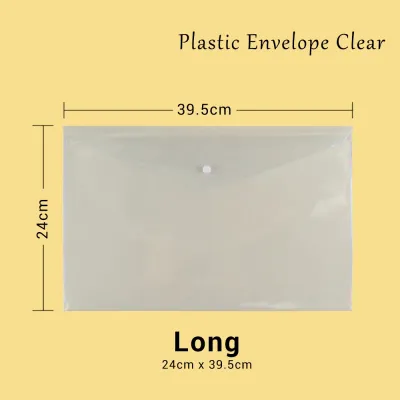
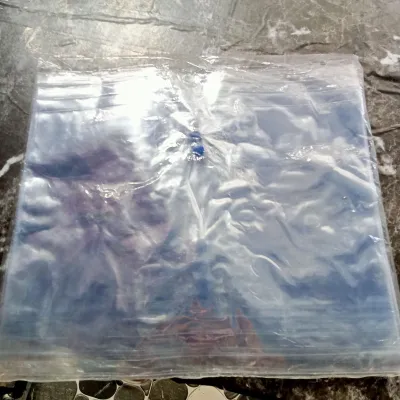
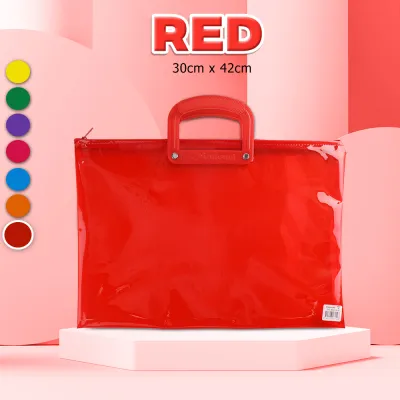
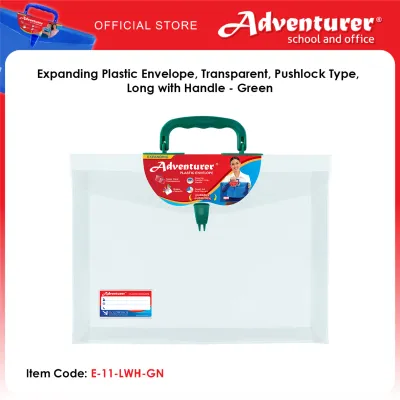
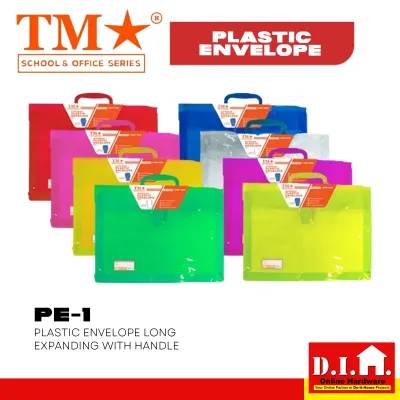
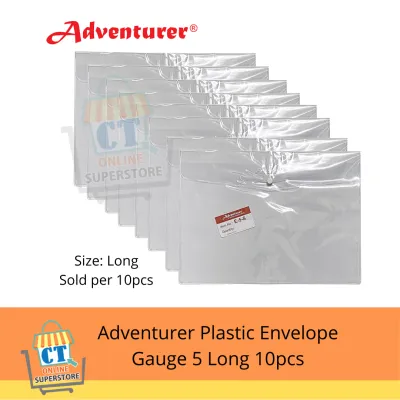
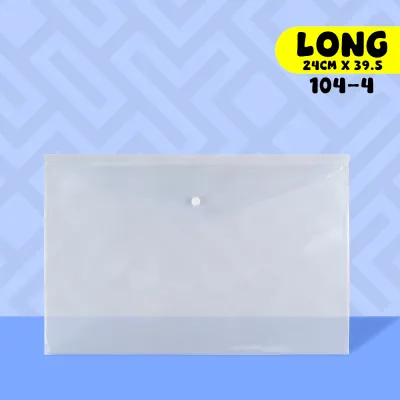
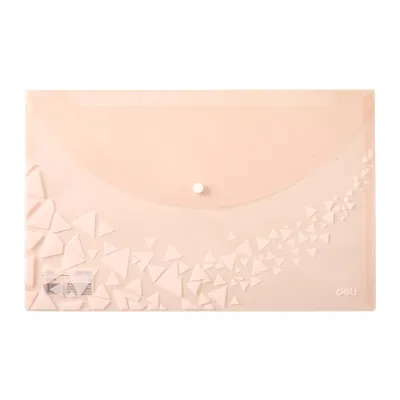
Prices are valid at publication and may change. Please refer to the product page for the latest price.
Certificates and diplomas present additional sizing challenges. These documents often vary from standard paper sizes and may feature rigid cardboard backing, embossed borders, or protective plastic sleeves. These design elements increase the overall width and thickness, requiring a larger envelope than a standard flat sheet of the same nominal size.
Matching Envelope Sizes to Your Document Types
Finding the right fit depends on the specific dimensions of your paperwork and how many sheets you plan to store together. Let us break down the suitable envelope choices for each document category.

Sizing for A4 and Standard Certificates
A4 documents are slightly shorter and narrower than local long documents. While you can find specific A4-sized plastic envelopes, using a plastic long envelope designed for 13-inch paper offers distinct advantages.
The extra length of a long envelope is highly practical for top-loading designs or when you need to store multiple A4 sheets separated by index dividers. The extra headspace ensures the tabs of your dividers do not get crushed when the envelope is closed.
If you are storing heavy certificate paper or textured diplomas, look for envelopes with reinforced corners. These prevent the sharp, heavy edges of the paper from puncturing the plastic seams over time.
Sizing for Legal and Folio Documents
In local offices and schools, the standard long envelope is designed to fit 8.5 x 13-inch Folio papers. These envelopes usually measure around 9.5 x 13.5 inches externally, providing just enough clearance for a neat fit.
A common mistake is trying to fit true US Legal paper, which is 8.5 x 14 inches, into these standard local long envelopes. Because US Legal paper is a full inch longer than Folio paper, attempting to force it into a standard long envelope will result in the bottom or top edge folding, potentially ruining official documents.
Always check the product label or specifications for the exact internal capacity. External dimensions include the welded seams and the flap fold, which can reduce the actual usable space inside the envelope.
Sizing for Thick, Bound, or Framed Certificates
When dealing with bound contracts, thick certificates with rigid backing, or multiple documents stacked together, a flat plastic envelope will not suffice. You must measure the total thickness of the stack or the bound edge before choosing an envelope.
For these bulky items, select an expandable plastic envelope or a gusseted document wallet. These envelopes feature accordion-style sides that expand to accommodate thicknesses ranging from 0.5 inches to over an inch.
Keep in mind the trade-offs: while expandable envelopes are excellent for high-capacity storage, they take up more physical space. They may not slide as easily into standard flat filing cabinets or slim desk organizers compared to their flat counterparts.
Key Features to Check Beyond Basic Dimensions
Beyond the physical dimensions, the design of the envelope plays a major role in how well it protects your documents. The closure mechanism is a primary consideration. Snap buttons and Velcro closures offer quick access and are ideal for documents you retrieve frequently. Zipper closures provide a more secure seal against dust and light moisture, while open-top designs are well suited for quick filing inside a larger drawer.
You should also assess the plastic thickness and the quality of the edge welding. Thinner plastic can tear easily at the seams under the weight of multiple papers. Inspect the welded edges to ensure they are wide and clean, without any loose threads or gaps. If you are shopping online, look for specifications indicating the plastic’s gauge or thickness.
For long-term preservation of important certificates, diplomas, or land titles, check for labels indicating the material is archival-safe or acid-free. Standard plastics can release chemicals over time that cause ink to lift off the page or paper to yellow. Acid-free polypropylene is generally recommended for preserving sensitive printed materials in hot and humid climates.
Frequently Asked Questions (FAQ)
Can I use a standard long envelope for US Legal size paper?
No, standard local long envelopes are typically sized for Folio paper (8.5 x 13 inches) and will not fit US Legal paper (8.5 x 14 inches) without folding. To store true US Legal documents safely, you must look for envelopes explicitly labeled as US Legal size or extra-long, which provide the necessary 14-inch internal clearance.
How do I measure a plastic envelope to ensure my documents fit?
To ensure a proper fit, measure the internal usable space of the envelope rather than its outer edges. Lay the envelope flat and measure from the inside of the bottom seam to just below the closure mechanism, and from the inside of one side seam to the other. This prevents you from buying an envelope where the document fits the outer dimensions but gets caught in the zipper track or snap button flap.
Community discussion
Share your experience or ask a question. Comments are reviewed before publication.