
Quick Guide: Which Binder Notebook Should You Choose?
Selecting the right notebook system is a highly personal decision that directly impacts your productivity, organization, and daily writing comfort. When comparing the three major modular options—ring binders, disc binders, and screw post binders—the best choice depends entirely on how you interact with your notes and your specific daily workflow. If your priority is absolute flexibility, allowing you to rearrange, add, and remove pages on the fly with a simple tug, a disc-bound system is your best match. For those who prioritize maximum document security, long-term durability, and a traditional book-like aesthetic, a screw post binder provides an unmatched, rigid lock. If you simply need a familiar, cost-effective, and widely compatible system for standard daily archiving and study notes, the classic ring binder remains the most practical and accessible solution.
In tropical climates like the Philippines, where high humidity can affect paper stiffness and metal components over time, choosing the right binding mechanism also involves considering how well your notebook will hold up to daily wear and tear. A notebook that works perfectly in a dry, air-conditioned office might behave differently when carried in a backpack through humid commutes. By understanding the mechanical differences and material demands of each system, you can select a binder notebook that not only keeps your thoughts organized but also stands the test of time.
How Ring, Disc, and Screw Post Binders Actually Work
To make an informed decision, it is essential to understand the physical mechanisms that power each of these three binding types. While they all serve the primary purpose of holding loose sheets of paper together, their structural designs dictate how you add pages, how the notebook behaves on a desk, and how secure your documents remain.
Products mentioned in this guide

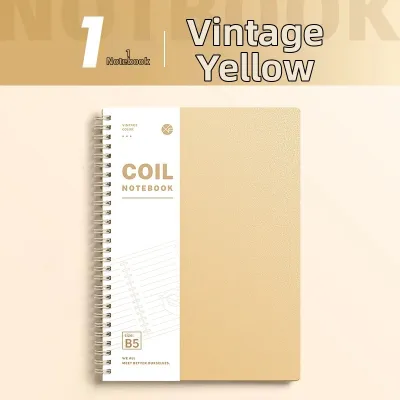
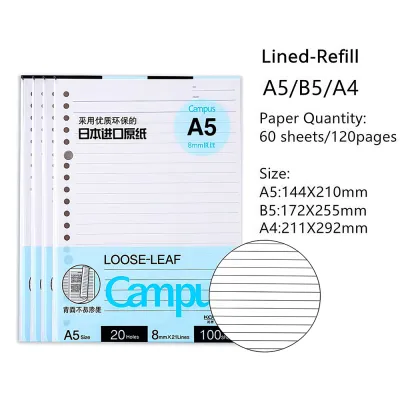
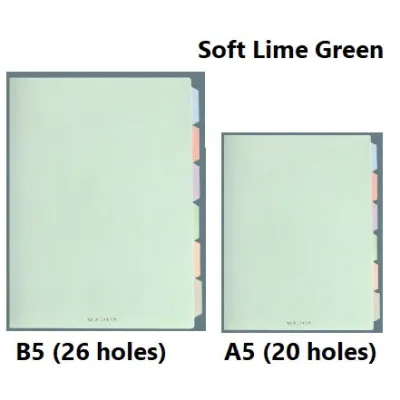
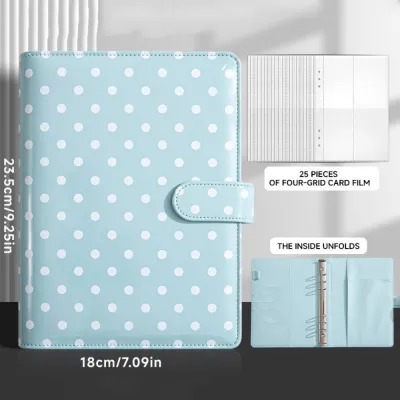
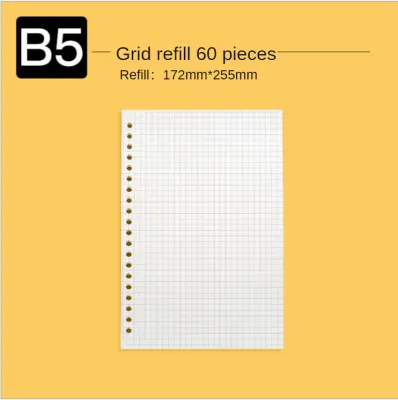
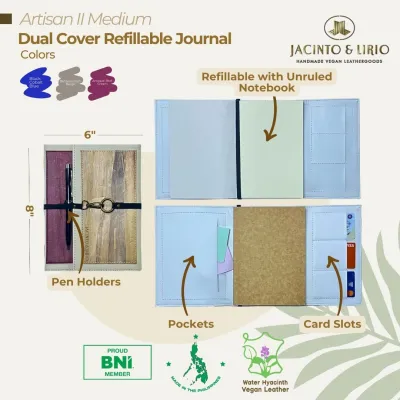
Prices are valid at publication and may change. Please refer to the product page for the latest price.

Ring Binders Ring binders are the most recognizable stationery staple in schools and offices. They utilize a mechanical clasp system, typically made of nickel-plated steel or sturdy plastic, featuring two, three, twenty, or twenty-six rings depending on the paper standard (such as standard A4, A5, or B5 multi-ring systems). These rings are split down the center and operate on a spring-loaded tension bar housed within a metal spine. Pressing the tabs at either end of the spine snaps the rings open, allowing you to slide hole-punched paper or plastic sleeves over the curved arches. Snapping the rings closed secures the pages. Because the rings are fixed to a rigid spine or the back cover, the overall thickness of the notebook is predetermined by the ring diameter, regardless of how many pages are currently inside.
Disc Binders Disc-bound systems discard the traditional continuous spine altogether, offering a highly modular alternative. Instead of a single spine, they rely on a series of individual, circular discs with raised outer rims. The magic of this system lies in the specialized paper punch: rather than standard round holes, disc-bound paper features mushroom-shaped cutouts along the binding edge. The wide “cap” of the mushroom hole slips over the raised rim of the disc, while the narrow “stem” of the punch grips the center of the disc. This unique friction-fit mechanism allows you to pull pages out or press them back in at any location without opening a mechanical latch. The covers and pages are held together solely by the physical tension of the paper gripping the discs.
Screw Post Binders Screw post binders represent the heavy-duty, semi-permanent end of the binding spectrum. They consist of a rigid or semi-rigid cover with a spine flap containing a set of pre-drilled holes. Metal or plastic posts—consisting of a hollow female tube with a flat head and a matching male screw—are threaded through the cover and the punched paper. Using a flathead screwdriver, a coin, or even your fingernail, you tighten the male screw into the post, clamping the entire stack of paper securely between the covers. To add, remove, or rearrange a single page, you must completely unscrew the posts, remove the top cover, lift off the preceding pages, make your changes, and then reassemble the entire stack.
Comparing Ring, Disc, and Screw Post Binders Across Key Dimensions
Evaluating these three mechanisms across practical, real-world dimensions helps highlight the trade-offs of each system. Whether you are a student rushing between university lectures or a professional compiling executive reports, these key factors will determine which binder notebook fits your daily habits.
Adding and Rearranging Pages
The ease with which you can modify your notebook’s contents is often the primary reason for choosing a modular binder over a traditionally bound book. Disc binders offer the fastest, most intuitive experience for rearranging pages. Because there are no rings to open or screws to turn, you can grab a sheet, pull it gently away from the discs, and press it back down onto the discs in a different section in a matter of seconds. This makes disc-bound notebooks perfect for dynamic workflows like bullet journaling or project tracking, where ideas flow out of order and require constant reorganization.
Ring binders require more physical steps but remain highly straightforward. To rearrange pages, you must locate the target section, press the tabs to snap open the rings, lift off the pages sitting on top of the sheet you want to move, insert or remove your page, replace the stack, and snap the rings shut. While reliable, this process can become tedious during active brainstorming sessions or when you need to move individual sheets frequently throughout the day.
Screw post binders are the least convenient for frequent rearranging. Because the binding is locked tight by threaded screws, changing a single page in the middle of the notebook requires complete disassembly of the spine. You must unscrew the posts, remove the top cover, lift off every page above the target sheet, swap the page, realign the entire paper stack, and screw the posts back together. This multi-step process makes screw posts highly impractical for daily, spontaneous note-taking, but excellent for permanent setups where the order of pages rarely changes.
Durability and Page Security
In high-humidity environments, paper can absorb moisture from the air, making it softer and more prone to tearing at stress points. This environmental factor directly influences how secure your pages remain in each binder type. Screw post binders offer the absolute highest level of page security. Because the paper is tightly clamped between metal or plastic posts and solid covers, there is virtually zero risk of pages slipping out or tearing at the holes under normal use. They can withstand being tossed into a packed bag, carried on long commutes, or dropped on the floor without losing a single sheet.
Ring binders provide moderate to high security. The closed rings prevent pages from falling out, but the friction of turning pages can gradually wear down standard round holes, leading to tears over time. If a ring binder is dropped, the impact can sometimes force the mechanical rings to snap open, scattering your notes. Additionally, cheap metal rings can rust in humid conditions, which can stain your paper and make page-turning rough.
Disc binders are the most sensitive to rough handling and environmental factors. Because pages are held in place solely by the friction of paper gripping the disc rims, overstuffing the notebook or dropping it can cause sheets to pop off the discs entirely. Thin or damp paper can lose its grip over time, meaning you must handle a disc-bound notebook with care, avoid pulling pages out at harsh angles, and store it securely in your bag to prevent other items from bending the exposed paper tabs.
Writing Experience and Lay-Flat Ability
The physical presence of the binding mechanism significantly alters how comfortably you can write, especially when working near the inner margins of the page. Disc binders offer an exceptional writing experience because they allow you to fold the cover and pages completely back, 360 degrees, just like a spiral notebook. This dramatically reduces the notebook’s footprint on cramped desks, such as those in university lecture halls or busy coffee shops. However, the physical discs do protrude from the center, which can obstruct your hand when writing on the left side of a page (for right-handed writers).
Ring binders also lay flat when open, but they cannot fold back 360 degrees. The rigid spine keeps the notebook wide open, requiring double the desk space. Furthermore, large metal rings (especially those exceeding 1 inch in diameter) create a substantial physical barrier that makes writing near the inner margin highly uncomfortable unless you remove the page entirely to write on it.
Screw post binders struggle the most with lay-flat ability. The tight clamping force creates a stiff spine with a narrow gutter. Pages do not lay completely flat naturally; they tend to curve upward near the binding, requiring you to hold the book open with one hand while writing. Folding the cover back is impossible, making screw post binders best suited for reading, presenting, or writing on spacious flat surfaces.
Capacity and Expansion
As your notes grow, the ability to expand your binder notebook becomes a major consideration. Disc binders excel in capacity flexibility. If your notebook becomes too thick for its current discs, you do not need to buy a whole new notebook. You simply pull the pages and covers off the small discs and press them onto a set of larger discs. Discs are commonly available in sizes ranging from 0.5 inches to 2 inches, allowing you to scale your notebook’s capacity seamlessly.
Screw post binders are also highly expandable, but they require a different approach. To increase capacity, you must replace the existing screws with longer posts, or add screw post extensions (threaded couplers that screw into the existing posts). This allows you to accommodate massive stacks of paper, though finding matching extension posts in local stationery shops can sometimes be a challenge.
Ring binders are the most rigid in terms of capacity. The rings are permanently attached to the binder’s spine or cover. If you buy a 1-inch ring binder and fill it to capacity, your only option is to archive older pages elsewhere and start fresh, or purchase a completely new, larger binder.
Comparison Summary
To help you visualize the differences, here is a summary of how each binding type performs across key usability dimensions:
| Feature | Ring Binders | Disc Binders | Screw Post Binders |
|---|---|---|---|
| Ease of Rearranging | Moderate (Requires opening rings) | Excellent (Instant pull-and-press) | Low (Requires unscrewing posts) |
| Page Security | High (Secure when rings are closed) | Moderate (Pages can pop off if dropped) | Maximum (Clamped tightly in place) |
| Lay-Flat Ability | Good (Lays flat, cannot fold 360°) | Excellent (Folds back 360 degrees) | Poor (Stiff spine, narrow gutter) |
| Capacity Flexibility | Fixed (Determined by ring size) | High (Can swap to larger discs) | High (Can add extension posts) |
| Writing Comfort | Moderate (Rings can obstruct hand) | Good (Folds back, but discs can obstruct) | Low (Stiff gutter, hard to write near margin) |
| Portability | Moderate (Bulky spine) | High (Compact and lightweight) | Low (Rigid and heavy) |
Pros, Cons, and Best Use Cases for Each Binding Type
To help you match these systems to your specific daily environment, let us break down the practical advantages, drawbacks, and ideal use cases for each binding type.
Ring Binders
Ring binders are the classic choice for a reason, offering reliability and widespread support, but they come with physical limitations.
- Pros:
- Widespread Availability: You can find ring binders and standard multi-hole punched paper in almost any local bookstore or office supply shop across the country.
- Familiarity: The mechanical snap of a ring binder is universally understood, requiring no learning curve or specialized tools.
- Cost-Effective: Because they are mass-produced, both the binders and their refills are highly budget-friendly, making them accessible for students.
- Secure Archiving: Once closed, the rings keep pages securely locked in place during standard transport.
- Cons:
- Desk Footprint: Because they cannot fold back on themselves, they require a large flat surface to use comfortably.
- Ring Misalignment: Over time, metal rings can become misaligned or bent, creating gaps where pages can snag or slip out.
- Fixed Spine Size: You cannot adjust the physical thickness of the binder cover, meaning a half-empty binder takes up just as much space in your bag as a full one.
- Best for:
- Academic and Corporate Archiving: Perfect for students and office workers who need a reliable, standard system to compile lecture notes, handouts, and printed reports that do not require constant, daily rearrangement.
Disc Binders
Disc binders offer unparalleled flexibility for those who love customization, but they demand high-quality materials and careful handling.
- Pros:
- Unmatched Customization: You can mix and match different disc sizes, cover materials (from flexible plastic to premium leather), and paper types (ruled, grid, dotted, or blank) to build a truly personalized planner.
- 360-Degree Folding: The ability to fold the notebook completely flat is a lifesaver when writing on your lap, on small tablet desks, or during site visits.
- On-the-Go Reorganization: You can move a page from the back of your notebook to the front in seconds without dealing with loud, snapping metal rings.
- Scalable Capacity: Swapping to larger discs takes only a few minutes, allowing your notebook to grow alongside your projects.
- Cons:
- Page Vulnerability: The mushroom-shaped cutouts can tear or wear out if pages are repeatedly removed and reinserted, especially with thin, low-gsm paper.
- Specialized Accessories: You cannot use standard hole-punched paper; you must purchase pre-punched refills or invest in a specialized disc-punch machine.
- Higher Initial Cost: Premium disc systems and punches represent a larger upfront investment compared to standard stationery.
- Best for:
- Creative Planners and Bullet Journalers: Ideal for individuals who love to design their own layouts, move sections around frequently, and need a highly portable, compact notebook for daily planning.
Screw Post Binders
Screw post binders are built for permanence and presentation, sacrificing quick editing for maximum security and a premium feel.
- Pros:
- Maximum Durability: The solid, bolted binding ensures that pages never slip out accidentally, making it the most secure option available.
- Professional Presentation: Screw post binders offer a clean, seamless spine that looks exceptionally neat on a shelf or during a client presentation.
- Book-Like Feel: The rigid structure feels substantial and premium, closely mimicking the experience of a bound hardcover book.
- Heavy-Duty Capacity: Excellent for holding thick cardstock, laminated sheets, or heavy watercolor paper without bending or warping the binding.
- Cons:
- Tedious Page Swapping: The requirement of unscrewing the posts makes even minor page adjustments a slow, deliberate task.
- Poor Lay-Flat Writing: The rigid spine limits how wide the notebook can open, making it difficult to write comfortably near the inner margins.
- No 360-Degree Folding: Must be used on a flat surface; cannot be folded back for quick hand-held note-taking.
- Best for:
- Portfolios, Art Books, and Archives: Best suited for creative professionals presenting design portfolios, photographers showcasing prints, or businesses archiving permanent legal and financial documents that rarely require page-level edits.
How to Make Your Final Decision
Choosing between these three systems comes down to analyzing your daily workflow, how often you need to rearrange your pages, and your environment.
- Choose Ring Binders if:
- You want a highly accessible, budget-friendly notebook system that uses standard paper.
- You primarily use your notebook for linear note-taking and long-term archiving.
- You do not mind a larger desk footprint and prefer a mechanism that is easy to find in local stationery stores.
- Choose Disc Binders if:
- You are a dynamic planner who constantly moves pages, combines different paper templates, and reorganizes sections.
- You need a compact notebook that can fold completely back to save desk space.
- You are willing to invest in a specialized hole punch and high-quality, thicker paper to ensure long-term page durability.
- Choose Screw Post Binders if:
- You are compiling a finished portfolio, photo album, or permanent document archive where security is paramount.
- You want a premium, book-like aesthetic and do not need to rearrange pages on a regular basis.
- You primarily write on spacious, flat desks and do not need to fold your notebook back.
Before making your final purchase, it is highly recommended to check the availability of refills and accessories. If you live in a highly humid area, consider investing in heavier paper weights (at least 80 gsm to 100 gsm) to ensure the punched holes—especially for disc binders—retain their structural integrity over time. Additionally, verify whether your local stationery shops stock the specific hole punches or replacement posts required for your chosen system, or if you will need to source them from reliable online marketplaces.
Frequently Asked Questions (FAQ)
Can I use standard hole-punched paper in a disc binder?
No, standard round-hole punched paper will not work in a disc-bound system. Disc binders require specialized mushroom-shaped holes with a narrow slit that allows the paper to slide over the raised rim of the disc. If you try to use standard 2-hole, 3-hole, or multi-ring punched paper, there will be no T-shaped tabs to grip the discs, and the pages will simply fall out immediately. To use your own custom paper or printed templates in a disc binder, you must purchase a dedicated disc-punch machine, which is designed to punch the exact mushroom profile required.
How do I prevent pages from falling out of a disc binder?
To keep your pages securely inside a disc binder, follow a few practical guidelines. First, avoid overstuffing the notebook; if the paper stack approaches the very edge of the disc rims, the pages lose their tension and can pop off easily. Second, use thicker paper. Paper with a weight of 100 gsm or higher provides a much firmer grip on the discs and resists tearing when pages are turned or removed. Third, when carrying your notebook in a bag, use an elastic band or a protective sleeve to keep the covers closed. This prevents other items from sliding between the pages and lifting them off the discs.
Are screw post binders reusable?
Yes, screw post binders are fully reusable and highly durable. The covers and the metal or plastic posts themselves can be used indefinitely. You can easily unscrew the posts, remove the old pages, and insert a completely new stack of paper whenever needed. However, keep in mind that frequent assembly and disassembly can gradually wear down the threads of plastic screw posts, potentially leading to a looser fit over time. If you plan to change the contents of your binder relatively often, investing in high-quality brass or aluminum screw posts will ensure the threads remain sharp and secure through years of use.
Community discussion
Share your experience or ask a question. Comments are reviewed before publication.