
Choosing the right cash binder for your budgeting journey depends entirely on your daily handling habits, the thickness of your envelopes, and how often you rearrange your savings categories. Neither the traditional ring binder nor the modern disc-bound system is universally superior for cash stuffing. Ring binders excel at keeping heavy loads of paper currency and thick plastic sleeves securely locked in place, making them ideal if you frequently carry your budget planner in a bag. Disc binders, on the other hand, offer unmatched flexibility, allowing you to snap envelopes in and out of any section instantly without opening a metal mechanism. However, both systems present a shared challenge: plastic cash envelopes are prone to tearing at the binding edge under constant physical stress, especially in humid tropical climates where materials can become sticky or brittle.
How Ring Binders Handle Cash Envelopes and Receipts
Traditional ring binders remain a staple for cash stuffing because of their mechanical security. When comparing ring styles, the shape of the metal loop significantly affects how your cash envelopes sit. O-ring binders cause pages to ride up over the curve, which can bend the edges of stiff plastic sleeves and make the binder difficult to close when fully loaded. In contrast, D-ring binders feature a straight edge that allows envelopes to stack flat against the back cover. This flat alignment provides much better turning clearance and prevents the rings from pinching the edges of your plastic inserts as you flip through your budget categories.
The primary advantage of a ring binder is its secure locking mechanism. Once the metal rings snap shut, they form a continuous loop that prevents envelopes from slipping out, even if the binder is dropped, shaken, or stuffed into a crowded tote bag during a daily commute. This physical security is reassuring when you are carrying high-value bills like ₱500 or ₱1,000 notes for household expenses.
Products mentioned in this guide
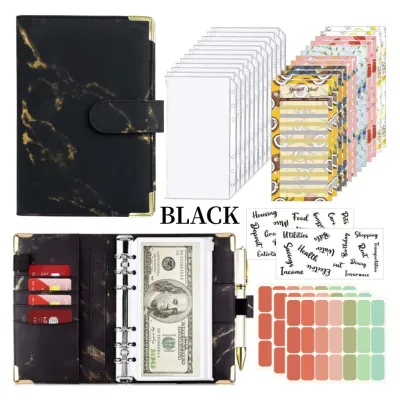
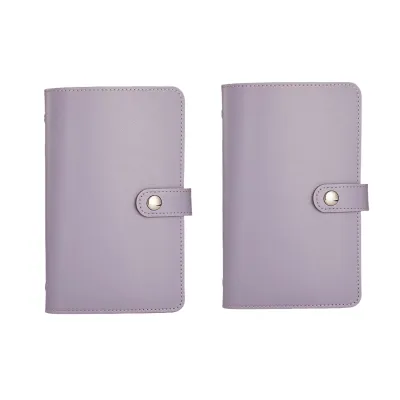
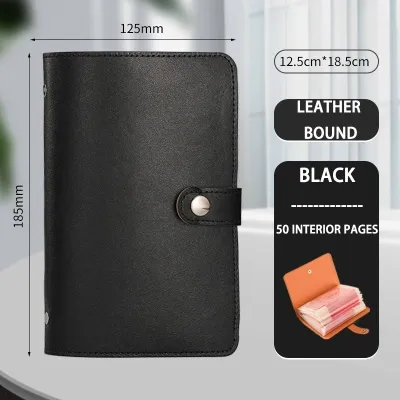
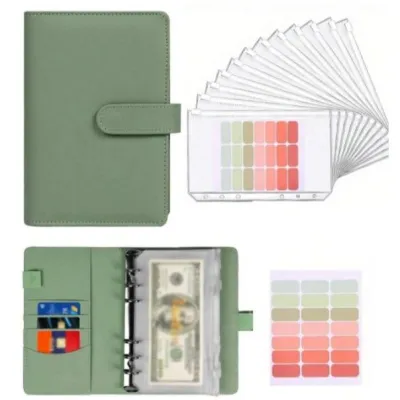
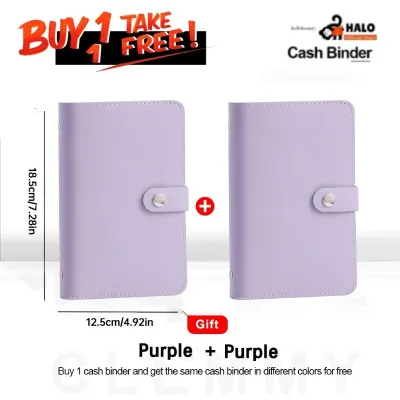

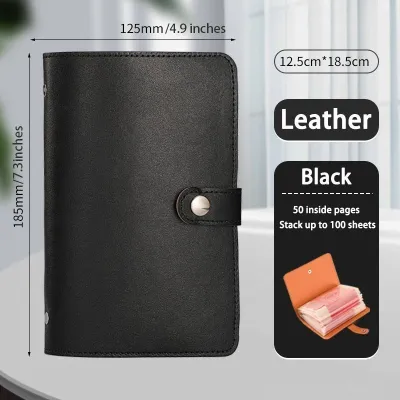
Prices are valid at publication and may change. Please refer to the product page for the latest price.
However, ring binders have a fixed capacity determined by the ring diameter. If you exceed this limit, the rings may fail to close completely, leaving a gap that can snag and tear your envelopes. Additionally, adding a new envelope to the middle of your binder requires you to open the rings and unthread all the preceding pages, which can be tedious if you frequently adjust your sinking funds.
When preparing custom inserts for a ring binder, standard multi-hole punches are typically used. However, punching through rigid PVC or thick plastic sleeves puts significant stress on standard paper punches. You must check the punch blades regularly to ensure they are making clean, sharp cuts; dull blades can leave ragged edges that tear easily under the tension of opening and closing the metal rings.
How Disc Binders Handle Cash Envelopes and Receipts
Disc-bound systems offer a highly customizable alternative that has gained popularity among home organizers. Instead of a central metal spine, this system uses individual plastic or metal discs with raised rims to hold pages in place. To attach an envelope, the binding edge must be punched with a specialized mushroom-shaped hole. This unique shape allows the plastic or laminated sleeve to grip the rim of each disc securely while remaining easy to pull free when needed.

The standout benefit of a disc binder is the ease of rearrangement. You can pull a cash envelope out of your “Groceries” section and snap it directly into “Utilities” without disturbing any other pages. This modular design is incredibly convenient for dynamic budgeters who constantly update their savings challenges or need to remove a single receipt sleeve to update an expense tracker on their desk.
Despite this flexibility, disc binders carry a higher risk of page loss. Because there is no locking clasp or continuous loop securing the spine, overstuffed envelopes or sudden impacts can cause the mushroom-cut holes to slip off the discs. If you drop a heavily loaded disc binder on a hard floor, the weight of the cash and plastic sleeves can cause multiple pages to pop out simultaneously, scattering your contents.
Furthermore, you must carefully match your disc diameter to the combined thickness of your inserts. Plastic cash envelopes do not compress the way standard paper does; they retain their bulk and can expand significantly when filled with paper bills and coins. If the discs are too small, the envelopes will not turn smoothly, putting excessive friction on the delicate mushroom-shaped cuts and causing them to wear out prematurely.
Key Dimensions for Comparing Cash Binder Mechanisms
To choose the right system, you must evaluate how each mechanism performs across several practical categories. The table below outlines the core differences to help you match a binder to your specific cash management style.
| Feature | Ring Binders | Disc Binders |
|---|---|---|
| Binding Security | High; closed metal loops prevent accidental page loss. | Moderate; pages can pop off under heavy loads or impact. |
| Page Addition Ease | Low; requires opening rings and unthreading pages. | High; pages snap directly onto discs at any position. |
| Capacity Estimation | Fixed by ring size; overstuffing prevents closing. | Expandable by swapping to larger disc diameters. |
| Plastic Sleeve Wear | Concentrated at circular holes; prone to pulling. | High wear at mushroom stems; requires reinforcement. |
| Customization Limits | Restricted to fixed ring spacing and standard sizes. | Highly customizable; mix-and-match disc sizes and covers. |
Estimating the true capacity of your cash binder requires measuring the thickness of your empty envelopes first. A standard plastic envelope can be up to five times thicker than a sheet of paper. When you add paper currency, the middle of the binder swells significantly. Always leave at least a five-millimeter clearance gap along the spine to allow the envelopes to rotate freely without binding or warping.
The tool requirements for these two systems also differ greatly. Standard multi-hole punches for ring binders are widely available and easy to use, requiring minimal physical effort. In contrast, heavy-duty mushroom punches for disc systems require more force to cut through thick plastic or laminated sheets. There is a steeper learning curve to aligning the punch correctly, and a poor cut can ruin an expensive custom envelope.
Maintaining your binder is essential for long-term durability. For ring binders, regularly inspect the alignment of the rings; if they do not meet perfectly, they will snag your envelopes. For disc binders, check the discs for warping, cracks, or rough edges that could damage the plastic slits, and verify that the outer cover provides enough structural support to keep the discs aligned.
Decision Framework: Choosing Your Cash Binder
To make your final decision, consider how and where you plan to use your cash binder. Your daily routine and the physical environment will dictate which mechanism serves you best.
Choose Ring Binders if:
- You carry your budget planner daily in a tote bag or backpack, exposing it to the bumps of a daily commute.
- You prioritize maximum security to ensure your cash envelopes never accidentally detach.
- You prefer using widely available, standard pre-punched envelopes and office hole punches.
Choose Disc Binders if:
- You keep your binder mostly stationary on a home desk or inside a secure drawer.
- You frequently rearrange your budget categories, add new savings challenges, or remove receipt sleeves for weekly tracking.
- You enjoy customizing your planner's aesthetic by swapping out disc sizes, colors, and covers.
Verify First: Before purchasing any binder, check the specifications of your preferred cash envelopes. Many pre-made PVC envelopes sold on online marketplaces come pre-punched with standard six-hole configurations. If you do not want to punch holes yourself, this pre-punched layout strictly dictates which binder type you must buy.
Neither May Fit if: If your primary goal is the long-term preservation of thermal paper receipts, neither open-spine system is ideal. High humidity and ambient light in tropical climates like the Philippines accelerate the fading of thermal ink. Both ring and disc binders expose the edges of your pages to light, friction, and moisture. For archival receipt storage, a sealed, light-proof box or a digital scanning routine is a much safer choice.
Frequently Asked Questions (FAQ)
Can I use standard paper hole punches for disc-bound cash envelopes?
No, standard circular paper hole punches cannot be used to prepare envelopes for a disc-bound system. Disc binders require a highly specific mushroom-shaped punch that cuts a circular hole with a narrow slit extending to the edge of the page. Without this precise slit, the envelope cannot snap onto or grip the raised rim of the disc. If you attempt to use a standard punch, you will end up with isolated holes that cannot attach to the binder. Always check the manufacturer’s specifications for specialized disc punches, and verify that the punch blades are rated to cut through thick PVC, laminated cardstock, or synthetic plastics without jamming.
How do I prevent plastic cash envelopes from tearing at the holes?
To extend the lifespan of your cash stuffing inserts, you can reinforce the binding edges before they begin to wear. Applying a strip of clear, heavy-duty packing tape along the edge before punching provides an extra layer of structural support. Alternatively, you can use specialized adhesive reinforcing rings around each punched hole to distribute physical tension more evenly. It is also crucial to avoid overstuffing individual envelopes with too many bills or heavy coins. Excessive bulk increases the pulling force on the binding holes every time you turn a page, which quickly leads to stretching, warping, and tearing at the stress points.
Community discussion
Share your experience or ask a question. Comments are reviewed before publication.