
Selecting the ideal notebook for campus life in the Philippines requires balancing writing comfort, paper quality, and physical durability. Filipino students face unique environmental and logistical challenges daily. High relative humidity can soften paper fibers, making standard sheets prone to ink feathering, while sudden tropical downpours demand protective covers that shield your hard work. Furthermore, navigating crowded commutes in jeepneys and working on cramped lecture hall armrest desks means your stationery must be highly portable and structurally resilient. Finding a notebook that accommodates your preferred writing tools—whether you rely on quick-drying gel pens, classic ballpoints, or highlighters—is essential for maintaining neat, legible notes throughout the semester.
Core Features to Evaluate When Choosing a Campus Notebook
To find a notebook that can withstand the rigors of a busy semester, you must look closely at its physical specifications. The first and most critical factor is paper weight, measured in grams per square meter (GSM). Standard school notebooks often feature paper ranging from 50 to 60 GSM, which is highly susceptible to bleed-through and ghosting when used with liquid inks. For campus use, especially if you prefer gel pens or highlighters, look for paper with a weight of 80 GSM or higher. This thickness provides a dense fiber structure that resists ink penetration, allowing you to write on both sides of the page without distracting shadows.
The texture of the paper, often referred to as its tooth, also plays a significant role in your writing experience. Very smooth, coated paper allows gel pens and fountain pens to glide effortlessly, reducing hand fatigue during fast-paced lectures. However, this smoothness can slightly increase ink drying times, which may lead to smudging if you write quickly. Conversely, paper with a slight texture or tooth provides excellent feedback for ballpoint pens and pencils, giving you more control over your strokes.
Products mentioned in this guide
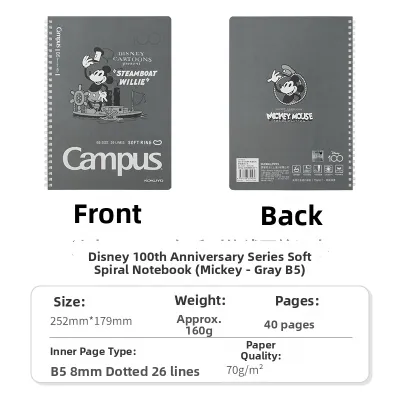
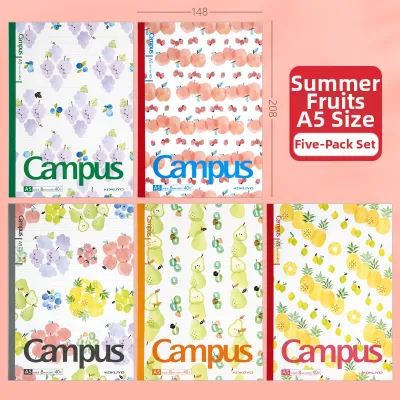
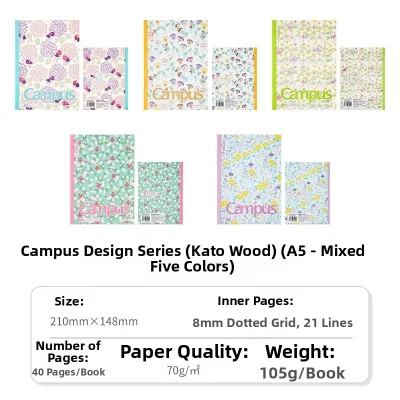
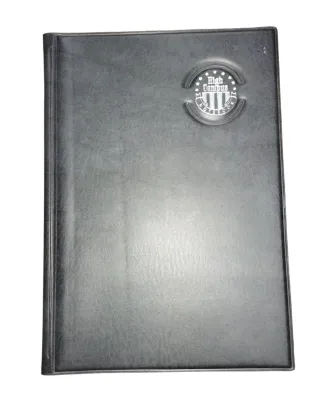
Prices are valid at publication and may change. Please refer to the product page for the latest price.
Binding is another crucial element that dictates how you interact with your notebook daily. Spiral or wire-O binding is highly popular among college students because it allows the notebook to fold completely back on itself, saving precious space on tiny classroom desks. However, metal or plastic coils can get crushed in a packed bag and may interfere with your hand when writing near the margin. Thread-bound or stitched notebooks offer a premium feel and lay completely flat when opened, providing a seamless writing surface across two pages. While they cannot fold in half, they are highly durable and do not snag on other items in your backpack. Glued or perfect-bound notebooks are compact and affordable, but they often require you to hold the pages down constantly, and the spine can crack over time with heavy use.
Finally, consider the page ruling that best aligns with your academic discipline. Horizontal ruled lines, typically spaced at 6mm (college ruled) or 8mm (medium ruled), are the standard choice for text-heavy subjects like history, literature, and social sciences. Grid or graph paper is indispensable for mathematics, engineering, and physics, as it simplifies the alignment of numbers, equations, and coordinate axes. Dotted paper has gained immense popularity because it offers the structure of a grid without the visual clutter, making it highly versatile for both writing and sketching. Blank pages provide absolute creative freedom, making them ideal for art, design, or organic mind-mapping.
Matching Notebook Types to Your Study Scenarios
Your academic schedule is rarely uniform, often consisting of a mix of formal lectures, collaborative group projects, and independent study sessions. Using a single type of notebook for every task can lead to disorganized notes and unnecessary physical strain. By mapping specific notebook formats to your daily campus activities, you can build a highly efficient stationery system that supports your workflow.

Selecting the right notebook involves analyzing the environment where you will use it and the speed at which you need to record information. For instance, a notebook designed for quick, messy drafting during a brainstorming session requires different features than a structured planner used to track semester-long deadlines. Prioritizing specific features for each scenario ensures that your tools work with you, rather than against you, throughout the school year.
Notebooks for Heavy Lecture Note-Taking
During long, back-to-back lectures, your primary need is a notebook that facilitates fast, uninterrupted writing. When an instructor is moving quickly through slides, you cannot afford to struggle with a notebook that keeps flipping shut or paper that causes your pen to skip. For these intense writing sessions, prioritize notebooks with lay-flat bindings, such as thread-bound or high-quality spiral designs, which allow you to focus entirely on the lecture.
The physical weight of your notebooks is also a major consideration when walking across a large campus. Carrying multiple thick, hardbound notebooks can quickly strain your back. Instead, consider using slim, single-subject notebooks with flexible cardstock covers. These lightweight formats, often containing 40 to 80 pages, allow you to carry only what you need for that specific day’s classes.
Paper smoothness is paramount for lecture notes. Look for paper that has been calendered—a manufacturing process that presses the paper fibers between rollers to create a highly polished, uniform surface. This smoothness ensures that fine-tipped gel pens and ballpoints glide without resistance, preventing hand cramps and allowing you to keep up with rapid dictation. Additionally, choosing a notebook with a subtle margin line can help you separate main concepts from quick side notes or dates.
Notebooks for Group Projects and Drafting
Collaborative coursework and project planning require a highly flexible notebook format that encourages visual thinking. When brainstorming with classmates, you often need to sketch out user interfaces, map out project timelines, or draw quick flowcharts. For these tasks, standard ruled lines can feel restrictive and counterproductive.
Dotted or grid pages are the ideal choice for drafting and group work. The subtle dots or lines provide just enough guidance to help you draw clean diagrams, boxes, and arrows without dominating the page. This layout allows you to combine text, sketches, and diagrams on a single sheet, making your brainstorming sessions much more visual and easier for your group members to understand.
Another essential feature for collaborative work is perforated pages. When working in a team, you frequently need to share ideas, hand over a sketch to a classmate, or submit a physical draft to your professor. Notebooks with clean, micro-perforated edges allow you to tear out pages effortlessly without leaving messy, frayed paper scraps behind. This keeps both your notebook and your shared documents looking professional and organized.
Notebooks for Daily Planning and Task Tracking
Managing a university workload requires excellent time management, making a dedicated planning notebook a vital tool for campus survival. Between exam dates, assignment deadlines, organization meetings, and personal errands, a reliable tracking system keeps you from feeling overwhelmed.
When choosing a planning notebook, decide whether you prefer a structured or a flexible layout. Pre-printed academic planners offer dedicated sections for daily, weekly, and monthly schedules, which is highly convenient if you want a ready-to-use system. However, if your schedule varies wildly from week to week, a blank dotted notebook allows you to create a customized bullet journal. This flexible setup lets you expand your task lists during busy exam weeks and scale them back during lighter periods.
Look for practical physical features that enhance daily usability. An elastic band closure keeps the notebook securely shut inside your bag, preventing pages from getting bent or torn. Built-in paper or plastic pockets are excellent for holding loose campus documents, such as syllabus sheets or registration forms. Additionally, ribbon bookmarks allow you to flip instantly to your current weekly spread or daily task list without wasting time.
Verifying Pen and Paper Compatibility Before You Buy
Because paper manufacturing processes and ink formulations vary widely, the only way to guarantee a flawless writing experience is to verify compatibility yourself. Even high-quality paper can react poorly to certain ink types, resulting in frustrating issues like feathering, ghosting, or slow drying times. Understanding how to perform a simple compatibility test can save you from purchasing a bulk set of notebooks that do not work with your favorite pens.
When you acquire a new notebook, establish a habit of dedicating the very last page to a comprehensive pen test. Write a few lines using every pen, pencil, and highlighter you plan to use during the semester. Be sure to write at your normal speed and pressure, and include a small block of solid ink to test how the paper handles heavy saturation.
Observe the test page closely for three distinct characteristics: drying speed, feathering, and ghosting. To test drying speed, run your finger across the ink immediately after writing; in the humid climate of the Philippines, ink can dry more slowly, and a paper that resists absorption too much might cause frequent smudging. Next, look at the edges of your written words under good lighting. If the ink has spread outward into tiny, fuzzy branches, the paper fibers are too loose and absorbent, which is a sign of feathering. Finally, turn the page over to check for ghosting and bleed-through. Ghosting occurs when you can see the outline of your writing through the paper, which can make reading the reverse side difficult. Bleed-through occurs when the ink actually penetrates the paper fibers and appears as wet spots on the back, rendering that side unusable.
Additionally, pay close attention to manufacturer labels and product descriptions. Many stationery brands include specific compatibility claims on their packaging, such as “fountain pen friendly” or “bleed-resistant.” While these labels are helpful indicators, they should always be verified with your own writing tools, as different gel pen brands and ink flow rates can still produce varying results on the same paper.
Inspecting Quality When Shopping Online or In-Store
Whether you prefer the tactile experience of shopping in a physical bookstore or the convenience of browsing online marketplaces, knowing how to inspect notebook quality is essential for making a smart purchase. Each shopping channel requires a different set of evaluation techniques to ensure you get a durable product.
When shopping in a physical stationery store, take full advantage of the opportunity to handle the notebooks. Start by inspecting the binding integrity. Gently open the notebook to the center and check if the pages are securely stitched or glued; there should be no loose threads, gaps, or excess glue spilling onto the pages. For spiral notebooks, run your finger along the wire coils to ensure they are perfectly round and aligned, as bent coils will prevent the pages from turning smoothly. Check the page alignment by looking at the edges of the closed notebook; the pages should be cut perfectly flush with one another. Finally, assess the stiffness of the cover. A sturdy cover should feel rigid enough to protect the inner pages from getting bent when shoved into a crowded backpack.
When shopping online, you must rely on product specifications and customer feedback. Begin by checking the exact paper weight, which should be clearly stated in GSM; avoid listings that omit this rating, as it often indicates thin paper. Verify the dimensions carefully, comparing standard sizes like B5 or A4 to a physical ruler to ensure the notebook fits your bag and desk space. Read the page count to confirm you are getting enough sheets to last the entire semester. Lastly, read customer reviews and look for real-world photos uploaded by other students, paying close attention to comments regarding how well the paper handles gel pens and how the binding holds up after weeks of use.
Frequently Asked Questions (FAQ)
How to Prevent Pages From Tearing in Spiral Notebooks
To extend the life of your spiral notebooks, always use two hands when turning the pages. Lifting the page from the center, close to the spiral binding, distributes the tension evenly along the paper perforations and prevents the holes from tearing. Pulling a page quickly from the outer corner puts immense stress on a single point, which quickly leads to ripped pages.
When packing your backpack, store your spiral notebooks vertically with the spiral coils facing upward or toward the side. Placing them with the coils facing downward subjects the wire to the full weight of your books, which can bend the metal and cause the pages to catch and tear. Additionally, avoid stuffing loose handouts or thick folders inside the spiral coils, as this stretches the wire loops out of shape.
Choosing Between A4 and B5 Sizes for University Classes
The choice between A4 and B5 sizes depends largely on your academic major and the physical environment of your classrooms. A4 notebooks provide a large, expansive writing surface that is ideal for complex subjects requiring long mathematical equations, detailed diagrams, or wide data tables. However, their large footprint can make them difficult to use on small lecture hall armrest desks, and they require a larger backpack to carry comfortably.
B5 notebooks offer an excellent middle ground for most university students. They are slightly smaller than A4 but offer significantly more writing space than a standard A5 notebook. This size fits comfortably on cramped classroom desks, slides easily into most standard backpacks without bending, and provides ample room for structured lecture notes. For general humanities, languages, and note-taking, B5 is typically the more practical and portable choice.
Community discussion
Share your experience or ask a question. Comments are reviewed before publication.