
Quick Verdict: Which Brand Should You Choose?
The choice between a Sharp scientific calculator and a CASIO scientific calculator depends on your specific school curriculum, your comfort with their distinct button layouts, and your budget. Neither brand is universally superior; instead, they serve different user preferences and academic pathways.
CASIO is highly visible in classrooms and is frequently the default brand referenced in local textbooks and teacher demonstrations. This widespread adoption makes it a highly convenient choice if you want to follow along with step-by-step classroom instructions without translating key sequences.
Sharp offers a compelling alternative, often favored by users who prefer its direct algebraic entry system and ergonomic key spacing. Many students find that Sharp models provide excellent value, offering advanced mathematical functions at highly competitive price points.
Products mentioned in this guide
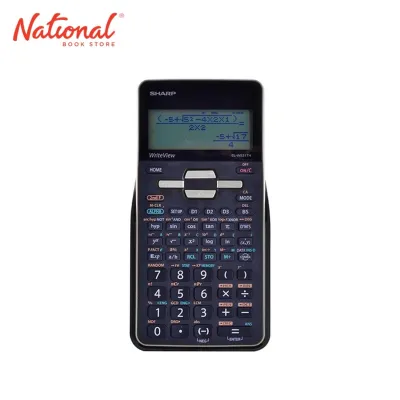
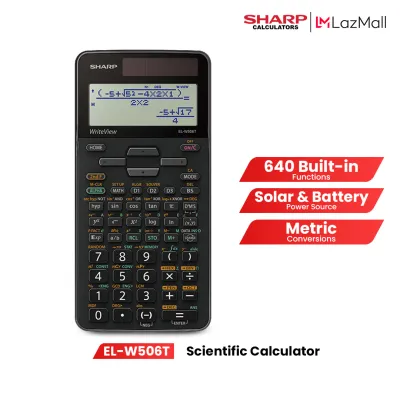
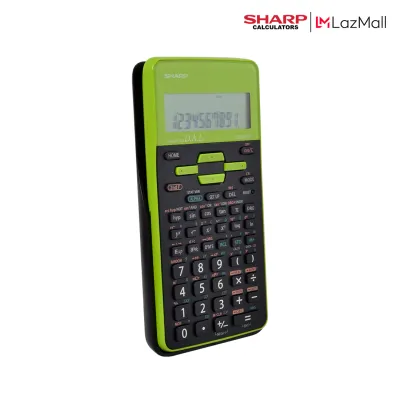
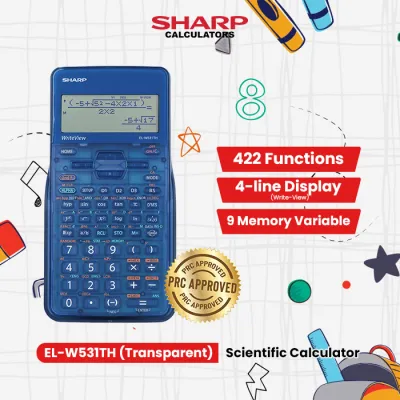
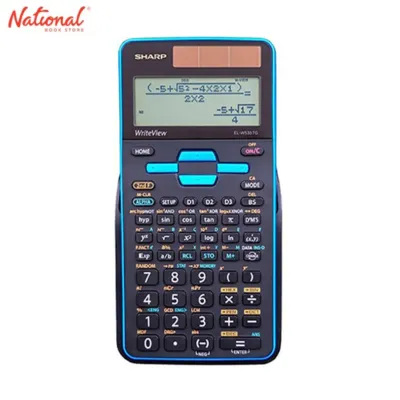
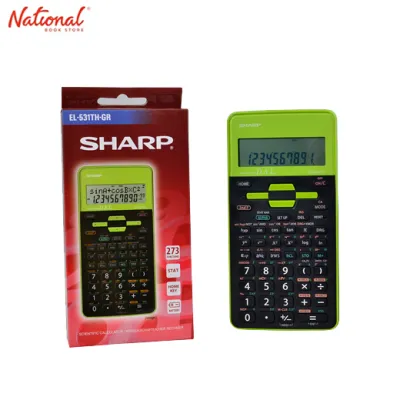
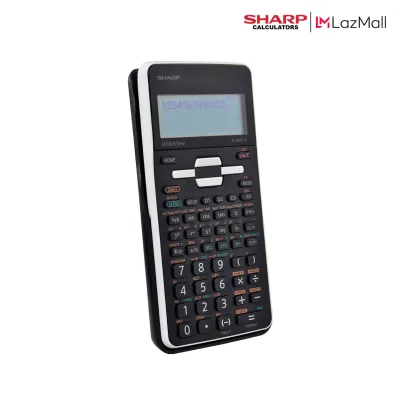
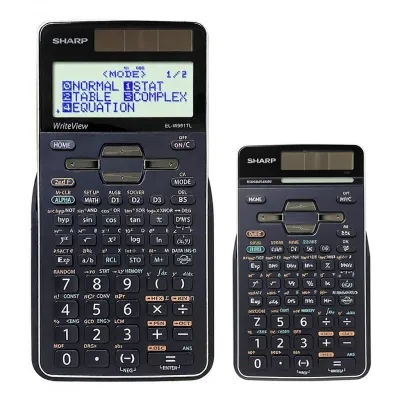
Prices are valid at publication and may change. Please refer to the product page for the latest price.
Before committing to either brand, your absolute first step must be to consult your school’s student handbook or your examination board’s official guidelines. In the Philippines, specific national exams maintain strict lists of approved calculator models, making compliance your most critical purchasing factor.
Comparing Key Features: What to Check Before Buying
When evaluating a scientific calculator, looking at the brand name alone is not enough to guarantee it will meet your academic needs. You must assess how the physical design and internal programming of a specific model align with your daily coursework.

To make an informed comparison, you should focus on three primary dimensions: the functionality and physical key layout, the display quality and overall build, and the pricing relative to long-term value.
Because both manufacturers produce dozens of models ranging from basic fraction calculators to advanced graphing tools, always cross-reference the exact model number with the official manufacturer specification sheet before purchasing.
Functionality and Key Layout
The arrangement of buttons on your calculator directly influences your calculation speed and accuracy, especially during timed exams. Sharp and CASIO design their keypads differently, particularly regarding the placement of secondary functions accessed via the shift or secondary function keys.
When examining a calculator in-store, pay close attention to the physical feedback of the keys. High-quality buttons should depress smoothly without sticking and register your inputs reliably even during rapid typing.
Check the product packaging or user manual to verify that the model includes essential functions required for your specific math and science classes. Look for dedicated modes for equation solving, matrix and vector calculations, and advanced statistical analysis like regression.
Menu navigation is another area where the two brands diverge significantly. Some models utilize icon-based menus that are highly intuitive for beginners, while others rely on text-based lists that may require fewer keystrokes once you memorize the navigation paths.
Display Quality and Build
A clear, highly readable screen is vital for preventing errors when transcribing complex formulas. Look for models that feature natural textbook display technology, which renders fractions, square roots, and exponents exactly as they are written in your textbooks.
The physical environment in the Philippines, characterized by high humidity and tropical temperatures, can place extra stress on electronic components. Ensure the calculator comes with a sturdy, slide-on hard cover to protect the liquid crystal display (LCD) and key labels from scratches and moisture when stored in your school bag.
Examine the product label to identify the power source of the calculator. Dual-power models that combine solar panels with a backup battery are highly recommended, as they ensure the device remains operational even in dimly lit classrooms or during late-night study sessions.
Finally, verify the screen’s resolution and digit capacity. A higher-resolution screen allows for smoother font rendering and prevents multi-step equations from being truncated or split into confusing segments on the display.
Pricing and Long-Term Value
To determine which brand offers better value, you must compare models that occupy the same functional tier. Comparing an entry-level model from one brand to an advanced engineering model from the other will lead to an inaccurate assessment of cost-effectiveness.
Take the time to compare retail prices in ₱ across authorized local stationery shops and official online storefronts. You will often find that while both brands offer competitive options, one may provide specific advanced features, like matrix calculations, at a slightly lower price point in your local market.
Do not overlook long-term operational costs when calculating the total value of your purchase. Consider how easy it is to access the battery compartment for replacements and whether the model uses standard, widely available battery sizes.
Additionally, research the availability of local customer support and warranty services. A slightly cheaper calculator that lacks local warranty backing can end up costing you more if the device malfunctions during the school year and requires a complete replacement.
Matching the Calculator to Your Academic Level
Your current educational stage is the most practical guide for determining how much calculating power you actually need. Purchasing an overly complex model can overwhelm you with unnecessary menus, while a model that is too basic will fail to support your advanced coursework.
For junior high school students, coursework typically centers on basic algebra, geometry, and introductory statistics. At this stage, a standard scientific calculator that handles fractions, basic trigonometric functions, and single-variable statistics is perfectly adequate and highly user-friendly.
As you transition into senior high school and college, especially within Science, Technology, Engineering, and Mathematics (STEM) tracks, your mathematical demands will increase dramatically. You will require a calculator capable of performing integration, differentiation, complex number calculations, and matrix operations.
For college students in the Philippines pursuing professional degrees such as engineering, accountancy, or architecture, exam compliance is paramount. The Professional Regulation Commission (PRC) maintains a strict list of allowed calculator models for licensure examinations to prevent academic dishonesty.
Before buying a high-end calculator, always cross-reference the model number with the latest official PRC guidelines. Choosing a model that is permitted for both your university exams and your future board exams ensures you can use the same familiar tool throughout your entire academic and professional transition.
Verifying Authenticity and Warranty Before Purchase
Due to the high demand for scientific calculators among students, counterfeit devices are a common issue in the retail market. Using a counterfeit calculator is risky, as these devices often suffer from inaccurate calculation algorithms, poor battery life, and sudden screen failures.
When inspecting a calculator, look closely at the physical branding and print quality on the casing. Counterfeit models often feature slightly misspelled brand names, misaligned key labels, or flimsy plastic casings that creak when light pressure is applied.
To protect yourself from buying a fake device, purchase your calculator only from authorized stationery retailers, official brand stores on reputable e-commerce platforms, or established physical bookstores. Avoid buying from unauthorized third-party sellers who offer prices that seem too good to be true.
Always check the packaging for an official distributor sticker or a local warranty card. Keep your physical purchase receipt or save a digital copy of your online transaction, as authorized service centers will require proof of purchase to honor warranty claims.
Final Decision Framework
To finalize your decision, use this structured framework to match your specific academic situation with the strengths of each brand.
- Choose CASIO if:
- Your teachers and textbooks primarily use CASIO models for classroom demonstrations, and you prefer to follow their keystrokes exactly.
- You are preparing for standardized national exams or PRC board exams that explicitly list specific CASIO models as approved devices.
- You prefer an icon-based menu system that simplifies navigation through various mathematical modes.
- Choose Sharp if:
- You prefer a direct algebraic entry system and find the physical key spacing and tactile feedback of Sharp models more comfortable for rapid typing.
- You are looking for an advanced set of mathematical functions, such as equation solvers or matrix calculations, at a highly competitive price point in ₱.
- Your school curriculum does not mandate a specific brand, allowing you to choose an alternative ergonomic design.
- Verify first if:
- Your specific college department or course syllabus has a strict policy regarding programmable calculators or specific model numbers.
- You plan to use the calculator in high-humidity environments, requiring you to verify the presence of a robust protective cover and dual-power capabilities.
Community discussion
Share your experience or ask a question. Comments are reviewed before publication.