
Choosing the right permanent marker often comes down to a single detail: the tip size. Selecting between a Sharpie fine point and an ultra fine point marker depends entirely on your specific task, the writing surface, and how much detail you need to capture. While both markers utilize the same iconic permanent ink formula, their physical designs serve completely different purposes.
To get the best results, choose the fine point marker for bold, highly visible labeling, standard writing, and marking large surfaces. Choose the ultra fine point marker when you need extreme precision, detailed drawing, or writing in tight spaces like small labels, planner grids, or index cards. The main trade-off is between high visibility from a distance and intricate detail that does not bleed into adjacent lines.
Quick Answer: Which Sharpie Tip Size Do You Need?
If you are looking for a quick decision, your choice should depend on the scale of your writing surface and how far away your audience will be. The fine point marker is the industry standard for general labeling, shipping boxes, plastic storage bins, and bold outlines. It produces a thicker, highly visible line that can be easily read from across a room.
Products mentioned in this guide
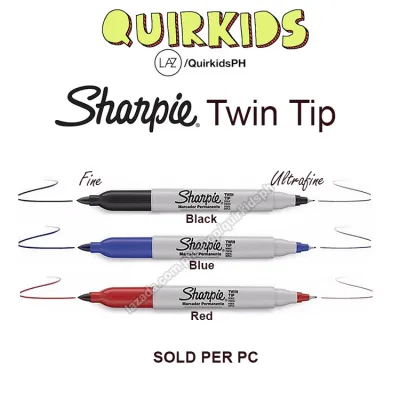
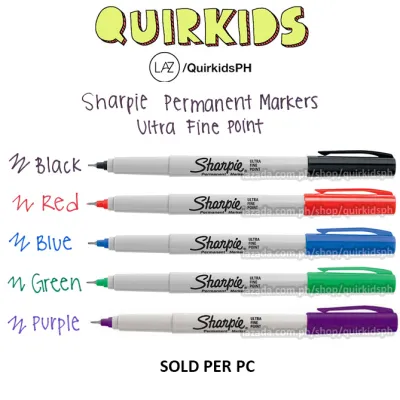
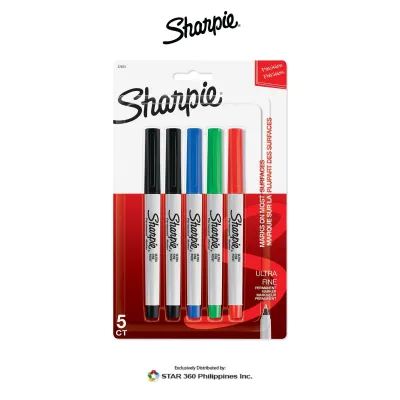
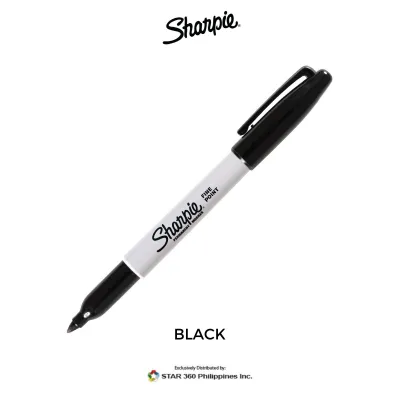
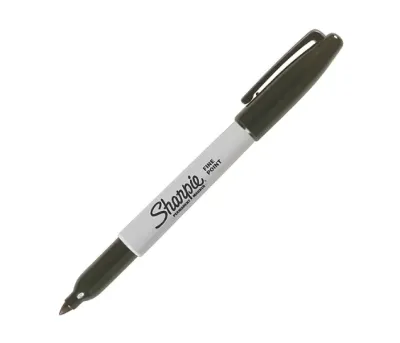
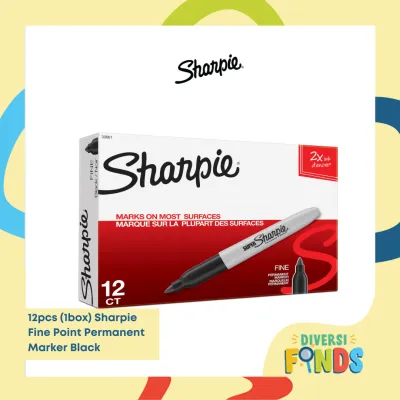
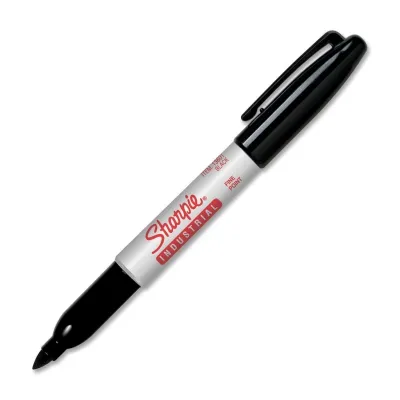
Prices are valid at publication and may change. Please refer to the product page for the latest price.
Conversely, the ultra fine point marker is designed for high precision and small-space writing. It behaves much like a precise plastic-point pen, making it the ideal tool for detailed notes, labeling small items, and drawing fine lines.
The primary trade-off is boldness versus detail. A fine point marker will quickly fill small spaces with ink, making tiny text illegible. An ultra fine point marker provides the control needed for intricate work, but its thin lines will disappear when viewed from a distance.
Understanding the Core Differences: Fine Point vs Ultra Fine Point
To understand why these two markers perform so differently, it helps to look at their physical construction. The fine point marker features a rounded, bullet-shaped felt tip. This tip is relatively thick and sturdy, designed to withstand moderate writing pressure without fraying or collapsing. It delivers a generous flow of ink, resulting in a line width that is distinct, dark, and highly saturated.

The ultra fine point marker utilizes a much narrower, needle-like tip. This tip is often housed in a metal or plastic collar to provide structural support, preventing the delicate felt fibers from bending during use. Because the point of contact is so small, it produces a remarkably thin line that allows for clean, crisp lettering even in the tightest spaces.
These structural differences directly influence ink flow and paper saturation. The fine point tip acts like a wide conduit, transferring a larger volume of alcohol-based ink to the surface. On standard porous paper, this high volume of ink can cause the lines to spread outward. The ultra fine point tip restricts ink flow to a minimum, which naturally limits spreading and helps maintain line definition on absorbent materials.
Key Factors to Consider Before Choosing a Marker Tip
Before reaching for a marker, take a moment to evaluate the specific variables of your project. The interaction between the marker tip and your writing surface will determine the quality of your final mark.
- Surface Texture and Porosity: Rough surfaces like corrugated cardboard, raw wood, or textured paper can quickly wear down or clog a delicate ultra fine tip. For these materials, the sturdy fine point is highly recommended. However, if you are writing on highly porous paper, a fine point may release too much ink, causing it to bleed through to the next page. The ultra fine point is much gentler on thin paper, minimizing bleed-through.
- Readability vs. Detail: Consider where your finished project will be displayed. If you are labeling storage boxes in a humid pantry or organizing school supplies, you need bold text that is readable at a glance. The fine point excels here. If you are writing detailed formulas in a compact notebook or labeling tiny electronic components, precision is paramount, making the ultra fine point the superior choice.
- Handwriting Size and Pen Pressure: Your natural writing style plays a significant role in marker performance. If you have large, expressive handwriting, a fine point marker will feel natural and look balanced. If your handwriting is small and compact, a fine point will cause the loops in letters like "e," "a," and "o" to fill with ink and become illegible. Heavy-handed writers should also lean toward the fine point, as excessive pressure can damage the delicate tip of an ultra fine marker.
- Environmental Conditions: In warm, humid tropical climates, ink drying times can vary. High humidity can slightly delay the drying process on non-porous surfaces like plastic or metal. Because the fine point deposits a thicker layer of ink, it may remain wet and prone to smudging longer than the thin, quick-drying line of an ultra fine point.
Best Use Cases for Each Sharpie Tip Size
Matching the correct tip size to your specific task ensures a clean, professional result and prevents frustration.
Fine Point Marker Applications
- Standard Box Labeling: Perfect for marking cardboard shipping boxes, plastic storage tubs, and moving containers where high visibility is required.
- Kitchen and Pantry Organization: Ideal for labeling glass jars, plastic food containers, and freezer bags. The bold line remains readable even through condensation and frost.
- School and Office Projects: Great for creating posters, bold headings on presentation boards, and color-coding hanging file folders.
- Industrial and Outdoor Marking: Highly suitable for marking tools, sports equipment, and outdoor gear where a thick, durable line is necessary to withstand wear.
Ultra Fine Point Marker Applications
- Planner and Calendar Organization: Excellent for writing daily tasks in compact personal planners, bullet journals, and pocket calendars.
- Small-Scale Labeling: Perfect for marking small items such as keys, charging cables, plant tags, and school supply labels.
- Technical Drawing and Sketching: Widely used by artists and designers for intricate detailing, fine outlines, and cross-hatching.
- Filling Out Forms: Ideal for writing in restricted text boxes, signing small documents, or adding precise margin notes.
When to Consider Alternative Tools
While both tip sizes are incredibly versatile, they are not universal solutions. For extremely large signs, poster boards, or filling in massive areas, a chisel tip or broad-tip poster marker is far more efficient. Conversely, if you are working on delicate archival scrapbooks or thin Bible pages where absolutely zero bleed-through is required, water-based pigment liners or specialized acid-free pens are a safer choice than alcohol-based permanent markers.
How to Verify Marker Compatibility with Your Paper and Surface
Because smoothness, bleed resistance, and drying speed depend entirely on the exact combination of ink and material, you should always verify compatibility before starting a major project.
First, conduct a quick spot test on an inconspicuous area of your material or on a scrap piece of the same paper. Write a simple line or dot and observe how the ink behaves. Watch for feathering, which is when the ink spreads outward along the paper fibers, and check the reverse side of the paper to see if the ink has bled through.
Next, check the manufacturer packaging for any specific surface warnings. While permanent markers are designed to adhere to most surfaces, some highly glossy plastics, coated papers, or silicone-treated materials may resist the ink, causing it to bead up or smudge easily.
Finally, adjust your writing technique based on your test results. If you notice the ink is pooling or bleeding on your chosen paper, try increasing your writing speed and applying lighter pressure. A swift, light touch with an ultra fine point can dramatically reduce ink saturation and keep your lines crisp.
Final Decision Framework: Choose Fine or Ultra Fine?
To make your final selection, use this simple decision framework based on your primary task requirements.
Choose Fine Point if:
- Your writing needs to be easily readable from a distance of several feet.
- You are marking rough, textured, or highly durable surfaces like cardboard, wood, or thick plastic.
- You want bold, saturated lines for outlining, labeling, or creating signs.
- You are purchasing markers for general household utility and everyday labeling.
Choose Ultra Fine Point if:
- You are writing on thin paper, small labels, or within tight grid lines.
- You require high precision for detailed drawing, sketching, or small handwriting.
- You want to minimize ink bleed-through on standard notebook or planner paper.
- You are labeling small personal items, cables, or office supplies.
Verify first if:
- You are working with highly glossy, coated, or delicate materials. Always perform a quick spot test to ensure the ink adheres properly and dries without smudging, especially in humid environments.
Frequently Asked Questions (FAQ)
Can I use an ultra fine point Sharpie on glossy surfaces?
Yes, you can use an ultra fine point marker on glossy surfaces, but it requires extra care. Because non-porous materials like laminated sheets, glossy photo paper, and certain plastics do not absorb ink, the alcohol-based formula must dry entirely through evaporation. While the thin line of an ultra fine point dries relatively quickly, it is highly susceptible to smudging if touched too soon. Always check the marker packaging for specific surface recommendations and test a small, hidden area first to verify drying time and adhesion.
Does the ultra fine point tip dry out faster than the fine point?
Because the physical tip of an ultra fine marker has less surface area and holds a smaller reservoir of ink at the very point, it can feel like it dries out faster if left uncapped. High humidity environments can sometimes slow down ink evaporation slightly, but proper storage remains essential. To prolong the life of both marker types, always snap the cap on tightly immediately after use and store them horizontally. This keeps the ink evenly distributed throughout the barrel and prevents the tip from drying out prematurely.
Community discussion
Share your experience or ask a question. Comments are reviewed before publication.