
Finding the perfect shoe box storage system requires balancing visibility, accessibility, and space. The ideal choice depends on your collection’s size, how often you wear your shoes, and your home’s environment.
To make an immediate decision, you can use this conditional framework:
- Choose stackable designs if you need to maximize limited floor space by building high vertical columns and are working within a strict budget.
- Choose drop-front designs if you access your shoes daily and want to retrieve any pair instantly without unstacking or moving other containers.
- Choose clear designs if you treat your footwear as a visual display or need to identify specific pairs at a single glance.
It is important to clarify that “stackable” and “drop-front” refer to the structural access and stability of the containers, while “clear” refers to the transparency of the material. These features frequently overlap in premium products. The core trade-off of any shoe box storage setup lies in balancing vertical space efficiency, daily retrieval convenience, and visual inventory management.
Products mentioned in this guide
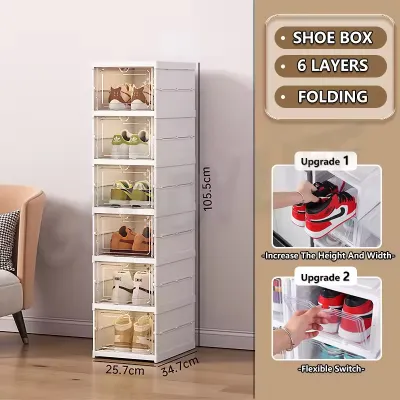
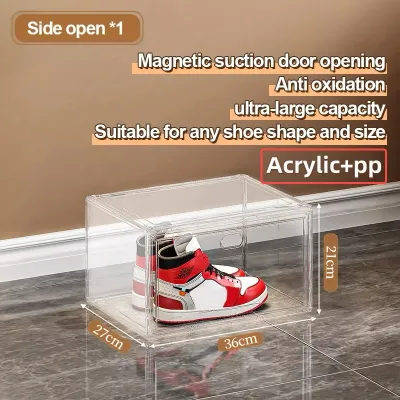
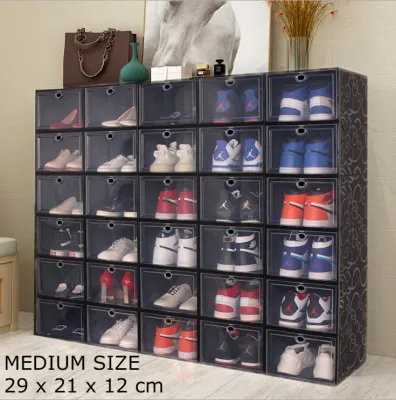
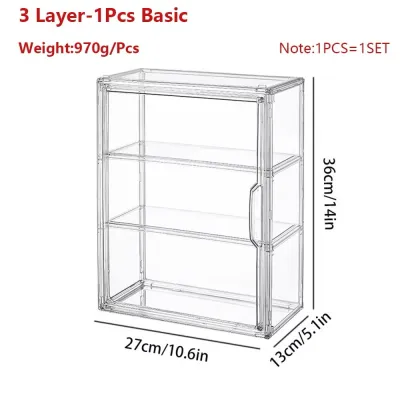
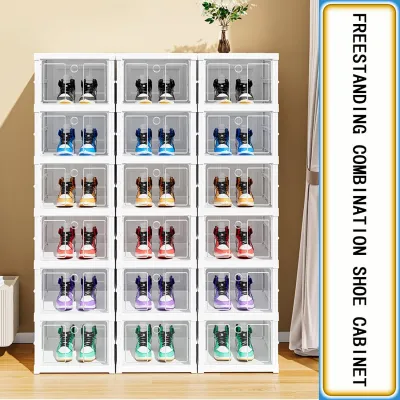
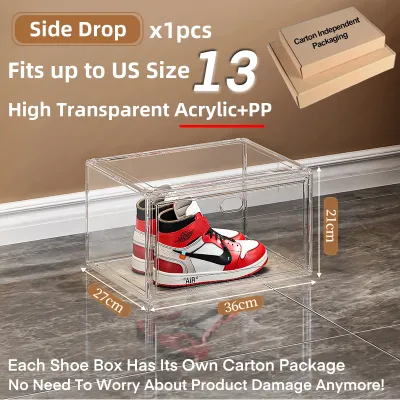
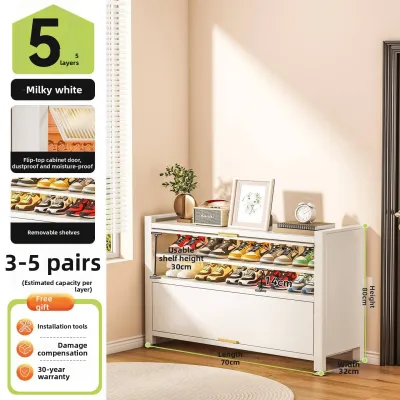
Prices are valid at publication and may change. Please refer to the product page for the latest price.
Understanding the Overlap: Structure vs. Material
When shopping for a shoe box storage system, it is easy to get confused by marketing terms that treat stackable, drop-front, and clear designs as entirely separate categories. In reality, these terms describe different physical dimensions of the same product. To find the right fit, you must evaluate how these structural and material choices intersect to meet your specific organizational goals.
To break down these options, consider the three primary axes of shoe container design:
- Access Method: This dictates how you reach your shoes. Top-opening boxes require you to remove the lid from the top, while front-opening (or side-opening) designs feature a swinging, sliding, or magnetic door on the side.
- Stacking Mechanism: This determines how securely the boxes sit on top of one another. Some boxes rely on simple flat-lidded friction, while others feature molded interlocking lips, grooves, or physical pegs that lock the units together.
- Material Composition: This governs visibility and durability. Options range from crystal-clear rigid acrylic and flexible transparent polypropylene to opaque plastics, cardboard, or fabric-covered frames.
Because these design axes intersect, a single premium container can easily incorporate all three features. For example, many high-end sneaker display cases are clear, stackable, and feature a drop-front magnetic door. Understanding this overlap prevents you from making unnecessary compromises. Instead of choosing between visibility and accessibility, you can look for products that combine these elements based on your budget and space.
Stackable Designs: Maximizing Vertical Space
Stackable shoe boxes are engineered to utilize vertical clearance, making them excellent solutions for small apartments, narrow closets, or high-density storage areas. By stacking containers safely from floor to ceiling, you minimize the footprint of your collection. These systems often feature reinforced frames and molded interlocking channels that prevent the columns from shifting or sliding.

The Advantages of Stackable Storage
Using dedicated stackable boxes provides exceptional stability compared to stacking standard cardboard shoe boxes, which degrade and collapse over time. They create a clean, uniform aesthetic that instantly makes a closet look organized. When utilizing interlocking features, these columns can remain stable even when stacked six to ten units high, depending on the manufacturer’s structural ratings.
The Drawbacks to Keep in Mind
The primary disadvantage of basic stackable boxes is their access method. If you choose top-opening stackable boxes, retrieving a pair near the bottom of the column requires you to lift off every single box resting above it. This physical effort often discourages people from wearing their lower-tier shoes. Additionally, if the boxes are not perfectly aligned, the entire column can become top-heavy and prone to tipping.
Ideal Use Cases
Stackable configurations are best suited for long-term storage, seasonal footwear rotations, or massive collections where most pairs are archived rather than worn daily. If you only need to access your winter boots or summer sandals a few times a year, a high stack of top-opening boxes is highly space-efficient.
Verification and Safety Guidelines
Before building a tall vertical stack, always verify the manufacturer’s maximum weight limit per tier. Inspect the depth of the interlocking lips; shallow grooves of less than two millimeters offer very little protection against accidental bumps. Always place your heaviest footwear, such as thick-soled work boots or heavy leather platforms, in the bottom two tiers to keep the center of gravity low and prevent dangerous tipping hazards.
Drop-Front Designs: Easy Access and Protection
Drop-front shoe boxes feature a front-facing door that swings downward, upward, or outward. This simple design change completely transforms how you interact with your footwear collection. By allowing frontal entry, these boxes eliminate the need to deconstruct your carefully built columns just to grab a single pair of shoes.
The Advantages of Front-Opening Doors
The ultimate benefit of a drop-front system is effortless, independent retrieval. You can pull out a pair of sneakers from the very bottom of a ten-box stack in seconds without disturbing the alignment of the boxes above. This accessibility reduces handling wear, preventing you from scraping or creasing delicate materials like suede, patent leather, or fine embellishments during retrieval.
The Drawbacks of Front-Opening Doors
These convenient designs require more physical clearance in front of the stack. You must ensure there is enough open floor or shelf space for the door to swing open fully and for your hands to reach inside comfortably. Additionally, the moving parts—such as plastic hinges, sliding tracks, or magnetic closures—are common failure points that can wear out or snap over time. Drop-front models also carry a higher price point per unit compared to basic utility boxes.
Ideal Use Cases
Drop-front boxes are the gold standard for your active shoe rotation, everyday sneakers, and premium collector footwear. If you change your shoes daily or want to display your most prized pairs while keeping them dust-free and ready to wear, front-access doors are well worth the investment.
Verification and Safety Guidelines
When shopping for drop-front boxes, closely inspect the hinge mechanisms and door alignments. Look for reinforced door frames, as the front opening removes a solid structural wall, making the box more susceptible to bowing under heavy loads. Measure your closet or shelf depth carefully, adding at least 15 to 20 centimeters of extra clearance in front of the box to accommodate the open door and your hands during retrieval.
Clear vs. Opaque: Visibility and Climate Protection
Choosing between clear and opaque materials is not just a matter of visual style. It also impacts how well your shoes are protected from environmental factors like sunlight, dust, and humidity. This choice is especially critical in tropical climates, where heat and moisture can degrade shoe adhesives and materials.
Clear Boxes: High Visibility and Visual Display
Clear boxes, typically made from polished acrylic or transparent polypropylene, allow you to see your entire collection instantly. This visual inventory saves time when dressing and turns your footwear into a striking design feature in your room. However, clear plastic acts like a greenhouse if placed in direct sunlight. UV rays can yellow white midsoles, fade vibrant canvas or leather dyes, and degrade synthetic materials over time.
Opaque Boxes: Maximum Protection and Uniformity
Opaque or solid-colored boxes offer total protection against UV damage, shielding delicate materials from light-induced aging. They also hide mismatched or cluttered shoe styles, creating a clean, minimalist visual plane in your closet. The obvious downside is the lack of visibility. To find a specific pair, you must either open multiple boxes or implement a labeling system, such as taping a photo of the shoes to the front of each container.
Climate Considerations in Humid Environments
In humid regions like the Philippines, moisture control is a critical factor for shoe preservation. Fully sealed, airtight plastic boxes trap ambient moisture inside. When temperatures fluctuate—such as when turning off home air conditioning—this trapped moisture condenses, creating a perfect breeding ground for mold, mildew, and dry rot. Opaque fabric boxes or cardboard alternatives offer better breathability but provide less protection against dust and pests.
Verification and Safety Guidelines
If you choose clear plastic boxes, check if the manufacturer specifies any UV-resistant coatings, especially if you plan to stack them near windows. For humid environments, prioritize boxes designed with built-in ventilation slots or adjustable rear vents to promote continuous airflow. Always plan to place a renewable silica gel pack or moisture-absorbing sachet inside each box, and inspect your collection periodically for any signs of dampness.
Matching Box Types to Your Shoe Collection
Not all shoes are shaped the same, and trying to force a diverse collection into a single “standard” box size can damage your footwear. High heels, tall boots, and wide-soled sneakers all have distinct structural requirements. To keep your collection in pristine condition, match your shoe types to the most compatible box designs and dimensions.
Use this comparison table to guide your selection:
| Shoe Type | Recommended Design Focus | Key Feature Priority | Actionable Sizing Tip |
|---|---|---|---|
| Everyday Sneakers | Drop-front, ventilated | Magnetic doors, rear airflow vents | Ensure the box length accommodates the heel flare of running shoes. |
| High Heels & Delicates | Clear, smooth interior | Scratch-free plastics, wide base | Store heels upright; check height clearance to avoid bending straps. |
| High-Tops & Boots | Tall, reinforced stackable | High vertical clearance, thick walls | Store boots flat or choose extra-tall boxes to prevent ankle collar creasing. |
| Seasonal & Archived | Opaque, interlocking stackable | Airtight seals (with desiccants), tight lips | Label the front clearly or use clear-window opaque boxes for quick ID. |
| Sandals & Flat Shoes | Slim, multi-pair stackable | Removable internal dividers | Use boxes with internal shelves to store two pairs of flats in one unit. |
When organizing your collection, always measure the outer dimensions of your largest, bulkiest shoes rather than relying on your standard shoe size. A US Men’s size 13 sneaker can vary wildly in actual length and width depending on whether it is a slim canvas low-top or a chunky, thick-soled basketball shoe. Compare these measurements against the internal dimensions of the shoe box before purchasing.
For high-top sneakers, ankle boots, and high heels, pay close attention to the internal height clearance. Forcing a high-top collar or a delicate heel strap to bend against the top panel of a shallow box will cause permanent creasing and structural damage to the shoe. If a shoe is slightly too tall, it is better to store it on its side or invest in specialized extra-tall containers designed specifically for boots and high heels.
Frequently Asked Questions (FAQ)
Can I mix different brands of stackable shoe boxes?
It is highly discouraged to mix different brands of stackable shoe boxes within the same vertical column. Every manufacturer uses proprietary designs for their interlocking lips, grooves, pegs, and corner joints. Even a minor size discrepancy of one or two millimeters can prevent the boxes from locking together securely. This mismatch creates unstable columns that can easily slide, tilt, or collapse under the weight of your shoes, risking damage to your collection and creating a safety hazard in your home. For safe vertical stacking, stick to a single brand and product line.
How do I prevent mold in shoe boxes in humid climates?
To prevent mold growth in humid environments, you must focus on airflow and moisture elimination. Avoid using completely airtight plastic boxes unless you actively manage the internal climate. Always ensure your shoes are completely clean and dry before putting them away; never store shoes immediately after wearing them, as sweat and street moisture will get trapped inside. Place a high-quality silica gel pack or a small charcoal deodorizer bag inside each box to absorb residual moisture. Finally, choose boxes with built-in ventilation holes and leave space between the back of the boxes and your closet walls to allow air to circulate.
Are drop-front boxes strong enough to stack high?
Many drop-front shoe boxes are designed to be stacked, but their structural limits are different from solid, fully sealed boxes. Because a drop-front box has an opening door on the front, it lacks a solid structural support wall on that side. Over time, heavy loads can cause the front frame to bow or sag, which can make the doors difficult to open or close. To stack them safely, look for models with reinforced internal frames, metal support rods, or heavy-duty ABS plastic construction. Always place your heaviest shoes at the bottom of the stack and follow the manufacturer’s maximum stacking height guidelines.
Community discussion
Share your experience or ask a question. Comments are reviewed before publication.