
Choosing between a short folder and a long folder might seem like a minor office decision, but it quickly becomes a daily frustration when documents get crumpled, edges stick out, or folders refuse to fit into your filing cabinet. The right choice depends on the specific dimensions of the documents you handle, how often you need to carry them around, and the physical limits of your existing storage setup. Instead of searching for a single superior option, the goal is to match the folder size to your practical school or office workflow to keep your paperwork pristine and organized.
Decoding Folder Sizes: What "Short" and "Long" Actually Mean
In the Philippines, stationery terminology has unique local standards that differ slightly from international formats. When you shop for a “short folder,” you are looking for a folder designed to hold standard Letter-size paper, which measures 8.5 by 11 inches (215.9 by 279.4 mm). On the other hand, a “long folder” is typically associated with what is locally called “long bond paper” or Folio size, measuring 8.5 by 13 inches (215.9 by 330.2 mm). It is important to note that US Legal-size paper, which measures 8.5 by 14 inches (215.9 by 355.6 mm), is also sometimes grouped under the “long” category, especially with imported office supplies.
Because of these variations, you should always check the exact millimeter or inch dimensions printed on the manufacturer’s packaging before purchasing. A folder’s external footprint is always slightly larger than the paper size it is rated for to ensure the edges of your documents do not peek out. For instance, a quality short folder will usually measure around 9 by 11.75 inches to provide a protective border. If you buy folders with inner pockets, verify the inner pocket capacity as well, as thick cardstock or heavy plastic seams can reduce the actual usable space inside the folder.
Products mentioned in this guide
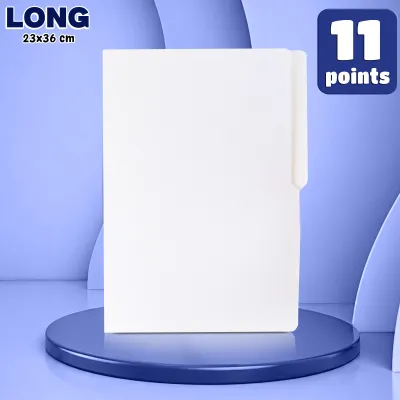

![25pcs Ordinary White Folder [LONG] or [SHORT]](https://img.lazcdn.com/g/p/1a377c03fd41cacbd761f7ce1cdb8473.jpg_400x400q80.jpg_.webp)
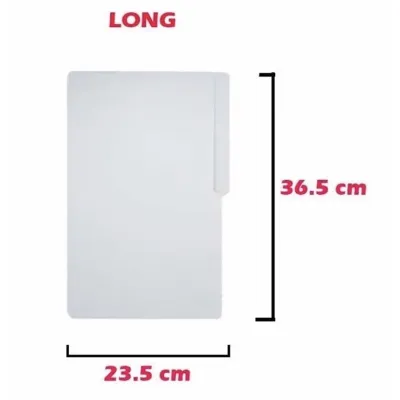
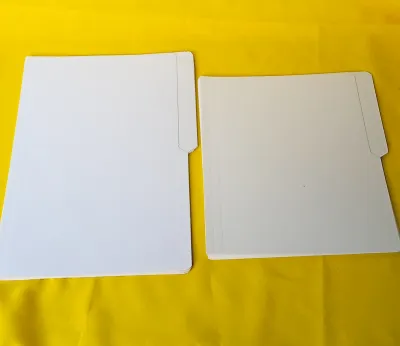
Prices are valid at publication and may change. Please refer to the product page for the latest price.
Best Use Cases for Short Folders
Short folders are the standard workhorses for everyday academic and administrative tasks. They are perfectly sized for standard printed school assignments, basic office reports, resumes, and daily business correspondence printed on Letter-size paper. Because these documents make up the vast majority of standard office printing, keeping a steady supply of short folders ensures your most common paperwork remains neatly organized without excess material flapping around.

Portability is another major advantage of the short folder format. Students and professionals who commute daily in busy urban areas will find that short folders slide effortlessly into standard backpacks, briefcases, messenger bags, and laptop sleeves. They do not stick out of bag openings, protecting them from getting bent or wet during sudden tropical downpours.
Furthermore, short folders offer excellent compatibility with standard desktop organizers. They fit neatly into shallow desk drawers, vertical sorting trays, and typical plastic presentation sleeves without hanging over the edges. This compact footprint makes them ideal for maintaining a clean, minimalist workspace where desk surface area is at a premium.
When Long Folders Are the Necessary Choice
While short folders excel in portability, long folders are indispensable when dealing with specialized or legal documents. Legal contracts, land titles, continuous form receipts, official certificates, and multi-page government agreements in the Philippines are almost exclusively printed on long (Folio) or US Legal-size paper. Attempting to force these documents into a short folder will inevitably result in exposed, crumpled edges or require you to fold the paper, which can ruin official seals or professional presentation.
Long folders provide the necessary physical length to protect these oversized documents from creasing, folding, or getting crushed at the edges during transit. In the humid tropical climate of the Philippines, paper products are highly susceptible to moisture absorption, which causes them to sag and warp. Choosing a folder with the correct length provides the necessary rigid support to prevent these long sheets from drooping and tearing over time.
These folders are also designed to fit into deep filing cabinets, specialized hanging file rails, and archival storage boxes. Using the correct long folder ensures that your legal-size archives sit flush with the rest of your records, preventing dust accumulation and keeping the filing system looking uniform and professional.
Checking Your Filing Setup and Storage Compatibility
Before purchasing folders in bulk, it is crucial to measure your existing office furniture and storage accessories. Take a tape measure to your filing cabinet drawers, hanging file rails, and desktop organizers to confirm they can physically accommodate the extra length of a long folder. A drawer designed strictly for letter-size files will not close if you attempt to store long folders vertically, leading to jammed drawers and damaged documents.
If you are using ring binders or clip folders instead of simple paperboard jackets, you must also check the binding mechanisms. Verify the binder ring spacing, punch-hole alignment, and clip positions on your folders. Standard two-hole or three-hole punches have different spacing requirements depending on whether you are binding short or long paper, and using mismatched equipment will cause pages to tear at the punch sites.
If you discover a mismatch in your storage setup, there are practical workarounds you can implement. Many modern filing cabinets feature adjustable metal rails that can be shifted to accommodate either short (letter) or long (legal/folio) hanging folders. Alternatively, you can use adapter clips to secure shorter documents inside longer folders, or establish a strict office policy to standardize paper sizes for specific workflows before filing them away.
Final Decision Guide: Short vs. Long Folder
To make the right choice for your workspace, evaluate your needs against these practical guidelines:
Choose short folders if:
- Your daily paperwork consists almost entirely of standard Letter-size documents, school homework, or standard office printouts.
- You prioritize portability and need your folders to fit easily inside standard backpacks, laptop bags, or compact briefcases.
- Your existing storage setup consists of shallow desk drawers, standard desktop trays, or letter-sized hanging file systems.
Choose long folders if:
- You regularly handle legal contracts, official certificates, land documents, or continuous form receipts printed on Folio or US Legal paper.
- You need to preserve the pristine, unfolded condition of important documents that exceed eleven inches in length.
- Your office is equipped with deep filing cabinets, legal-size suspension file frames, or dedicated archival boxes.
Verify first if:
- You share a centralized office filing system where a specific size standard is already mandated for consistency.
- You are storing mixed document sizes in a single drawer, which requires careful planning to prevent smaller folders from getting lost.
- You are purchasing supplies in bulk for a team with diverse document handling needs, where a mixed inventory of both sizes may be the safest approach.
Frequently Asked Questions (FAQ)
Can I store both short and long folders in the same filing cabinet?
Yes, you can store both sizes in the same cabinet, but it requires deliberate organization to avoid losing documents. The most effective method is to place long folders at the back of the drawer and short folders at the front, or to use separate hanging rails if your cabinet supports a split configuration. If you mix them indiscriminately, short folders can easily slip behind or beneath the longer ones, making them difficult to locate. Additionally, ensure your cabinet drawer is deep enough; if a long folder is forced into a shallow drawer designed only for short files, the folder tops will bend and get crushed when the drawer is closed. For high volumes of mixed documents, using physical drawer dividers or dedicating separate drawers to each size is highly recommended to maintain order.
Community discussion
Share your experience or ask a question. Comments are reviewed before publication.