
For beginners setting up their first accounting ledger book in the Philippines, the choice between single-entry and double-entry formats depends entirely on the complexity of your financial transactions. If you are a solopreneur, freelancer, or managing personal finances with straightforward cash flow, a single-entry ledger is the most practical and time-efficient choice. However, if you are running a growing small business with inventory, credit transactions, or plans to apply for business loans, a double-entry ledger is necessary to maintain accurate, error-checked financial records. This guide compares the structural differences, daily usability, and practical use cases of both formats to help you purchase the right physical ledger book for your specific needs.
Selecting the correct physical record-keeping tool is a foundational step for any local enterprise. In the Philippines, many micro, small, and medium enterprises rely on manual bookkeeping to track daily operations, manage cash flow, and prepare for tax filings. The physical ledger book you choose serves as the primary source of truth for your financial health, making it essential to understand how its layout dictates your daily routine. By matching your business model to the appropriate ledger structure, you can avoid the frustration of mismatched columns, messy corrections, and incomplete financial records.
Understanding the Core Differences in Ledger Structures
The fundamental mechanical difference between single-entry and double-entry ledger books lies in how they physically organize and record financial transactions. A single-entry accounting ledger book is designed to function much like a personal checkbook register. Each transaction is recorded as a single line item, tracking only the movement of cash into or out of a single account. The physical layout typically features columns for the date, a brief description of the transaction, a reference number, a column for cash receipts (inflows), a column for cash payments (outflows), and a running balance. This structure is straightforward because it focuses solely on cash flow, making it highly accessible for individuals without formal accounting training.
Products mentioned in this guide

14 Lazada user ratings
thank You Seller ang bilis po Dumating at ok po ang product.. Salamat po magagamit ko po sa Dialysis Record namin
Quality:as I expected ...I love it
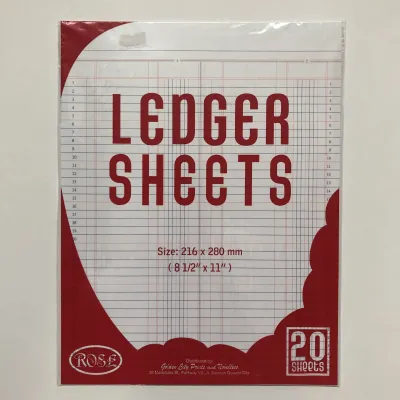
161 Lazada user ratings
maganda and super secure siya, kala ko pagdating niya medyo lukot lukot na pero hindi super satisfied ako. it only took 2-3 days bago ko nar…Read full reviewShow less
maganda and super secure siya, kala ko pagdating niya medyo lukot lukot na pero hindi super satisfied ako. it only took 2-3 days bago ko narecieve. thank you seller and kay kitang rider will order again and I will recommend it to my classmates.
thank you so much for this. Quality:10/10 Ease of Use:10/10 Appearance:10/10 sobrang happy ako kc ang bilis nia dumating and sobrang secured…Read full reviewShow less
thank you so much for this. Quality:10/10 Ease of Use:10/10 Appearance:10/10 sobrang happy ako kc ang bilis nia dumating and sobrang secured ng package... 🥰
Efficient way to manage finances, High-quality ledger sheets, High-quality ledger sheets, Quality:good
good condition.thnks
thank u so much👌👌👌👌


52 Lazada user ratings
Quality:matibay Design:Tama lang ang 5 layer at safe cguradong hindi mapapasukan ng ipis at daga Price:Tama lang po
Maganda Siya items hindi kana mahirapan isusulat mo nalang dito sa notebook. Thank you seller at kuya Rider
Quality:maganda ..Malaki pla ..big note book.. Design:cute very useful Price:mura lng...compare sa mall...
nice item malakiing tulong sakin
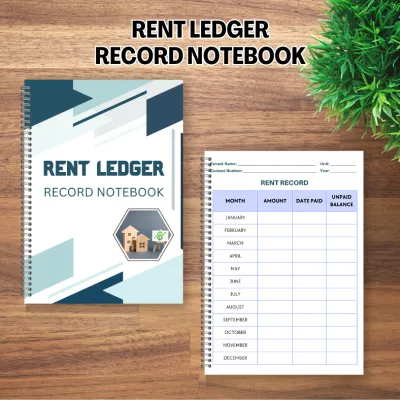
394 Lazada user ratings
Sturdy cover for protection., Smooth writing experience., Perfect for rent transactions., Customizable options available.,
Perfect for rent transactions., Smooth writing experience., No brand, but great quality., Sturdy cover for protection.,
Customizable options available., Smooth writing experience., Spiral design for easy flipping., Durable wire binding.,
Durable wire binding., Sturdy cover for protection., worth the price.suitable for recording rent payments
Convenient size options., Perfect for rent transactions., total fourty pages, good for long time use.
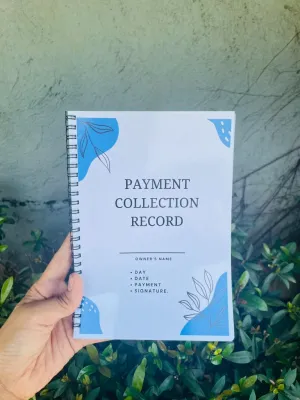
111 Lazada user ratings
Quality: it has a glossy sturdy cover Design: it has a clear light colored and simple design Price: the price is reasonable
maganda sana kaya lang gcash notebook naman idineliver sakin. iba ung order ko, ganun sana sa maliit.
Nice one ganda

20 Lazada user ratings
good quality and past deliver
Prices are valid at publication and may change. Please refer to the product page for the latest price.
In contrast, a double-entry accounting ledger book is structured around the fundamental accounting equation: Assets equal Liabilities plus Owner’s Equity. This system requires that every single transaction be recorded in at least two separate accounts, using equal and opposite entries known as debits and credits. Physically, a double-entry ledger book often features more complex page layouts, such as multi-column journal ruling or ledger sheets divided into distinct debit and credit sections. When you record a sale in a double-entry system, you do not simply write down the cash received; you must also record the corresponding reduction in inventory or the increase in revenue, ensuring that the overall books remain balanced.
For a beginner handling physical stationery, the learning curve and manual workload differ significantly between these two structures. Single-entry books require minimal mathematical effort, as you only need to add or subtract the transaction amount from the previous running balance. Double-entry books, however, demand a solid understanding of accounting principles to determine which accounts to debit and which to credit. Because physical books do not have automated error-correction features, manual double-entry bookkeeping requires meticulous attention to detail to ensure that the sum of all debits matches the sum of all credits at the end of each accounting period.
When to Choose a Single-Entry Accounting Ledger Book
A single-entry accounting ledger book is highly suited for specific business models and personal financial scenarios where simplicity is the primary goal. Freelancers, independent contractors, and micro-businesses—such as home-based food sellers or small retail stalls—benefit greatly from this format. If your daily operations consist almost entirely of immediate cash transactions with little to no credit sales, a single-entry book provides all the utility you need. It is also an excellent tool for personal budgeting, tracking household expenses, or managing the finances of a small community group where formal financial statements are not required.

The primary benefit of choosing a single-entry ledger is its exceptionally low learning curve. You do not need to study complex accounting rules to begin logging your daily transactions immediately. This simplicity translates directly into faster daily record-keeping, allowing you to update your books in just a few minutes at the close of each business day. Furthermore, basic single-entry ledger books are widely available and generally represent a lower initial investment in office stationery, making them a cost-effective choice for startups operating on a tight budget.
However, the single-entry format has distinct limitations that you must consider before making a purchase. Because there is no balancing mechanism, this system lacks built-in error detection; a simple transposition error or a missed entry can easily go unnoticed until you perform a manual audit. Additionally, a single-entry ledger cannot easily generate formal financial statements, such as a balance sheet, because it does not track assets and liabilities over time. As your business grows, this lack of comprehensive tracking can limit your ability to analyze long-term profitability or provide the detailed financial history required by tax authorities and financial institutions.
When to Choose a Double-Entry Accounting Ledger Book
A double-entry accounting ledger book becomes necessary when your business operations reach a level of complexity that cash tracking alone cannot capture. This format is the standard choice for growing small-to-medium enterprises, retail businesses with physical inventory, and any operation that extends credit to customers or maintains credit accounts with suppliers. If your business relies on purchasing raw materials on account or selling goods with delayed payment terms, a double-entry system is essential to track exactly who owes you money and whom you owe.
The most significant advantage of a double-entry ledger is its built-in error-checking capability. By organizing transactions into debits and credits, you can periodically perform a trial balance to verify that your books are mathematically correct. If the total debits do not equal the total credits, you know immediately that an error has occurred, allowing you to locate and correct the mistake before finalizing your records. Furthermore, this comprehensive system tracks assets, liabilities, and equity, providing the detailed data needed to generate formal balance sheets and income statements. These documents are crucial when applying for business loans, attracting investors, or undergoing official tax audits.
Despite these powerful benefits, the double-entry format demands a higher level of commitment and discipline from a beginner. The learning curve is steep, requiring you to understand how different transaction types affect various account categories. Recording a single transaction takes more time because you must write entries in multiple columns or across different pages of the ledger. If you do not maintain strict daily or weekly bookkeeping habits, a physical double-entry ledger can quickly become disorganized, making the process of balancing the books highly time-consuming and stressful.
Side-by-Side Comparison of Ledger Formats
To help you visualize the practical differences between these two record-keeping systems, the table below contrasts their key structural and operational characteristics.
| Feature | Single-Entry Ledger | Double-Entry Ledger |
|---|---|---|
| Page Structure (Columns) | Simple columns (Date, Description, Cash In, Cash Out, Balance) | Multi-column layouts (Debit, Credit, Balance, Account Folio) |
| Primary Use Case | Cash flow tracking, personal budgeting, micro-retail | Comprehensive business accounting, credit tracking, inventory |
| Error Detection | None built-in; manual audit required | High; debits must equal credits (Trial Balance) |
| Time Required per Entry | Minimal; single line per transaction | Moderate to high; multiple lines across different accounts |
| Ideal Business Size | Solopreneurs, freelancers, micro-enterprises | Growing small-to-medium enterprises (SMEs) |
When shopping for a physical accounting ledger book, keep in mind that manufacturers offer a wide variety of column configurations and page layouts. It is important to verify the exact column structure, page numbering variations, and index features printed on the product label or detailed in the product description before finalizing your purchase.
How to Verify Your Choice Before Purchasing
Before purchasing an accounting ledger book from a local stationery store or an online marketplace, you should carefully inspect its physical characteristics to ensure it matches your chosen bookkeeping system. Begin by checking the printed column headers and page layout. A single-entry book should have clear, wide columns for receipts and payments, while a double-entry book requires distinct debit and credit columns, often accompanied by a folio column to reference corresponding journal entries. Ensuring the layout matches your workflow prevents the need to manually draw lines or alter printed headers.
The physical durability of the ledger book is another critical factor, especially in the humid tropical climate of the Philippines. High humidity can cause thin, low-quality paper to warp, absorb moisture, or allow ink to feather and bleed through to the opposite side of the page. Look for ledger books featuring a paper weight of at least 80 GSM (grams per square meter) to ensure a smooth writing experience and excellent bleed resistance. Additionally, prioritize sturdy thread-bound or case-bound bindings over simple glued bindings; thread-bound books lay flatter when open, making it much easier to write neat, aligned entries near the center margin, and they are far less likely to lose pages over years of storage.
Finally, review the manufacturer’s product description to confirm the book’s total page count and overall dimensions. Consider your expected daily transaction volume to estimate how long a single book will last; purchasing a ledger with too few pages will force you to transfer opening balances to a new book frequently, increasing the risk of transcription errors. If your business requires physical copies of records for different departments or off-site storage, look for specialized ledger books that include perforated pages or integrated carbonless copy sheets to streamline your administrative tasks.
Frequently Asked Questions (FAQ)
Can I switch from a single-entry to a double-entry ledger later?
Yes, you can transition from a single-entry to a double-entry ledger book as your business grows and your financial tracking needs become more complex. The migration process requires moving from a simple cash-based recording system to an accrual-based system, which involves establishing accurate opening balances for all your assets, liabilities, and owner’s equity. You will need to conduct a physical inventory count, list all outstanding customer debts, and compile all unpaid supplier invoices to form the foundation of your new double-entry records.
To minimize the risk of reconciliation errors and simplify the transition, it is highly recommended to make the switch at the start of a new fiscal year or at the beginning of a major quarter. This timing ensures a clean break between your old cash-flow records and your new, comprehensive double-entry system. Attempting to transition mid-period can lead to confusing double-counting of transactions and make it difficult to balance your physical books during the initial setup phase.
Do I need a specific type of pen or ink for accounting ledger books?
Yes, the choice of writing instrument is highly important when maintaining formal physical accounting records. You should always use archival-quality, non-erasable ink, such as standard ballpoint pens or permanent gel pens, to ensure your entries remain legible for years and to prevent unauthorized alterations. Erasable pens, pencils, and water-soluble inks should be strictly avoided, as they can easily smudge in humid conditions, fade over time, or be altered, which compromises the integrity of your financial audits.
To ensure compatibility between your pen and your ledger book, perform a quick trial on an inconspicuous area, such as the corner of a back page, to check for bleed-through, feathering, and drying speed. In the Philippines’ warm climate, fast-drying ink is particularly beneficial to prevent accidental smudging from your hand as you write across long rows of figures. Choosing a pen with a fine tip (such as 0.5mm or 0.7mm) will also help you write clean, legible numbers within the narrow columns of your physical ledger book.

Community discussion
Share your experience or ask a question. Comments are reviewed before publication.