
Organizing important documents, school reports, or archival papers often leaves you choosing between loose, slipping pages and permanently creased, torn sheets. To hold documents securely without damaging them, smooth paper clips are the ideal choice for delicate, thin, or high-value papers because they distribute pressure evenly, while ridged paper clips (also known as corrugated clips) are best reserved for thick stacks or slippery paper stocks where maximum friction is required to prevent slipping. Understanding the physical differences between these two common stationery designs allows you to protect your valuable records while keeping your workspace orderly.
Selecting the wrong fastener can lead to unsightly indentations, torn edges, or lost pages that slip out of a weak grip. By evaluating the specific paper types you handle daily, you can match the clip design to the task. This guide breaks down the structural differences, safety considerations, and practical testing methods to help you make an informed decision for your home, school, or office organization needs.
How Do Smooth and Ridged Paper Clips Differ in Design and Grip?
Smooth and ridged paper clips differ primarily in their surface texture and how they generate friction against paper fibers. Smooth clips rely entirely on the tension of the bent wire loop, whereas ridged clips feature tiny, raised parallel indentations along the wire to physically bite into the paper surface. These structural variations dictate how each clip behaves when slid onto a stack of paper.
Products mentioned in this guide
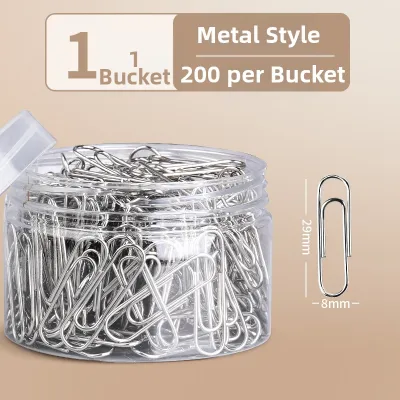
4 Lazada user ratings
Design:Eye-catching colors, soo kinis, smooth. so gandaa😍 Price:worth it. good quality po kase. Durability:matibay, excellent.
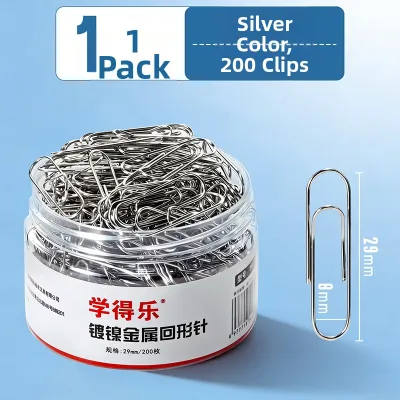
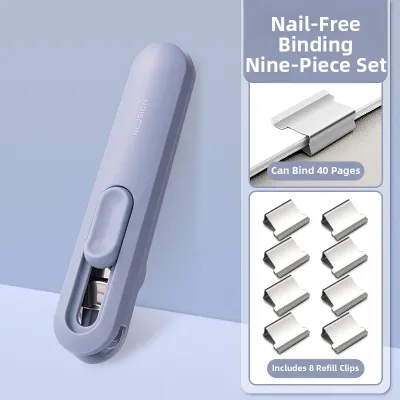
95 Lazada user ratings
The clipper is super handy to use, and its ergonomic sliding part doesn't tire my hand. The section at the back for unloading clips is a gre…Read full reviewShow less
The clipper is super handy to use, and its ergonomic sliding part doesn't tire my hand. The section at the back for unloading clips is a great bonus—it's efficient and quick, leaving no marks on the paper.
I don't know where they sourced their stuff, but everything I touched was dusty. The items are okay, but I wouldn't recommend this store.
Very good. It even came with 8 staples. The quality is excellent and the design is minimalist.
It's easy to push and simple to use, and the clip-on particles can be removed and reused.
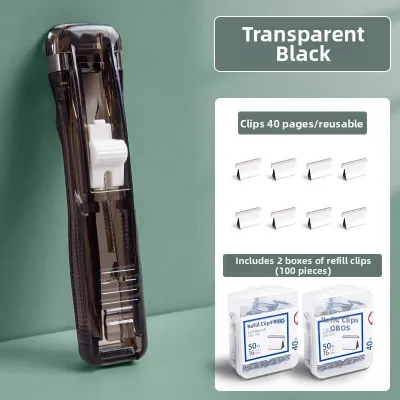
14 Lazada user ratings
complete ordered items received, securely packed👍👍 Durability:lightweight, plastic material, easy to use, I hope it is durable
It definitely deserves a full five stars! You can really feel the seller's effort!
Bought it for the students, hasn't been opened, I usually give good reviews.
Pretty good, using the sign-in rewards is really nice, not bad.
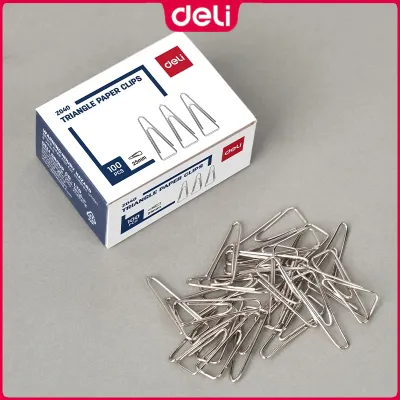
291 Lazada user ratings
Great for school and office use. Compact and lightweight design. I have the round shaped clip and I'm very satisfied with the quality and pr…Read full reviewShow less
Great for school and office use. Compact and lightweight design. I have the round shaped clip and I'm very satisfied with the quality and price. That's why I also bought the triangular clip. Same result, I'm happy with my purchase. I got two boxes - one for personal use, the other for my office files. Thanks, Deli! My go-to supplies store.
Eco-friendly metal material, Great for school and office use, Great for school and office use, Non-slip secure hold, 100 pieces per pack, Pe…Read full reviewShow less
Eco-friendly metal material, Great for school and office use, Great for school and office use, Non-slip secure hold, 100 pieces per pack, Perfect for organizing papers, Compact and lightweight design,
Perfect for organizing papers, Compact and lightweight design, Great for school and office use, Non-slip secure hold, 100 pieces per pack, G…Read full reviewShow less
Perfect for organizing papers, Compact and lightweight design, Great for school and office use, Non-slip secure hold, 100 pieces per pack, Great for school and office use, Eco-friendly metal material,
Compact and lightweight design, Great for school and office use, Great for school and office use, Perfect for organizing papers, Non-slip se…Read full reviewShow less
Compact and lightweight design, Great for school and office use, Great for school and office use, Perfect for organizing papers, Non-slip secure hold, Eco-friendly metal material,
Compact and lightweight design, Great for school and office use, Great for school and office use, Non-slip secure hold,
Prices are valid at publication and may change. Please refer to the product page for the latest price.
Visual and tactile differences in the wire surface texture are immediately apparent upon close inspection. A smooth paper clip features a polished, continuous metal or plastic-coated surface that glides effortlessly over paper. In contrast, a ridged paper clip has physical grooves cut or stamped into the wire, creating a rough, textured surface that you can easily feel with your fingertips. This texture is designed to increase the mechanical grip on the paper.
Surface ridges influence friction and initial grip by interlocking with the microscopic irregularities of the paper sheet. When you slide a ridged clip onto a document, these grooves catch on the paper fibers, creating a multi-point physical barrier against sliding. Smooth wire, lacking these physical catch points, relies solely on the surface-to-surface contact area and the spring tension of the metal to keep the pages in place.
The role of wire tension and clip shape alongside surface texture is critical in holding pages together. The spring temper of the steel wire determines how well the clip returns to its original shape after being stretched over a stack of paper. Regardless of whether the wire is smooth or ridged, a clip with poor tension will fail to hold pages securely. The classic “Gem” style clip shape, with its double-loop design, provides the standard distribution of this tension, but the surface texture determines how that tension is translated into holding power.
Which Paper Clip Type is Safer for Delicate or Important Documents?
Smooth paper clips are significantly safer for delicate, thin, or historically important documents because their uniform surface prevents localized pressure concentration and minimizes physical abrasion. Ridged clips, with their raised textures, can easily emboss, scratch, or tear fragile paper fibers when applied or removed. When document preservation is your primary goal, minimizing surface friction is essential.

Observable signs of paper damage include creases, micro-tears at the entry point, surface abrasion, and permanent indentation marks. When a ridged clip is pulled off a document, the tiny metal ridges act like miniature teeth, scraping against the delicate top layer of the paper. This action can shave off paper fibers, leaving a faint trail of paper dust and a visibly scuffed surface that compromises the document’s appearance and structural integrity.
Smooth wire distributes pressure across the paper surface evenly compared to the concentrated contact points of ridged wire. Because the smooth surface has no high points, the clamping force exerted by the wire loop is spread uniformly along the entire length of the contact area. Ridged wire concentrates this same clamping force onto the narrow peaks of the ridges, which can easily exceed the yield strength of delicate paper, leaving permanent corrugated patterns that cannot be flattened out.
Best practices for clipping fragile, glossy, or historically important documents involve avoiding direct metal-to-paper contact whenever possible. For archival or highly sensitive papers, consider using smooth, vinyl-coated clips or inserting a small piece of acid-free paper between the clip and the document to act as a protective buffer. Never use ridged clips on photographs, glossy brochures, or thin tracing papers, as the textured metal will permanently mar the delicate surface coatings.
When Should You Choose Ridged Paper Clips for Maximum Holding Power?
You should choose ridged paper clips when securing thick stacks of standard office paper, heavy cardstock, or glossy sheets that easily slide past one another. The added friction of the corrugated wire prevents the clip from slipping off under the weight of the pages or during frequent handling. In fast-paced environments where documents are constantly moved, the extra grip of a ridged clip is highly beneficial.
Use cases involving thick stacks, slippery paper stocks, or documents requiring frequent handling and transport demand a stronger hold than a standard smooth clip can provide. For example, when organizing multi-page reports printed on high-quality, smooth copy paper, a smooth clip may slide off if the document is placed in a bag or folder. The physical ridges of a corrugated clip lock the pages together, ensuring the document remains intact during transit.
The practical trade-off between higher grip strength and potential surface marking must be carefully managed. While ridged clips offer superior resistance to slipping, they are highly likely to leave visible marks on the outer sheets of your document. If the document is an everyday draft, a temporary invoice, or a school worksheet, minor surface indentations are usually an acceptable trade-off for ensuring no pages are lost.
To balance secure holding needs with acceptable document wear for everyday office or school use, reserve ridged clips for non-archival materials. If you must use them on important documents, place a blank cover sheet on the front and back of the stack. This ensures that any embossing or scratching caused by the ridged wire occurs only on the disposable cover sheets, leaving the primary document pristine.
How Can You Test and Verify the Right Paper Clip for Your Specific Paper Stack?
To find the ideal balance between holding power and document safety, you can perform simple, observable physical tests on a sample stack of the same paper type before clipping your final documents. This ensures you do not rely on unverified manufacturer claims regarding grip or safety. Testing under real-world conditions is the most reliable way to protect your work.
The Grip Security Test
To verify if a paper clip provides sufficient holding power for your specific stack, follow these steps:
- Assemble a test stack of identical paper sheets matching the thickness of your actual document.
- Slide the chosen paper clip completely onto the corner of the test stack.
- Hold the stack by the opposite corner and perform a gentle shake test by waving the document downward three times with moderate force. If the clip shifts or the pages begin to fan out, the grip is insufficient.
- Perform a fan test by gently turning the pages of the clipped stack as if reading them. If the clipped corner twists excessively or allows sheets to escape, you need a clip with higher tension or a textured surface.
The Visual Inspection Test
To check for potential paper damage and wire deformation after clip removal, follow these steps:
- Carefully slide the paper clip off the test stack in a straight, parallel motion without prying it open.
- Hold the top and bottom sheets of the test stack up to a light source at an angle to check for embossing, deep indentations, or micro-tears.
- Rub your finger over the clipped area to feel for surface abrasion or fiber tearing.
- Inspect the removed paper clip to see if the wire has remained bent or deformed; a clip that does not return to its original shape will not provide reliable tension for future use.
Adjusting your clip selection based on these observable test results rather than assumed specifications will save time and protect your documents. If a smooth clip fails the grip test, try a larger smooth clip or a vinyl-coated clip before resorting to a ridged clip. If a ridged clip damages the paper, reduce the stack size, switch to a smooth clip, or use a protective cover sheet.
What Other Factors Affect Paper Clip Performance and Document Safety?
Beyond surface texture, paper clip performance is heavily influenced by the clip’s physical size, wire thickness, material composition, and the user’s application technique. Selecting the correct combination of these factors is essential to prevent both document loss and permanent paper damage. Even the best clip design will fail if it is poorly matched to the task.
The impact of clip size and wire thickness relative to the specific thickness of the paper stack cannot be overstated. Standard No. 1 clips are designed for small stacks of up to 10 sheets, while Jumbo or Giant clips are required for thicker stacks of 20 to 50 sheets. Forcing a small clip onto a thick stack overstretches the wire, causing permanent deformation and loss of spring tension, while also putting excessive stress on the paper edges, which often leads to tearing.
Material and coating differences play a major role in paper safety and clip longevity. Galvanized or nickel-plated steel clips offer high strength and rigidity, but they can rust over time in humid environments, leaving permanent orange stains on your documents. Vinyl-coated paper clips provide a smooth, cushioned grip that reduces scratching and adds mild friction, making them an excellent middle-ground for delicate but slippery sheets. Plastic clips are completely rust-proof and gentle, but they offer significantly lower clamping tension.
Proper application and removal techniques are vital to avoid bending the wire or stressing the paper edges. When applying a clip, slide it on smoothly and parallel to the paper edge; never force it on at an angle or pry the loops open excessively, as this ruins the wire’s spring temper. When removing the clip, slide it off gently in a straight line rather than pulling it off sideways, which is the primary cause of corner tears and surface scuffs.
Community discussion
Share your experience or ask a question. Comments are reviewed before publication.