
Transitioning to college brings a massive shift in academic expectations, lecture speeds, and organizational demands. Unlike high school, where a single multi-subject notebook might have sufficed, college courses require a deliberate strategy for managing lecture notes, printed handouts, and laboratory data. Choosing between spiral-bound, loose-leaf, and composition notebooks is not merely an aesthetic decision; it directly affects your study efficiency, how much weight you carry during long commutes, and how well your records survive the academic term.
Each notebook format has distinct physical characteristics that cater to different learning styles and subject requirements. A spiral-bound notebook features a continuous metal or plastic coil threaded through punched holes, allowing the pages to fold back completely. A loose-leaf system relies on individual sheets of filler paper secured inside a multi-ring binder, offering unmatched customization. A composition notebook utilizes a sewn, tape-bound spine with a rigid cover, prioritizing page permanence and structural durability.
| Notebook Type | Page Permanence | Ideal Use Case | Key Advantage |
|---|---|---|---|
| Spiral-Bound | Semi-permanent (perforated pages) | Fast-paced lectures, humanities, daily journaling | Lays completely flat, folds back to save desk space |
| Loose-Leaf | Fully customizable (removable) | STEM majors, modular courses, heavy handout integration | Easy to reorganize, infinite page addition |
| Composition | Permanent (sewn binding) | Science laboratories, chronological logs, archival notes | Highly durable, tamper-evident, rigid writing surface |
Comparing Key Features for College Note-Taking
To find the format that best supports your academic routine, you must evaluate how each notebook performs across several practical dimensions. Your daily carry, how you organize information, the physical act of writing, and the lifespan of your notes all play critical roles in your decision.
Products mentioned in this guide
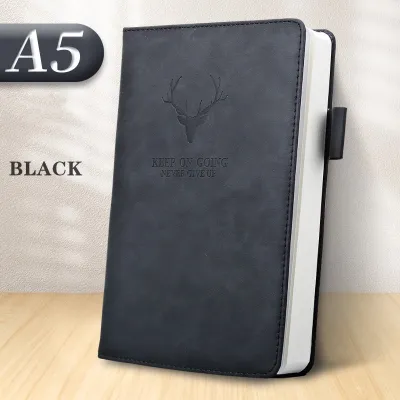
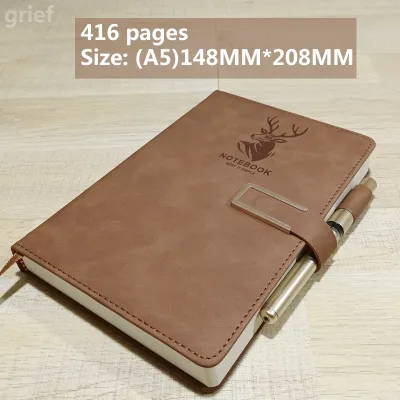
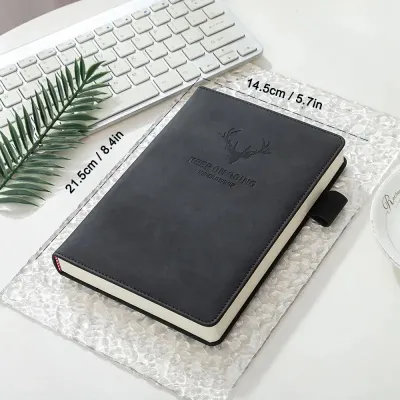
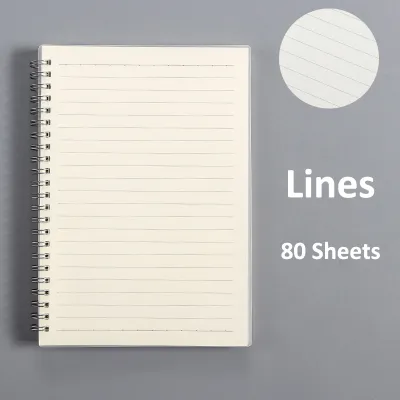
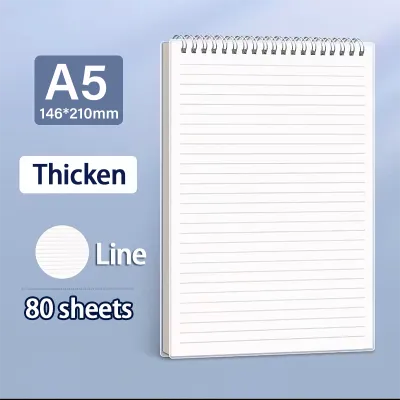
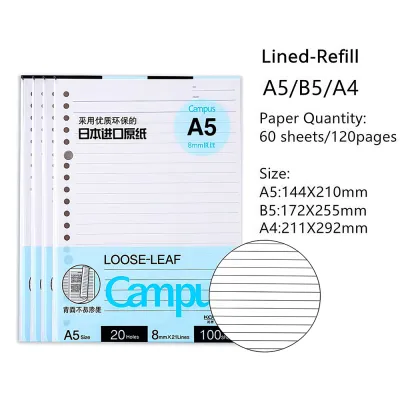
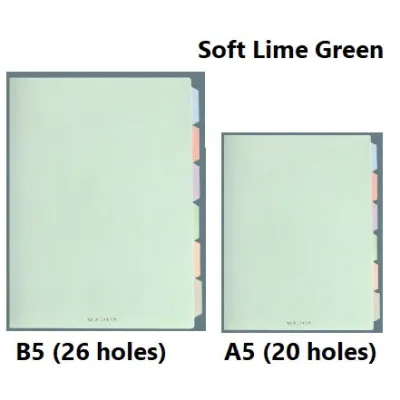
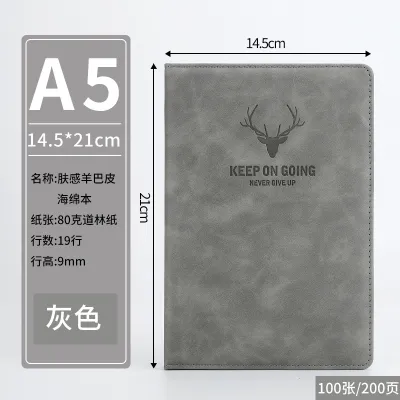
Prices are valid at publication and may change. Please refer to the product page for the latest price.
Before purchasing any notebook, it is essential to check the product label for paper weight, measured in grams per square meter (GSM), and the ruling style. Standard notebook paper typically ranges from 56 GSM to 80 GSM, while premium options can exceed 100 GSM. In humid tropical climates, paper naturally absorbs moisture from the air, which can cause thin sheets to warp and make ink more prone to bleeding. Additionally, choose between college ruling (6mm or 7mm spacing) to maximize text density, or wide ruling (8.7mm) if you have larger handwriting.
Portability and Bag Space
Your daily commute is a major factor in determining which notebook format is practical. If you travel to campus using crowded public transportation, minimizing the bulk and weight of your backpack is a daily necessity.
A three-ring binder used for loose-leaf paper is inherently bulky. The rigid, circular rings require significant depth, which can quickly fill up your backpack and leave little room for laptops, water bottles, or umbrellas. In contrast, spiral and composition notebooks feature a much slimmer, flatter profile that slides easily into tight bag compartments or laptop sleeves, allowing you to pack light.
However, spiral notebooks present their own portability challenges. The exposed metal coils can easily snag on loose threads, headphone cords, or the mesh pockets of your bag, occasionally bending out of shape under pressure. Composition books avoid this issue entirely; their smooth, tape-bound spines glide effortlessly in and out of bags without catching on other items, while their rigid covers protect the inner pages from getting bent or dog-eared during transit.
Flexibility and Page Reorganization
College courses rarely follow a perfectly linear path. Professors frequently distribute printed syllabi, worksheets, and reading materials that must be kept alongside your handwritten notes for effective studying.
Loose-leaf systems are the undisputed champion of flexibility. Because the pages are not permanently bound, you can open the binder rings to insert, remove, or rearrange sheets at any time. This allows you to integrate printed handouts directly into your chronological lecture notes, or move older units to an archive binder at home to keep your daily carry light.
Fixed-page formats like spiral and composition notebooks offer virtually no flexibility for reorganization. If you need to add a handout to a spiral notebook, you must tape or glue it onto an existing page, which quickly makes the notebook bulky and messy. Tearing a page out of a composition book can compromise the entire sewn binding, causing other pages to fall out, while tearing pages from a spiral notebook often leaves unsightly paper shreds along the margin unless the pages are micro-perforated.
Writing Comfort and Layout
The physical comfort of writing for hours during back-to-back lectures can significantly impact your focus and hand fatigue. The binding mechanism of your chosen notebook dictates how comfortably your hand can move across the page.
Spiral-bound notebooks offer excellent writing comfort because they can fold completely in half. This reduces the notebook’s footprint by 50%, allowing you to write comfortably even on the tiny tablet armchairs common in crowded lecture halls. Composition books also lay relatively flat once the spine is broken in, providing a smooth, continuous writing surface across the center margin.
Loose-leaf binders present a distinct physical barrier. The large metal or plastic rings can obstruct your hand, particularly when you are writing near the inner margin or if you are left-handed. To write comfortably in a binder, you often have to open the rings, remove the sheet of paper entirely, write your notes, and then snap the page back into place, which can be disruptive during a fast-paced lecture.
Paper compatibility is another critical element of writing comfort. Before buying notebooks in bulk, purchase a single sheet or notebook to conduct an observable trial with your preferred pens. Gel pens (such as standard 0.5mm or 0.7mm tips) and fountain pens require denser, high-quality paper (ideally 80 GSM or higher) to prevent bleeding and feathering. Ballpoint pens are highly compatible with cheaper, lower-GSM paper but require more physical pressure, which can lead to hand strain during long writing sessions.
Durability Over a Semester
A standard college semester subjects your stationery to constant handling, packing, and unpacking. Your notes must remain intact and legible from the first day of class to final exams.
Spiral notebooks are highly vulnerable to coil deformation. If a heavy textbook presses against a metal coil inside your bag, the loop can bend, causing pages to catch, tear, or resist turning. Plastic coils offer slightly better flexibility and memory, resisting permanent bends, but they can still crack under heavy impact.
Composition books are exceptionally durable. The sewn binding and reinforced spine tape ensure that pages remain securely attached even after months of heavy use. The rigid cardboard covers also provide a sturdy writing surface when you do not have access to a desk.
Loose-leaf paper is the most fragile option over time. The punched holes on standard filler paper are prone to tearing under the weight of a heavy binder or during rapid page-turning. Once a hole tears, the page slips out of the rings and can easily become lost or damaged. To mitigate this, you must invest in reinforcement rings or purchase specialized filler paper with reinforced margins.
Matching Notebook Types to College Subjects
Different academic disciplines require different note-taking methodologies. Matching your notebook format to the specific demands of your courses can streamline your study habits.

For STEM (Science, Technology, Engineering, and Mathematics) courses, loose-leaf systems are highly recommended. These subjects often involve a complex mix of lecture notes, hand-drawn diagrams, mathematical proofs, and printed problem sets. A binder allows you to keep your syllabus, lecture notes, homework assignments, and graded quizzes organized in a single, logical sequence.
For lecture-heavy humanities and social sciences (such as History, Literature, or Psychology), spiral-bound notebooks are highly effective. These classes typically require rapid, continuous, chronological note-taking. The ability to fold the notebook flat allows you to focus entirely on capturing the lecture without worrying about managing loose sheets or dealing with bulky binder rings.
Composition books are the gold standard for laboratory courses, creative writing, and language learning. In laboratory settings, academic integrity and intellectual property rules often require a permanent, unalterable record of your experiments and data. A composition book’s sewn binding ensures that pages cannot be removed or inserted retroactively without detection. In fact, many chemistry and physics departments strictly mandate bound composition books for this very reason.
Evaluating Cost and Long-Term Value
When budgeting for college supplies, looking only at the upfront price tag can be misleading. To find the true value, calculate the cost-per-page by dividing the total price of the notebook by the number of usable sheets.
For example, a premium spiral notebook priced at ₱150 with 80 sheets has a cost-per-page of ₱1.88, whereas a basic composition book costing ₱40 with 80 sheets costs only ₱0.50 per page. Loose-leaf systems require a higher initial investment because you must purchase a durable multi-ring binder. However, this binder can be reused for multiple semesters, or even your entire college career. Over the long run, you only need to purchase packs of loose-leaf filler paper, which is highly cost-effective when bought in bulk.
To optimize your budget, check local stationery stores or online marketplaces for bulk packs of filler paper or multi-subject spiral notebooks. Multi-subject notebooks often provide a lower cost-per-page than buying several single-subject notebooks individually, though they do concentrate all your academic notes into one heavy volume.
Final Decision Framework: Which Format Should You Choose?
To finalize your stationery setup, consider how your daily habits and course requirements align with each format’s strengths.
Choose Spiral-Bound if:
- You have limited desk space in lecture halls.
- You prefer a lightweight, single-book solution for each class.
- Your note-taking style is strictly chronological and linear.
Choose Loose-Leaf if:
- You need to integrate printed handouts, syllabus sheets, and homework directly into your notes.
- You want to carry only one binder for all your subjects instead of multiple notebooks.
- You like to reorganize, discard, or archive notes at the end of each unit.
Choose Composition if:
- You are taking a laboratory course that requires a permanent, tamper-evident record.
- You want maximum durability to survive a rough daily commute.
- You prefer a rigid cover that allows you to write comfortably on your lap or on uneven surfaces.
Verify first if:
- Your professors have specific stationery mandates outlined in their syllabi (especially for lab classes).
- Your favorite pens perform well on the paper without bleeding or feathering.
Consider a hybrid approach. Use a heavy-duty binder at home to archive your notes, but carry a slim, lightweight spiral notebook or a few loose-leaf sheets in a folder to lectures. This keeps your daily carry light while maintaining a highly organized, comprehensive filing system at home.
Frequently Asked Questions (FAQ)
Can I use a spiral notebook for a college lab course?
Many college science departments strictly prohibit spiral notebooks for lab work. This is because spiral pages can be easily torn out, which compromises the academic integrity of your experimental records. Always verify the exact guidelines in your lab manual or syllabus before purchasing your supplies.
How do I prevent loose-leaf paper from tearing out of the binder?
To protect your loose-leaf notes, use self-adhesive hole reinforcements (reinforcement rings) on heavily referenced pages. Alternatively, you can purchase pre-reinforced filler paper that features a plastic strip along the punched edge. Avoid overfilling your binder, and use a dedicated zipper pouch or binder pocket for loose handouts rather than forcing them onto the rings.
Are multi-subject spiral notebooks better than single-subject ones?
Multi-subject notebooks are highly convenient because they allow you to carry notes for three to five classes in a single book. However, this convenience comes with a risk: if you lose or damage that one notebook, you lose your notes for every single class. Single-subject notebooks are generally safer, easier to archive at the end of the semester, and keep your backpack lighter on days when you only have one or two classes.
Community discussion
Share your experience or ask a question. Comments are reviewed before publication.