
Quick Answer: Which Notebook Binding Fits Your Study Style?
Choosing the right notebook for high school depends entirely on your personal study habits, organizational preferences, and the specific demands of your subjects. There is no single format that works perfectly for every student, as each binding type serves a distinct academic purpose.
Spiral-bound notebooks excel in physical flexibility, allowing you to fold the cover back completely to save space on cramped classroom armchairs. Composition notebooks offer unmatched structural permanence and spine protection, keeping your notes secure and chronological throughout the school year. Loose-leaf and binder systems provide a modular, highly customizable setup where you can rearrange, add, or remove pages as your syllabus evolves.
Breaking Down the Three Notebook Formats
To make an informed choice, you must understand how these three formats differ in their physical construction. Each type utilizes a distinct binding mechanism, cover material, and page attachment method that directly influences how you write, store, and organize your academic work.
Products mentioned in this guide
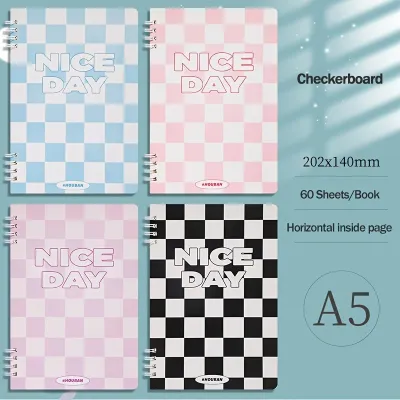
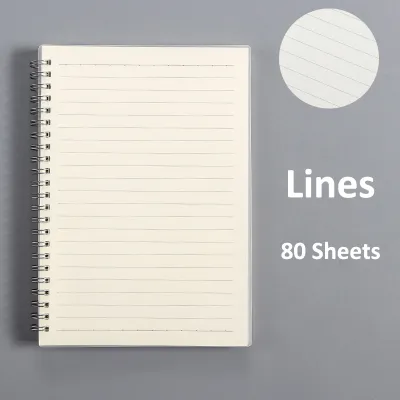
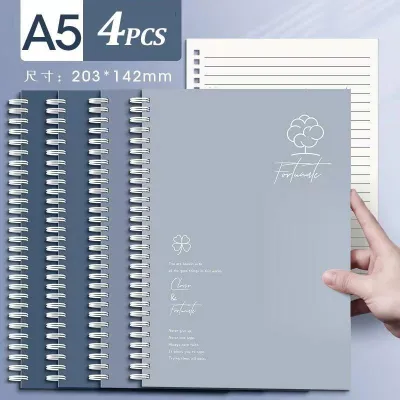
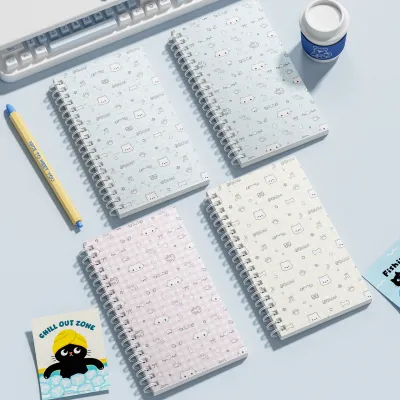
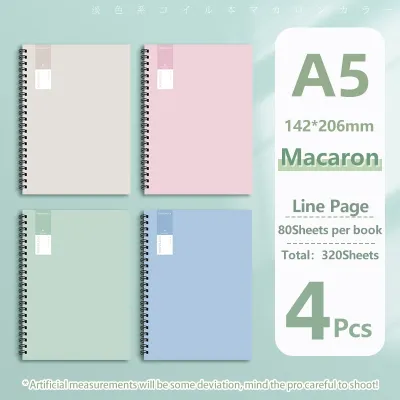
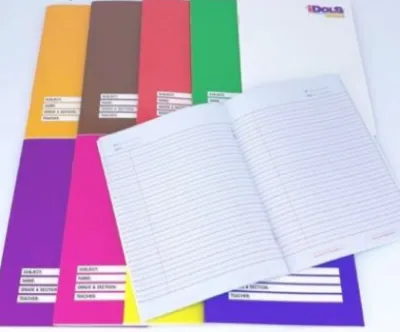
Prices are valid at publication and may change. Please refer to the product page for the latest price.

Spiral-Bound Notebooks
Spiral-bound notebooks feature a continuous plastic or metal coil threaded through a series of closely spaced punches along the margin. This specific mechanism allows the notebook to open a full 360 degrees, meaning you can fold the unused half underneath the active page. This is incredibly practical when writing on small, single-arm school desks where desk space is at a premium.
When shopping for spiral notebooks, pay close attention to the coil material. Metal coils offer rigidity but can sometimes bend out of shape inside a packed bag, potentially snagging on clothing or other papers. Plastic coils are more resilient against crushing and do not rust in humid tropical climates, though they can crack under extreme pressure.
Another critical feature to inspect is the page perforation. High-quality spiral notebooks include micro-perforations near the binding. This allows you to tear out pages cleanly for homework submissions without leaving messy, frayed paper scraps. If the notebook lacks perforations, tearing out a page can weaken the spiral binding and cause adjacent pages to slip out over time.
Composition Notebooks
Composition notebooks are characterized by their traditional, sewn or glued binding and a thick, rigid cardboard cover. Because the pages are bound permanently to the spine, they cannot be removed without tearing them out and leaving a visible gap. This permanent structure encourages chronological note-taking and ensures that your records remain intact from the first day of class to the last.
The rigid cover of a composition notebook acts as a protective shield. When stuffed into a crowded backpack alongside heavy textbooks and water bottles, the stiff covers prevent the inner pages from bending, folding, or developing dog-ears. This makes them highly durable for daily transit, especially during long commutes.
Before purchasing, physically inspect the spine integrity and page adhesion. Look closely at the center fold of the notebook to see if the thread stitching is tight and even. Avoid notebooks where the pages are held together solely by thin glue, as high humidity can soften certain adhesives over time, causing pages to detach from the spine during heavy daily use.
Loose-Leaf and Binder Systems
Loose-leaf systems rely on individual, pre-punched sheets of paper stored inside a multi-ring binder. This modular design gives you complete control over your learning materials, allowing you to insert printed handouts, syllabus sheets, and hand-written notes exactly where they belong in your study sequence. You can easily rearrange your entire filing system as the semester progresses.
The core of this system is the ring mechanism, typically featuring three or more metal or plastic rings that snap open and shut. This allows you to carry only the paper you need for the day, leaving older notes archived safely at home in a larger binder to reduce the weight of your school bag.
To ensure a reliable loose-leaf setup, verify the ring capacity and alignment of your binder. Misaligned rings will catch on the paper holes, leading to tears and frustration. Additionally, check the paper weight of your loose-leaf refills; thin, lightweight paper tears easily at the punched margins, so opting for slightly thicker paper or using adhesive reinforcement rings is highly recommended for high-frequency subjects.
Evaluating Durability, Organization, and Portability
Durability
High school environments put stationery through rigorous daily wear. When evaluating durability, observe the cover thickness and material in person. Plastic or laminated covers resist moisture and sweat much better than raw cardboard, which can soften and warp in humid weather. Check the binding security by gently tugging on the pages; a secure binding should not show signs of loosening or tearing at the attachment points.
Organization
Your choice of notebook dictates how you structure your thoughts. Bound formats like composition books enforce a strict chronological order, which is excellent for tracking progress in sequential subjects like history or mathematics. However, if you prefer a highly categorized system, loose-leaf binders allow you to use colored dividers, index tabs, and pocket folders to separate multiple subjects within a single binder, keeping all your academic resources in one organized place.
Portability and Weight
Carrying multiple notebooks can quickly weigh down your backpack. A single, fully loaded three-ring binder can hold materials for several classes, but its bulky spine takes up significant physical space. Conversely, carrying three or four slim composition or spiral notebooks distributes the physical volume more evenly in your bag, allowing for a flatter, more comfortable fit against your back during your daily commute.
Cost and Value
Budget considerations are essential when preparing for the school year. A binder system requires a higher upfront ₱ investment for the binder shell and dividers, but the recurring cost is relatively low since you only need to purchase loose-leaf paper refills. Bound notebooks generally have a lower initial ₱ cost per unit, but you will need to replace the entire notebook once the pages are filled, which can add up over multiple semesters.
Decision Framework: Match the Notebook to Your Classes
- Choose Spiral-Bound if: Your classes require you to regularly tear out pages for quizzes, lab reports, or homework assignments. The lay-flat design is also highly beneficial for subjects like art, geometry, or mind-mapping, where you need an unobstructed, wide-spanning writing surface to draw diagrams and organize complex visual information.
- Choose Composition if: Your teachers require you to submit your entire notebook periodically for grading or notebook checks. The permanent binding ensures that no pages go missing, providing a clean, tamper-evident record of your academic progress. It is also the ideal choice for science laboratory journals where chronological data entry is strictly required.
- Choose Loose-Leaf if: Your courses involve a heavy volume of printed handouts, worksheets, and study guides that need to be integrated directly alongside your handwritten notes. This system is highly suited for comprehensive, multi-topic subjects like social studies or biology, where you need to constantly reorganize your study materials before major exams.
- Verify first if: Your school or specific subject teachers have established strict guidelines for classroom supplies. Many high school teachers explicitly state their notebook preferences in the syllabus—such as mandating a sewn composition book for science or prohibiting spiral notebooks due to messy torn pages. Always check these official requirements before purchasing your stationery to avoid buying incompatible formats.
Frequently Asked Questions (FAQ)
Can I mix loose-leaf paper with bound notebooks?
You cannot physically bind loose-leaf paper directly into a spiral or composition notebook without damaging the pages or using external adhesives. However, you can integrate them into your workflow by using adhesive document pockets pasted onto the inside covers of your bound notebooks. Alternatively, you can use sticky notes for quick additions or fold printed handouts neatly and secure them with paperclips to keep related materials together.
Which format is best for subjects with heavy formulas and diagrams?
For subjects like physics, chemistry, or advanced mathematics, look for notebooks with grid or dotted page layouts rather than standard horizontal lines. Before committing to a notebook, test your preferred pens on a corner page to check for ink bleed-through and drying speed, as heavy formulas often require dense writing. Spiral-bound notebooks are highly practical here because they lay completely flat, preventing your hand from bumping against a raised spine while drawing complex geometric shapes or long equations.

Community discussion
Share your experience or ask a question. Comments are reviewed before publication.