
Choosing between a spiral-bound and a hardbound Milan notebook comes down to how you write, where you work, and how you handle your pages. If you prioritize maximum flexibility, the ability to fold your notebook completely flat, and quick page removal, a spiral-bound notebook is your ideal companion. Conversely, if you require structural protection for your notes, a rigid writing surface on the go, and a premium, book-like feel that preserves your work for years, a hardbound notebook is the superior choice.
Finding the perfect stationery setup requires looking beyond aesthetics. To make an informed decision, you must evaluate three core factors: your physical writing posture, your daily commuting and storage habits, and how you plan to manage your pages over time. By examining these elements, you can select a notebook that integrates seamlessly into your daily routine.
Core Structural Differences and Lay-Flat Performance
The fundamental difference between these two notebook styles lies in their spine construction, which dictates how the pages behave when opened. Spiral-bound Milan notebooks utilize a continuous metal or plastic coil—often referred to as a wire-o or spiral binding—threaded through evenly spaced punches along the edge of the paper. This mechanical design allows each page to rotate independently around the coil.
Products mentioned in this guide
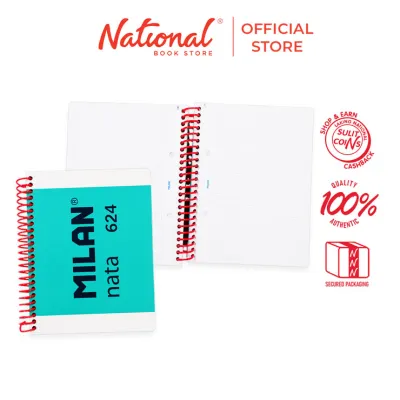

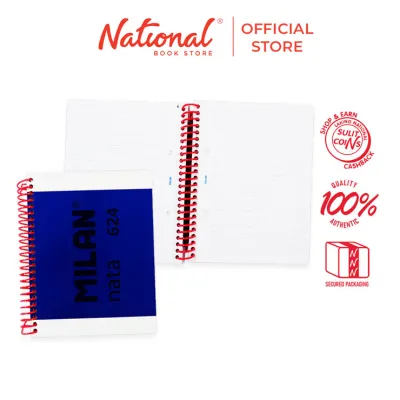
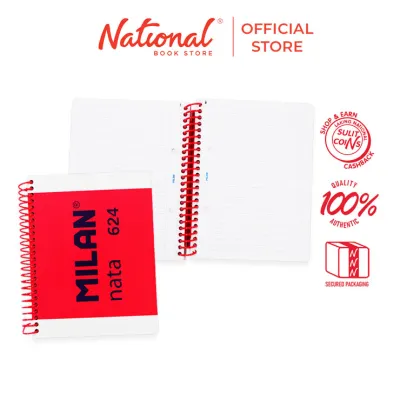
Prices are valid at publication and may change. Please refer to the product page for the latest price.
In contrast, hardbound Milan notebooks feature a fixed spine where folded sections of paper, known as signatures, are sewn or glued together and anchored to a rigid outer cover. This traditional binding creates a permanent, book-like structure that keeps all pages securely bound in a fixed sequence.
These structural differences directly impact lay-flat performance. A spiral notebook can open a full 360 degrees, allowing you to fold the front cover completely behind the back cover. This is incredibly useful when working on cramped desks, small coffee shop tables, or during a busy commute where space is limited.
Hardbound notebooks, however, require a bit more effort to lie flat. Depending on the specific binding method used, a new hardbound notebook may resist staying open on its own, requiring you to gently break the spine or use a book weight to keep the pages accessible. Over time, high-quality stitched spines will loosen and lay flatter, but they will never offer the zero-resistance fold of a spiral coil.
When shopping, always check the manufacturer’s specifications or product labels for details on spine flexibility. Look for terms like “thread-bound” or “lay-flat binding” on hardbound models, as these indicate a construction designed to minimize page bounce and maximize your usable writing area.
Writing Comfort and Ergonomics
Your physical comfort during long writing sessions is heavily influenced by the binding of your notebook. For many writers, the physical presence of a spiral coil can be a major ergonomic obstacle. When writing near the inner margin, your hand or wrist may constantly bump against the raised metal or plastic loops.

This interference is particularly challenging for left-handed writers, whose hands must cross over the binding when starting a new line on the right-hand page. Even right-handed writers will experience this discomfort when working on the left-hand page of a spiral notebook.
Hardbound notebooks offer a much smoother transition across the center fold. Because the pages meet at a relatively flat gutter, your hand can glide across the entire width of the sheet with minimal interruption. This makes hardbound options highly preferred for continuous journaling, creative writing, or sketching.
Another ergonomic factor is the stability of your writing surface. A hardbound notebook features stiff, rigid covers that act as a built-in clipboard. This allows you to write comfortably while holding the notebook in your lap, standing up during a presentation, or sitting in transit where no desk is available.
While a spiral notebook can be folded back to save space, its flexible covers often lack the structural rigidity needed for writing without a solid table underneath. If you plan to write on your lap, you may need to carry a separate hard surface to support the flexible backing.
Finally, consider the sensory experience of page-turning. In quiet environments like libraries, study halls, or shared offices, the soft rustle of paper in a hardbound book is virtually silent. Spiral notebooks, depending on the coil material and punch alignment, can sometimes produce a clicking or scraping sound as pages slide over the wire, which might be distracting in whisper-quiet spaces.
Portability, Durability, and Daily Carry
If you carry your notebook everywhere, you must consider how well each binding type survives the daily commute. In tropical climates with high humidity, paper and bindings are subjected to additional environmental stress.
Spiral-bound notebooks face unique risks when tossed into a packed bag. The exposed metal or plastic coils can easily snag on loose threads, keys, or the mesh pockets of your backpack. Under heavy pressure from heavy textbooks or laptops, these coils can bend or warp, making it difficult to turn pages smoothly.
Hardbound notebooks are much better suited for tight spaces. Their smooth, enclosed spines slide easily into bag compartments without catching on other items. However, they are not completely immune to wear; the corners of hardbound covers can dent, fray, or peel over time if repeatedly dropped or rubbed against rough surfaces.
Cover protection is another critical area of comparison. The rigid covers of a hardbound notebook act as a protective shield, preventing the inner pages from creasing, bending, or tearing when your bag is compressed. Spiral notebooks often feature flexible plastic or thin cardboard covers that can curl or warp under pressure, leaving the edges of your pages vulnerable to damage.
To ensure you buy a durable product, perform a quick quality check in-store. For spiral models, inspect the ends of the wire coil to ensure they are securely crimped inward; loose or sharp wire ends can scratch your hands or snag your clothes. For hardbound models, gently open the notebook to the center and check the spine glue; there should be no visible gaps, cracking, or loose threads separating the pages from the cover.
Page Capacity and Paper Compatibility
The binding method also dictates how much paper a notebook can hold and how that paper interacts with your writing instruments. Because spiral bindings rely on physical loops, they can easily accommodate thicker paper stacks and higher page counts without putting stress on a fixed spine.
Hardbound notebooks must maintain a strict balance between page count, paper thickness, and spine integrity. If the paper is too thick, the notebook will struggle to close properly, resulting in a “gaping” effect that strains the glued joints. Consequently, hardbound notebooks often have a fixed, moderate page capacity to ensure the book remains flat and durable.
When choosing a notebook, always verify the paper weight, measured in grams per square meter (GSM), which is typically printed on the product label. If you prefer using fountain pens, gel pens, or heavy markers, you will need thicker paper (usually 90 GSM or higher) to prevent ink from bleeding through to the other side.
The relationship between paper weight and binding is crucial: a spiral notebook with high-GSM paper remains highly functional because the coil easily accommodates the extra thickness. A hardbound notebook with very thick paper will be significantly bulkier and may have fewer total pages to keep the spine manageable.
Additionally, consider how you plan to manage your pages. Spiral notebooks are often designed with perforated pages, allowing you to cleanly tear out notes to share with colleagues, file in a binder, or discard. Hardbound notebooks rarely feature perforations; removing a page usually requires cutting it out, which can compromise the structural integrity of the entire signature and cause adjacent pages to fall out.
Final Decision Framework: Which Milan Notebook Should You Buy?
To finalize your purchase, match your daily writing habits and environment to the strengths of each binding type. Use this framework to guide your decision:
Choose Spiral-Bound if:
- You work in cramped spaces, such as small coffee shop tables or lecture hall desks, where folding the notebook completely flat is a necessity.
- You frequently need to tear out pages for sharing, scanning, or discarding without ruining the rest of the notebook.
- You prefer a lightweight, flexible notebook that can easily bend to fit into casual bags.
- You want a notebook that opens instantly to your current page without needing a bookmark or weight to hold it down.
Choose Hardbound if:
- You want a premium, professional aesthetic suitable for business meetings, formal journaling, or long-term archiving.
- You need a rigid, built-in writing surface that allows you to take notes comfortably on your lap or while standing.
- You carry your notebook in a packed bag where exposed coils are likely to snag, bend, or damage other items.
- You write continuously across the entire page and want to avoid the physical obstruction of a center coil.
Verify First if:
- You are left-handed: test the notebook in-store to see if the coil placement or margin width interferes with your natural writing posture.
- You use specific writing instruments: check the paper weight (GSM) on the label to ensure it can handle your preferred ink without bleeding or feathering.
- You live in a highly humid environment: ensure metal coils are coated to prevent rust, or opt for a hardbound model with a sealed spine to protect the pages from moisture.
Frequently Asked Questions (FAQ)
Can I use fountain pens in both spiral and hardbound Milan notebooks?
Yes, you can use fountain pens in both formats, but your success depends entirely on the paper quality rather than the binding type. Before purchasing, check the product label for the paper weight (GSM). For fountain pen use, look for paper that is at least 90 GSM with a smooth, coated finish. This prevents the ink from feathering (spreading out along the paper fibers) or bleeding through to the reverse side. Always perform a small ink test in an inconspicuous corner of the back page to verify compatibility before starting a major writing project.
Do spiral-bound Milan notebooks last as long as hardbound ones for archiving?
For long-term archiving, hardbound notebooks generally offer superior longevity. The enclosed spine of a hardbound notebook protects the inner edges of the pages from dust, light, and physical wear over many years. In contrast, spiral-bound notebooks are more vulnerable to environmental degradation. In humid tropical climates, exposed metal coils can rust if not properly coated, and the punched holes along the paper edge can tear or wear out with frequent handling. If you want your journals or records to last for decades, a hardbound format stored in a dry, cool place is the safest choice.
Community discussion
Share your experience or ask a question. Comments are reviewed before publication.