
Quick Answer: Which College Notebook Binding Should You Choose?
Selecting the right college notebook depends on how you process information, organize your coursework, and manage your daily campus commute. If you prefer a highly flexible system where you can constantly rearrange pages, insert printed handouts, and consolidate multiple subjects into a single volume, a loose-leaf binder system is your ideal choice. This setup is particularly beneficial for courses with heavy administrative updates, shifting syllabi, or a high volume of loose worksheets.
Conversely, if you prioritize a lightweight, grab-and-go format that requires zero maintenance, a spiral-bound notebook is the better fit. Spiral notebooks excel at sequential, chronological note-taking and are highly suited for fast-paced lectures where you cannot afford the distraction of loose pages. Your final decision should weigh your personal filing discipline against the physical constraints of your lecture halls and the specific submission formats required by your professors.
Structural Differences: Flipping, Folding, and Writing Comfort
The physical design of your notebook directly impacts your physical comfort during long lectures and study sessions. Spiral-bound notebooks feature a continuous metal or plastic coil threaded through perforated edges. This design allows the notebook to lay completely flat on a desk or fold back a full 360 degrees. In crowded university lecture halls with tiny armrest desks, this compact footprint is a massive advantage, allowing you to write comfortably without taking up adjacent space.
Products mentioned in this guide
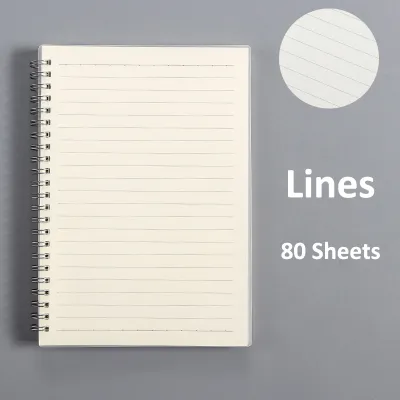
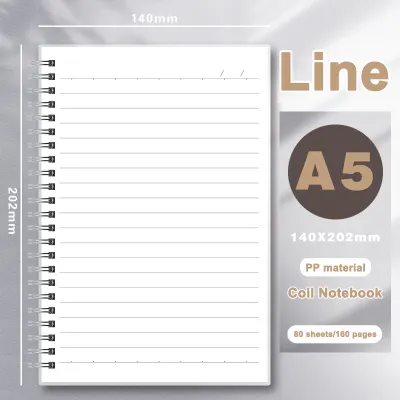

Prices are valid at publication and may change. Please refer to the product page for the latest price.

However, the page-turning mechanics of spiral coils can present minor annoyances. Over time, individual pages can catch on the coil, especially if the paper holes are small or if the coil itself becomes slightly bent during transit. If you need to flip back and forth between reference sheets and your active writing page quickly, this friction can slow you down and occasionally cause small tears near the perforations.
Loose-leaf systems rely on a rigid binder mechanism, typically featuring two, three, or multi-ring configurations. Because binders cannot fold back on themselves, they require double the desk space when open. This wide footprint can be cumbersome on small lecture desks or when sharing a study table with classmates. Additionally, the bulky metal or plastic rings create a physical barrier for your hand. Writing near the inner margin can be highly uncomfortable, particularly for left-handed students or when writing on the back of a page, often forcing you to remove the sheet entirely to write comfortably.
Paper size and format standards also differ structurally. Spiral notebooks are self-contained, meaning you are locked into the manufacturer’s paper dimensions and line spacing once purchased. Loose-leaf systems allow you to mix and match paper types—such as ruled, grid, or blank sheets—within the same binder, provided the paper matches the ring spacing and outer dimensions of your binder shell.
Organization and Customization for College Courses
College courses rarely follow a perfectly linear path, making organizational flexibility a key consideration for your note-taking system. Loose-leaf binders offer unparalleled customization. If a professor distributes a printed syllabus update, a grading rubric, or a complex diagram, you can punch holes in the document and insert it directly alongside your handwritten notes. This keeps all relevant materials for a specific topic chronologically integrated, reducing the risk of losing loose handouts in your bag.
This modularity also makes it easy to correct mistakes or reorganize your study materials before exams. If you miss a lecture, you can simply insert a classmate’s copied notes or a printed slide deck directly into the correct sequence later. You can also use heavy-duty plastic dividers with customizable tabs to separate different modules, units, or entirely different subjects within a single binder.
Spiral-bound notebooks enforce a strict, chronological structure. Once you write on a page, its position is fixed. If you need to insert a handout, you must rely on tape, glue, or built-in pocket folders, which can quickly make the notebook bulky and uneven. If you miss a lecture, you must estimate how many pages to leave blank, which often leads to awkward gaps or out-of-order notes.
To organize a spiral notebook, you must rely on external tools like sticky tabs, color-coded highlighters, or edge-indexing. While this limits structural flexibility, it offers a high level of security. Because the pages are permanently bound, there is virtually no risk of accidentally dropping your notebook and scattering loose sheets across a windy campus courtyard. Your notes remain intact and in the exact order you wrote them.
Durability, Portability, and Daily Campus Use
Commuting across a busy campus requires stationery that can withstand physical wear and tear, especially under tropical conditions. High humidity can soften paper fibers, making thin sheets more susceptible to damage. In a loose-leaf binder, humid conditions can cause the paper around the punched holes to soften, increasing the risk of pages tearing out of the rings during fast page turns. To prevent this, you may need to apply adhesive reinforcement rings to high-use pages.
Binder rings themselves are also prone to misalignment if the binder is dropped or packed too tightly into a backpack. Once the rings lose their perfect alignment, pages will snag, tear, or slip out of the binder entirely. Additionally, a fully loaded multi-subject binder is inherently bulky and heavy, which can strain your shoulders during long walks between campus buildings.
Spiral notebooks are generally lighter and more flexible, making them easier to slide into a packed bag. However, the spiral coils themselves are vulnerable to damage. Metal coils can bend out of shape under pressure, while plastic coils can crack if crushed. A bent metal coil can snag on the fabric lining of your backpack, catch on other items, or unravel over time, causing pages to slip off the binding.
To protect both notebook types during daily transit, look for options with durable polypropylene or thick water-resistant plastic covers rather than basic paperboard. Plastic covers shield your notes from sudden tropical downpours and prevent the edges of your paper from curling due to humidity. When packing your bag, place binders flat against the back panel to distribute weight evenly, and slide spiral notebooks in with the coil facing upward to prevent snagging on zippers.
Cost Structure and Refill Value Over a Semester
When budgeting for an academic year, it is helpful to look at both the immediate upfront costs and the long-term expenses of your stationery choices. A loose-leaf system typically requires a higher initial investment. You must purchase a durable binder, a set of dividers, and potentially a hole puncher to handle handouts. However, this system is highly cost-effective over time. Once you own the binder, you only need to purchase bulk packs of loose-leaf refill paper, which are generally much cheaper per sheet than buying brand-new bound notebooks.
At the end of a semester, you can archive your old notes in cheap storage folders and reuse the same binder and dividers for your next set of courses. This significantly reduces your recurring stationery expenses over your college career. It also minimizes waste, as you only use the exact number of pages you need, rather than discarding a half-empty spiral notebook.
Spiral-bound notebooks have a low upfront cost, making them highly accessible at the start of the semester. However, because they cannot be refilled, you must buy entirely new notebooks once the pages are full. If you purchase a multi-subject spiral notebook and only use half of the pages in one section, those remaining pages are often wasted, as tearing them out leaves messy paper shreds along the spine.
To calculate your personal semester budget, visit local stationery stores or browse online marketplaces to compare the price per sheet of bulk loose-leaf paper against the cost of individual spiral notebooks. Factor in your typical writing volume; heavy note-takers who fill multiple volumes per subject will find the long-term savings of a loose-leaf system highly advantageous.
Decision Framework: Choosing Your Ideal College Notebook
To finalize your choice, evaluate your study habits, course load, and organizational preferences against the following criteria.
Choose Loose-Leaf If:
- You value structural flexibility: You prefer to group notes by topic rather than the date they were written, or you like to integrate printed slides, syllabus sheets, and homework directly into your notes.
- You want to carry one item: You prefer consolidating all your subjects into a single, organized binder rather than managing multiple separate notebooks.
- You want long-term cost efficiency: You want to invest in a durable binder system that you can reuse for multiple semesters by simply swapping out the paper.
Choose Spiral-Bound If:
- You prioritize portability and speed: You want a lightweight, grab-and-go notebook that fits easily on small lecture hall desks and requires no assembly or hole-punching.
- You prefer chronological security: You want your notes to remain permanently bound in the exact order they were written, with zero risk of pages falling out or getting lost.
- You want a low upfront cost: You prefer to buy inexpensive, dedicated notebooks for each subject at the start of every term.
Consider a Hybrid Approach:
Many successful college students combine both systems to get the best of both worlds. You can use lightweight, single-subject spiral notebooks during lectures to capture fast-paced notes without worrying about desk space or ring obstruction. Once you return to your dorm or library, you can tear out the perforated pages and file them into a master loose-leaf binder alongside your syllabus, handouts, and study guides. This keeps your daily carry light while maintaining a highly organized, comprehensive archive of your coursework.
Before purchasing your supplies in bulk, always check your course syllabi or consult your professors. Some instructors require specific paper sizes, such as A4 or Letter, or mandate that assignments be submitted on clean, non-perforated loose-leaf paper. Verifying these requirements early will save you from buying incompatible supplies.
Frequently Asked Questions (FAQ)
Can I use loose-leaf paper in a spiral-bound notebook?
Standard loose-leaf paper cannot be directly inserted into a traditional spiral-bound notebook because the hole-punch patterns do not match the continuous coil binding. If you need to add loose-leaf sheets or printed handouts to a spiral notebook, you can use clear adhesive document pockets that stick to the inside covers, use paperclips or binder clips to secure the pages, or fold the handouts and tuck them into the notebook’s built-in pocket dividers. Alternatively, you can look for specialized disc-bound or customizable notebook systems that allow you to remove and insert pages on a flexible spine.
What paper size and punch standard should I check before buying?
Before purchasing binders or refill paper, you must ensure that your paper size and hole-punch pattern are fully compatible. In the Philippines, the most common paper sizes for academic use are Letter (8.5 x 11 inches) and A4 (8.27 x 11.69 inches), with B5 also growing in popularity for compact carrying. Standard binders typically use a 2-hole or 3-hole mechanism, which requires matching pre-punched paper. If you are buying multi-ring binders (such as 20-ring or 26-ring systems), you must purchase refill paper specifically punched for those exact ring configurations, as standard 3-hole paper will not fit.

Community discussion
Share your experience or ask a question. Comments are reviewed before publication.