
Choosing the right notebook is more than a matter of aesthetic preference; it directly dictates how comfortably you write, how easily you can share your notes, and how long your records will survive. Neither spiral-bound nor stitched notebooks are universally superior. Instead, the ideal choice depends on whether your daily routine demands a flexible, lay-flat writing surface with easily removable pages, or a durable, book-like archive that can withstand years of shelf storage. For students navigating cramped lecture halls, professionals documenting project timelines, and creative writers journaling their thoughts, understanding the structural trade-offs of each binding type is the first step toward finding the right analog tool.
Core Differences in Binding Structure and Lay-Flat Performance
The fundamental distinction between these two notebook types lies in their mechanical construction. Spiral-bound notebooks utilize continuous metal or plastic coils—or double-loop wire-o bindings—threaded through pre-punched holes along the edge of the paper. This design allows each page to rotate independently around the coil. Stitched notebooks, by contrast, rely on signatures, which are groups of folded sheets sewn together with thread along the fold line. These signatures are then bound to a spine cover, often reinforced with a layer of adhesive.
This structural difference directly impacts lay-flat performance. Spiral notebooks excel at flexibility, opening to a full 360 degrees. You can fold the cover completely behind the pages, creating a rigid, compact writing surface. This is highly advantageous when writing on your lap, on a tiny desk, or while standing during a busy commute.
Products mentioned in this guide
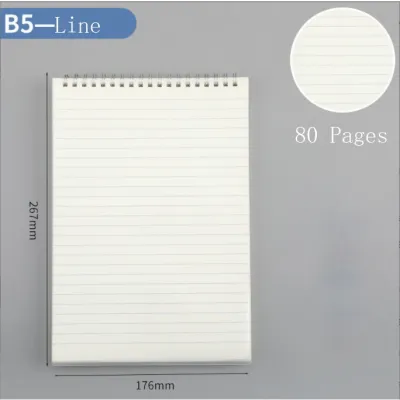
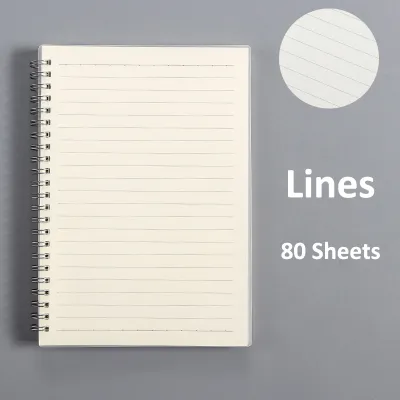
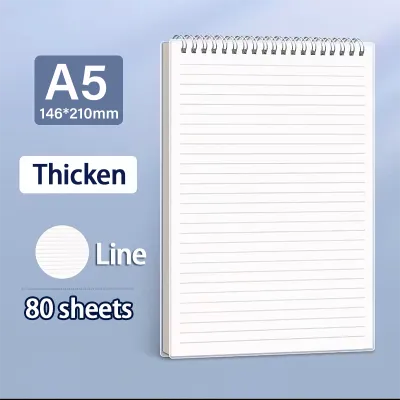
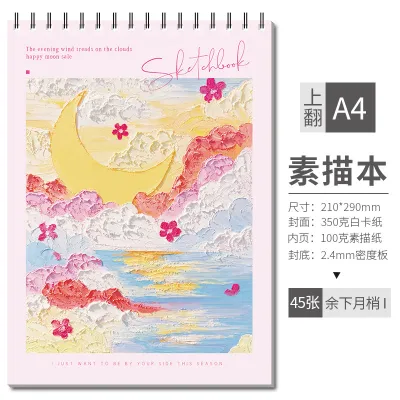
Prices are valid at publication and may change. Please refer to the product page for the latest price.
Stitched notebooks are bound like traditional books, meaning their ability to lay flat depends heavily on the binding quality and paper weight. High-quality Smyth-sewn notebooks can lay flat at 180 degrees, but cheaper glued-and-stitched options often resist staying open. This resistance requires you to hold the pages down constantly, which can cause hand fatigue over long writing sessions.
Furthermore, paper grain and signature size influence the opening angle of stitched notebooks. If the paper grain runs parallel to the spine, the pages turn smoothly and drape naturally. However, if the signatures are too thick, they create a deep center crevice or gutter. This gutter can make it difficult to write near the inner margins, a problem that spiral notebooks avoid entirely.
Durability and Lifespan: Which Binding Lasts Longer?
Evaluating long-term durability requires looking at how each binding style handles daily wear and tear. Spiral bindings have distinct physical vulnerabilities. The metal or plastic coils can snag on clothing, backpack mesh, or loose threads. Under heavy pressure inside a packed bag, metal coils can bend out of shape, which prevents pages from turning smoothly and may cause them to slip off the track.

Additionally, the punched holes in spiral notebooks are highly susceptible to tearing. In humid tropical climates, such as during the wet season in the Philippines, paper naturally absorbs moisture from the air, becoming softer and more pliable. This increased moisture content makes the paper around the spiral holes more fragile, increasing the risk of pages tearing away under daily friction.
Stitched notebooks generally offer superior long-term structural integrity, but they are not immune to failure. The primary vulnerabilities of stitched bindings are thread snapping and signature loosening. If a single thread breaks due to rough handling, adjacent pages in that signature can begin to slip out. Many modern stitched notebooks use a hybrid glued-and-sewn spine; in high-humidity environments, low-grade adhesives can degrade or soften over time, leading to spine separation.
To ensure you buy a durable notebook, perform quick quality checks before purchasing. For spiral models, inspect the ends of the coil to ensure they feature a crimped lock-loop that prevents the coil from spinning out. For stitched models, open the notebook to the center of a signature and inspect the thread. Look for thick, tightly tensioned thread without loose loops or fraying, and gently tug the pages to ensure they are firmly anchored.
Page Removal, Tearing, and Reorganization Convenience
If your workflow involves sharing notes, scanning documents, or discarding rough drafts, page-removal convenience is a critical factor. Spiral notebooks are highly practical for these tasks. Many spiral models feature micro-perforations along the inner edge of the page, allowing you to tear out a clean sheet without leaving messy, jagged paper scraps. Even without perforations, you can carefully tear a page off the coil without affecting the rest of the notebook.
Stitched notebooks, however, are designed for permanent, chronological records. Tearing a page out of a stitched notebook is highly discouraged. Because the pages are bound in folded signatures, removing one page often loosens its conjugate page on the opposite side of the signature, causing multiple pages to fall out over time. Tearing also leaves a jagged edge near the gutter, which compromises the binding’s overall tension.
Before buying a spiral notebook, run your finger along the micro-perforations to verify they are deep and consistent. If the perforations are too shallow, the paper will tear unevenly; if they are too deep, pages may fall out prematurely. Additionally, check the inner margin width to ensure there is enough blank space between the perforations and the ruled lines so your writing is not cut off when you remove a page.
Portability, Storage, and Daily Handling
How a notebook behaves in backpacks, on desks, and during commutes is essential for daily usability. The physical profile of a spiral notebook makes it less streamlined for travel. The exposed coil can catch on bag zippers or delicate clothing fabrics. To mitigate this, look for spiral notebooks with protective polypropylene covers that extend slightly past the coil, or choose twin-loop wire-o designs which lie flatter than single continuous spirals.
For vertical shelf storage, stitched notebooks are the clear winner. They feature flat, uniform spines that can be easily labeled with titles, dates, or subject names, allowing you to file them like books. Spiral notebooks tend to tangle when stacked vertically on a shelf. The coils make one side of the notebook significantly thicker than the other, causing stacks to tilt and slide unless you alternate their orientation.
Metal spirals also add noticeable weight and bulk, preventing the notebook from closing completely flush. If you carry multiple notebooks in your bag during a daily commute, the cumulative bulk of several spiral coils can take up valuable space. Stitched notebooks lay flat against one another, maximizing bag space and keeping your load compact.
Evaluating Value and Budget Considerations
Spiral notebooks are generally less expensive to manufacture because the process of punching holes and threading a coil is highly automated. This makes spiral-bound options highly accessible and cost-effective for bulk school or office supplies, with functional options starting at very low price points, often under ₱50 to ₱100.
Stitched notebooks, particularly those utilizing Smyth-sewn bindings, require more complex machinery and assembly steps, which commands a premium price. These notebooks are often paired with higher-grade paper designed to resist fountain pen ink feathering and ghosting, further increasing the cost.
To determine the true value, calculate the cost per usable page and factor in the notebook’s intended lifespan. If you are using a notebook for temporary scratch work or daily to-do lists, a low-cost spiral notebook offers excellent utility. However, if you are keeping permanent project logs, journals, or reference guides that you need to consult years from now, investing in a durable stitched notebook is more cost-effective in the long run.
Decision Framework: Which Notebook Should You Buy?
To finalize your purchasing decision, consider how your specific daily tasks align with the strengths of each binding type.
Choose Spiral-Bound if:
- You need to fold the notebook 360 degrees to write on small desks, clipboards, or while standing.
- You frequently tear out pages to share, scan, or discard.
- You prefer a budget-friendly option for high-volume note-taking.
Choose Stitched if:
- You plan to archive your notes long-term and store the notebook vertically on a shelf.
- You prefer a smooth, book-like writing experience without a metal coil obstructing your hand.
- You write across the entire spread and need a clean, continuous layout.
Verify First if:
- Check the paper weight (GSM). For gel pens and fountain pens, look for 80 GSM or higher to minimize bleed-through. Conduct a small ink test in an inconspicuous corner to verify drying speed and feathering, as these depend on your specific ink and paper combination.
- Verify the binding type of stitched notebooks. Perfect-bound notebooks use only glue and are prone to falling apart; look for Smyth-sewn or thread-bound labels for maximum durability.
| Feature | Spiral-Bound Notebooks | Stitched Notebooks |
|---|---|---|
| Lay-Flat Angle | 360 degrees (folds back completely) | 180 degrees (requires quality binding) |
| Page Removal | Easy (often micro-perforated) | Difficult (risks damaging the binding) |
| Snag Risk | High (coils can catch on fabrics/bags) | Low (smooth, flush spine) |
| Shelf Storage | Poor (tends to tilt or tangle) | Excellent (flat, labelable spine) |
| Ideal Use Cases | Lecture notes, quick drafts, field work | Journaling, archival logs, sketching |
Frequently Asked Questions (FAQ)
Can I rebind a spiral notebook into a stitched one later? (FAQ)
Traditional signature stitching is not feasible once a notebook has been spiral-bound. Stitched notebooks require intact, folded sheets of paper sewn through the center fold. Because spiral notebooks consist of single sheets with pre-punched holes along the edge, there is no center fold to sew through. Attempting to stitch through the punched holes would require cutting off the margins, significantly reducing your writing space. If you want to archive a spiral notebook, consider placing it in a protective slipcase, scanning the pages into a digital format, or using a binder system with archival sleeves.
Does the number of pages affect which binding I should choose? (FAQ)
Yes, page count plays a significant role in binding performance. Spiral bindings can accommodate very high page counts, but as the page count increases, the coil must become larger. Oversized coils are highly susceptible to bending, making the notebook bulky and awkward to write near. For stitched notebooks, high page counts put immense strain on the spine. If a stitched notebook exceeds the manufacturer’s recommended signature limits without proper reinforcement, the spine can crack, and the glue may fail under the weight of the pages. For thick, high-page-count volumes, look for robust Smyth-sewn bindings with reinforced cloth spines.
Community discussion
Share your experience or ask a question. Comments are reviewed before publication.