
Quick Answer: Which Should You Choose?
Choosing between a spiral notebook and a writing pad depends entirely on whether you prioritize long-term page preservation or disposable flexibility. If you need a permanent, chronological record of your thoughts, lectures, or projects, the spiral notebook is your best option. Its bound structure keeps your pages securely in place over time.
Conversely, if you prefer a temporary workspace for sketching out ideas, drafting quick lists, or tearing off sheets to share with colleagues, a writing pad is the superior tool. The choice hinges on your daily workflow and how you prefer to organize, store, or discard your written notes.
Core Differences in Binding and Paper Layout
Spiral notebooks utilize a continuous metal or plastic coil threaded through pre-punched holes along the side or top edge. This mechanical binding allows the user to fold the notebook completely back on itself, creating a compact, 360-degree writing surface. However, the coil itself takes up physical space and can occasionally catch on fabrics or bend out of shape.
Products mentioned in this guide
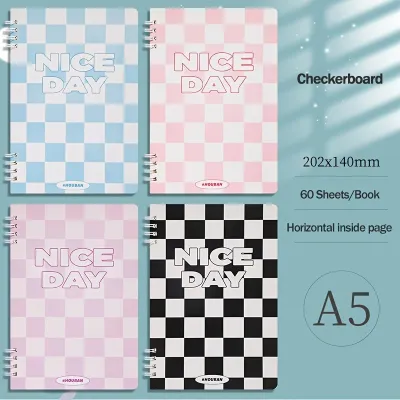
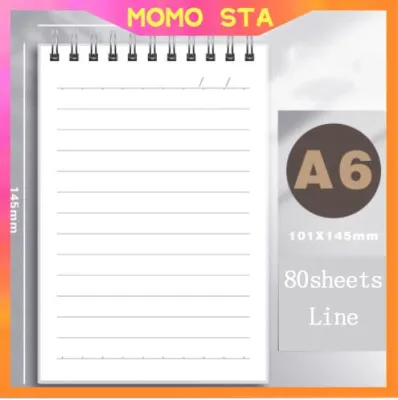
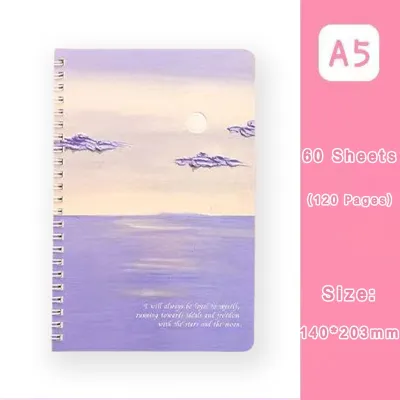
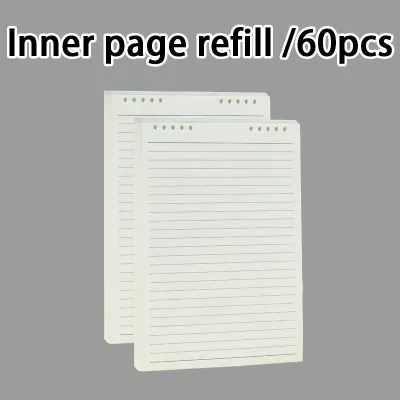
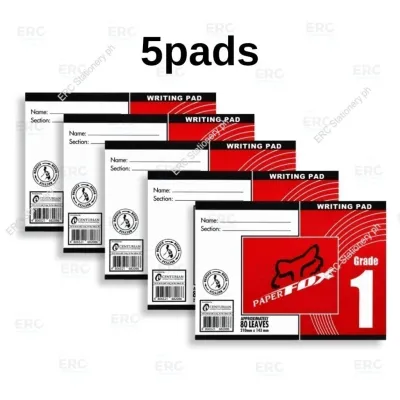
Prices are valid at publication and may change. Please refer to the product page for the latest price.

In contrast, writing pads typically feature a top-bound design secured by a strip of adhesive or heavy-duty tape. This construction keeps the sides completely free of obstructions, allowing your hand to glide smoothly across the entire width of the page. Pages are designed to be torn away cleanly along a perforated line or peeled directly from the glue strip, making them ideal for temporary notes.
The layout of the paper also differs due to these binding methods. Spiral notebooks often lose a small margin of usable writing space on the inner edge where the holes are punched. If the notebook lacks perforations, tearing a page out leaves messy paper remnants. Writing pads maximize the full width of the sheet, providing clean, straight margins from edge to edge without any structural interference.
Portability and Desk Space Considerations
When packing for a daily commute in a crowded bag, the physical profile of your stationery matters. Spiral coils add noticeable bulk and can easily snag on laptop sleeves, loose threads, or other items in your backpack. Stacking multiple spiral notebooks can also result in an uneven, wobbly pile because the coil side is thicker than the paper side.
Writing pads offer a much slimmer, flatter profile that slides effortlessly into any bag compartment. Many writing pads are constructed with an extra-thick, rigid cardboard backing board. This sturdy backing acts as a built-in lap desk, allowing you to take clear, legible notes while standing, traveling, or sitting in spaces without a desk.
On a desk, the footprint of each format dictates how you organize your workspace. A spiral notebook folded back on itself takes up exactly half the desk space of a traditional bound book, making it highly compatible with crowded study desks or small office cubicles. Writing pads, while flat and stable, require a clear vertical space above them if you fold the torn pages over the top, or they require you to immediately discard or file the sheets you remove.
Writing Experience and Paper Compatibility
The physical sensation of writing is heavily influenced by how your hand interacts with the binding and the paper itself. For left-handed writers, spiral notebooks can present a constant physical obstacle. The raised metal or plastic coil can press uncomfortably into the side of the hand when writing on the left page of a side-bound notebook. Writing pads, with their top-bound design, eliminate this side barrier entirely, offering an unobstructed path for both left- and right-handed users.
Paper weight, measured in grams per square meter (GSM), is a critical specification to check on the product label. Standard, budget-friendly notebooks and pads often use paper ranging from 50 to 70 GSM. This lighter paper is perfectly adequate for ballpoint pens and pencils, but it is highly susceptible to ink feathering and bleed-through when using gel pens, rollerballs, or fountain pens.
To ensure a clean writing experience without ink seeping through to the reverse side, look for paper rated at 80 GSM or higher. You can verify the paper’s texture and absorption by checking the manufacturer’s packaging details or performing a quick test in an inconspicuous corner of the page. Smoother, coated papers slow down ink absorption, which prevents feathering but may slightly increase drying times—a crucial factor to consider in humid environments where ink naturally takes longer to dry.
Durability and Long-Term Archiving
If you intend to keep your notes for months or years, the durability of the binding is just as important as the paper quality. Spiral notebooks excel at keeping pages in chronological order, but they are not immune to wear. Over time, frequent page-turning can wear down the paper around the punched holes, causing pages to slip out of the coil. Additionally, plastic coils can crack under pressure, while metal coils can bend, making it difficult to flip pages smoothly.
Writing pads face a different set of durability challenges, particularly in tropical climates with high humidity. The adhesive used in top-glued pads can soften and degrade when exposed to consistent moisture and heat. This can cause pages to detach spontaneously from the pad before you are ready to remove them. Tape-bound pads with heavy stapling offer more structural integrity, but they are still fundamentally designed for temporary use.
For long-term archiving, notes written on a writing pad must be actively managed. This typically involves tearing the pages off and organizing them into binders, sheet protectors, or filing cabinets. Spiral notebooks require less active maintenance for archiving, provided you store them flat in a dry environment and handle the coils gently to prevent snagging.
Cost and Value Comparison in the Philippines
When shopping for stationery in the Philippines, evaluating the true value of your purchase requires looking beyond the initial price tag on the shelf. A simple comparison of upfront costs in ₱ can be misleading. To find the most economical option, calculate the cost per usable page by dividing the total price of the item by the number of sheets it contains.
Spiral notebooks often carry a slightly higher upfront cost due to the complexity of their mechanical binding and the inclusion of extra features. Many mid-range and premium notebooks come equipped with built-in plastic dividers, storage pockets, and durable plastic covers that protect the paper from spills and humidity. These added components provide excellent value if you need to organize multiple school subjects or work projects within a single book.
Writing pads, on the other hand, offer a minimalist, cost-effective solution. Because they lack complex covers, dividers, or metal coils, you are paying almost exclusively for the paper and a basic backing board. This makes them highly economical for high-volume drafting, brainstorming sessions, or daily to-do lists. To maximize your budget, look for bulk packs or seasonal promotions at local physical stationery shops and online marketplaces, especially during back-to-school seasons.
Final Decision Framework: Match the Format to Your Habit
To finalize your choice, evaluate your daily writing habits against the specific strengths of each format. Your decision can be guided by a straightforward set of practical criteria.
Choose a Spiral Notebook if:
- You need to keep your notes organized chronologically over a long period.
- You are managing multiple subjects, projects, or meetings that require distinct sections.
- You frequently write in tight spaces, such as small lecture hall desks, where folding the cover back is necessary.
- You want a durable cover to protect your pages from being bent or soiled in a bag.
Choose a Writing Pad if:
- You prefer a clean, flat writing surface without any side binding obstructing your hand.
- You regularly tear out pages to share with others, file in binders, or discard after completing tasks.
- You often write on the go and require a stiff, rigid backing board to support your handwriting.
- You want a minimalist, lightweight tool for quick brainstorming and temporary drafting.
Verify first if:
- You use wet inks like gel or fountain pens, which require checking the GSM rating on the label to prevent bleed-through.
- You are left-handed, in which case a top-bound writing pad or a top-bound spiral notebook will offer the most comfortable, snag-free writing experience.
Frequently Asked Questions (FAQ)
Can I use fountain pens on standard spiral notebooks and writing pads?
Standard office-grade paper used in common notebooks and pads is often highly absorbent, which causes fountain pen ink to feather across the fibers or bleed through to the back of the page. To enjoy a smooth fountain pen experience, look for products explicitly labeled as fountain pen friendly or check for a higher paper weight, ideally 80 GSM to 100 GSM. Performing a small ink test in a corner of the page is always recommended before writing extensively.
Are there eco-friendly or recycled options for both formats?
Yes, eco-friendly options are widely available for both spiral notebooks and writing pads. When shopping, look for certified recycled paper content and sustainable forestry labels on the packaging. Additionally, consider the recyclability of the binding materials; metal coils can be easily separated and recycled, whereas plastic coils and heavy adhesives may require special processing or end up in landfills.

Community discussion
Share your experience or ask a question. Comments are reviewed before publication.