
Quick Answer: Which Binding System Should You Choose?
Choosing the right organizer notebook depends on how you manage your notes, how often you rearrange your pages, and where you plan to write. If you prioritize a simple, lightweight, and budget-friendly setup that folds completely flat on your desk or lap, a spiral-bound notebook is your best option. For those who require a highly structured, durable, and professional archiving system with heavy-duty dividers and pockets, a traditional ring-bound organizer is the ideal choice. If you want the ultimate level of customization—allowing you to snap pages in and out, mix different paper templates, and adjust the notebook’s thickness on the fly—the modular disc-bound system is unmatched.
Before committing to a system, consider your daily workflow. A student rushing between classes may prefer the grab-and-go simplicity of a spiral coil, while a project manager coordinating multiple active tasks will benefit from the modular flexibility of discs or the secure, high-capacity storage of rings.
Understanding the Three Binding Mechanisms
To choose the best organizer notebook, it is essential to understand how each binding mechanism physically holds your pages together and how they operate during daily use.
Products mentioned in this guide
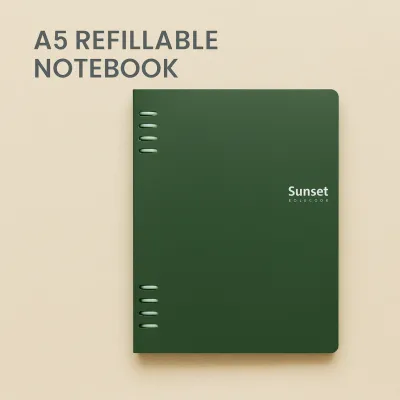
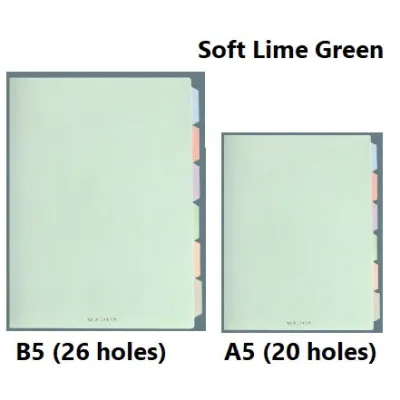
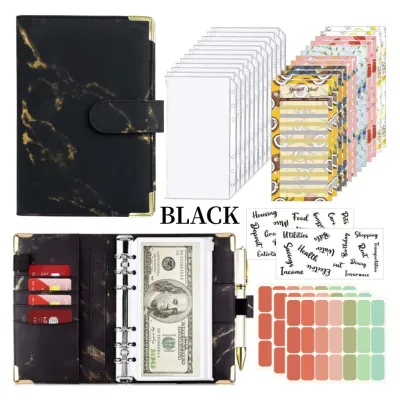
Prices are valid at publication and may change. Please refer to the product page for the latest price.

Spiral-Bound Notebooks
Spiral-bound notebooks utilize a continuous coil made of plastic or metal that is threaded through a series of closely spaced, small round or square holes punched along the edge of the paper. This design is incredibly common and highly reliable for straightforward writing tasks. Because the coil is a single, unbroken loop, the pages are permanently secured in place.
To remove a page from a standard spiral notebook, you must either tear it along a perforated line or physically rip it from the coil, which leaves messy paper debris behind. The defining physical characteristic of the spiral binding is its ability to fold back on itself a full 360 degrees. This allows you to write comfortably in tight spaces, such as a crowded cafe table or while standing during a commute, without requiring double the desk space of a traditional book.
Ring-Bound Organizers
Ring-bound organizers, often referred to as binders or personal planners, feature a mechanical spine equipped with metal rings that snap open and shut. These systems typically use standard configurations, such as 3-ring, 6-ring, or 9-ring layouts, mounted onto a rigid or semi-flexible cover. The paper used in these organizers must be punched with matching hole spacing to slide onto the rings.
To add, remove, or rearrange pages, you manually open the rings by pressing levers at either end of the spine or by pulling the rings apart directly. Once closed, the metal rings form a secure, unbroken loop that prevents pages from slipping out, even when the organizer is packed tightly into a bag. Because the spine is rigid and integrated into the cover, ring-bound organizers cannot fold back on themselves; they must remain open flat like a textbook, requiring a dedicated flat surface for comfortable writing.
Disc-Bound Notebooks
Disc-bound notebooks are a highly customizable hybrid system that relies on a series of individual, circular discs rather than a continuous spine or connected rings. The discs feature a raised rim on both sides, and the paper is punched with a specialized mushroom-shaped pattern along the edge. These mushroom-shaped slots snap directly onto the rims of the discs, holding the pages securely in place through friction and paper tension.
This unique design allows you to pull pages out and press them back in at any location within the notebook without opening a mechanical latch. You can easily move a meeting note from the back of your notebook to the front, or insert a monthly calendar page between your daily logs. The capacity of a disc-bound notebook is determined entirely by the diameter of the discs you choose; if your notebook becomes too thick, you can simply slide the pages off and transfer them to a larger set of discs.
Key Comparison Dimensions for Organizer Notebooks
When evaluating these three binding systems, comparing their performance across practical, daily-use dimensions will help you identify which mechanism aligns with your writing habits.
Refilling and Reorganization
The ease of moving pages is the primary differentiator among these systems. Disc-bound notebooks offer unparalleled freedom in this category. You can peel a page away from the discs with a gentle upward tug and press it back down onto the discs of another notebook in seconds. This makes it incredibly easy to archive old notes or consolidate active projects.
Ring-bound organizers also allow for easy reorganization, but the process is slightly more mechanical. You must open the rings, lift out the desired section, insert the new pages, and snap the rings shut. While secure, this process can be tedious if you frequently move individual pages throughout the day. Spiral-bound notebooks offer virtually no reorganization potential; once a page is written on, it remains in its original position unless you cut the binding or tear the page out permanently.
Lay-Flat and Folding Experience
How a notebook behaves on your desk significantly impacts your writing comfort. Spiral-bound and disc-bound notebooks excel at laying completely flat when opened. Furthermore, both systems allow you to fold the cover and unused pages all the way around to the back. This 360-degree folding capability minimizes the notebook’s footprint, making it highly convenient for writing on small desks, clipboards, or on your lap.
In contrast, ring-bound organizers cannot fold backward. The rigid spine and the protective cover require the binder to lie fully open on a flat surface. Additionally, the physical height of the metal rings can create an obstacle for your hand when writing near the center margin, a common frustration for left-handed writers or anyone working on the inner pages of a smaller binder size.
Customization and Accessories
If you enjoy tailoring your organizational system with specialized tools, the ecosystem of accessories is a major consideration. Ring-bound systems have a massive, decades-old market of pre-punched inserts, plastic zipper pouches, card holders, and colored dividers. Because the hole spacing is standardized (such as A5 or Personal size), finding compatible accessories from various manufacturers is highly straightforward.
Disc-bound systems also offer excellent customization, but they rely on a more specialized ecosystem. You can purchase dedicated disc-bound punches to turn any document, receipt, or heavy cardstock cover into a snap-in accessory. This allows you to create a truly bespoke planner. Spiral notebooks offer the least customization; accessories are generally limited to slide-in plastic bookmarks or adhesive pockets that you must stick directly onto the covers.
Durability and Snagging
Durability is heavily influenced by your environment and how you transport your notebook. In warm, humid tropical climates, paper fibers can soften over time. This environmental factor is particularly critical for disc-bound systems. If you use thin, low-gsm paper in a humid environment, the delicate mushroom-shaped punches can wear down or tear, causing pages to loose their grip on the discs and fall out during transit.
Ring-bound organizers provide the highest level of protection because the pages are safely enclosed within a thick, sturdy binder cover that shields the paper edges from wear and tear. Spiral-bound notebooks are generally durable, but cheap plastic coils can crush, and metal coils can bend if shoved carelessly into a packed bag, which can obstruct the pages from turning smoothly.
| Comparison Dimension | Spiral-Bound Notebooks | Ring-Bound Organizers | Disc-Bound Notebooks |
|---|---|---|---|
| Page Reorganization | Permanent (cannot rearrange) | Easy (requires opening rings) | Instant (snap-in, snap-out) |
| 360-Degree Folding | Yes (excellent for tight spaces) | No (must lie open flat) | Yes (excellent for tight spaces) |
| Paper Compatibility | Fixed manufacturer paper | Standard pre-punched refills | Requires specialized mushroom punch |
| Accessory Ecosystem | Minimal (mostly self-contained) | Extensive (pouches, dividers, inserts) | Moderate to high (custom punch required) |
| Page Security | Maximum (pages cannot fall out) | High (rings keep pages locked) | Moderate (requires thicker paper for security) |
| Spine Bulk | Very low and lightweight | High (bulky metal mechanism) | Adjustable (depends on disc size) |
Decision Framework: Matching the Binding to Your Workflow
To make your final decision, analyze your daily writing habits, your preferred workspace, and how you plan to maintain your notes over time.
Choose Spiral-Bound if:
- You want a lightweight, low-profile notebook that is easy to slip into a bag for daily travel.
- You prefer to write chronologically and have no need to rearrange, categorize, or remove pages later.
- You frequently write on your lap, in transit, or on small, crowded desks where saving space is a priority.
- You want an affordable, straightforward writing tool that requires no maintenance or additional accessories.
Choose Ring-Bound if:
- You need a highly secure, durable archiving system to store years of records, financial documents, or structured planning pages.
- You want to use heavy-duty accessories like plastic pockets, business card holders, and thick tabbed dividers.
- You primarily write at a spacious desk where the notebook can remain fully open without crowding your workspace.
- You prefer a classic, professional aesthetic, such as a premium leather or fabric binder cover.
Choose Disc-Bound if:
- You love the freedom of modular planning and want to constantly rearrange sections, project notes, and calendar pages.
- You want to mix and match different paper styles—such as grid, dotted, and lined sheets—within a single notebook.
- You want to control the thickness of your notebook, keeping it slim with small discs for daily travel, or expanding it with larger discs for comprehensive projects.
- You are willing to invest in a specialized punch and higher-quality, thicker paper to ensure your pages remain securely attached.
Verify First if:
- Paper Weight: If you choose a disc-bound system, verify that your paper is at least 100 gsm to 120 gsm. Thinner paper (like standard 70 gsm copy paper) will tear easily at the mushroom punches under regular handling.
- Punch Compatibility: If you plan to print your own inserts or use existing paper stock, check the cost and availability of compatible hole punches. A standard office hole punch will not work for disc-bound systems or specialized multi-ring planners.
- Sizing Standards: Ensure that any third-party refills you purchase match the exact dimensions and hole spacing of your binder cover or discs, as sizing standards can vary significantly between brands.
Frequently Asked Questions (FAQ)
Can I use ring-bound inserts in a disc-bound notebook?
No, standard ring-bound inserts are not compatible with disc-bound notebooks. Ring-bound paper features closed, circular holes designed to slide onto metal rings, whereas disc-bound systems require open, mushroom-shaped slots that grip the outer rims of individual discs. If you attempt to use ring-bound paper in a disc-bound notebook, the pages will not stay attached. To repurpose ring-bound paper for a disc-bound system, you would need to cut off the existing punched edge and punch new mushroom-shaped slots using a dedicated disc punch.
Do disc-bound pages fall out easily?
Under normal handling conditions, disc-bound pages remain highly secure and will not fall out. However, page security depends heavily on paper thickness and notebook capacity. If you overstuff a disc-bound notebook beyond the recommended capacity of your discs, the pages can easily pop off. Additionally, using thin paper (under 80 gsm) or turning pages aggressively can cause the delicate paper tabs around the mushroom punches to tear, reducing their grip. For the best results, use paper weights of 100 gsm or higher and turn pages gently from the top or center rather than pulling them from the outer corner.
How do I safely remove pages from a spiral notebook?
Standard spiral notebooks are designed for permanent page retention. Tearing pages out by hand leaves messy, frayed edges and can weaken the binding of the surrounding pages. If you must remove pages cleanly, it is best to use a notebook with micro-perforated pages, which allow you to snap the paper out cleanly along a designated line. If your notebook is not perforated and you want to remove the pages without leaving debris, you can use a specialized wire cutter to carefully snip the metal coil at both ends, allowing you to unthread the coil entirely. Note that this process permanently disassembles the notebook, so you will need to rebind the remaining pages using a new coil or transfer them to a different system.
Community discussion
Share your experience or ask a question. Comments are reviewed before publication.