
Quick Answer: Which A4 Notebook Binding Should You Choose?
Selecting the right A4 notebook binding depends entirely on your daily writing environment, how long you need to keep your notes, and your personal organizational style. Because the A4 format offers a generous canvas of 210 by 297 millimeters, the physical structure of the spine heavily influences how comfortably you can fill each page.
- Choose spiral-bound if you have limited desk space, frequently write on your lap, or need a notebook that can fold completely back on itself for quick note-taking.
- Choose stitched (thread-sewn) if you require a durable, professional-looking volume for permanent archiving, formal meetings, or chronological journaling where pages must never fall out.
- Choose loose-leaf if you manage complex, evolving projects, need to insert printed handouts, or want the freedom to reorganize and categorize your pages at any time.
Spiral-Bound A4 Notebooks: Flexibility and Flat-Lay Convenience
Spiral-bound notebooks, which utilize a continuous plastic or metal coil threaded through punched holes along the margin, are designed for maximum physical flexibility. This construction allows you to open the notebook completely flat on a desk or fold the cover 360 degrees behind the active page. This folding capability effectively halves the desk space required to use the notebook, making it an excellent option for cramped lecture halls, busy coffee shop tables, or writing while standing.

Another practical advantage of the spiral design is the ease of page turning. Because each sheet moves independently along the smooth track of the coil, there is no spine tension to resist your movement, allowing for quick transitions during fast-paced lectures or brainstorming sessions. Many modern spiral notebooks also feature micro-perforations along the inner edge, allowing you to tear out clean sheets without leaving messy, shredded paper scraps behind.
Products mentioned in this guide
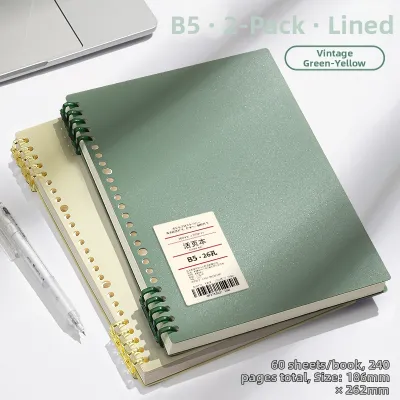
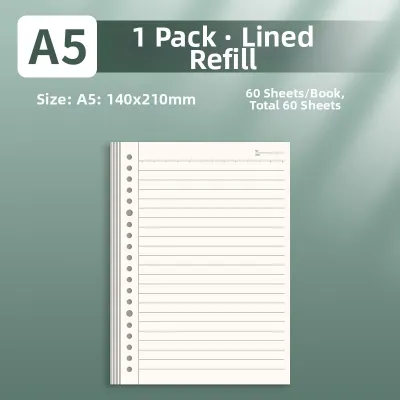
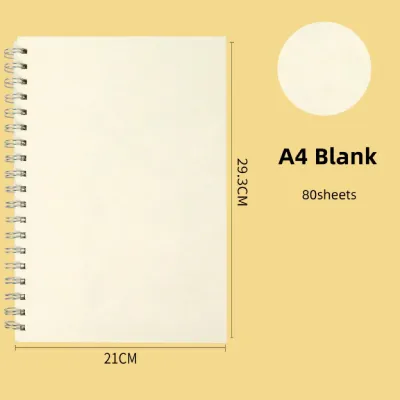
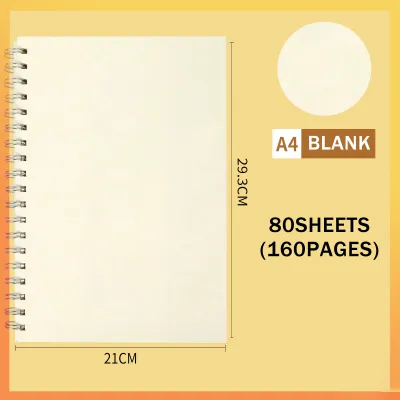
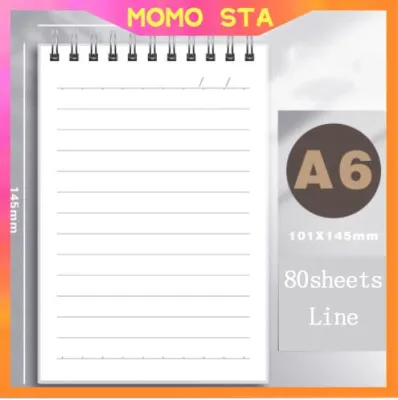
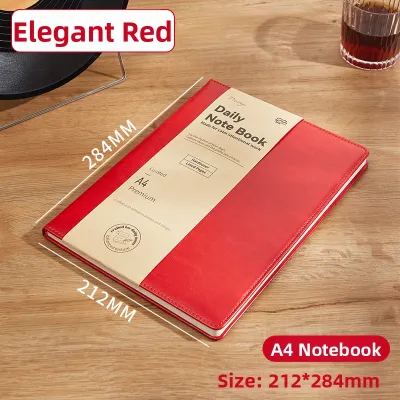
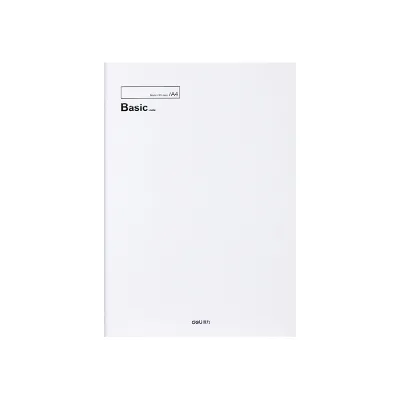
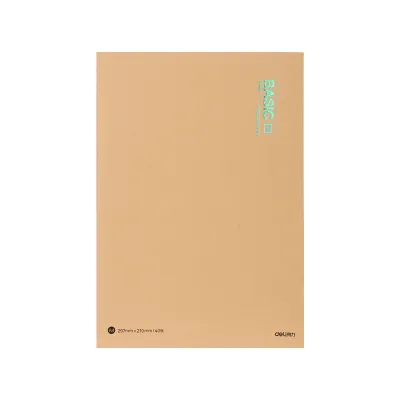
Prices are valid at publication and may change. Please refer to the product page for the latest price.
However, spiral bindings have distinct structural limitations that you should evaluate before purchasing. The exposed coils can easily snag on loose threads inside your backpack, potentially damaging delicate clothing or unravelling over time. Under heavy pressure in a packed bag, metal coils can bend and plastic coils can warp, which restricts the smooth movement of the pages and causes sticking. Additionally, the physical bulk of the spiral coil can sometimes obstruct your hand when writing close to the inner margin, a common frustration for left-handed writers.
This binding style is best suited for active, high-tempo environments. If you are a student taking daily lecture notes, a designer sketching quick layouts, or a professional who needs to jot down rapid reminders on a clipboard, the immediate accessibility of a spiral-bound notebook is highly practical.
Stitched A4 Notebooks: Durability and Professional Archiving
Stitched notebooks, often referred to as thread-sewn or Smyth-sewn, are constructed by sewing folded groups of paper (called signatures) together with strong thread before gluing them to an outer spine. This traditional bookbinding method offers exceptional structural integrity, ensuring that individual pages remain permanently secured within the binding even after years of frequent handling. The lack of exposed rings or coils gives these notebooks a slim, elegant profile that slides smoothly into laptop sleeves and looks highly professional in corporate settings.
One of the primary benefits of a high-quality stitched notebook is its long-term durability. Because the pages are bound together in interlocking groups, they do not suffer from the page-shedding issues common to cheaply glued notebooks. When opened, a well-made stitched notebook will lay relatively flat, allowing you to write comfortably across the center seam (the gutter) without losing valuable writing space. This makes it highly efficient for double-page spreads, mind maps, and continuous horizontal timelines.
Despite these benefits, stitched bindings require specific trade-offs. You cannot fold a stitched notebook back on itself; attempting to force the cover backward will crack the glued spine, weaken the threads, and permanently ruin the structural integrity of the book. Furthermore, because the pages are sewn in fixed signatures, removing a page is highly discouraged, as tearing out one sheet can loosen the corresponding page on the opposite side of the signature, causing both to eventually fall out.
Stitched A4 notebooks are ideal for permanent record-keeping and formal documentation. If you are keeping a daily work journal, maintaining a laboratory logbook, recording official meeting minutes, or archiving personal reflections that you wish to preserve on a bookshelf for decades, the security of a stitched binding is unmatched.
Loose-Leaf A4 Notebooks: Customization and Reorganization
Loose-leaf systems, which include traditional multi-ring binders and modern disc-bound notebooks, offer a modular approach to paper management. Instead of being permanently fixed to a spine, pages are punched with holes and held in place by rings or discs that can be opened and closed at will. This design gives you complete control over the internal structure of your notebook, allowing you to insert custom dividers, add fresh paper exactly where you need it, or remove obsolete notes to keep your binder lightweight.
This modularity is highly beneficial for integrating different types of media into a single physical location. You can easily print out digital documents, syllabus sheets, or project briefs on standard A4 paper, punch matching holes, and slot them directly alongside your handwritten notes. Additionally, loose-leaf systems are highly cost-effective over time; instead of purchasing an entirely new notebook when you run out of space, you simply buy refill paper packs, which typically range from ₱150 to ₱400 depending on paper thickness, and reuse the durable outer binder.
However, the mechanical nature of loose-leaf binders introduces notable drawbacks. The ring mechanisms add significant physical bulk and weight, making them the least portable option among the three binding types. Writing near the inner margin can also be highly uncomfortable, as your hand will constantly bump against the raised metal or plastic rings. Furthermore, if you frequently flip through the pages quickly, the punched holes can wear down, tear, and slip off the rings, requiring the use of adhesive reinforcement labels to keep the pages secure.
This system is best suited for complex, multi-subject organization. Students managing several distinct courses, project managers tracking multiple shifting timelines, and professionals who need to constantly update reference manuals will find the adaptability of a loose-leaf system highly advantageous.
Side-by-Side Comparison of A4 Notebook Bindings
To help you quickly evaluate these options, the table below compares the three binding types across key structural and usability dimensions.
| Binding Type | Lay-Flat Ability | Durability | Customization | Ideal User Profile |
|---|---|---|---|---|
| Spiral-Bound | Excellent (360-degree fold) | Moderate (coils can bend) | Low (fixed pages) | On-the-go writers, students, and quick note-takers |
| Stitched | Good (requires breaking in) | High (secure signatures) | None (permanent pages) | Professionals, archivists, and long-term journalers |
| Loose-Leaf | Fair (rings can obstruct hand) | High (reusable covers) | Excellent (modular pages) | Project managers, students, and planners |
It is important to note that paper performance—such as resistance to ink feathering, ghosting, and bleed-through—is entirely independent of the binding type. The thickness of the paper, measured in grams per square meter (GSM), and its surface coating are separate manufacturing specifications. Whether you choose spiral, stitched, or loose-leaf, you must verify the paper weight on the product packaging to ensure it matches your preferred writing instrument.
How to Match Your Workflow to the Right Binding
To make the final decision, analyze your physical writing environment. If you often work on public transit, on small clipboards, or at tiny desks where space is at a premium, a spiral-bound notebook is the most practical choice because of its minimal footprint. Conversely, if you always write at a spacious desk where you can spread out your materials, a stitched notebook or a loose-leaf binder will provide a more stable and comfortable writing surface.
Next, consider your long-term archiving habits. Ask yourself if the notes you are taking today will still be valuable to you in five or ten years. If you are compiling a permanent reference guide or a personal journal, a stitched notebook ensures that your records remain intact and chronological. If your notes are temporary, such as study drafts that you will discard after an exam, a spiral notebook or a loose-leaf binder allows you to recycle the paper easily without wasting a premium cover.
Do not forget to evaluate your daily commute and storage limits. A4 paper is relatively large, and when housed inside a thick multi-ring binder, it can quickly crowd a backpack or briefcase. If you travel frequently or commute in humid tropical weather where carrying heavy bags is exhausting, a slim, lightweight stitched notebook or a flexible plastic-covered spiral notebook will keep your load manageable.
Finally, verify the secondary specifications of the notebook before purchasing. Check the ruling style—whether you prefer ruled lines for structured writing, grid or dotted patterns for technical diagrams, or blank pages for sketching. If you choose a spiral notebook, look for micro-perforated pages for clean tearing. If you opt for loose-leaf, ensure that the hole pattern on your refill paper matches the ring configuration of your binder to avoid compatibility issues.
Frequently Asked Questions (FAQ)
Can I convert a spiral-bound notebook into a loose-leaf system?
Converting a spiral-bound notebook into a loose-leaf binder is generally impractical and risky. If you cut the spiral coils to extract the pages, the pre-punched holes along the margin rarely align with standard two, three, or four-ring binder spacing. To make them fit, you would need to trim the margins and punch new holes, which often cuts directly into your written notes and weakens the paper edge. It is highly recommended to select the correct binding system from the start to protect your work.
Does the binding type affect the paper quality inside the A4 notebook?
No, the binding type does not dictate the quality of the paper inside. Binding refers strictly to the mechanical method used to hold the sheets together, while paper quality is determined by its manufacturing specifications, such as fiber density, coating, and weight (GSM). You can find premium, fountain-pen-friendly paper in spiral, stitched, and loose-leaf formats alike. Always check the product label for the specific paper weight and texture to ensure it suits your writing tools.
Community discussion
Share your experience or ask a question. Comments are reviewed before publication.