
Choosing the right writing or drawing instrument depends entirely on your daily tasks, your paper choice, and your creative goals. The Stabilo marker lineup offers three distinct tools designed for specific applications, making it easy to build the ultimate stationery kit once you understand their core strengths. Whether you are highlighting textbooks, writing detailed journal entries, or coloring intricate designs, matching the pen to your project ensures clean results without ruining your paper.
To make an immediate decision, you can match your primary task to the corresponding line. Choose the Stabilo Boss if you need fluorescent or pastel highlighting and broad wedge-tip strokes for text annotation. Opt for the Point 88 if you require precise, fine-line writing, detailed journaling, or technical drafting with rulers and stencils. Select the Pen 68 if your focus is on vibrant coloring, bold sketching, and filling larger artistic areas. Before purchasing, always verify if your specific paper type requires specialized ink to prevent bleeding or feathering.
Core Differences: Tip, Ink, and Application
Understanding the physical and functional specifications of these three marker lines helps you avoid common stationery mistakes, such as using a broad highlighter for fine notes or a fine liner for coloring large spaces. Each line features a unique tip design, line width, and ink flow rate tailored to its intended use.
Products mentioned in this guide
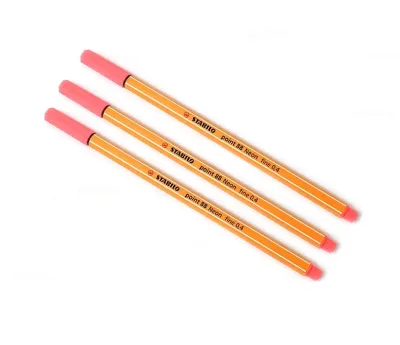
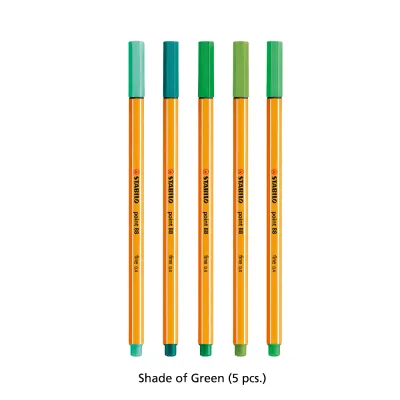
Prices are valid at publication and may change. Please refer to the product page for the latest price.
The tip shapes vary significantly across the three lines. The Stabilo Boss utilizes a broad, chisel-shaped polyester wedge tip. The Point 88 features a ultra-fine, metal-clad plastic tip designed for durability and structural support. The Pen 68 is equipped with a robust, conical fiber tip that provides a medium line width and handles varying hand pressure.
Ink formulations also differ to suit each application. The Stabilo Boss uses a highly visible, water-based fluorescent or pastel ink designed to stand out on printed text. Both the Point 88 and Pen 68 use water-based dye inks, but they are tuned to different flow rates. The Point 88 has a controlled, low-viscosity flow to prevent pooling in fine lines, while the Pen 68 delivers a richer, more saturated flow to ensure solid color coverage.
| Feature | Stabilo Boss | Stabilo Point 88 | Stabilo Pen 68 |
|---|---|---|---|
| Tip Type | Chisel / Wedge | Metal-clad Fine | Conical Fiber |
| Line Width | 2.0 mm and 5.0 mm | 0.4 mm | 1.0 mm |
| Ink Type | Water-based fluorescent/pastel | Water-based dye | Water-based dye |
| Best For | Highlighting & text marking | Fine writing, detailing, stencils | Coloring, bold sketching, drawing |
Stabilo Boss: Best for Highlighting and Broad Strokes
The Stabilo Boss is the classic choice for document review, academic studying, and organizing planner layouts. Its iconic flat design prevents it from rolling off slanted desks, making it a reliable companion for long study sessions in libraries or offices.

The wedge tip mechanics allow for dual line widths depending on how you hold the pen. Holding the chisel tip flat against the paper creates a broad 5.0 mm stroke, which perfectly covers standard printed text lines in textbooks. Tilting the pen to use the sharp point of the wedge produces a narrow 2.0 mm line, ideal for underlining specific words or writing small margin notes.
This line is highly regarded for its water-based ink properties, which are available in both classic fluorescent colors and softer pastel shades. The ink formula features anti-dry-out technology, allowing the marker to remain uncapped for up to four hours without drying out. This is particularly useful when you are actively reading dense documents and do not want to constantly recap the pen between highlights.
However, the heavy ink flow required for bright, solid highlighting presents some limitations. On thin paper, such as standard newsprint, lightweight notebook pages, or low-gsm copy paper, the ink can cause noticeable show-through or even bleed through to the other side. To minimize this, use a light hand and avoid pausing the tip at the end of a stroke, as resting the pen on the page deposits excess ink.
Students and professionals who regularly review dense documents, printouts, and textbooks will find the Stabilo Boss to be the most efficient tool for visual organization. It is designed to draw immediate attention to key information without smearing most printed inkjet or laser text.
Stabilo Point 88: Best for Precision Writing and Detailing
When your work demands absolute precision, the Stabilo Point 88 fineliner is the industry standard. Its hexagonal orange-and-white striped barrel is instantly recognizable and provides a comfortable grip for detailed writing and technical drawing.
The defining feature of the Point 88 is its 0.4 mm metal-clad fine tip. The tiny plastic writing nib is encased in a protective metal collar, which prevents the tip from bending, splitting, or wearing down over time. This rigid structure makes the Point 88 exceptionally durable when used alongside plastic rulers, metal stencils, and mathematical templates, as the metal casing glides smoothly against the edges without shaving off the fiber.
The water-based dye ink is formulated to dry quickly on standard notebook paper, which significantly reduces the risk of smudging. In tropical climates with high humidity, drying times can vary slightly on coated or highly calendared papers, but on standard wood-free paper, the ink sets almost instantly. This quick-drying behavior makes it a favorite for rapid note-taking and daily journaling.
Like the Boss, the Point 88 features a long cap-off time, meaning the tip will not dry out quickly if left open during a busy desk session. This reliability ensures consistent ink flow from the moment you touch the pen to the paper, preventing skipping or dry patches during continuous writing.
Despite its strengths, the ultra-fine tip has limitations. On highly textured, rough watercolor paper or handmade sketchbooks, the 0.4 mm tip can feel scratchy and may skip as it catches on the paper fibers. It is also entirely unsuitable for coloring large areas, as attempting to fill shapes with such a fine point can tear the paper and wear out the nib prematurely.
Stabilo Pen 68: Best for Coloring and Bold Sketching
The Stabilo Pen 68 bridges the gap between fine writing instruments and artistic markers. It is designed specifically for those who love to draw, color, sketch, and practice creative hand-lettering.
Equipped with a robust 1.0 mm conical fiber tip, the Pen 68 is built to handle varying hand pressure without fraying or losing its shape. Whether you press lightly for a medium-fine line or apply more pressure for a bolder stroke, the tip remains resilient, ensuring a consistent line width throughout your drawing or lettering project.
The water-based ink formulation is highly pigmented, delivering vibrant, odorless color saturation. Because the ink is water-soluble, it offers excellent blending capabilities. You can create beautiful watercolor gradients by applying the ink to a plastic palette and picking it up with a wet brush, or by blending two colors directly on heavy-duty paper.
When layering colors or blending, paper selection is critical. On standard copy paper, repeated strokes in the same area will saturate the fibers, causing the paper to pill, warp, or tear. For the best blending and layering results, use specialized art pads, mixed-media paper, or heavy cardstock that can handle wet mediums.
If you are deciding between the Point 88 and the Pen 68, consider the scale of your project. Choose the Point 88 for technical drafting, fine outlines, and small handwriting. Choose the Pen 68 when you need to fill in shapes, create bold titles in your bullet journal, or work on freehand illustrations that require rich color presence.
How to Match Your Marker to Paper and Daily Tasks
To get the best performance out of your Stabilo markers, you must consider how the ink and tip interact with your specific stationery setup. Different paper weights, textures, and coatings react uniquely to water-based inks.
First, check your paper weight and coating. Standard school notebooks and cheap copy paper usually range from 50 to 70 gsm (grams per square meter). On these thin sheets, the heavy ink flow of the Stabilo Boss and the concentrated pigment of the Pen 68 will likely ghost or bleed. The Point 88, with its controlled 0.4 mm flow, is much safer for thin paper. If you prefer using thick, high-quality journals (100 to 160 gsm), you can use all three marker lines freely without worrying about bleed-through.
Next, evaluate your task requirements. If your daily routine involves drawing precise diagrams, ruling margins, or filling out tight grids in a pocket planner, the rigid, metal-clad tip of the Point 88 is essential. If your tasks involve creative expression, mind-mapping, or color-coding large sections of a calendar, the Pen 68 and Stabilo Boss provide the visual impact and coverage you need.
Consider ink drying times and smudge risks, especially if you are a left-handed writer. Left-handed users should opt for paper with a slightly matte, absorbent texture when using the Pen 68 or Stabilo Boss, as highly coated, glossy papers keep the wet ink on the surface longer, making it easy to smear with your hand as you write from left to right.
Before purchasing bulk packs online, use this quick checklist to verify compatibility with your daily tools:
- Paper Weight Check: Ensure your primary notebooks are at least 80 gsm if you plan to use the Pen 68 or Stabilo Boss extensively.
- Ruler Compatibility: If you use plastic or metal rulers daily, verify that you are choosing the metal-clad Point 88 to protect the pen tip from friction damage.
- Water Resistance: Remember that all three lines use water-based inks. They are not waterproof, so they will bleed if exposed to water spills, heavy sweat, or wet media.
- Handwriting Scale: If you have very small, compact handwriting, stick to the Point 88; the 1.0 mm Pen 68 tip will cause your letters to close up and become illegible.
Frequently Asked Questions (FAQ)
Can I use Stabilo Boss highlighters on thin Bible paper?
Using a standard Stabilo Boss highlighter on thin Bible paper (which is typically very lightweight, around 25 to 30 gsm) is not recommended. The high ink flow from the broad wedge tip will almost certainly bleed through to the other side, obscuring the text on the reverse page. If you want to highlight passages in a Bible or on similarly delicate paper, perform a test on an inconspicuous back page first, or switch to dry highlighters, wax-based marking crayons, or high-quality colored pencils.
Do Point 88 and Pen 68 use the exact same ink?
No, they do not use the exact same ink formulation. While both lines utilize high-quality, water-based dye inks, their viscosity and flow rates are specifically calibrated for their respective tips. The Point 88 uses a lower-viscosity ink designed to flow smoothly through a very narrow 0.4 mm metal-clad channel without clogging. The Pen 68 features a richer, more heavily saturated ink flow tailored for a porous 1.0 mm fiber tip, which results in different absorption rates and color depth on paper.
How do I revive a dried-out Stabilo marker?
Because these markers use water-based ink, you can often revive a slightly dried-out tip using clean water. Dip the very tip of the marker into a small drop of clean, room-temperature water for two to three seconds. Immediately cap the pen and store it vertically with the tip pointing downward for a few hours to allow the water to draw the remaining ink pigment back to the nib. Avoid using rubbing alcohol, acetone, or household solvents, as these chemicals will permanently destroy the fiber structure of the tip and break down the ink formula.
Community discussion
Share your experience or ask a question. Comments are reviewed before publication.