
Choosing between a Stabilo mechanical pencil set and a traditional wooden pencil set is more than just a matter of aesthetic preference. The decision directly impacts your daily writing comfort, the neatness of your work, and how often you need to pause for maintenance. Both formats offer distinct tactile experiences that cater to different writing styles, tasks, and environments.
In tropical climates like the Philippines, where high humidity and warm temperatures can affect both paper texture and hand grip, selecting the right writing instrument becomes even more critical. A pencil that slips in a sweaty hand or lead that snaps under humid paper friction can quickly disrupt your focus. Understanding how these two pencil formats perform under daily use will help you select the set that best supports your productivity.
This guide compares the ergonomic design, practical applications, maintenance needs, and overall writing feel of both Stabilo options. By examining these factors, you can make an informed decision that aligns with your specific writing or drawing habits.
Products mentioned in this guide
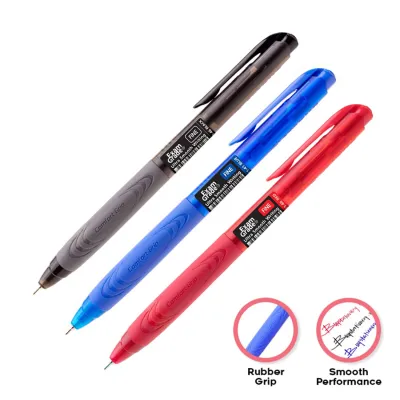
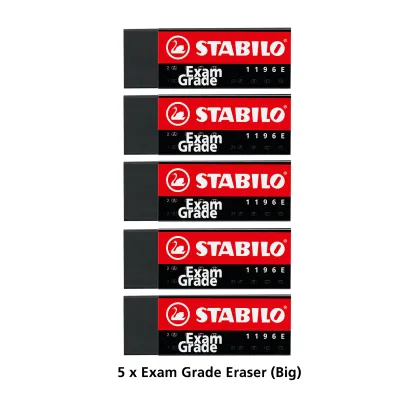
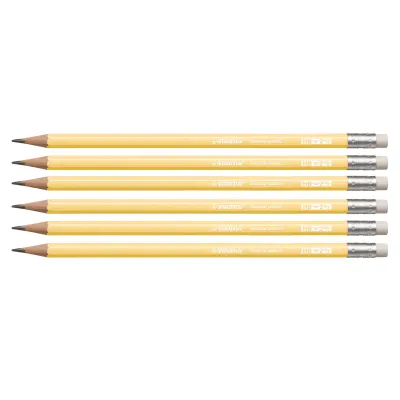
Prices are valid at publication and may change. Please refer to the product page for the latest price.
Core Differences in Writing Feel and Grip Comfort
The physical design of a pencil determines how comfortable it feels during long writing or drawing sessions. Stabilo mechanical pencil sets often feature molded plastic barrels, with many models incorporating rubberized or textured grip zones. These specialized grip areas are highly practical in warm weather, as they provide traction and prevent your fingers from sliding down the barrel when your hands get warm.
In contrast, traditional wooden pencils feature a classic hexagonal or triangular wooden casing. The natural wood grain offers a warm, organic feel and naturally absorbs minor amounts of skin moisture. However, wooden pencils lack the cushioned grip zones found on mechanical models, which means they may feel less forgiving if you tend to grip your writing tools with high pressure.
Weight distribution and the center of gravity also differ significantly between the two formats. A mechanical pencil maintains a fixed weight and a consistent center of gravity, which is often balanced slightly toward the middle or rear due to the internal lead-advancing mechanism. This stable balance provides a predictable feel every time you pick up the tool, helping to establish a consistent writing rhythm.
Wooden pencils, on the other hand, experience a shifting center of gravity. A brand-new wooden pencil is long and front-weighted, but as you use and sharpen it, the pencil becomes shorter and lighter. This changing dynamic can alter how the pencil sits in your hand, requiring subtle adjustments to your grip over time. Some users enjoy this traditional, evolving feel, while others prefer the unchanging consistency of a mechanical barrel.
To check which grip comfort suits you, observe your natural writing posture. If you hold your pencil tightly near the tip, a mechanical pencil with a wide, rubberized grip zone may help reduce hand fatigue. If you prefer a lightweight tool that allows for quick, sweeping hand movements, a classic wooden pencil set may feel more balanced and natural.
Practical Use Cases: Matching the Pencil to Your Task
Matching your pencil to your primary daily activities ensures better results and a more enjoyable writing experience. Mechanical pencils are highly suited for tasks that demand high precision and uniform line widths. Because the lead diameter remains constant—typically 0.5 mm or 0.7 mm—you do not need to rotate the pencil or adjust your hand angle to maintain a clean, sharp line.

This consistency makes mechanical sets excellent for technical drafting, solving mathematical equations, and writing small, neat notes in tight margins. They are also highly efficient for filling out optical mark reader (OMR) sheets during standardized exams, where keeping marks within precise boundaries is essential for accurate grading.
Wooden pencils excel in artistic, expressive, and high-pressure tasks. Because the graphite core is encased in wood, you can expose a longer portion of the lead and tilt the pencil to create broad, soft shading strokes. This versatility makes wooden sets indispensable for sketching, life drawing, and shading complex diagrams.
Furthermore, wooden pencils are highly durable under heavy downward pressure. If you have a heavy writing hand, a thin mechanical lead may snap frequently, causing frustration and interrupting your workflow. The thicker graphite core of a wooden pencil can withstand substantial force, making it a reliable choice for fast, heavy-handed note-taking.
| Task / Activity | Recommended Format | Key Reason |
|---|---|---|
| Standardized Exams (OMR) | Mechanical (0.5 mm or 0.7 mm) | Keeps bubble filling precise and clean |
| Technical Drawing & Drafting | Mechanical | Maintains a constant, predictable line width |
| Expressive Sketching & Shading | Wooden | Allows for variable line thickness and broad angles |
| Long-form Essay Writing | Mechanical with Ergonomic Grip | Reduces hand fatigue and eliminates sharpening pauses |
| Fieldwork & Outdoor Note-taking | Wooden | No internal mechanical parts that can jam from dust |
Maintenance, Refills, and Everyday Convenience
The daily upkeep of your writing tools affects their long-term convenience and portability. Wooden pencils require regular sharpening to maintain a usable point. This means you must always carry a reliable manual sharpener and have access to a waste bin for wood shavings. In highly humid environments, low-quality wood casings can sometimes absorb moisture and swell, which may lead to uneven sharpening or cause the internal graphite core to fracture.
Mechanical pencils eliminate the need for a sharpener, but they require a steady supply of lead refills and replacement erasers. You must ensure you purchase the exact lead diameter (such as 0.5 mm or 0.7 mm) and hardness grade (such as HB or 2B) that matches your pencil model. The small, built-in erasers on mechanical pencils also tend to wear down quickly, meaning you will likely need to carry a separate block eraser for larger corrections.
Portability is another important factor to consider. Mechanical pencils allow you to retract the lead entirely inside the sleeve, protecting the tip from breaking and preventing accidental pencil marks on the inside of your pencil case or bag. This makes them highly convenient for students and professionals who are constantly on the move.
Wooden pencils require protective caps to keep the sharpened tips from snapping or poking holes in your carrying case. However, wooden pencils are physically resilient in other ways; if you drop a wooden pencil, it will not suffer mechanical failure, though the internal lead may fracture if dropped onto a hard surface. A dropped mechanical pencil can suffer damage to its internal clutch mechanism, which can render the entire pen unusable.
Before purchasing any set, verify the packaging details to see what accessories are included. Some mechanical sets come packaged with starter lead refills and spare erasers, while some wooden sets include a matching sharpener and a high-quality eraser, saving you the trouble of buying these essential accessories separately.
Decision Framework: Which Stabilo Pencil Set Should You Buy?
To finalize your decision, evaluate your daily routine, writing pressure, and how much time you are willing to spend on tool maintenance. Both formats offer distinct advantages depending on your priorities.
Choose a Mechanical Pencil Set if:
- You prioritize clean, consistent lines and want to avoid the frequent interruptions of sharpening.
- You need a precise tool for technical drawing, mathematics, or writing small, detailed notes in compact planners.
- You want a highly portable option that can be safely tossed into a bag without marking your belongings.
- You prefer a consistent weight and center of gravity that does not change as you use the pencil.
Choose a Wooden Pencil Set if:
- You enjoy the traditional, tactile feedback of graphite on paper and the natural feel of wood.
- Your work involves sketching, shading, or drawing, where variable line weights and broad strokes are necessary.
- You have a heavy writing hand and find that thin mechanical leads snap too easily under your natural pressure.
- You want a simple, durable tool with no moving parts that could jam or break over time.
Verify first if: Before completing your purchase at a local stationery store or an online marketplace, verify the lead grade of the set. Standard HB lead is suitable for general writing, while 2B lead is darker, softer, and highly recommended for standardized exam sheets and shading. Additionally, check if the set fits within your target budget—typically ranging from ₱150 to ₱400 for quality school and office supplies—and confirm that the package includes the necessary refills or sharpeners for immediate use.
Frequently Asked Questions (FAQ)
Can I use standard lead refills in Stabilo mechanical pencils?
Yes, you can use standard third-party lead refills in Stabilo mechanical pencils, provided the refill diameter matches the pencil’s specifications exactly. Check the pencil barrel or the original packaging for the size indicator, which is most commonly 0.5 mm or 0.7 mm. Using the incorrect lead size will cause the mechanism to jam or fail to hold the lead securely. It is also helpful to match the lead hardness, such as HB or 2B, to your writing preference.
Do wooden pencil sets require a specific type of sharpener?
While standard wooden pencils fit most school and office sharpeners, using a sharpener with a high-quality, sharp steel blade is recommended to prevent wood splintering. Check the shape and diameter of your Stabilo wooden pencils before buying a sharpener; some ergonomic or jumbo sets feature thicker, triangular barrels that require a dual-hole sharpener with a larger opening. A dull blade can tear the wood casing and fracture the internal graphite core, leading to frequent breakage.
Community discussion
Share your experience or ask a question. Comments are reviewed before publication.