
Choosing a premium graphite pencil in the Philippines often comes down to finding the right balance between smooth feedback, point retention, and resistance to our humid tropical climate. The Staedtler Mars Lumograph has long been a benchmark for artists, architects, and writers alike, but it faces stiff competition from other premium European and Japanese graphite pencils. Deciding which pencil deserves a permanent spot in your pencil case depends entirely on your specific daily tasks, your preferred paper pairing, and how heavily you press when writing or drawing. By evaluating how these tools perform under local conditions, you can find the ideal match for your creative or professional workflow.
To make an informed choice, you must look beyond brand reputation and focus on observable performance metrics. This comparison evaluates the Staedtler Mars Lumograph against other high-end alternatives using three core criteria: graphite formulation and grading, line consistency under varying pressures, and overall long-term value. Whether you are drafting precise technical layouts on tracing paper or sketching on textured watercolor sheets, understanding these material differences will help you avoid premature lead breakage and unnecessary paper damage.
Core Differences in Graphite Formulation and Build Quality
Premium pencils distinguish themselves through the purity of their graphite mix and the structural integrity of their wood casings. The Staedtler Mars Lumograph is renowned for its proprietary lead formulation, which blends high-density graphite with clay. This mixture is designed to produce a slightly firmer feel across the entire hardness scale compared to many Japanese competitors. For instance, a Mars Lumograph HB pencil often feels slightly harder and holds its point longer than a Japanese premium HB, which typically prioritizes a darker, softer, and more buttery laydown. This variance means you should always test a brand’s specific grading scale rather than assuming all HB or 2B leads behave identically.
Products mentioned in this guide
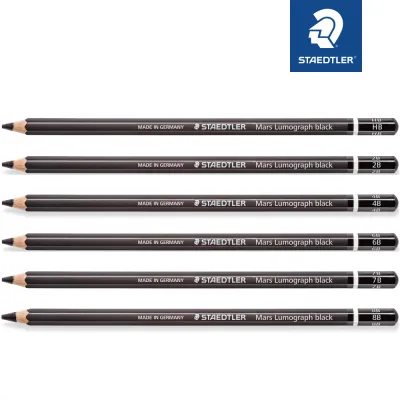
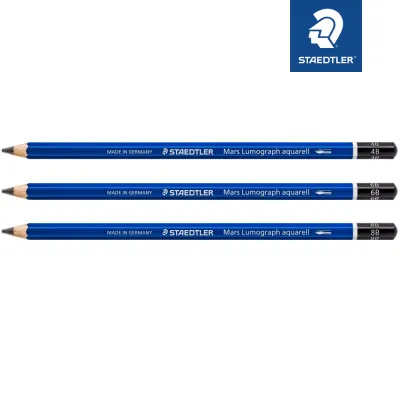
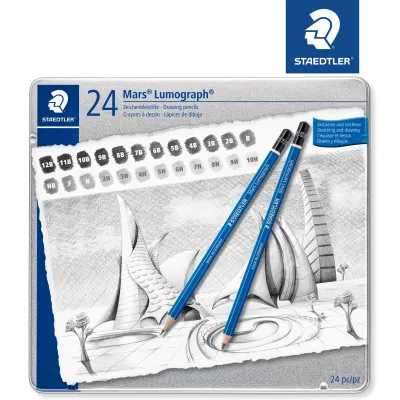
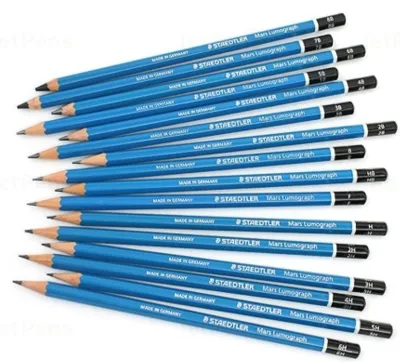
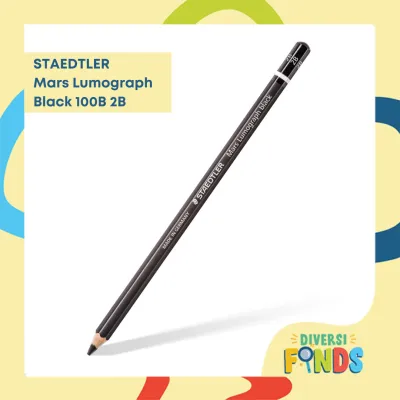
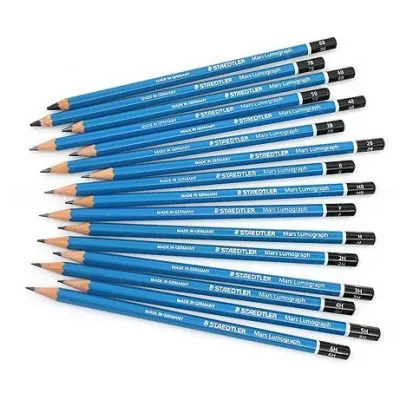
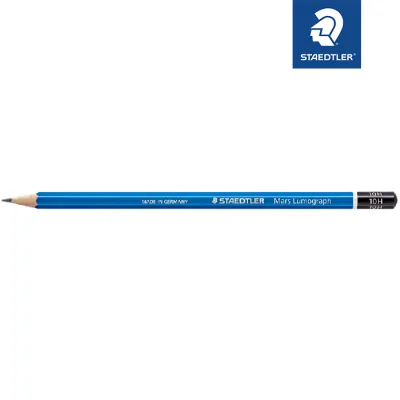
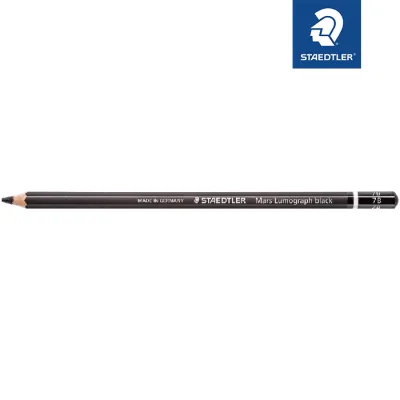
Prices are valid at publication and may change. Please refer to the product page for the latest price.
The wood casing plays an equally critical role in the daily usability of a premium pencil. High-quality pencils generally utilize premium incense cedar, which releases a distinct, pleasant aroma when sharpened and cuts away cleanly without splintering. When sharpening a Mars Lumograph, the wood should shave off in a continuous, smooth ribbon, minimizing wood wastage and protecting the lead from lateral stress. Cheaper or lower-grade wood casings often split or crumble, which can cause the internal lead to fracture repeatedly during sharpening, leading to rapid pencil depletion.
Before purchasing a single pencil or a full set at a local stationery shop, you can perform a quick visual inspection to verify its build quality. Hold the pencil upright and look directly at the unsharpened end to check if the graphite core is perfectly centered within the wooden hexagon. A misaligned core is a sign of poor manufacturing and will result in uneven sharpening, exposing one side of the lead while leaving the other covered in wood. Additionally, premium manufacturers use specialized bonding techniques to secure the lead to the wood casing along its entire length, which significantly reduces internal breakage if the pencil is accidentally dropped on a hard tiled floor.
Evaluating Writing Smoothness and Line Consistency
For daily writing, a premium pencil must glide effortlessly across the page without catching on the paper fibers or requiring excessive downward force. You can easily evaluate this by conducting a simple swatch test on the specific paper types you use most frequently, such as standard 70gsm copy paper or smoother, fountain-pen-friendly notebook pages. Draw a series of continuous loops and crosshatches without applying heavy pressure. Observe whether the pencil leaves a consistent, unbroken line or if it skips and feels scratchy. The Mars Lumograph typically offers a highly consistent, scratch-free feedback that appeals to those who write quickly and prefer a controlled glide.

Another critical factor to observe is how the graphite reacts to the high humidity levels common in the Philippines. High humidity can soften paper fibers, making them more receptive to smudging and graphite transfer. To test for smudge resistance, write a few lines and immediately run your finger across the text with moderate pressure. Some softer premium pencils leave a dark, dusty trail, whereas the Mars Lumograph is formulated to adhere tightly to the paper, resulting in minimal smudging. You should also inspect the line under direct light to check for graphite shine—a highly reflective, metallic sheen that can make reading your notes difficult under bright office or classroom lights.
Writing fatigue is directly tied to how much pressure you must exert to maintain a legible line. If a pencil’s formulation is too hard or lacks pigment density, you will find yourself pressing down harder, leading to hand strain during long writing sessions. When testing different premium options, pay close attention to how much effort is required to achieve a dark, clear line. A well-balanced premium pencil should do the work for you, allowing the weight of your hand alone to produce a clear mark on the page.
Assessing Drawing Performance and Shading Capabilities
Artists and technical illustrators require a broad range of values and precise control over line weight, making drawing performance the ultimate test for any premium pencil. For technical drafting and clean line work, the harder grades of the Mars Lumograph (such as H to 4H) excel at retaining a sharp, needle-like point under repeated strokes. This point retention is crucial for maintaining consistent line widths across complex architectural plans or geometric patterns. When comparing this to other premium brands, observe whether the tip crumbles or flattens quickly, which would require frequent interruptions to resharpen.
For artistic shading, the softer grades (from B up to 8B) must deliver rich, deep darks without introducing unwanted graininess or hard clay particles that can scratch the paper surface. When shading a gradient block from light to dark on textured drawing paper, look closely at how evenly the graphite fills the valleys of the paper grain. The Mars Lumograph is known for its clean, matte finish in its specialized black grades, whereas standard graphite pencils can sometimes look shiny or greasy when layered heavily. You can test blending smoothness by using a paper stump or your finger to see if the graphite transitions smoothly without leaving harsh, unblendable edges.
Erasability is another vital consideration, especially when working on delicate layout paper or high-grade cartridge paper. To test this, shade a dense block of graphite and use a high-quality vinyl or kneaded eraser to clear a path through the center. Observe whether the eraser lifts the graphite cleanly or simply smears it across the page, leaving a dark ghost image. A premium pencil should erase with minimal residue and without requiring so much friction that it tears or pills the delicate surface of the paper.
Value, Availability, and Cost-Per-Pencil Considerations
When shopping for premium stationery in the Philippines, balancing performance with long-term cost is essential. Single-unit prices for premium pencils typically range from ₱50 to over ₱120 depending on the brand and the specific retail outlet. While buying a full set provides a wide range of grades for artistic projects, purchasing individual pencils is often more cost-effective if you primarily use only one or two specific grades, such as HB or 2B, for daily writing. You can find these pencils at major local department store stationery sections, specialty art supply shops, or verified online storefronts.
To determine the true cost-per-pencil over time, you must look beyond the initial purchase price and consider durability. A pencil that costs slightly more upfront but features a break-resistant core and high-quality wood casing will ultimately last longer than a cheaper alternative that breaks internally and wastes away in the sharpener. If you find yourself sharpening your pencil constantly because the lead keeps snapping inside the wood, your cost-per-use increases dramatically.
Because premium stationery brands are highly sought after, counterfeit products can occasionally appear on unverified online marketplaces. To protect your investment, always inspect the physical details of the pencil before use. Authentic premium pencils feature crisp, perfectly aligned gold or silver hot-stamping, a smooth and uniform lacquer finish, and a cleanly cut end cap. Purchasing directly from official brand stores or long-standing, reputable local art supply dealers is the most reliable way to ensure you are getting genuine graphite performance.
How to Choose the Right Premium Pencil for Your Workflow
To finalize your decision, consider how your specific writing or drawing habits align with the unique characteristics of each pencil type. Use this practical framework to guide your next purchase.
Choose the Staedtler Mars Lumograph if you prioritize exceptional point retention, precise line work, and a slightly firmer, highly controlled writing feel. It is particularly well-suited for technical drafting, clean sketching, and daily writing on standard paper, especially in humid environments where smudge resistance is a priority.
Choose alternative premium pencils if you prefer an incredibly dark, buttery-smooth laydown and do not mind sharpening your pencil more frequently. These alternatives are often favored by portrait artists who require deep, rich shadows and seamless blending capabilities on heavily textured paper.
Verify first if you are transitioning from standard school-grade pencils to premium options. Test a single HB and 2B pencil from different brands on your favorite notebook or sketchpad before committing to a full set. This hands-on trial will help you determine how your personal grip pressure and paper choices interact with each unique graphite formulation.
Frequently Asked Questions (FAQ)
Does the Staedtler Mars Lumograph require a specific sharpener?
No, the Staedtler Mars Lumograph does not require a proprietary sharpener, as it conforms to standard pencil diameters. However, to prevent lead breakage and ensure a clean point, you should use a high-quality sharpener with a sharp, undamaged steel blade. Regularly check the condition of the sharpener’s blade, as a dull blade will tear the wood casing and put uneven pressure on the graphite core, causing it to snap.
How can I tell if a premium graphite pencil is counterfeit?
You can identify a counterfeit pencil by looking for misaligned or blurry foil stamping, a rough or unevenly applied lacquer coating, and off-center graphite cores. Genuine premium pencils have a distinct, clean cedar scent when sharpened, whereas counterfeits often use cheap, odorless, or splintery wood. To guarantee authenticity, always purchase your stationery from authorized local distributors or official online brand stores.
Community discussion
Share your experience or ask a question. Comments are reviewed before publication.