
The choice between Staedtler’s standard Noris line and the premium Mars Lumograph line depends entirely on your primary use case and writing habits. Noris is generally suited for high-volume everyday writing, schoolwork, and general office tasks, while Mars Lumograph is tailored for detailed sketching, technical drafting, and professional note-taking. Rather than declaring a single winner, this guide will help you evaluate the physical characteristics, set configurations, and cost-to-utility ratios of both lines so you can select the set that aligns with your specific needs.
Understanding the Core Differences: Standard vs. Premium Lines
To make an informed choice, you must first understand how these two lines are positioned in the stationery market. The Staedtler Noris is instantly recognizable by its iconic yellow and black striped barrel. It is designed as a workhorse pencil, manufactured to meet the daily demands of students, teachers, and office workers who require a dependable writing tool.
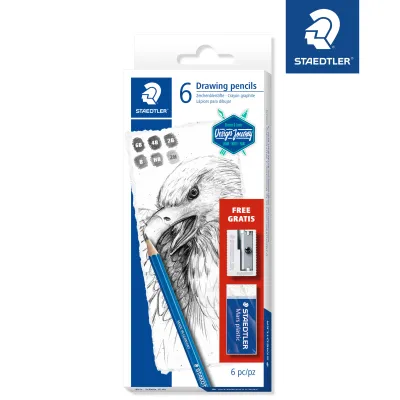
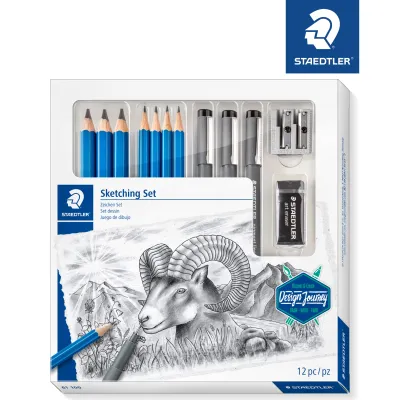
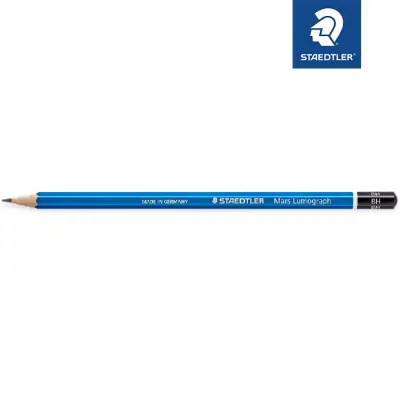
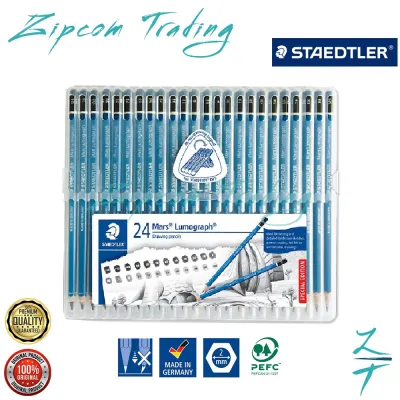
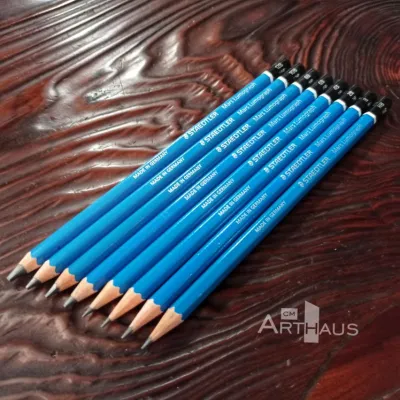
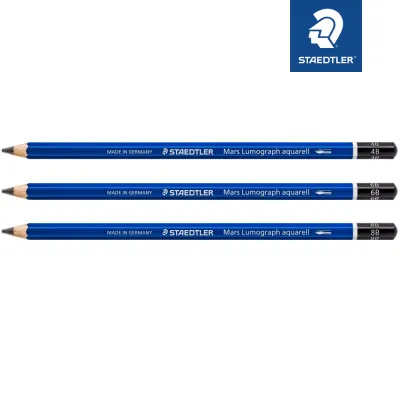
In contrast, the Mars Lumograph features a classic blue lacquer finish with a black crown and white ring. This line is engineered as a premium drawing and drafting tool, catering to artists, designers, and architects who require precise control over line weight and tonal values.
Products mentioned in this guide
Prices are valid at publication and may change. Please refer to the product page for the latest price.
The physical construction of the two pencils also differs significantly. The Noris line typically utilizes standard, sustainably managed wood that provides a reliable sharpening experience. The Mars Lumograph, however, is crafted from premium cedar wood, which is highly regarded for its smooth sharpening characteristics and pleasant natural aroma.
The graphite cores themselves represent different manufacturing philosophies. The Noris core is formulated for consistent, everyday writing, focusing on a balance of darkness and durability. The Mars Lumograph core uses a highly refined graphite mixture that minimizes impurities, resulting in a more uniform texture across a much wider range of hardness grades.
Evaluating Smoothness and Break Resistance
When choosing a pencil set, writing comfort and lead durability are critical factors to consider. You can verify these characteristics through simple observations and hands-on testing before committing to a large purchase.

Start by checking the product packaging for claims regarding lead bonding. High-quality pencils often feature a fully bonded core, meaning the graphite lead is glued to the wood casing along its entire length. This construction technique prevents the lead from shattering inside the wooden barrel when the pencil is dropped on hard classroom or office floors.
To evaluate smoothness, conduct a controlled pressure test on the paper you use most frequently. Write several lines using your natural grip and pressure. A standard Noris pencil should feel stable and consistent, though you may notice a slight tactile feedback or “tooth” on the page. A Mars Lumograph pencil of the same grade should glide more effortlessly, depositing graphite with minimal resistance.
Pay close attention to the sharpening process, as this is where low-quality pencils often fail. When using a manual sharpener, the wood casing of both Staedtler lines should shave away in clean, continuous spirals rather than splintering. If you experience frequent lead snapping during sharpening, it may indicate that the pencil has suffered internal damage from drops, or that your sharpener blade is dull.
It is also important to match the graphite grade to your writing style. If you naturally write with heavy hand pressure, a standard HB Noris or a harder Mars Lumograph grade (such as H or F) will resist breaking much better than soft, dark grades like 4B or 6B, which have thicker, more delicate cores.
Erasability and Smudge Resistance Check
A pencil’s performance is not just about how it writes, but also how cleanly it can be removed or corrected. This is especially important in tropical climates like the Philippines, where high humidity can affect how paper fibers interact with graphite and erasers.
To test erasability, write a series of heavy and light strokes on your preferred paper, then use a standard vinyl or rubber eraser to clear them. Observe whether the pencil leaves a distinct shadow, known as ghosting, or if the eraser tears the paper fibers. Harder grades in both lines erase with ease, but the premium formulation of the Mars Lumograph often allows even its darker grades to lift more cleanly than standard pencils.
Smudging is another common issue, particularly for left-handed writers or those who sketch detailed diagrams. Rub a clean finger across your written lines to see how easily the graphite dust spreads. Because the Mars Lumograph uses highly refined, compressed graphite, it generally resists smudging better than standard pencils of equivalent darkness, keeping your pages cleaner.
The texture and weight of your paper also play a significant role in these tests. Lightweight notebook paper or cheap copy paper tends to absorb moisture in humid conditions, making graphite more prone to smudging and harder to erase. If you plan to use premium sketching pencils, pairing them with heavier, acid-free drawing paper will yield the best results.
Value and Set Configuration: Finding the Right Fit
Evaluating the cost-to-utility ratio of these pencil lines requires looking at how they are packaged and sold in local stationery shops or online marketplaces.
The Staedtler Noris is typically sold in economical bulk configurations, such as cardboard boxes of 10 or 12 pencils. These sets are often bundled with a basic sharpener and eraser, making them an excellent, ready-to-go option for the start of the school year. The price per pencil (₱) for the Noris line is highly budget-friendly, allowing you to stock up without a significant financial investment.
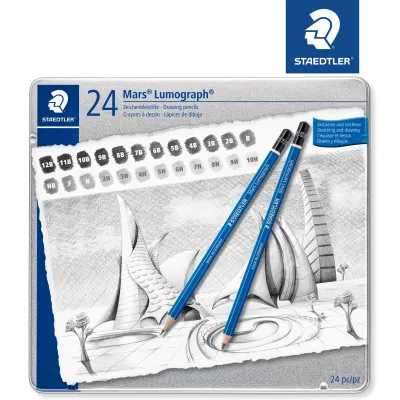
The Mars Lumograph is generally offered in specialized set configurations, such as protective metal tins containing a curated selection of drawing grades (for example, a set ranging from 2H to 6B). While you can purchase individual Mars Lumograph pencils as open stock, the price per unit is considerably higher than that of a Noris pencil, reflecting its premium materials and specialized target audience.
You should also consider whether the pencils arrive pre-sharpened. Many Noris school packs are pre-sharpened for immediate convenience. Mars Lumograph sets, particularly those in metal tins, are frequently sold unsharpened. This protects the delicate, soft graphite tips from breaking against the metal casing during shipping and allows artists to custom-sharpen the tips to their preferred angle.
Final Decision Framework: Which Staedtler Pencil Set Should You Buy?
To finalize your decision, match your daily writing or drawing habits to the specific strengths of each pencil line.
- Choose Staedtler Noris if: Your primary need is high-volume writing, daily schoolwork, or general office tasks. It is the ideal choice for budget-conscious buyers who need a reliable, easily replaceable pencil that performs consistently on standard notebook paper.
- Choose Mars Lumograph if: You are focused on detailed sketching, technical drafting, or professional design work. The premium cedar casing, smooth graphite deposition, and extensive range of hardness grades justify the higher price point for those who require precise artistic control.
- Verify first if: Check your local stationery store or online marketplace listings to confirm whether the set includes a sharpener, and ensure the paper you use regularly can handle the specific graphite grade you plan to buy.
Frequently Asked Questions (FAQ)
Can I use Mars Lumograph pencils for everyday school writing?
While you can certainly use Mars Lumograph pencils for everyday school writing, it is generally not the most economical choice. The premium graphite wears down quickly during rapid note-taking, and the higher cost per pencil means you will spend more over time without experiencing a significant practical benefit on standard, thin notebook paper.
Do these pencil sets come pre-sharpened?
It depends on the specific set you purchase. Standard Noris school packs are often sold pre-sharpened so students can use them immediately. Mars Lumograph sets, especially those packaged in metal tins for artists, are typically sold unsharpened to prevent the delicate graphite cores from fracturing during transit.

Community discussion
Share your experience or ask a question. Comments are reviewed before publication.