
Selecting the right writing instrument requires matching a pen’s physical design and ink delivery system with your daily writing habits. Staedtler, a long-established German stationery manufacturer, offers three prominent product lines that cater to vastly different user needs: Triplus, Noris, and Mars. Because these lines represent distinct engineering philosophies, the best choice depends entirely on your primary tasks, writing duration, and precision requirements.
To make an immediate decision, consider this quick breakdown of their core purposes:
- Choose Staedtler Triplus if your priority is ergonomic comfort during long, continuous writing sessions, such as taking lecture notes or journaling.
- Choose Staedtler Noris if you need a highly reliable, cost-effective, and traditional pen for everyday school, office, or household tasks.
- Choose Staedtler Mars if you require absolute line precision, technical drafting capabilities, or professional detailing on specialized paper.
While these general categories guide the overall design, the actual writing experience is heavily influenced by the specific pen type—such as a fineliner, ballpoint, rollerball, or technical pen—within each product family. Understanding how these lines differ in design, grip, ink flow, and build quality will help you select the exact tool that fits your writing style.
Products mentioned in this guide
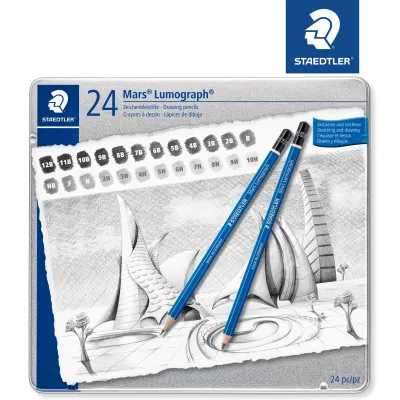
Prices are valid at publication and may change. Please refer to the product page for the latest price.
Core Design and Positioning: Triplus, Noris, and Mars
Each Staedtler product line is engineered with a specific target audience and functional goal in mind. These design philosophies dictate everything from the shape of the pen barrel to the materials used in production.
Staedtler Triplus: The Ergonomic Specialist
The Triplus line is built entirely around ergonomics and user comfort. Its defining feature is the triangular barrel design, which is scientifically shaped to promote a natural tripod grip. This design minimizes muscle strain in the hand and fingers, making it highly suitable for students, writers, and professionals who spend hours putting pen to paper. The Triplus family is modern, colorful, and highly focused on reducing physical fatigue during extended use.
Staedtler Noris: The Everyday Workhorse
The Noris line represents Staedtler’s classic, utilitarian heritage. Easily recognized by its traditional hexagonal or cylindrical shapes, Noris products are designed for general-purpose school and office environments. This line focuses on simplicity, durability, and affordability. It is the pen you keep in your desk organizer, toss into a school backpack, or use to fill out quick forms. It does not attempt to offer specialized ergonomic curves or technical precision; instead, it delivers straightforward, dependable utility.
Staedtler Mars: The Technical Instrument
The Mars line is rooted in Staedtler’s professional and technical drawing heritage. While the family includes writing instruments, its core identity is defined by precision engineering, drafting, and exact line control. Mars instruments are designed for architects, engineers, cartographers, and fine artists who require consistent line widths that do not deviate under pressure. The design language is highly functional, prioritizing exact measurements, robust sealing caps, and specialized tips over casual writing comfort.
Comparing the Writing Experience: Grip, Flow, and Control
To understand how these pens perform in daily use, it is helpful to examine the physical sensations of writing, including how the pen feels in your hand, how the ink transfers to the page, and how the materials respond to pressure.

Grip Comfort and Hand Fatigue
The physical shape of a pen barrel directly influences how tightly you must grip it to maintain control. The Triplus line’s triangular barrel naturally guides your thumb, index, and middle fingers into an optimal 120-degree spacing. This even distribution of pressure prevents the hand from cramping, making it highly beneficial for individuals who tend to grip their pens too tightly. Many Triplus models also feature a subtle, soft-touch matte finish that provides traction without requiring excess finger pressure, which is particularly helpful in warm, humid climates where hands can become sweaty.
In contrast, the Noris line utilizes traditional hexagonal or round barrels. The hexagonal shape provides flat edges that prevent the pen from rolling off slanted desks, but during prolonged writing sessions, those same edges can press uncomfortably into the sides of your fingers. Because Noris pens are typically made of smooth, glossy plastic, they can feel somewhat slippery if your hands are damp, requiring a slightly tighter grip to control.
Mars instruments prioritize rigid, uncompromising stability. They often feature textured grip zones or hard, high-grade plastic barrels designed to prevent any micro-slippage during delicate drafting tasks. While this provides exceptional control for drawing straight lines against a ruler, it is not optimized for the relaxed, flowing hand movements used in rapid cursive writing. If you are prone to hand fatigue, the Triplus design offers a distinct physical advantage over both the Noris and Mars configurations.
Ink Flow and Line Precision
Ink behavior depends significantly on the specific pen mechanism and the paper medium you use. However, the three product lines are tuned to deliver ink in ways that match their intended scenarios.
Triplus fineliners and rollerballs are designed for smooth, effortless gliding. They utilize fluid, water-based inks that require almost zero downward pressure to leave a mark. This free-flowing ink is excellent for fast note-taking, but it can bleed or feather on thin, low-grade paper. Triplus fineliners also feature “Dry Safe” ink technology, which allows the pen to remain uncapped for days without drying out—a highly practical feature for busy study environments.
Noris ballpoints, such as the classic Noris stick pens, use high-viscosity, oil-based inks. This ink is thicker and requires more downward writing pressure to transfer to the page. While this can increase hand fatigue over time, oil-based ink offers outstanding water resistance and rarely bleeds through even the thinnest school notebooks. It is a highly forgiving ink system that works reliably on almost any paper surface, making it ideal for everyday administrative tasks.
Mars technical pens, like the Mars Matic, use highly pigmented, fluid drawing ink designed for absolute line consistency. These pens feature a precise internal weight and capillary system that ensures a 0.5 mm tip draws an exact 0.5 mm line every single time, regardless of the angle or speed of your stroke. However, this fluid ink requires specialized, smooth paper (such as tracing paper or high-density layout paper) to prevent feathering. On standard copy paper, Mars technical ink will bleed heavily, and the fine metal tips can easily snag or clog on loose paper fibers.
To assist your selection, check the tip sizes printed on the packaging:
- 0.3 mm to 0.4 mm: Ideal for ultra-fine notes, tight margins, and detailed technical drawing.
- 0.5 mm to 0.7 mm: The standard range for balanced everyday writing, offering a good mix of legibility and smoothness.
- 1.0 mm and above: Best for bold signatures, quick grading, or users who prefer a very smooth, high-flow writing feel.
Build Quality and Material Feel
The materials used in these pens affect their overall weight, balance, and durability. Triplus pens are constructed from lightweight, flexible polypropylene. This specific plastic is highly resistant to chemical degradation and physical impact, meaning a Triplus barrel is highly unlikely to crack if stepped on or dropped onto a hard floor. The lightweight nature of the pen keeps the center of gravity low, which aids in effortless hand movement.
Noris pens are built using economical, rigid plastics. They are incredibly lightweight and simple, containing very few moving parts. While they lack a premium tactile feel, they are highly durable in standard office conditions and can withstand significant wear and tear without failing. Their low production cost makes them easily replaceable if lost or borrowed.
Mars technical instruments are built to a much higher standard of engineering. They feature heavy-duty, impact-resistant acrylics, metal pocket clips, and precision-threaded caps. The caps often contain hermetic seals to prevent the specialized drawing ink from drying out inside the delicate metal tips. This extra engineering adds weight to the pen, giving it a solid, grounded feel in the hand. This weight helps stabilize the pen against drawing guides, but it can feel unnecessarily heavy for casual, rapid note-taking.
Decision Framework: Matching the Pen to Your Writing Style
To determine which Staedtler line is the right investment for your desk, match your daily writing scenarios to the profiles below.
Choose Triplus if:
- You write for long periods: You are a student transcribing lectures, a writer drafting manuscripts, or a professional taking extensive meeting notes.
- You experience hand discomfort: You frequently suffer from writer's cramp, finger indentations, or joint fatigue during writing.
- You enjoy color-coding: You use color to organize your notes, planners, or mind maps, as the Triplus fineliner family offers an extensive spectrum of vibrant, dry-safe colors.
- You prefer a guided grip: You like a pen that naturally coaxes your fingers into a comfortable, ergonomic posture.
Choose Noris if:
- You need high utility at a low cost: You want a dependable pen for quick daily tasks, such as signing delivery receipts, filling out forms, or writing shopping lists.
- You share your stationery: You work in a shared office, classroom, or retail space where pens are frequently misplaced or borrowed by others.
- You write on low-quality paper: You frequently write on thin, porous paper, such as newsprint, standard sticky notes, or cheap school pads, where bleed resistance is critical.
- You prefer a classic feel: You grew up using traditional hexagonal pencils and prefer that familiar, lightweight shape.
- You require water-resistant ink: You need your writing to withstand accidental spills or high humidity without smudging.
Choose Mars if:
- You require absolute precision: You are an architect, engineer, designer, or drafting student who must produce exact, standardized line widths.
- You work with drawing guides: You frequently use rulers, templates, or T-squares, which require a rigid, extended metal tip to guide the ink line accurately.
- You use specialized media: You primarily write or draw on high-density tracing paper, vellum, or heavy mixed-media cardstock.
- You want a long-term professional tool: You prefer a high-quality, refillable instrument that can be maintained and cleaned over years of use.
Neither may fit if:
- You want expressive line variation: These lines do not feature flexible nibs. If you want dramatic swells and thin hairlines for calligraphy, you will need a specialized flex-nib fountain pen or a brush pen.
- You want a luxury executive pen: While Mars instruments are premium, they are industrial and technical in appearance. If you want a heavy, polished lacquer or precious-metal pen for boardrooms, you should look toward dedicated luxury writing brands.
How to Verify Specs and Authenticity Before Buying
Because “Triplus,” “Noris,” and “Mars” refer to broad product design families rather than a single type of pen, you must verify the specific technical details on the packaging before making a purchase.
Verify the Tip and Ink Type
Never assume that a pen’s exterior shape tells you what kind of ink is inside. For example, the Triplus family includes the Triplus Fineliner (felt tip, water-based ink), the Triplus Ball (metal ballpoint tip, oil-based ink), and the Triplus Gel (rollerball tip, gel-based ink). Read the packaging carefully to ensure the ink type matches your paper. If you need water resistance and zero bleed-through, look for “Ballpoint” or “Oil-based.” If you want effortless, vibrant lines and are using thick paper, look for “Fineliner” or “Gel.”
Check for Ergonomic and Safety Features
If you are purchasing Triplus fineliners, verify that the packaging displays the “Dry Safe” logo. This ensures that the ink formula contains specialized humectants that prevent the tip from drying out if left uncapped. For pens intended for school use or children, check that the caps feature ventilation safety holes to comply with international safety standards.
Authenticity and Retailers in the Philippines
Stationery counterfeiting is common on unverified online marketplaces. Counterfeit pens often use inferior ink formulas that clog, leak under tropical humidity, or dry out almost immediately. To ensure you are buying genuine Staedtler products, purchase from established local stationery stores, reputable office supply chains, or official brand storefronts on major e-commerce platforms.
Genuine Staedtler pens fall into consistent, predictable retail price bands in the Philippines:
- Noris Ballpoints: Typically range from ₱15 to ₱35 per pen, making them highly economical for bulk office purchases.
- Triplus Fineliners and Ballpoints: Generally cost between ₱70 and ₱110 per individual pen, with multi-color sets offering a slightly lower cost per unit.
- Mars Technical Pens: These are precision instruments and are priced significantly higher, usually starting around ₱1,200 to ₱2,500 per pen depending on the tip size and model.
If you encounter online listings offering professional Mars drafting pens or large Triplus sets at prices that seem unusually low, they are likely counterfeit goods. Authentic Staedtler packaging will feature crisp, aligned printing, clear barcode labels, and precise plastic molding with no rough or sharp seams.
Frequently Asked Questions (FAQ)
Can I use Staedtler Mars pens for everyday note-taking?
While you can use Mars technical pens for everyday writing, it is generally not recommended. These pens are engineered to be held at a nearly vertical 90-degree angle to maintain consistent ink flow through their delicate metal tube tips. Writing at a casual, slanted angle can scratch the paper, restrict the ink flow, or permanently bend the fine wire inside the tip. Additionally, the fluid drawing ink requires premium, high-density paper to prevent severe bleeding and feathering.
Are Staedtler Triplus pens refillable?
Refillability depends entirely on the specific model within the Triplus line. Standard Triplus fineliners (such as the 334 model) and Triplus fiber-tip pens are disposable and cannot be refilled once the ink reservoir is depleted. However, premium models within the Triplus family, including certain Triplus rollerballs and select ballpoint pens, are designed to accept standard Staedtler refills. Always check the product packaging or the pen barrel for refill compatibility instructions before purchasing.
Community discussion
Share your experience or ask a question. Comments are reviewed before publication.