
Choosing between a staple-free stapler and a regular stapler for daily office use depends on your specific document volume, workflow speed, and long-term archiving requirements. While traditional metal staplers remain the standard for securing thick reports and high-volume paperwork, staple-free alternatives have gained traction as an eco-friendly, consumable-free option for lighter tasks. Understanding how each tool performs under daily office conditions helps you select the right binding method for your workspace.
Understanding the Mechanisms: How Each Stapler Binds Paper
To make an informed decision, it is essential to understand how these two tools physically join sheets of paper. A regular stapler relies on metal wire consumables. When you press down on the cap, the driver pushes a single metal staple through the paper stack. As the staple legs penetrate the sheets, they strike the anvil on the base, which bends or clinches the legs inward or outward to lock the pages together. This mechanical action requires a brief, sharp application of force, which is easily distributed through leverage on standard desktop models.
In contrast, a staple-free stapler operates without any metal consumables, utilizing one of two distinct mechanical designs. The most common design is the cut-and-tuck mechanism. When pressed, internal blades punch a small, arrow-shaped tab through the paper stack, fold it backward, and tuck it through a slit cut simultaneously behind the tab. The second design is the crimping mechanism, which uses micro-interlocking metal teeth to press the paper fibers together under high pressure without cutting a hole.
Products mentioned in this guide
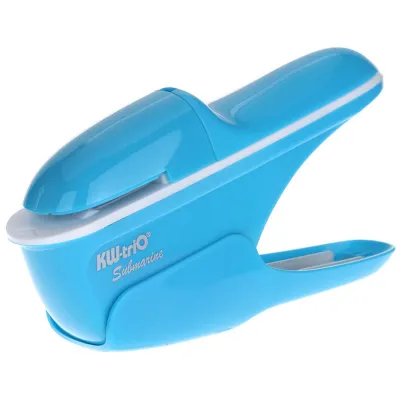
2 Lazada user ratings
It functions as expected.
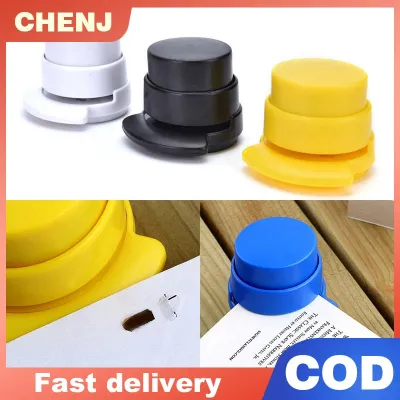
5 Lazada user ratings
Works as expected, solid quality, easy to use, and worth the price for everyday need. Super reliable, thank you!
Design:10 Ease of Use:10 Durability:10
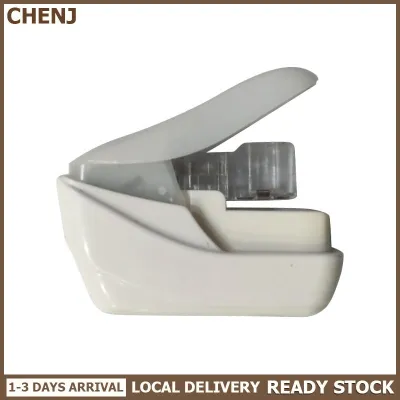
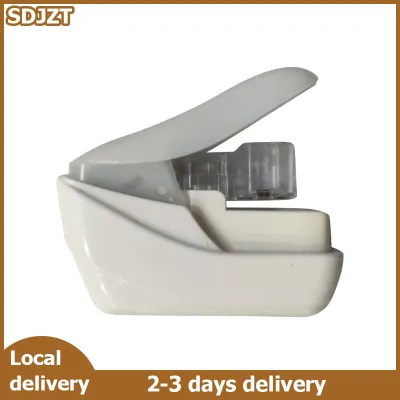
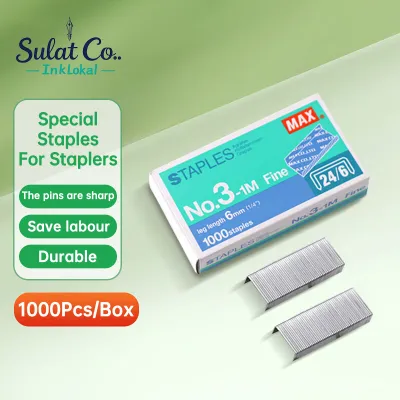
132 Lazada user ratings
Perfect for office use, Easy to operate handle, Easy to operate handle, Smooth staple feeding, Suitable for A3/A4 paper, Smooth staple feedi…Read full reviewShow less
Perfect for office use, Easy to operate handle, Easy to operate handle, Smooth staple feeding, Suitable for A3/A4 paper, Smooth staple feeding,
Ayaw po gumana. Dumating sa akin na wala manlang naka balot na cellophane sanloob ng calculator. At marumi po xa.
360° swivel design, Easy to operate handle, Smooth staple feeding, Perfect for office use,
Smooth staple feeding, Easy to operate handle, Smooth staple feeding, 360° swivel design,
Smooth staple feeding, Easy to operate handle, nice comport able
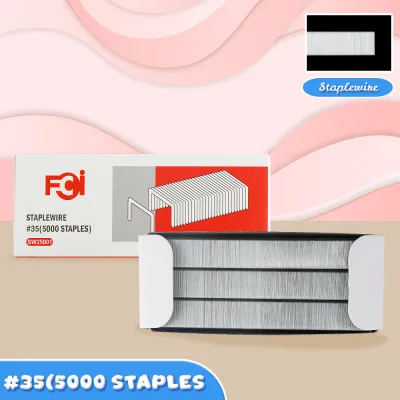
50 Lazada user ratings
kulang po ang protractor., 30 po ang order ko 29 lng po dumating
Perfect for school and office,
good quality 😍
Prices are valid at publication and may change. Please refer to the product page for the latest price.
Ergonomic considerations differ significantly between these two mechanisms. Regular staplers are highly efficient for repetitive, high-volume tasks because the mechanical leverage minimizes hand strain. Staple-free staplers, particularly the cut-and-tuck variety, require a complete, firm squeeze to ensure the internal blades fully cycle through cutting, folding, and tucking. If you operate a staple-free model repeatedly throughout a busy workday, you may experience greater hand fatigue due to the precise, high-pressure stroke required to complete the binding cycle.
Binding Strength and Paper Capacity Limits
Evaluating your typical document thickness and daily processing volume is crucial when comparing these two binding methods. Standard regular staplers easily handle 20 to 30 sheets of standard office paper, while heavy-duty regular models can bind upwards of 100 sheets using longer staple legs. Users must check the manufacturer labels on staple packaging and the stapler itself to verify the maximum sheet capacity and compatible staple sizes.

Staple-free staplers have much lower capacity limits. Most standard staple-free models are designed to bind between 4 and 10 sheets of standard 70 gsm or 80 gsm paper. Exceeding these recommended limits often results in incomplete cuts, jammed mechanisms, or torn documents. Because the binding relies entirely on the structural integrity of the paper itself, forcing too many sheets into a staple-free slot prevents the folding mechanism from tucking the tab securely.
Binding durability also varies between the two types. Metal staples provide a highly secure, rigid hold that resists frequent page turning, rough handling, and the friction of mailing. Staple-free bindings are more delicate. Frequent flipping of pages can cause the tucked tab to slip out or the crimped fibers to separate. If your office frequently distributes documents that will be heavily handled, dropped, or sent through the postal system, the traditional metal staple offers a more reliable hold.
Document Security, Archiving, and Scanning
The way your office stores, digitizes, and processes documents plays a major role in determining which stapler is more practical. For long-term archival storage, environmental factors must be considered. In tropical climates with high humidity, such as the Philippines, standard metal staples are prone to rusting over time. This rust can stain paper, degrade document quality, and eventually cause the binding to fail. While stainless steel or copper-coated staples resist corrosion, staple-free binding eliminates the risk of rust entirely, though the folded paper tabs themselves may become brittle or unfold over decades of storage.
For modern offices focused on digitization, scanner and shredder compatibility is a critical consideration. Before feeding documents into an automatic document feeder (ADF) scanner or an office shredder, metal staples must be carefully removed. Failing to do so can scratch scanner glass, damage sensitive imaging sensors, or dull and chip shredder blades. Staple-free bound documents can be placed directly into shredders or scanners without any preparation, saving significant staff time and protecting expensive office equipment from accidental damage.
Document security and tamper evidence are also influenced by your choice of binding. A metal staple can be pried open, pages can be swapped, and a new staple can be inserted into the existing holes, sometimes leaving minimal obvious evidence of tampering. A staple-free cut-and-tuck binding, however, leaves a highly distinct, die-cut pattern through all sheets. If a page is removed or replaced, matching the exact cut pattern and tucking it back together without leaving visible tears or misalignment is exceptionally difficult, making unauthorized document alterations immediately noticeable.
Environmental Impact and Long-Term Cost
Aligning your stationery choices with office sustainability goals and operational budgets requires a close look at ongoing costs and waste generation. Traditional staplers require a continuous supply of metal staples, which are packaged in cardboard boxes and often wrapped in plastic. Over years of daily office operations, a high-volume workspace can accumulate significant metal waste. Additionally, documents bound with metal staples require manual separation before they can be placed in paper recycling bins, as metal contaminants can complicate the recycling process.
Staple-free staplers offer a zero-consumable operation. Once you purchase the tool, there are no ongoing costs for refills, packaging, or shipping. This makes staple-free models highly eco-friendly, as they generate zero waste during use and allow bound documents to be thrown directly into recycling bins or paper shredders without manual sorting.
When evaluating financial costs, consider both upfront investments and recurring expenses. Regular staplers generally have a lower initial purchase price, but they incur a lifetime cost of purchasing staple refills. Staple-free staplers typically carry a higher upfront cost due to their complex internal cutting and folding machinery. To determine the most cost-effective option for your budget, check local office supply stores or online marketplaces for current pricing in ₱. For low-volume offices, the higher initial cost of a staple-free unit may be offset over time by eliminating refill purchases, whereas high-volume offices may find the speed and capacity of traditional staplers worth the ongoing consumable cost.
Side-by-Side Specification Checklist
To help you evaluate specific products, the following checklist outlines the key verification points you should look for on product packaging and manufacturer specification sheets.
| Verification Point | Regular Stapler | Staple-Free Stapler |
|---|---|---|
| Maximum Sheet Capacity | Typically 20 to 100+ sheets (verify packaging) | Typically 4 to 10 sheets (verify packaging) |
| Binding Method | Metal wire penetration and clinching | Paper cutting/folding or fiber crimping |
| Refill Requirements | Requires specific staple sizes (e.g., No. 10, 26/6) | None (zero consumables) |
| Shredder & Scanner Safety | Must remove staples to prevent blade/glass damage | Safe for direct shredding and scanning |
| Archival Risk | Potential for rust in humid environments | Potential for tabs to unfold over long periods |
When shopping, always read the product packaging carefully for exact capacity numbers. Manufacturers base these limits on standard paper weights, such as 70 gsm or 80 gsm. If your office primarily uses thicker specialty paper, you will need to adjust your capacity expectations downward. Use this checklist to match your daily workflow requirements against the verified specifications of the models you are considering.
How to Choose the Right Stapler for Your Workflow
Selecting the right tool depends on matching your daily office tasks to the strengths and limitations of each stapler type.
Choose a regular stapler if:
- Your daily tasks involve binding thick documents, multi-page reports, or packets exceeding 10 sheets.
- You require a highly secure, permanent hold that can withstand frequent handling, mailing, or distribution.
- Your workflow demands rapid, repetitive binding where minimizing hand fatigue is a priority.
Choose a staple-free stapler if:
- Your office prioritizes eco-friendly operations and wants to eliminate consumable waste.
- You frequently scan, shred, or digitize short documents, such as invoices, receipts, or brief memos.
- You work in environments where metal staples pose a safety hazard, such as school classrooms or food service areas.
Before making a final purchase, verify your specific workflow requirements. Check if your documents regularly use specialty paper finishes, exceed standard light-duty capacities, or require strict tamper-evident sealing. Testing a single unit in your actual office environment is often the best way to verify compatibility before purchasing supplies for the entire workspace.
Frequently Asked Questions (FAQ)
Can a staple-free stapler bind glossy or coated paper?
Staple-free staplers generally struggle to bind glossy, laminated, or heavily coated papers. The cut-and-tuck mechanism relies on the natural friction and flexibility of standard paper fibers to hold the folded tab in place. Slippery or stiff coatings reduce this friction, causing the tucked tab to slide out easily. Additionally, thick coatings can resist the delicate internal blades, leading to incomplete cuts or jams. Always check the manufacturer specifications for paper weight and finish restrictions. If you must bind coated presentation materials, traditional metal staples or alternative binding methods like paper clips remain more reliable.
Do staple-free staplers require any maintenance?
Yes, staple-free staplers require basic upkeep to ensure the longevity of their internal cutting and folding components. Over time, tiny paper fibers, dust, and debris can accumulate inside the mechanism, which can cause the blades to stick or jam. Periodically blowing compressed air into the binding slot or using a small brush to clear out paper dust helps maintain smooth operation. Users should also check for dulling blades or misaligned crimping parts if the tool begins to tear paper instead of cutting clean tabs. If the internal springs weaken or the blades dull significantly, the entire unit may need to be replaced, as these complex internal mechanisms are rarely user-serviceable.
Community discussion
Share your experience or ask a question. Comments are reviewed before publication.