
Choosing the right sticky calendar depends on your planning scope, desk space, and mobility needs. If you need highly portable, modular planning that moves with your notebook or laptop, choose sticky note pads. For high-visibility, shared scheduling that keeps your desk clear, a peel-and-stick wall calendar is ideal. If you prefer a dedicated, spacious writing surface for detailed daily logging directly under your keyboard or monitor, a desk calendar pad is the best fit.
In tropical environments like the Philippines, where high humidity can affect adhesive backing and paper curling, understanding these formats helps you select a setup that stays securely in place and matches your daily workflow.
Assess Your Planning Workflow and Space Constraints
Before purchasing a sticky calendar, evaluate how you naturally organize your time and the physical environment of your workspace. Do you plan day-by-day with granular to-do lists, or do you need a broad monthly overview to track deadlines at a glance? A detailed daily schedule requires more writing area per date block, whereas a macro-level monthly view can function with smaller, color-coded markers.
Products mentioned in this guide
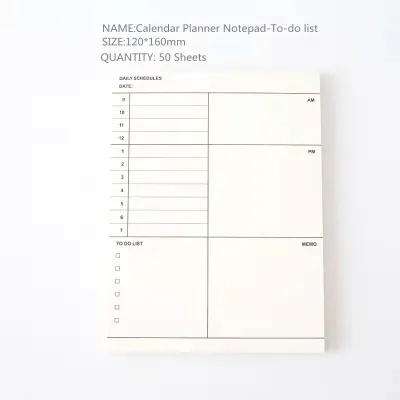
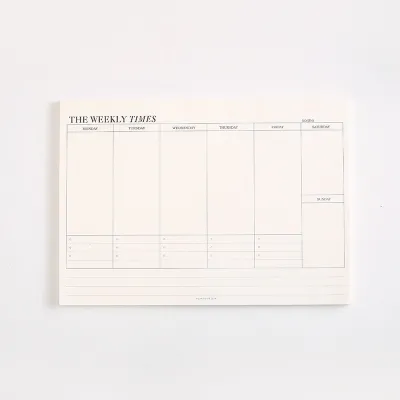
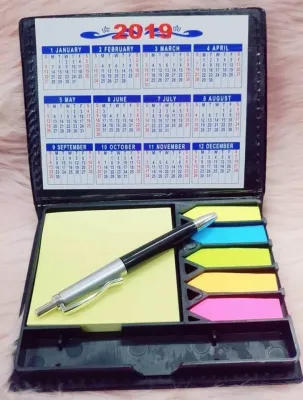
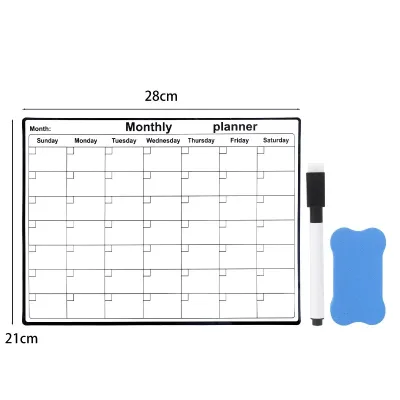
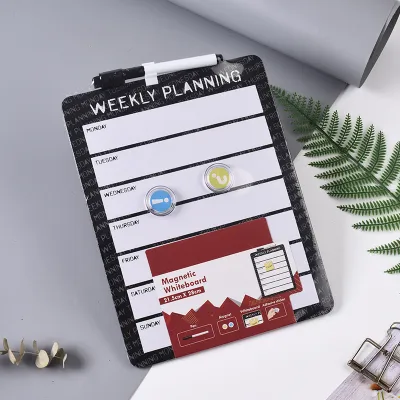
Prices are valid at publication and may change. Please refer to the product page for the latest price.
Next, measure your physical workspace. If your desk is already crowded with a laptop, external monitor, and keyboard, adding a large desk pad might feel cramped. Conversely, if you have empty wall space, a cabinet side, or a glass partition nearby, utilizing vertical space keeps your desk surface completely free.
Consider visibility and privacy. A calendar mounted on a wall or whiteboard is inherently public, making it excellent for family coordination or team projects. If your schedule contains sensitive work tasks or personal reminders, a portable sticky note pad or a low-profile desk pad keeps your agenda private and within your immediate line of sight.
Sticky Note Pads: Best for Flexible, Daily Micro-Planning
Sticky note pads designed as calendars offer unmatched flexibility for dynamic schedules. These compact pads typically feature individual daily or weekly sheets with adhesive backing, allowing you to stick them directly onto your laptop palm rest, inside a bullet journal, or on the edge of your monitor. They are highly portable, making them ideal for students and hybrid workers who move between home, cafes, and offices.

When selecting sticky note calendars, pay close attention to paper quality and adhesive strength. In humid climates, standard paper can absorb moisture from the air, causing the edges of the sticky sheets to curl upward or lose their grip prematurely. Look for products that specify a heavier paper weight (such as 80 gsm or higher) and a reliable, clean-removal adhesive.
The primary limitation of this format is writing space. Because these pads are small, they cannot accommodate extensive journaling or long lists of hourly appointments. They work best as modular additions to an existing planning system, serving as temporary highlights for your top three daily priorities rather than a comprehensive archive of your year.
Peel-and-Stick Wall Calendars: Best for Macro-Views and Shared Spaces
Peel-and-stick wall calendars transform vertical surfaces into highly visible planning hubs. These large-format calendars use a low-tack adhesive backing that allows them to cling directly to walls, doors, or cabinets. They provide a macro-level view of your month or year, making it easy for everyone in a household or office to see upcoming events, deadlines, and shared responsibilities at a glance.
Before mounting a wall calendar, you must assess the compatibility of your wall surface. Smooth, painted drywall, sealed wood, and metal surfaces generally accept peel-and-stick backings well. However, textured walls, matte paint finishes, or walls prone to dampness can prevent proper adhesion or, conversely, cause the adhesive to bond too aggressively over time, risking paint damage during removal.
While these calendars excel at group coordination, they lack portability. Once applied, moving them frequently can degrade the adhesive backing and collect dust, reducing their stickiness. They also require a dedicated, unobstructed vertical area at eye level, which may not be available in smaller rooms or highly decorated spaces.
Desk Calendar Pads: Best for Detailed Logging and Desk Setups
Desk calendar pads are the traditional anchor of a productive workspace, designed for heavy writers who prioritize structured desk organization. These large paper pads sit flat on your desk, often serving as a protective blotter beneath your keyboard or mouse. They offer the largest writing surface area of any calendar format, with spacious daily blocks that let you log detailed hourly schedules, project milestones, and extensive notes.
Because desk pads are designed for heavy writing, paper thickness and bleed-through resistance are critical. If you prefer using gel pens, fountain pens, or highlighters, look for pads featuring thick, high-density paper (typically 100 gsm or more) to prevent ink from bleeding through to the sheets underneath. You should also verify the binding style; top-bound pads with secure corner protectors prevent the pages from fraying or curling as your arms move across the desk.
The main trade-off is the physical footprint. A standard desk pad occupies a significant portion of your desk surface, which can limit your ability to adjust your keyboard or monitor placement. Additionally, because they are designed to stay flat on your desk, they are not portable; you must tear off and leave behind previous months, meaning you cannot easily carry your past schedule with you.
How to Match Your Needs to the Right Sticky Calendar Format
To make your final decision, match your daily routine and environment to the strengths of each format. If you are a hybrid professional or student constantly on the move, a compact sticky note calendar pad fits seamlessly into your bag and adapts to changing workspaces. For busy households managing school schedules, meal plans, and family chores, a peel-and-stick wall calendar placed in a high-traffic area like the kitchen or hallway keeps everyone aligned.
If your work is primarily desk-bound and involves managing complex, multi-step projects, a desk calendar pad provides the expansive canvas you need to map out your days. When evaluating options, check for secondary features such as integrated habit trackers, dedicated to-do list columns, and whether the calendar uses a standard academic or calendar-year layout.
You do not have to limit yourself to a single format; combining systems often yields the best results. For example, you can mount a peel-and-stick wall calendar to track major project deadlines (the macro-view) while using small sticky note calendars on your desk to map out your immediate daily tasks (the micro-view). This hybrid approach ensures you never lose sight of the big picture while staying focused on your immediate priorities.
Frequently Asked Questions (FAQ)
How do I remove sticky calendar residue from walls or desks without damaging the surface?
To remove adhesive residue safely, always start by checking the manufacturer’s specific removal instructions. Begin by peeling the calendar away slowly and at a sharp angle, rather than pulling it straight outward, to minimize tension on the paint or wood finish. If a sticky film remains, test a small, hidden area of your wall or desk first before applying any cleaning agent. For delicate surfaces, avoid harsh chemical solvents; instead, try gently rubbing the residue with a microfiber cloth dampened with warm, soapy water, or use a mild, surface-safe adhesive remover. If the surface is antique, delicate, or easily damaged, stop immediately and consult a professional restorer.
Can I use sticky calendars on whiteboards or glass surfaces?
Yes, sticky calendars can be used on whiteboards, glass partitions, and other smooth, non-porous surfaces, but adhesion performance will differ from painted walls. Because glass and whiteboard surfaces do not absorb moisture, they are highly receptive to low-tack adhesives, but they also collect dust, fingerprints, and oils easily. Before applying your sticky calendar, thoroughly clean the surface with glass cleaner or isopropyl alcohol and let it dry completely to ensure a secure bond. Always check the product label or packaging warnings to verify that the adhesive is rated for non-porous surfaces, as some high-tack backings can become difficult to peel off glass after prolonged exposure to sunlight.
Community discussion
Share your experience or ask a question. Comments are reviewed before publication.