
Choosing between student-grade and artist-grade acrylic paint comes down to a balance of pigment concentration, binder quality, and your specific project goals. While both types of paint share a water-based acrylic polymer base, they perform differently on the canvas and palette. Understanding these differences allows you to invest your budget wisely, whether you are practicing basic color theory or preparing a professional canvas for exhibition.
Student-grade acrylics are formulated to be accessible and affordable, making them excellent for beginners, classroom settings, and large-scale drafts. Artist-grade acrylics, on the other hand, prioritize pigment purity and permanence, offering the rich texture and reliable mixing capabilities required for professional fine art. By learning how to evaluate their composition, read manufacturer labels, and calculate their true cost, you can make an informed decision for your creative workspace.
Core Differences in Composition and Performance
The primary difference between these two paint grades lies in the ratio of pigment to binder and the inclusion of additives. Artist-grade acrylic paints contain a high concentration of finely ground pigments suspended in a high-quality acrylic polymer emulsion. Because there are minimal fillers, these paints offer exceptional tinting strength, meaning a small amount of paint can significantly alter the color of a mixture. The texture is typically rich and consistent, allowing artists to retain brushstrokes or palette knife marks easily.
Products mentioned in this guide
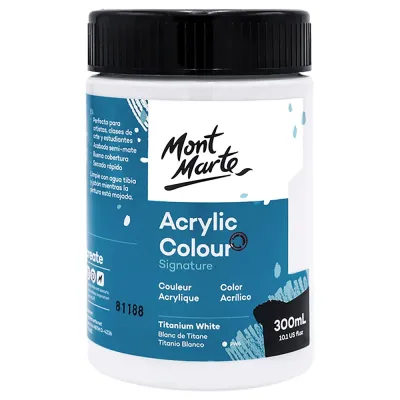
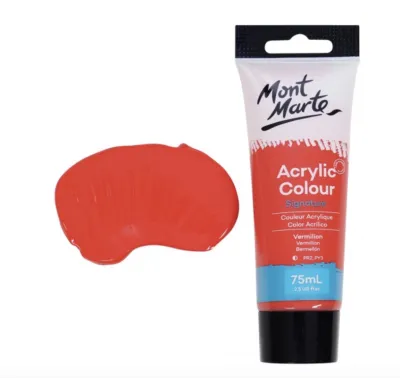
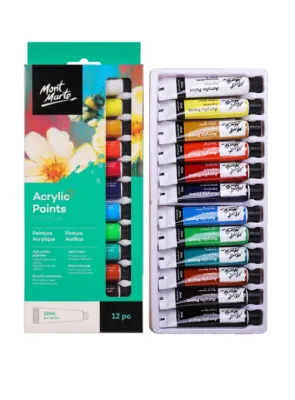
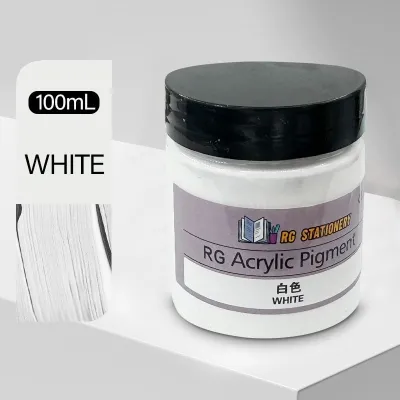
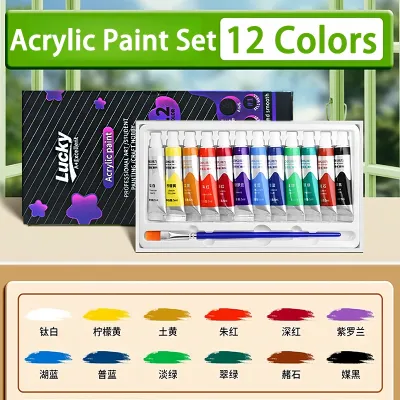

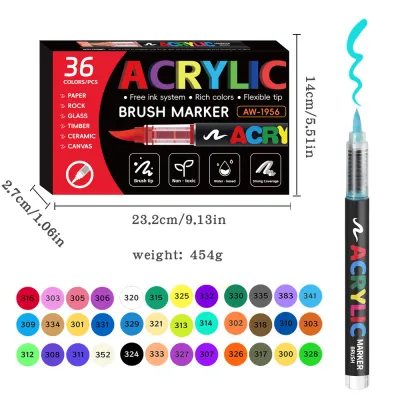
Prices are valid at publication and may change. Please refer to the product page for the latest price.
In contrast, student-grade acrylic paints use lower concentrations of pigment and rely heavily on fillers, extenders, and opacifiers such as calcium carbonate or barium sulfate. These additives bulk up the paint and keep production costs low, but they also dilute the color intensity. When you mix student-grade paints, you may notice they feel slightly chalky, gelatinous, or thin. They also tend to have lower tinting strength, requiring you to use more paint to achieve vibrant, saturated hues.
The quality of the acrylic binder also directly influences how the paint behaves during and after the drying process. High-quality binders used in artist-grade lines dry to a highly flexible, durable film that resists cracking, peeling, and yellowing over time. This flexibility is particularly important in tropical climates with high humidity and temperature fluctuations, where canvases naturally expand and contract. Student-grade binders may dry to a stiffer, less flexible film, making them more susceptible to cracking if applied thickly or on flexible supports.
You can easily observe these compositional differences through a simple palette test. Squeeze a small amount of student-grade and artist-grade paint side by side. You will often notice that the student-grade paint has a higher water content or a more jelly-like consistency, and it may undergo a more dramatic color shift—usually darkening—as it dries. Artist-grade paint typically retains its wet volume, texture, and color value much more closely once dry, providing greater predictability during the painting process.
Evaluating Color Quality and Lightfastness
To truly understand the quality of the paint you are buying, you must look beyond the marketing terms on the front of the tube and examine the technical details printed on the back. Reliable manufacturers print specific standardization codes that tell you exactly what is inside the tube. Learning to read these labels is the most effective way to verify color permanence and mixing potential before you begin painting.

The first detail to look for is the lightfastness rating, which indicates how well the paint resists fading when exposed to light over time. The American Society for Testing and Materials (ASTM) rates pigments on a scale from I to III (or sometimes V). An ASTM I rating represents excellent lightfastness, meaning the color is highly permanent and suitable for archival artwork. ASTM II indicates very good lightfastness, while ASTM III or lower signifies that the pigment is fugitive and will likely fade over time. Artist-grade paints almost always display these ratings clearly, whereas student-grade paints may omit them entirely or use lower-rated pigments.
Another critical factor is the use of single pigments versus pigment mixtures, often labeled as “hues.” To keep costs down and eliminate toxic elements, student-grade lines frequently replace expensive pigments with synthetic alternatives. For example, instead of genuine cadmium, a student tube might be labeled “Cadmium Red Hue.” While these hues are safer and cheaper, they are usually made by blending several inexpensive pigments. When you mix these multi-pigment hues on your palette, the resulting colors can quickly turn muddy or dull compared to the clean, vibrant mixtures achieved with single-pigment artist-grade paints.
To verify the exact pigment composition, check the tube for the Colour Index (CI) generic name and number. This code consists of letters and numbers, such as PR108 (Pigment Red 108, which is genuine Cadmium Red) or PW6 (Pigment White 6, or Titanium White). If a tube of paint lists three or four different pigment codes on the back, you are dealing with a convenience mixture rather than a pure single pigment. Checking these codes allows you to build a palette of true, single-pigment colors that mix predictably and maintain their brilliance.
Price, Budget, and Cost-Effectiveness
When managing your art supplies budget, it is helpful to look at the long-term cost-effectiveness of your paint rather than just the initial retail price. In local art supply shops and online marketplaces, a 120ml tube of student-grade acrylic paint might cost around ₱150 to ₱250. In comparison, a smaller 60ml tube of artist-grade paint can range from ₱400 to well over ₱1,200, depending on the rarity of the pigment. Artist-grade paints are categorized into “series” numbers (e.g., Series 1 to Series 5), with series 1 being the least expensive and series 5 containing the most costly natural pigments.
While the upfront cost of artist-grade paint is significantly higher, calculating the cost per milliliter reveals a more nuanced story. Because student-grade paint has a lower pigment concentration, you must use a much larger volume of paint to achieve deep saturation or to cover a dark underpainting. This means you will empty student-grade tubes much faster than artist-grade ones. The high tinting strength of artist-grade paint means a single tiny dab can color a large area of white paint, making a small tube last significantly longer.
A highly effective strategy for budget optimization is to use a hybrid approach in your studio. You can use affordable student-grade acrylics for blocking in large background shapes, mapping out compositions, or creating the initial underpainting layers. Once the base layers are established, you can switch to artist-grade paints for the top layers, fine details, and final glazes. This method allows you to enjoy the rich texture and vibrant color of premium paints where they matter most, without wasting expensive pigments on areas that will eventually be covered up.
Decision Framework: Which Grade Should You Buy?
To determine which paint grade best suits your current needs, consider your skill level, the purpose of your project, and the surface you are working on. Use the following guidelines to select the right option for your studio:
- Choose student-grade if: You are a beginner learning the basics of color mixing, practicing brushwork techniques, or working on temporary classroom assignments. It is also the ideal choice for large-scale studies, sketchbooks, and craft projects where long-term archival preservation is not a priority.
- Choose artist-grade if: You are producing fine art for sale, preparing pieces for gallery exhibitions, or working on commissions that require archival durability. This grade is also necessary if you rely on complex glazing techniques, require highly predictable color mixing, or want to create thick, textured impasto strokes that hold their shape without shrinking.
- Neither may fit if: You are painting on specialized surfaces such as flexible clothing fabrics, outdoor murals, or glazed ceramics. Standard acrylic paints lack the specific additives needed for these environments. For fabrics, you will need to mix your paint with a specialized fabric medium to prevent cracking. For outdoor murals, you must look for exterior-grade acrylics with high UV stabilizers, and for ceramics, you will need paints formulated to withstand kiln firing or heat setting.
- Verify first if: You plan to mix your acrylic paints with other mediums, such as heavy gloss gels, pouring resins, or retarders to slow down drying times. Before mixing brands or grades with these mediums, check the manufacturer's technical data sheets to ensure chemical compatibility and prevent issues like cracking, poor adhesion, or uneven drying.
Frequently Asked Questions (FAQ)
Can I mix student-grade and artist-grade acrylic paints?
Yes, you can safely mix student-grade and artist-grade acrylic paints on the same palette or canvas. Because both grades are formulated with a water-based acrylic polymer emulsion, they are chemically compatible and will adhere to each other without peeling. However, mixing them will dilute the high pigment concentration of the artist-grade paint, resulting in a mixture with lower tinting strength and potentially reduced lightfastness depending on the ratio used.
Does student-grade acrylic paint fade faster over time?
Student-grade acrylic paint is generally more susceptible to fading over time, but this depends on the specific pigments used rather than the grade label itself. Many student-grade lines use inexpensive, synthetic organic pigments or fugitive dyes to replicate traditional colors. If these paints are exposed to direct sunlight or high UV environments, they can fade or shift in color much faster than artist-grade paints formulated with highly stable, mineral-based pigments.
Is artist-grade paint necessary for painting on canvas?
Artist-grade paint is not strictly necessary for painting on canvas, as stretched canvas and canvas boards accept both student and artist-grade paints equally well. The choice should be guided by the intended lifespan and destination of the artwork rather than the surface itself. If you are creating practice pieces or personal studies, student-grade paint is perfectly adequate; if you are creating finished pieces intended for sale or long-term display, artist-grade paint is recommended for its archival quality.

Community discussion
Share your experience or ask a question. Comments are reviewed before publication.