
Choosing between the Tomy Mega Sketcher and traditional sketching tools like graphite pencils and charcoal depends entirely on the beginner’s age, developmental goals, and tolerance for mess. For young children developing basic motor skills in a clean, reusable environment, a magnetic drawing board is an excellent, low-pressure tool. However, for older children, teens, and adults aiming to learn foundational art techniques like shading, line weight, and perspective, traditional graphite pencils and charcoal are indispensable. Understanding the capabilities and limitations of each medium will help you select the right starting point for your creative journey.
In tropical environments like the Philippines, where high humidity can warp paper and affect how drawing mediums behave, practical considerations also play a role in this choice. While a magnetic screen remains completely unaffected by moisture in the air, traditional paper and charcoal require specific storage and handling to prevent damage. By evaluating your artistic goals alongside these practical factors, you can establish a drawing practice that is both enjoyable and sustainable.
Identifying Your True Drawing Goals and Skill Level
Before comparing physical tools, it is essential to clarify the user’s developmental stage and ultimate artistic intent. Early childhood drawing is primarily about motor skill development, hand-eye coordination, and sensory exploration. Toddlers and preschoolers benefit most from tools that offer instant gratification and require minimal physical control. At this stage, the ability to draw, erase, and draw again in rapid succession keeps engagement high without the frustration of tearing paper or running out of materials.
Products mentioned in this guide
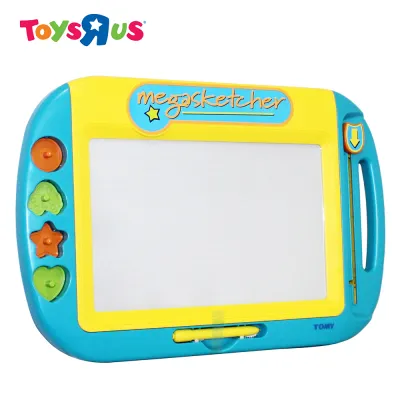
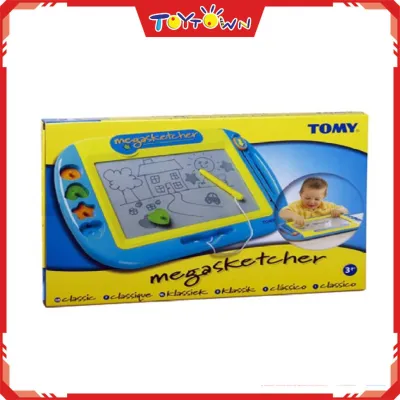
Prices are valid at publication and may change. Please refer to the product page for the latest price.
In contrast, foundational art education for older children and adults focuses on translating the three-dimensional world onto a two-dimensional surface. This transition requires a patient, deliberate approach to learning. The artist must develop muscle memory for precise line control, learn to observe how light creates form, and understand how to build depth through shading. These skills require tools that respond dynamically to subtle changes in hand pressure and angle.
Attention span and the tolerance for mistakes also differ significantly across age groups. A magnetic drawing board provides a low-stakes, playful environment where mistakes disappear with a single slide of a lever. Traditional sketching, however, teaches artists to embrace mistakes, work through smudges, and use erasers as creative tools rather than simple reset buttons. Deciding whether the primary goal is casual, mess-free entertainment or long-term skill building is the first step in making the right choice.
Evaluating the Tomy Mega Sketcher for Artistic Growth
The Tomy Mega Sketcher operates on a magnetic mechanism where a stylus attracts tiny magnetic particles suspended in a liquid layer beneath the screen. This design offers a completely self-contained drawing experience with zero consumables. There are no pencils to sharpen, no paper sheets to replace, and no ink cartridges to dry out. The slide eraser sweeps a magnet across the back of the screen, instantly clearing the surface for the next drawing.

While highly convenient, this magnetic mechanism introduces significant limitations for anyone trying to learn traditional drawing techniques. The screen lacks pressure sensitivity; pressing harder with the stylus does not produce a darker or thicker line. It simply attracts the same density of magnetic particles to the surface. This binary output makes it impossible to practice tonal shading, create smooth gradients, or master the delicate line variations essential for realistic sketching.
Additionally, the drawing area is constrained to a fixed physical size, and the magnetic screen has a distinct, slightly textured feel that differs greatly from paper. The lines produced are often slightly fuzzy or pixelated rather than crisp. However, the board’s durability and resistance to environmental factors make it highly portable. In hot, humid climates, where traditional sketchbooks can absorb moisture and become soft or wavy, the magnetic board remains perfectly flat and functional, making it a reliable companion for outdoor play or travel.
Mastering Basics with Traditional Pencils and Charcoal
Traditional sketching mediums offer an unmatched learning curve for developing genuine artistic technique. Graphite pencils are graded on the HB scale, ranging from hard, light-marking leads (H) to soft, dark-marking leads (B). By working with a basic set of pencils, such as an HB, 2B, and 4B, a beginner learns how different graphite compositions behave on paper. This variety teaches the artist how to control hand pressure to achieve a wide range of values, from faint guidelines to deep, rich shadows.
Charcoal introduces a highly expressive, high-contrast medium that is ideal for learning form and volume. Willow or vine charcoal glides smoothly across paper, allowing for broad, sweeping strokes and quick blending with fingers or a blending stump. Compressed charcoal provides intense, dark lines that are excellent for dramatic contrast. Because charcoal is easily smudged and manipulated, it forces the beginner to focus on large shapes, light sources, and overall composition rather than getting bogged down in tiny details too early.
Using traditional tools requires a small ecosystem of supplementary materials. A beginner needs a sketchbook with appropriate paper tooth (texture) to catch the graphite or charcoal particles, a pencil sharpener, and specialized erasers. A kneaded eraser is particularly valuable, as it can be molded into precise shapes to lift highlights out of dark areas, teaching the artist that erasing is an active part of the drawing process rather than just a way to correct errors. This hands-on interaction with physical materials builds fine motor control and a deep understanding of permanent mark-making.
Comparing Core Features: Control, Cost, and Cleanup
To help visualize how these tools compare across daily usage scenarios, it is helpful to look at their performance across key practical dimensions.
Line Control and Expression
Traditional graphite and charcoal offer infinite variation. By changing the angle of the pencil or the pressure of your hand, you can transition from a razor-sharp line to a soft, smoky shadow. The Tomy Mega Sketcher is limited to a uniform line width determined by the stylus tip, with no capacity for blending or tonal variation.
Forgiveness and Correction
The magnetic board offers a total, one-swipe erase. While incredibly fast, it is an all-or-nothing system; you cannot easily erase a single misplaced line without affecting the surrounding drawing. Traditional media allows for highly selective erasing, blending, and layering, giving the artist precise control over corrections.
Ongoing Costs and Maintenance
The Tomy Mega Sketcher is a one-time purchase with no recurring costs, provided the stylus and stamps are not lost. Traditional sketching requires ongoing purchases of paper, pencils, charcoal, and erasers. In humid tropical climates, storing paper in a dry, sealed container or a dedicated drawer is necessary to prevent mold and warping, adding a minor maintenance step to your routine.
Mess Factor and Cleanup
The magnetic board is entirely mess-free, making it safe for use on carpets, in cars, or on clean furniture. Graphite pencils produce minor dust and can smudge hands, while charcoal produces a significant amount of fine black dust that settles on surfaces and requires immediate handwashing and a dedicated workspace.
| Feature | Tomy Mega Sketcher | Traditional Pencils & Charcoal |
|---|---|---|
| Line Variation | Fixed width, no pressure sensitivity | Infinite variation via pressure and angle |
| Shading & Gradients | Not possible | Highly achievable with blending and grading |
| Erasing Method | Full-screen slide erase | Selective erasing with specialized erasers |
| Mess & Cleanup | Zero mess, completely self-contained | High (charcoal dust, graphite smudges) |
| Ongoing Costs | One-time purchase | Recurring (paper, pencils, fixatives) |
| Portability | High, unaffected by humidity | Moderate, paper requires protection from moisture |
How to Choose the Right Starting Tool
Your final decision should align with the user’s age, environment, and creative goals. Choose the Tomy Mega Sketcher if the primary user is a young child under the age of six, or if you need a completely mess-free tool for casual doodling, handwriting practice, or entertainment during long travel sessions. It is also an excellent option for quick, temporary brainstorming where saving the work is not required.
Choose traditional pencils and charcoal if the beginner is an older child, teenager, or adult who is genuinely interested in learning how to draw, shade, and render realistic objects. While it requires a dedicated workspace and a bit of cleanup, the developmental benefits and the ability to keep a physical record of your progress in a sketchbook are essential for artistic growth. Budgeting a few hundred ₱ for a starter sketchbook, a small set of drawing pencils, and a kneaded eraser is a highly accessible way to begin.
If the beginner has specific sensory sensitivities, such as a strong aversion to the dry, dusty texture of charcoal or the sound of graphite scratching on paper, traditional dry mediums might cause discomfort. In such cases, starting with smooth ink pens, colored pencils, or even transitioning to a digital drawing tablet may be a more suitable path. Always verify the user’s comfort with the physical properties of the tools before investing in a complete set of art supplies.
Frequently Asked Questions (FAQ)
Can a magnetic drawing board replace a sketchbook for daily practice?
No, a magnetic drawing board cannot replace a physical sketchbook for serious art practice. While it can be used for quick gesture warm-ups or mapping out basic shapes, the lack of paper texture, pressure sensitivity, and tonal range prevents you from practicing essential shading and detailing techniques. Furthermore, because you cannot save your work, a magnetic board does not allow you to keep a portfolio, which is crucial for tracking your improvement and staying motivated over time.
What safety and cleanup considerations apply to charcoal dust?
Charcoal is a dusty medium that requires a few simple precautions to keep your workspace clean and safe. Always work in a well-ventilated room and avoid blowing on your paper to clear excess dust, as this can cause the fine particles to become airborne and easily inhaled; instead, gently tap the edge of your paper over a trash bin. Keep a damp cloth or wet wipes nearby to clean your hands and work surface immediately after drawing. If you choose to use a spray fixative to preserve your finished charcoal drawings, always apply it outdoors or in a highly ventilated area, strictly following the manufacturer’s safety instructions.

Community discussion
Share your experience or ask a question. Comments are reviewed before publication.