
Choosing between a tracing cursive practice book and a guided cursive practice book depends on your current fine motor control and familiarity with script letterforms. Selecting the wrong style can lead to frustration, slow progress, or a lack of real-world writing confidence.
Tracing books serve as the entry point for absolute beginners. These books feature dotted outlines, faded gray-scale letters, or physical grooves designed for direct replication. By tracing over these pre-drawn paths, you build muscle memory and learn correct stroke directions without the cognitive burden of planning letter shapes or spacing.
Guided books represent the logical next step in the handwriting journey. Instead of a path to trace, they provide structured ruling, such as three-line or four-line grids, starting dots, and directional arrows, alongside ample blank space. This format challenges you to execute strokes independently while maintaining correct proportions, consistent slants, and proper spacing.
Products mentioned in this guide
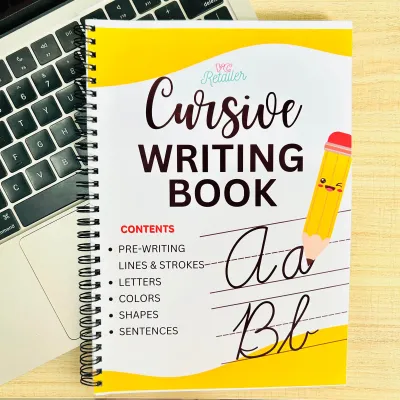
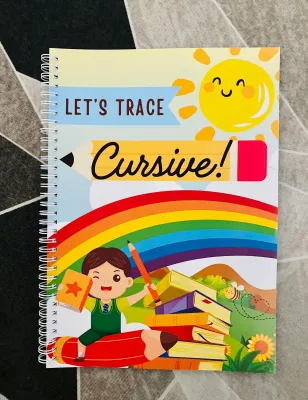
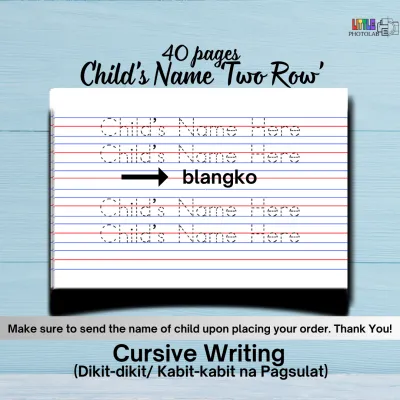
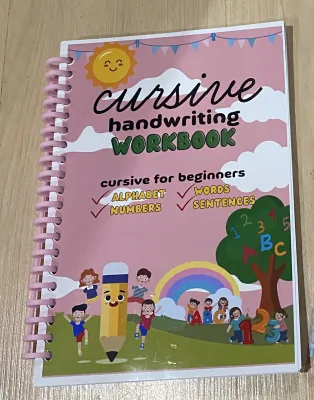

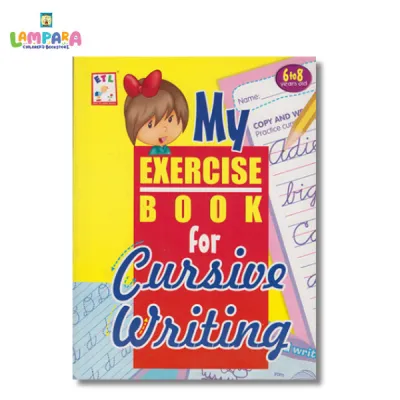
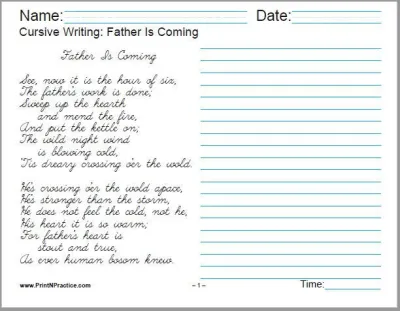
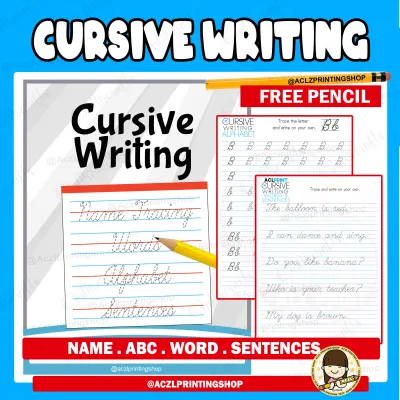
Prices are valid at publication and may change. Please refer to the product page for the latest price.
Many learners find that a phased approach yields the best results. Starting with tracing to memorize letter shapes and then transitioning to guided practice to build speed and style ensures a smooth path to fluid cursive writing. Below, we break down the structural designs, cognitive differences, and paper considerations to help you select the ideal practice book.
What Is a Tracing Cursive Practice Book?
A tracing cursive practice book is structured specifically to guide the hand through repetitive, physical replication. The pages are dominated by pre-printed letter outlines, light gray characters, or dotted paths that you draw directly over. In some specialized notebooks, these paths may even be physically recessed or grooved, forcing the pen or pencil to stay within a designated channel. The layout typically starts with individual uppercase and lowercase letters, gradually moving to simple letter combinations and short words, all presented under a visible template.
The primary pedagogical goal of a tracing book is to build foundational muscle memory. Cursive writing requires continuous, fluid movements that are fundamentally different from the stop-and-start strokes of print writing. Tracing eliminates the need to decide where a letter begins, how wide it should be, or where it connects to the next character. This low-demand cognitive setup allows your hand to focus entirely on the physical mechanics of the pen, establishing the baseline motor patterns required for smooth, sweeping strokes.
This style of practice book is highly beneficial for specific groups of learners. Young children who are still developing basic fine motor skills and hand-eye coordination benefit from the explicit visual boundaries. Similarly, adults who are retraining their hands after injury, or those seeking a therapeutic, low-stress motor exercise, find the structured paths comforting and easy to follow. It is also an excellent tool for anyone completely unfamiliar with the cursive alphabet who needs to learn stroke sequences from scratch.
However, tracing books have a distinct structural limitation. Because the page provides a continuous physical or visual guide, the brain does not have to actively plan the spatial execution of the letters. It is common to experience a false sense of proficiency while tracing, only to find that your writing becomes shaky or illegible when you attempt to write on a blank page. Relying too long on tracing can delay the development of spatial planning and independent stroke control.
What Is a Guided Cursive Practice Book?
A guided cursive practice book shifts the responsibility of letter formation from the page to the writer. The layout of a guided book does not feature full letter outlines to trace. Instead, it utilizes specialized ruling systems, often consisting of a solid baseline, a dashed midline, and solid top and bottom lines to mark the boundaries of ascenders and descenders. You might find a single exemplar letter at the beginning of a line, followed by starting dots that indicate where to place your pen, alongside empty ruled rows for independent practice.

The primary learning objective of guided practice is to master proportion, slant, and spatial distribution. Without a pre-drawn track, you must decide how high to stretch an “h,” how low to drop a “g,” and how to maintain a consistent forward slant across an entire sentence. Guided books place a heavy emphasis on ligatures, which are the connecting strokes between letters. Learning how to transition smoothly from a low-connecting letter like “a” to a high-connecting letter like “o” requires active spatial planning that guided grids are designed to facilitate.
This format is tailored for intermediate learners who have already memorized the basic shapes of the cursive alphabet. If you can recognize and trace cursive letters but struggle with inconsistent sizes, uneven spacing, or a messy appearance when writing notes, guided practice is the tool you need. It helps bridge the gap between mechanical tracing and freehand writing, training your hand to maintain legibility without relying on constant visual prompts.
The primary advantage of a guided book is that it closely simulates real-world writing conditions. Writing on ruled grids forces your brain and hand to coordinate spatial planning and physical execution simultaneously. This active engagement builds genuine, long-term muscle memory and allows you to develop a personalized, fluent writing style that translates directly to everyday note-taking, journaling, or professional correspondence.
Key Differences in Structure and Learning Approach
To choose the right tool, it is helpful to look at how these books differ in their physical design and the mental effort they require. The table below outlines the structural and functional differences between the two formats.
| Dimension | Tracing Cursive Books | Guided Cursive Books |
|---|---|---|
| Visual Layout | Dotted, dashed, or faded gray-scale letter templates spanning the entire page. | Specialized horizontal ruling grids with starting dots and ample blank space. |
| Primary Motor Focus | Basic shape replication, pen control, and stroke direction paths. | Letter proportions, consistent slant angle, spacing, and ligature transitions. |
| Cognitive Load | Low; the path is pre-determined, requiring minimal spatial planning. | High; requires active mental planning of letter shapes, connections, and boundaries. |
| Independence Level | High dependence on visual guides; acts as training wheels for the hand. | High independence; requires freehand execution within structural guidelines. |
| Ideal Skill Stage | Absolute beginners, young children, or motor rehabilitation. | Intermediate learners, style refinement, and real-world writing preparation. |
Understanding these structural differences highlights why trying to transition too quickly to guided books can be discouraging, while staying with tracing books for too long can stall your progress. Tracing books remove the spatial planning aspect of writing to let you focus on physical comfort with the pen. Guided books reintroduce spatial planning, challenging you to maintain consistency across a blank line.
Additionally, the physical layout of the ruling lines in guided books can vary. Some use a simple two-line system, while others use a more complex four-line system that defines the exact heights of loops and tails. Tracing books, by contrast, focus less on the rules of the grid and more on the immediate path of the specific letter you are tracing. Recognizing these design choices helps you target the exact area of your handwriting that needs improvement.
How to Choose the Right Book for Your Skill Level
Selecting the right book requires evaluating your current handwriting skills, your physical comfort with a pen, and your ultimate learning goals.
Choose a Tracing Book if:
- You are an absolute beginner: If you cannot write the cursive alphabet from memory, tracing is the most efficient way to learn the basic shapes.
- You struggle with basic pen control: If your hand feels tense or shaky when holding a pen, tracing allows you to practice smooth, continuous movements without worrying about layout.
- You need to learn stroke order: If you do not know where a cursive letter starts or how the loops are formed, tracing templates provide a clear, step-by-step path.
- You are practicing for rehabilitation: For those recovering motor control, tracing offers a low-stress, highly structured way to rebuild hand strength.
Choose a Guided Book if:
- You already know the letter shapes: If you can easily visualize and draw individual cursive letters but want to improve your overall layout.
- Your writing suffers from inconsistent sizing: If your letters tend to shrink, grow, or drift off the line as you write across a page.
- You want to improve your writing speed: Guided practice helps you transition from slow, deliberate letter drawing to fast, rhythmic, and connected writing.
- You are preparing for practical use: If your goal is to take legible notes in school, sign documents, or write letters without needing a template underneath.
Combine Both if:
If you find yourself between these two stages, a hybrid approach works best. You can use a tracing book to master complex, less common letter connections, such as the tricky transitions from “f,” “q,” or “z.” Once you feel comfortable with those specific shapes, you can immediately switch to a guided book to practice writing full sentences. This keeps your practice engaging and prevents you from becoming overly dependent on tracing lines.
Verify First Before Purchasing:
Before buying a practice book, check the interior page layouts to ensure they match your specific needs. In the Philippines, elementary schools historically utilize specific red-and-blue ruling systems to teach handwriting. If you are purchasing a book for a young student, verify that the ruling style matches their school standard to avoid confusion.
Additionally, consider physical accessibility. If the writer has hand fatigue or motor challenges, look for books with larger ruling sizes (around 15mm to 20mm) to allow for broader, less precise movements. For standard adult practice, a ruling size of 8mm to 10mm is generally preferred as it closely matches standard notebook spacing.
Paper and Pen Compatibility for Cursive Practice
The physical experience of writing cursive depends heavily on how your pen’s ink interacts with the paper surface. Because cursive requires continuous, unbroken strokes, any friction, skipping, or ink pooling can disrupt your rhythm and ruin your practice. This makes paper quality and pen compatibility key factors in your stationery setup.
When evaluating a cursive practice book, pay close attention to the paper weight, measured in grams per square meter (GSM). Many budget-friendly practice books use thin paper (around 50 to 60 GSM), which is highly susceptible to ink bleed-through and feathering, where the ink spreads sideways into the paper fibers. In the humid tropical climate of the Philippines, paper naturally absorbs moisture from the air, making it even more prone to feathering. For the best results, look for practice books that use 80 GSM to 100 GSM paper, which provides a sturdier barrier against wet inks.
Your choice of writing instrument also plays a major role in your practice:
- Gel Pens: Extremely popular for their smooth ink flow and vibrant lines. However, they require a few seconds to dry on smooth paper, especially in humid conditions, so be careful not to smudge your work.
- Fountain Pens: Excellent for cursive because they require almost no downward pressure, reducing hand fatigue. They do, however, require high-quality, fountain-pen-friendly paper to prevent bleeding.
- Rollerball Pens: Offer a liquid ink flow that mimics a fountain pen but with the convenience of a ballpoint. They glide easily across the page, making them great for fluid connections.
- Pencils: While useful for beginners because they are erasable, the natural friction of graphite can slow down your strokes and prevent you from developing a truly fluid cursive rhythm.
Regardless of the claims on the packaging, always conduct a quick, observable test before starting a new book. Flip to the very last page or a blank corner and write a few connected loops with your preferred pen. Observe how quickly the ink dries, check if the line remains sharp or begins to feather, and turn the page to see if any ink has bled through to the other side. This simple trial ensures your tools are perfectly matched to your paper, allowing you to focus entirely on perfecting your cursive strokes.
Frequently Asked Questions (FAQ)
Can adults use tracing books to learn cursive?
Yes, adults can absolutely use tracing books. If you are learning cursive for the first time or retraining your hand after years of typing, tracing is a highly effective way to build initial muscle memory. Adults generally process spatial concepts faster than children, meaning you will likely transition from tracing to guided books much more quickly once the basic letter shapes are memorized.
Do I need special pens for guided cursive practice?
You do not need specialized or expensive pens for guided cursive practice. However, using a pen with a smooth, consistent ink flow, such as a high-quality gel pen or a liquid-ink rollerball, can make a significant difference. These pens allow you to maintain the continuous, unbroken lines that define cursive writing without needing to press down hard on the paper.
Community discussion
Share your experience or ask a question. Comments are reviewed before publication.