
Choosing between tube and pan watercolors depends entirely on your typical painting environment, canvas size, and session length. If you primarily paint large formats, require extensive color mixing, or work in a dedicated studio, tube watercolors offer the volume and immediate activation you need. If you paint outdoors, travel frequently, work on small-scale illustrations, or prefer quick, mess-free setups, pan watercolors provide superior portability and convenience. Aligning your choice with your specific artistic workflow ensures a smoother painting experience and prevents unnecessary waste of your creative materials.
Understanding the Physical and Functional Differences
To make an informed choice, you must first understand the physical states and packaging of these two formats. Tube watercolors contain moist, freshly mixed paint sealed inside small metal or plastic tubes, typically ranging from 5 ml to 15 ml. This paste-like consistency is rich in binder—usually gum arabic—and humectants like glycerin or honey, which keep the paint soluble and wet. In contrast, pan watercolors consist of dry or semi-dry solid cakes of paint poured or extruded into small plastic or metal cups, known as half pans (approximately 1.5 ml to 2 ml) or full pans (approximately 3 ml to 4 ml). These solid blocks remain stable in their dry state until you introduce water.
The activation process highlights the primary functional difference between the two formats. With tubes, you squeeze the moist paste directly onto a palette, where it is immediately ready for use with a damp brush. This allows you to access highly concentrated, fluid pigment instantly without wearing down your brush tips. Pan watercolors, however, require active rehydration. You must drop clean water onto the solid cake and let it sit for a few moments, then work your wet brush into the surface to lift the pigment. This process requires a bit more physical friction, which can gradually wear down delicate natural-hair brushes over time if done aggressively.
Products mentioned in this guide
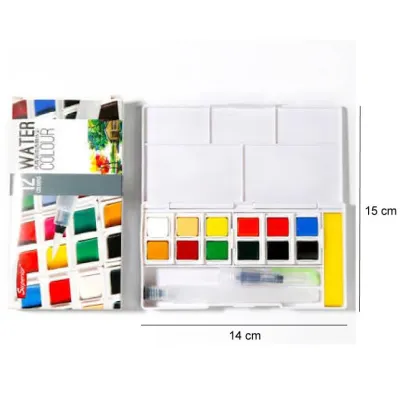
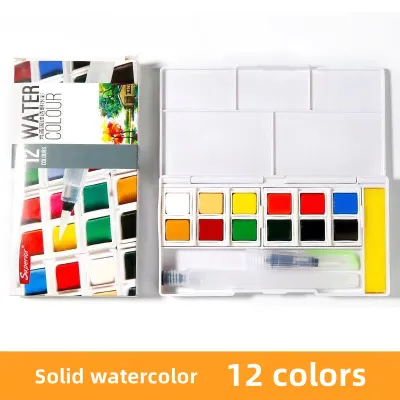
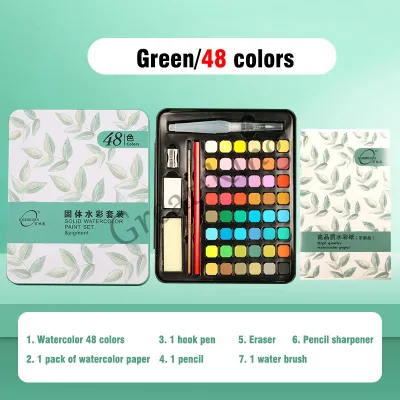
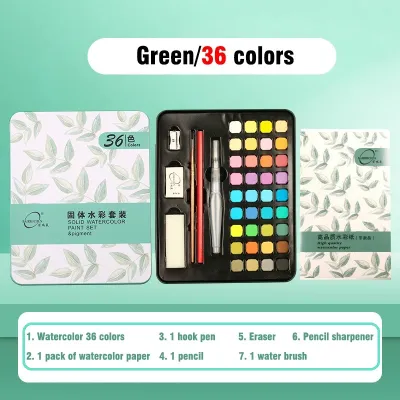
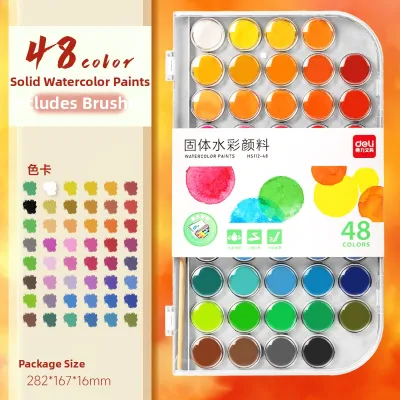
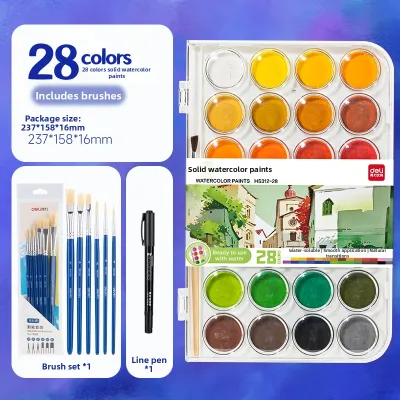
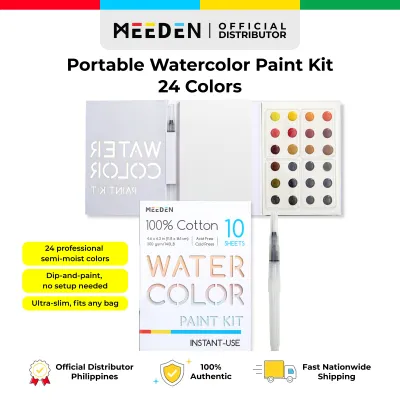
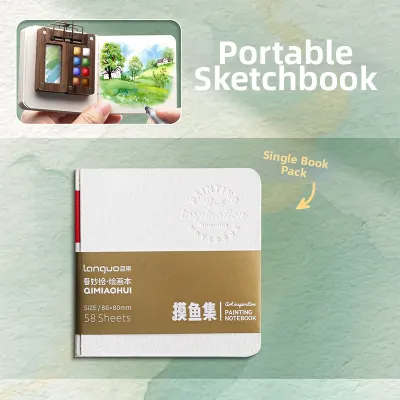
Prices are valid at publication and may change. Please refer to the product page for the latest price.
A common misconception is that one format inherently possesses a higher pigment concentration or superior quality over the other. In reality, professional-grade paints in both tubes and pans use the same high-quality pigments and binders. The difference lies in the moisture content and the specific ratio of humectants used to keep the paint stable in its respective packaging. When evaluating quality, you should check the manufacturer’s technical specifications for pigment load, lightfastness ratings, and transparency levels rather than assuming that a tube is automatically superior to a pan.
Evaluating Portability and Setup for Your Painting Environment
Your physical workspace plays a decisive role in determining which watercolor format will serve you best. For outdoor painting, urban sketching, or commuting between locations, pan sets are highly practical. Their compact, self-contained design fits easily into a small bag or pocket, and they rarely leak because the paint is already dry. Setting up a pan palette takes seconds: you simply open the lid, which often doubles as a mixing tray, and begin painting. This rapid setup is invaluable when you want to capture a fleeting sunset or sketch in a busy public space without drawing too much attention.

Indoor studio setups, by contrast, accommodate the physical demands of tube watercolors much more comfortably. Working with tubes requires a dedicated palette with deep wells to hold the squeezed paint, along with a larger flat mixing area to blend the fluid colors. This setup occupies significant desk space and requires careful management. If you leave tube caps off or fail to seal your palette tightly, the paint can dry out and harden, though it can still be rehydrated later. Cleaning a large tube palette also requires more effort, as you must carefully wipe down the mixing areas without washing away the expensive paint remaining in the wells.
In tropical climates, environmental factors such as high humidity and ambient temperature significantly influence how you manage your setup. High humidity can prevent squeezed tube paint from drying completely on your palette, leaving it sticky and prone to running if the palette is tilted. Conversely, damp pan sets stored in airtight containers without proper ventilation can easily develop mold. To ensure travel readiness and protect your investment, inspect your pan hinges for rust, verify that tube caps are sealed tightly without dried paint blocking the threads, and ensure your palette lids feature secure rubber gaskets to prevent accidental leaks during transport.
Matching the Format to Your Canvas Size and Painting Style
The physical scale of your artwork and your preferred painting techniques should directly guide your format selection. If you work on large-format sheets—such as standard 300 gsm watercolor paper measuring 15 by 22 inches or larger—you will frequently need to mix broad, uniform washes of color. Tube watercolors are highly efficient for this task because you can squeeze a generous amount of moist paint directly into a mixing well, add water, and quickly create a large volume of fluid color. Attempting to mix a large wash using only a pan requires repeatedly scrubbing the solid cake with a wet brush, which is time-consuming, inconsistent, and tough on your brush bristles.
For small-scale illustrations, detailed botanical paintings, or pocket-sized journals, pan watercolors offer excellent control. The solid cakes allow you to pick up tiny, precise amounts of highly concentrated pigment on the very tip of a fine-detail brush. Because the paint is contained within a small, defined slot, there is little risk of accidentally picking up too much wet paint and overloading your brush, which can lead to muddy layers or uncontrolled bleeding on your paper. This controlled pickup makes pans highly suitable for dry-brush techniques and intricate line work.
Your typical painting session length also influences which format feels more natural. If you enjoy long, uninterrupted painting sessions where you work continuously for several hours, the immediate, fluid flow of tube paint supports a steady creative rhythm. You do not have to pause to rehydrate dry cakes repeatedly. On the other hand, if your painting time is fragmented into short, thirty-minute windows throughout the day, pans are incredibly convenient. You can quickly open the set, paint a small section, and close it when you are done, without worrying about wasting freshly squeezed tube paint that you did not have time to use.
Assessing Longevity, Maintenance, and Value
Maintaining your watercolor supplies properly ensures they remain usable for years, regardless of the format you choose. For pan watercolors, the primary maintenance goal is preventing mold growth, especially in warm, humid environments. Always allow your pan set to air-dry completely with the lid open before closing it for long-term storage. For tube watercolors, the most common issue is the cap becoming glued to the tube by dried paint. You can prevent this by wiping the metal or plastic threads of the tube with a damp cloth before screwing the cap back on, ensuring a clean, airtight seal.
Recognizing the signs of paint degradation helps you determine when a product needs attention or replacement. High-quality watercolors generally have an excellent shelf life, but they can occasionally fail. For tubes, look out for irreversible hardening inside the tube, where the paint becomes a solid rock that cannot be squeezed, or severe binder separation where only clear gum arabic liquid emerges. For pans, watch for extreme cracking that causes the cake to crumble out of its slot, or a foul, sour odor that indicates bacterial or mold contamination. Always consult the manufacturer’s specific shelf-life guidelines if you suspect a batch has degraded.
When evaluating the financial value of your purchase, look beyond the initial price tag and compare the cost per milliliter or gram based on current local retail listings in ₱. A single 15 ml tube often costs more upfront than a single half pan, but it contains up to seven times more paint, making it far more economical in the long run. A highly cost-effective hybrid strategy is to purchase empty plastic half pans and fill them yourself using your favorite tube colors. This approach gives you the portability of a pan set combined with the lower volume-cost of tube paint.
Final Decision Framework: Tube, Pan, or a Hybrid Approach?
To finalize your choice, evaluate your painting habits against this structured decision framework. Choose tube watercolors if you primarily paint in a dedicated indoor studio, work on large canvases or broad washes, prefer immediate access to rich, fluid color, and want the best long-term value per milliliter. Choose pan watercolors if you paint outdoors or travel frequently, work on small-scale illustrations or journals, paint in short, interrupted sessions, and prefer a compact, low-maintenance setup that requires minimal cleanup.
Many experienced artists eventually adopt a hybrid approach that combines the strengths of both formats. You can assemble a custom travel palette using a compact metal tin filled with empty half pans, then fill those pans with high-quality tube paint. This allows you to customize your color selection precisely while enjoying the portability of a pan set. Additionally, you can keep a few large tubes of your most frequently used colors—such as ultramarine blue or burnt sienna—in your studio to mix large washes, while relying on pans for your accent and detail colors.
Before making your final purchase from a local art supplier or online marketplace, run through this quick pre-purchase checklist:
- Verify that your watercolor paper is heavy enough (ideally 300 gsm or higher) to handle the amount of water your chosen format requires.
- Ensure your physical palette has deep enough wells to accommodate squeezed tube paint, or secure slots that fit standard half-pan dimensions.
- Confirm that replacement tubes or individual pans of your favorite colors are readily available locally so you can easily replenish your palette when a specific color runs out.
Frequently Asked Questions (FAQ)
Can I use tube watercolors to refill empty pan slots?
Yes, you can easily refill empty half or full pans using tube watercolors. Simply squeeze the moist paint into the empty plastic slot, filling it in layers to minimize air pockets. As the water evaporates, the paint will shrink and crack slightly, so you may need to apply a second layer after a day or two to fill the pan completely. Keep in mind that some student-grade paints contain fillers that may cause the dried cake to crack excessively or detach from the plastic walls, so professional-grade tubes are generally preferred for this method.
Do pan watercolors expire or dry out permanently?
High-quality pan watercolors do not have a strict expiration date and can last for many years if kept clean and dry. If they are exposed to very dry conditions, they may become extremely hard, but this is rarely permanent. You can easily rehydrate them by misting the surface with clean water or placing a few drops directly onto the cake a few minutes before you begin painting. However, if a pan develops a persistent foul odor, shows visible mold growth, or completely loses its ability to dissolve and transfer pigment to your brush, it should be discarded.
Which format is better for beginners?
For most beginners, a pre-assembled pan watercolor set is the most practical and user-friendly option. Pan sets are highly intuitive, require almost no preparation, and usually come with a built-in mixing palette, which reduces the initial cost and setup complexity. However, if you already know you want to paint large landscapes with broad washes at a desk, a small starter set of tubes is also an excellent choice. Regardless of the format you select, prioritize buying student-grade or professional-grade paints with clear pigment labels over cheap, generic craft paints, as high-quality pigment behavior is crucial for learning proper watercolor techniques.
Community discussion
Share your experience or ask a question. Comments are reviewed before publication.