
Buying sewing elastic, locally referred to in the Philippines as goma, by the kilo is the most cost-effective sourcing strategy for garment manufacturers, local dressmakers, and high-volume crafters. Sourcing goma by the kilo offers substantial cost savings, but it also introduces unique challenges in quality control, yield calculation, and material selection. Selecting the right type of bulk sewing elastic requires matching the elastic’s structural properties with your fabric’s weight and the garment’s intended construction method.
The three primary categories of sewing elastic—braided, knitted, and woven—behave differently when stretched, stitched, or washed. Choosing the incorrect type can result in waistbands that roll, necklines that sag, or rubber cores that snap and lose their elasticity after a few laundry cycles. This comprehensive guide details the types of bulk sewing elastic available by the kilo, how to calculate your yield, and how to select the perfect goma for your production needs.
Understanding Sewing Elastic (Goma) Sold in Bulk
In the local garment industry, goma is a staple accessory used in everything from casual shorts and school uniforms to bedsheets and activewear. When you step into wholesale textile districts, you will find that elastic is rarely sold by length at wholesale prices. Instead, it is bundled, weighed, and sold in bulk packages, typically weighing 1 kilo. This weight-based purchasing system is highly efficient for suppliers, as it eliminates the labor-intensive process of measuring hundreds of meters manually. For buyers, purchasing by weight significantly lowers the per-meter cost, making it an essential practice for commercial production.
Products mentioned in this guide
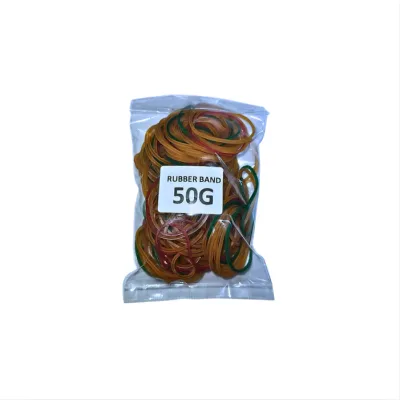
Prices are valid at publication and may change. Please refer to the product page for the latest price.
However, buying by weight requires a shift in how you plan your production. Unlike buying by the meter, where the yield is explicit, a 1-kilo pack of elastic yields a variable length that depends on several physical factors. The width of the elastic is the most obvious variable: a 1-kilo roll of 1/4-inch elastic will naturally yield far more linear meters than a 1-kilo roll of 2-inch elastic. Additionally, the thickness of the band and the density of the fiber wrapping (usually polyester or nylon wrapped around a rubber or spandex core) heavily influence the weight. A denser, heavier weave means fewer meters per kilo, even if the width remains constant.
Bulk elastic is typically packaged in one of three ways: on heavy cardboard or plastic spools (rolls), wound into tight coils, or bundled into loose hanks (locally known as piye or banal). Spools are highly convenient for industrial sewing setups as they can be mounted directly onto thread stands or dispensing racks, preventing tangles during fast-paced assembly. Bundled hanks and loose coils are often slightly cheaper because they lack the weight and cost of a plastic core, but they require careful manual handling and storage to avoid nesting and tangles in the workshop.
Main Types of Sewing Elastic Available by Weight
Understanding the physical construction of elastic is crucial when buying in bulk, as the manufacturing method dictates how the band responds to tension, stitching, and long-term wear.

Braided Elastic
Braided elastic is easily recognized by its parallel ridges running along its length. It is constructed by braiding parallel rubber or elastomer strands together with polyester, nylon, or cotton threads. This diagonal interlacing gives braided elastic a high degree of structural grip, but it also creates a distinct mechanical behavior: when stretched to its limit, braided elastic narrows significantly.
This narrowing property makes braided elastic highly effective for use inside fabric casings, such as the waistbands of lightweight shorts or the cuffs of sleeves. The parallel ridges provide excellent friction against the inside of the casing, helping to keep the fabric gathered evenly without slipping. However, braided elastic has a major limitation: it should never be stitched through directly. Piercing a braided band with a sewing needle cuts the parallel rubber strands inside, causing them to fray, lose tension, and eventually snap, which ruins the elastic’s recovery.
Knitted Elastic
Knitted elastic is manufactured by looping fibers together around the internal rubber or synthetic stretch cores. This knit construction results in a band that is significantly softer, more flexible, and lighter than braided or woven alternatives. One of its most valuable characteristics is that it does not narrow when stretched, allowing it to maintain its full surface area and distribute pressure evenly against the skin.
Because of its soft hand feel, knitted elastic is the preferred choice for garments worn directly against the body, such as underwear, baby clothing, loungewear, and lightweight sportswear. Furthermore, knitted elastic is highly compatible with direct stitching. When a sewing needle pierces a knitted band, it slides between the open loops of the knit fibers rather than cutting through them. This allows you to sew directly through the elastic—using a zigzag, serger, or coverstitch—without damaging its structural integrity or reducing its stretch recovery.
Woven Elastic
Woven elastic, often referred to as heavy-duty elastic, is produced on industrial looms by weaving warp and weft threads around thick rubber or elastane cores. This tight, grid-like weaving process creates a very firm, thick, and durable band with high tensile strength. Like knitted elastic, woven elastic does not narrow when it is stretched, but it offers a much stronger resistance to tension.
The primary advantage of woven elastic is its exceptional resistance to rolling and folding. When encased in a waistband, it maintains its flat, crisp shape even under heavy wear and frequent laundering. This makes it the ideal choice for heavy-duty applications, such as waistbands for denim jeans, canvas workwear, thick sweatpants, and home upholstery projects like fitted bedsheets. However, because the weave is incredibly tight and dense, direct stitching can be difficult; piercing the woven threads with a standard needle can weaken the band, so it is best utilized within a casing or sewn with heavy-duty industrial equipment.
Specialty and Clear Elastics
Beyond the standard three types, several specialty elastics are highly sought after in bulk for specific manufacturing niches.
- Fold-Over Elastic (FOE) features a distinct structural crease running down the center of its length. This crease allows the elastic to be easily folded in half over the raw edges of fabrics, acting as both a binding agent and a stretch finish. FOE is commonly used in lingerie, swimwear, activewear, and baby diapers to create clean, comfortable edges that stretch smoothly.
- Clear TPU Elastic is a synthetic, latex-free band made from Thermoplastic Polyurethane. It is incredibly thin, lightweight, and completely transparent. TPU elastic is widely used in the garment industry to stabilize seams in knit fabrics—such as shoulder seams, necklines, and gathered waistlines—without adding bulk or showing through sheer fabrics. It is highly resistant to chlorine, salt water, and body oils, making it a staple for swimwear and performance athletic gear.
- Buttonhole Elastic is a specialized knitted band that features evenly spaced, pre-woven buttonholes running down its center. This design allows for adjustable waistbands, which are highly popular in children's wear, maternity clothing, and medical garments. By pulling the elastic through a casing and securing it to a button sewn inside the garment, the wearer can easily adjust the fit as needed.
How to Match the Right Goma to Your Sewing Project
To ensure your finished garments are both comfortable and durable, you must match the physical properties of the elastic to the weight of your fabric and the construction method of your project.
As a general rule, lightweight fabrics require soft, highly flexible elastics, while heavy fabrics demand firm, high-tension bands. If you pair a stiff woven elastic with a delicate silk or thin jersey fabric, the elastic will distort the fabric, causing unsightly puckering and a stiff, uncomfortable fit. Conversely, if you use a soft knitted elastic on a heavy denim waistband, the weight of the fabric will easily overpower the elastic, causing the waistband to sag and fail to hold the garment up.
You must also consider how the elastic will be attached. If your design calls for a clean, flat waistband where the elastic is stitched directly to the fabric (such as an exposed elastic waistband on athletic leggings), knitted elastic or fold-over elastic is the correct choice. If your design utilizes a fabric channel or casing (such as a simple pajama pant waistband), braided or woven elastic will perform beautifully, as they are protected inside the fabric tube and do not require direct needle penetration.
For specialized environments, environmental exposure is a critical factor. Swimwear and activewear are regularly exposed to harsh conditions, including chlorine, salt water, sweat, and high-heat drying cycles. For these projects, standard rubber-core elastics will quickly degrade, become brittle, and lose their stretch. Instead, you must select elastics with synthetic elastomer cores (like polyurethane or specially treated polyester-wrapped rubber) that are certified for chlorine and heat resistance.
Below is a structural comparison table to help you select the right bulk elastic for your specific sewing applications:
| Elastic Type | Best Applications | Recommended Sewing Method | Stretch & Recovery Profile |
|---|---|---|---|
| Braided Elastic | Sleeve cuffs, necklines, simple casings for light-to-medium fabrics | Threaded through a fabric casing (avoid direct stitching) | High initial stretch, narrows under tension, moderate recovery |
| Knitted Elastic | Underwear, baby clothes, loungewear, direct-stitch waistbands | Direct stitching (zigzag, serger) or threaded through casings | Soft stretch, maintains width, excellent recovery, comfortable against skin |
| Woven Elastic | Heavy waistbands (denim, sweatpants), bedsheets, outerwear | Threaded through casings or stitched with heavy-duty needles | Firm tension, maintains width, highly resistant to rolling and folding |
| Fold-Over Elastic | Lingerie edges, necklines, baby diapers, activewear trim | Folded over raw fabric edges and sewn with a zigzag or coverstitch | Highly flexible, soft touch, moderate stretch with clean finish |
| Clear TPU Elastic | Swimwear, knit shoulder seams, gathered waistlines, sheer garments | Stitched directly into seams or gathered areas | Extremely thin, clear, highly resistant to chlorine, oils, and sweat |
| Buttonhole Elastic | Children's clothing, maternity wear, adjustable waistbands | Threaded through a casing with openings for button adjustment | Soft-to-medium stretch, durable knit structure with built-in slots |
What to Check Before Buying a 1 Kilo Pack of Elastic
When purchasing sewing elastic by the kilo, you are committing to a large quantity of material. To protect your investment and avoid production delays, perform these five essential quality checks before finalizing your bulk purchase.
Width and Thickness Consistency Unroll a few meters of the elastic from different parts of the pack to verify that the width is completely uniform. In low-quality bulk batches, the width can fluctuate by several millimeters, or the thickness can vary, leading to uneven tension. A variation in width can make it difficult to thread the elastic through pre-measured casings, or it can cause uneven gathering along a waistband.
Degradation and Dry Rot The tropical climate of the Philippines, characterized by high humidity and ambient heat, is highly detrimental to natural rubber. Over time, improper storage can cause rubber-core elastics to undergo dry rot or thermal degradation. Inspect the bulk pack closely: the elastic should not feel sticky, stiff, or brittle. Gently stretch a section; if you hear faint cracking sounds or notice a fine white powder shedding from the fibers, the rubber core has degraded, and the elastic will snap during sewing or washing.
Stretch Recovery Testing A simple manual test will reveal the quality of the elastic’s internal core. Measure a 10-centimeter section of the elastic, stretch it firmly to its maximum limit, hold it for ten seconds, and then release it. High-quality elastic will snap back to exactly 10 centimeters instantly. If the elastic remains stretched out, shows wavy edges, or takes several minutes to return to its original length, the recovery profile is poor, and it will quickly sag when worn.
Heat and Wash Tolerance Before using a new bulk batch for production, check the care labels of your target fabric and the manufacturer’s instructions for both the fabric and the elastic. It is highly recommended to perform a shrinkage and heat test on a small sample. Cut a 20-centimeter piece, wash it in hot water, and press it with a warm iron (using a press cloth to protect the fibers). Measure the sample again to check for shrinkage. Cheap elastics can shrink by up to 10% or lose their elasticity entirely when exposed to standard laundry heat, which can ruin the sizing of your finished garments.
Weight vs. Length Verification To ensure you are getting fair value, ask the supplier for the estimated yield or the meters per kilo ratio for the specific width you are buying. You can verify this by weighing the roll on a digital scale to confirm it is a true 1-kilo pack (excluding the weight of the cardboard spool). Knowing the exact yield per kilo allows you to calculate your cost per garment accurately and prevent unexpected material shortages mid-production.
Recommended Sourcing Strategies for Bulk Goma
Finding a reliable supplier for bulk sewing elastic is essential for maintaining consistent garment quality and production schedules. Depending on your business scale and location, different sourcing channels offer distinct advantages.
Local Fabric Districts and Wholesale Markets For dressmakers and small business owners who prefer a hands-on approach, visiting local wholesale textile hubs is highly recommended. In the Philippines, districts like Divisoria (specifically Ylaya Street) in Manila, the Taytay Garments Market in Rizal, or regional public market textile sections are excellent sourcing grounds. The primary advantage of physical markets is the ability to touch, stretch, and inspect the goma for dry rot and thickness before spending your money. You can also negotiate prices directly with vendors, especially if you are buying multiple kilos. However, keep in mind the travel time, transport costs, and the physical effort required to transport heavy rolls.
Online Wholesale Platforms and E-commerce Marketplaces If convenience is your priority, online e-commerce marketplaces and wholesale platforms offer an unmatched variety of elastic types, including specialty options like clear TPU and buttonhole elastic. Sourcing online allows you to compare prices from multiple suppliers nationwide without leaving your workshop. To mitigate the risk of receiving low-quality stock, always read verified buyer reviews, paying close attention to comments about actual weight, stretch recovery, and shipping packaging. A smart strategy is to order a single sample meter or a small roll first; once you verify the quality, you can confidently purchase the 1-kilo pack. Remember to factor in shipping fees, as 1-kilo packs are heavy and can incur higher delivery costs.
Direct Manufacturer or Supplier Orders For established apparel brands, school uniform contractors, or high-volume factories, ordering directly from industrial textile manufacturers or specialized commercial suppliers is the most secure strategy. Direct sourcing guarantees consistent dye lots, precise width specifications, and a continuous long-term supply. While direct manufacturers offer the lowest per-kilo prices, they operate with strict Minimum Order Quantities (MOQs) that may require purchasing dozens of kilos per order, along with longer lead times for production and delivery.
Regardless of the sourcing channel you choose, always verify the supplier’s return and exchange policies. A reputable supplier should be willing to replace a bulk pack if you discover manufacturing defects, such as inconsistent widths or degraded rubber cores, upon delivery.
Frequently Asked Questions (FAQ)
How many meters are in 1 kilo of sewing elastic?
There is no universal length for a 1-kilo pack of sewing elastic, as the yield depends entirely on the width, thickness, and material density of the band. For example, a 1-kilo pack of ultra-thin 1/4-inch braided elastic can yield approximately 200 to 250 meters. In contrast, a 1-kilo pack of thick, heavy-duty 2-inch woven elastic may only yield around 30 to 45 meters. Always ask your supplier for the specific meters per kilo conversion rate for your chosen width and style before purchasing.
How should I store bulk goma to prevent it from degrading?
To maximize the shelf life of your bulk elastic, store it in a cool, dry, and dark environment. High temperatures, humidity, and direct sunlight accelerate the breakdown of natural rubber, leading to dry rot. Keep your spools or hanks inside sealed plastic bags or airtight plastic storage bins to protect them from moisture, dust, and ozone exposure. Additionally, avoid stacking heavy items on top of loose elastic coils, as prolonged compression can create permanent creases and weaken the stretch fibers.
Can I use standard sewing machine needles for all types of elastic?
Using a standard universal sewing machine needle on elastic often leads to skipped stitches, uneven tension, or damaged fibers. Universal needles have sharp points that can pierce and sever the internal rubber strands, ruining the elastic’s recovery. Instead, use a stretch needle or a ballpoint needle. These needles are designed with rounded tips that slide smoothly between the knit or woven fibers without cutting the rubber core. Always match the needle size to the combined thickness of your fabric and the elastic.
Community discussion
Share your experience or ask a question. Comments are reviewed before publication.