
Choosing the right tool to organize your life can be the difference between a highly productive year and a discarded notebook gathering dust on your shelf. The debate between dated and undated weekly planners ultimately comes down to your personal consistency, your scheduling environment, and how you handle the natural disruptions of daily life.
If you maintain a highly consistent daily routine and prefer a structured, ready-to-use system that aligns perfectly with the standard calendar, a dated weekly planner is your ideal match. This format provides immediate, chronological structure with zero setup time, making it excellent for tracking fixed professional meetings, academic schedules, and annual milestones.
Conversely, if your schedule is highly variable, if you anticipate periods of inactivity, or if you want to avoid the psychological guilt of leaving blank pages during busy weeks, an undated weekly planner offers the ultimate flexibility. It allows you to pause your planning during holidays, vacations, or unexpected disruptions and resume on the very next page without wasting a single sheet of paper.
Products mentioned in this guide
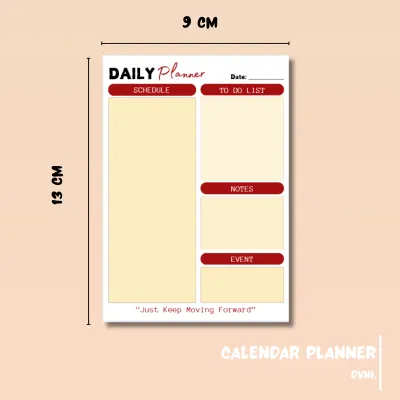

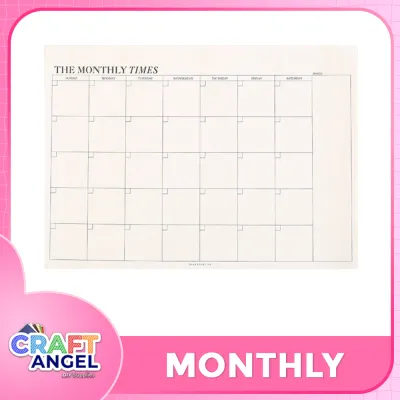
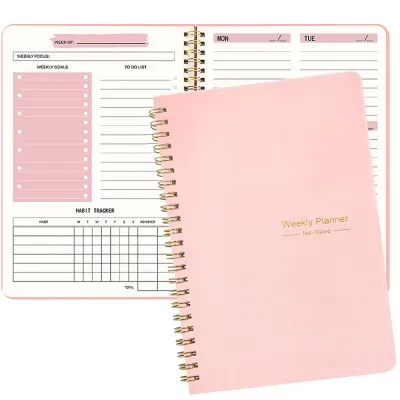
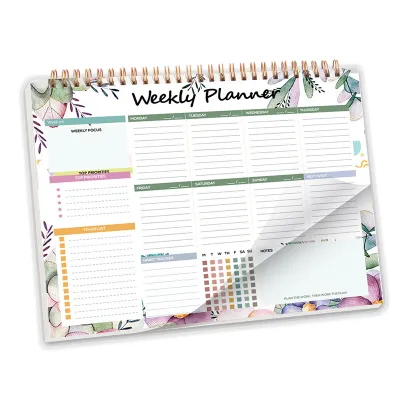
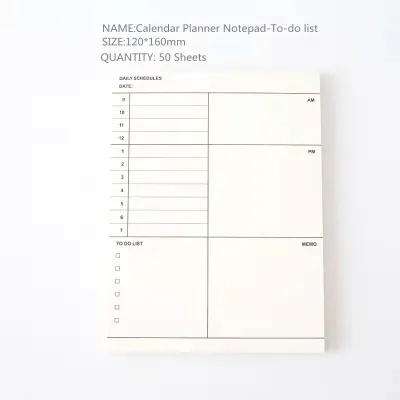
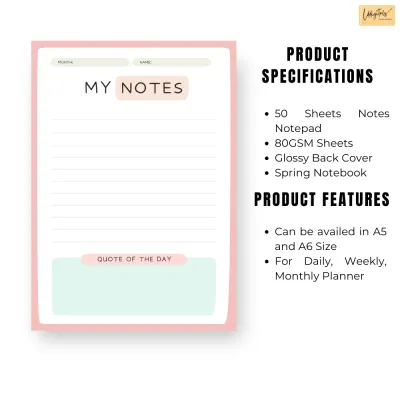
Prices are valid at publication and may change. Please refer to the product page for the latest price.
Understanding the Core Differences
To make an informed decision, it is essential to understand how the physical structure of each format dictates your daily workflow. The physical design of a notebook affects not only how you write but also how you organize your thoughts over weeks and months.
Dated Weekly Planners: Structure and Constraints
A dated weekly planner is manufactured with pre-printed days, dates, and months corresponding to a specific calendar year. This structure establishes a rigid chronological framework that mirrors the standard calendar, typically starting in January and ending in December, or following an academic year starting in August or September. Each week occupies a designated spread, with specific slots for Monday through Sunday.
This pre-printed layout offers immediate, out-of-the-box utility, but it also imposes strict temporal constraints. Because the dates are permanently fixed, the planner has a defined lifespan and becomes obsolete once the calendar year concludes. If you experience a hectic month where you do not open your planner, those pages remain permanently tied to those specific past dates. You cannot easily repurpose them for future weeks, which often results in unused paper and a fragmented record of your year.
Furthermore, the rigid structure of a dated planner means you are bound to the manufacturer’s layout decisions. If a particular week requires double the writing space due to a major project, you cannot easily expand your notes without spilling over into the next week’s pre-allocated pages. This format assumes a highly predictable, linear progression of time where every week of the year demands an identical amount of attention and physical space.
Undated Weekly Planners: Flexibility and Freedom
An undated weekly planner features the same general weekly layouts but leaves the date fields, month headings, and sometimes even the day names entirely blank. You manually write in the numbers and months as you go, which completely decouples the physical pages from the standard calendar. This design gives you the freedom to start using the planner at any point during the year—whether that is in the middle of April, at the start of a new project in October, or during a mid-year career transition.
The primary benefit of this format is its conservation of space. If you take a two-week vacation or face a period where daily scheduling is unnecessary, you can simply leave the planner closed. When you return, you write the current date on the next clean page, ensuring that no paper is wasted. This makes the undated planner a highly economical and sustainable choice for those whose planning habits are seasonal or project-based.
However, this flexibility introduces a distinct trade-off: you must invest the time and effort to write in the dates yourself, and you must maintain your own organizational system to track chronological progress. Without pre-printed dates, it is much harder to flip forward to a week in three months’ time to schedule a future appointment. You must establish a reliable “future log” or use digital tools alongside your physical planner to ensure future commitments do not slip through the cracks.
How Each Format Impacts Your Planning Habits
The physical differences between these two formats directly influence your psychological relationship with productivity and the practical steps you take to manage your time.

Consistency and the "Guilt Factor"
One of the most significant differences between dated and undated planners is how they handle human inconsistency. Many people experience periods of high productivity followed by phases of planning fatigue or burnout. In a dated planner, a missed week leaves behind a stark, empty spread that serves as a visual reminder of a broken habit. This can trigger a psychological phenomenon known as “planner guilt,” where the sight of empty pages discourages you from picking the book back up, ultimately leading to the abandonment of the planner altogether.
Undated planners eliminate this visual penalty entirely. Because there are no pre-printed dates, an empty page is simply a clean slate waiting for your next active week. If you stop planning during a busy exam period, a family emergency, or a hectic transition at work, you do not return to a graveyard of blank calendar squares. You simply write down the date of your return and continue. This makes undated planners highly supportive of long-term habit retention, as they accommodate the natural ebb and flow of daily life without inducing feelings of failure or waste.
In tropical regions like the Philippines, where the rainy season from June to November can bring sudden disruptions, typhoons, and suspension of classes or office work, daily routines can shift overnight. An undated planner adapts beautifully to these unpredictable weeks. If a storm disrupts your schedule for a week and you find yourself focusing solely on immediate priorities without needing a detailed planner, you can pause without the guilt of wasting premium stationery pages.
Scheduling Flexibility and Spontaneity
Your daily routine and the predictability of your workload should heavily influence your choice of format. A dated planner assumes a standard, linear progression of time where every week requires roughly the same amount of scheduling space. This works exceptionally well if your life revolves around fixed, recurring schedules, such as standard corporate office hours or structured school semesters.
However, if you are a freelancer with a fluctuating project load, a shift worker with irregular rotations, or an entrepreneur whose weeks vary wildly, a rigid dated format can feel restrictive. An undated planner allows you to adapt your layout to your actual workload. During an incredibly busy week, you might use an entire spread just to map out three days of intense tasks, while a quiet week might only require a small list on half a page.
Some undated planners even allow you to insert blank notes pages between weekly spreads, giving you the freedom to expand your writing space whenever a complex project demands it. This flexibility is particularly useful for university students who experience intense workloads during midterms and finals but require minimal scheduling space during semestral breaks. With an undated system, you can allocate your pages dynamically, matching the physical space of your planner to the cognitive demands of your life.
Setup Time and Upfront Effort
The convenience of a planner is directly tied to how much work is required before you can actually use it. A dated planner is a “grab-and-go” tool. The manufacturer has already taken care of the calendar alignment, the weekly divisions, and the monthly overviews. You can open the book on January 1st and immediately begin scheduling appointments, setting goals, and logging tasks without any preparation.
An undated planner, on the other hand, demands regular manual maintenance. Before you can plan your upcoming week, you must sit down and write in the dates, verify the calendar days, and potentially fill in monthly overview pages. If you enjoy the creative process of lettering, using stamps, or customizing your layout, this setup time can be a therapeutic and enjoyable ritual.
However, if you view dating your planner as a tedious chore, this extra step can become a barrier to entry. If you are already short on time, the requirement to manually date your pages might prevent you from planning altogether. It is crucial to be honest with yourself about your patience levels: if you are unlikely to spend ten minutes every Sunday night setting up your pages, the immediate readiness of a dated planner will serve you much better.
The Decision Framework: Which Format Should You Choose?
To help you select the ideal format for your lifestyle, let us break down the specific user profiles and practical scenarios where each planner excels.
Choose a Dated Planner If…
A dated weekly planner is the superior choice for individuals who thrive on structure, predictability, and immediate functionality. You will benefit most from this format if:
- You maintain a highly consistent planning routine: You open your planner daily, log tasks regularly, and rarely let a week pass without writing down your schedule.
- You want zero setup time: You prefer a system that is fully prepared by the manufacturer, allowing you to focus entirely on managing your time rather than designing pages.
- You rely on historical archiving: You use your past planners as journals or reference logs to look back at specific dates, verify when past meetings occurred, or track personal milestones throughout a specific calendar year.
- You need aligned monthly and yearly overviews: You require pre-printed monthly calendars and yearly future logs that align perfectly with standard calendar dates, making it easy to schedule long-term commitments like flights, medical appointments, or project deadlines months in advance.
Choose an Undated Planner If…
An undated weekly planner is highly recommended for those who value customization, flexibility, and a pressure-free planning environment. This format is ideal if:
- Your planning habits are intermittent: You tend to plan in bursts—such as during busy work quarters or academic terms—and prefer to pause your planner during slower seasons or holidays.
- You have a non-traditional or highly variable schedule: Your tasks do not fit neatly into a standard Monday-to-Sunday format, or you experience dramatic shifts in your weekly workload that require customizable space.
- You want to maximize your financial investment: You want to ensure that every single page of the notebook you purchase is utilized, with absolutely no paper wasted on blank weeks.
- You enjoy personalizing your stationery: You look forward to the process of hand-writing dates, using decorative stickers, or using custom ink stamps to set up your weekly spreads.
When Neither Format Fits (or Verify First)
There are situations where a standard weekly planner—whether dated or undated—may not meet your organizational needs. If you find yourself constantly running out of space on your weekly spreads, you may need to transition to a daily planner, which dedicates an entire page (or more) to a single day, allowing for detailed time-blocking and extensive task lists. Conversely, if you only need to track high-level deadlines and major events, a simple monthly planner or a blank bullet journal might offer a more streamlined, rapid-logging experience.
Before purchasing any planner, it is crucial to verify several physical specifications to ensure it can withstand daily use. In the humid tropical climate of the Philippines, high humidity can cause thin paper to absorb moisture from the air, making it more prone to ink feathering, ghosting, and bleed-through. Look for planners featuring a paper weight of at least 100 gsm (grams per square meter) to ensure compatibility with various writing instruments, including gel pens, rollerballs, and fountain pens.
Additionally, check the binding type of the planner. A true lay-flat binding (such as thread-sewn casing, disc-bound systems, or wire-o coil) is essential for a comfortable writing experience, especially when writing near the center margins. If you are opting for an undated planner, carefully check the product specifications to confirm if it includes pre-drawn future logs, index pages, or habit trackers. If these are missing, you will need to draw them yourself, which significantly increases your upfront setup time.
Finally, consider your budget and where you plan to purchase. In the local market, planner prices can vary widely. Budget-friendly options on online marketplaces typically cost under ₱300, while mid-range planners from local stationery brands range from ₱300 to ₱800. Premium imported planners, known for high-quality fountain pen-friendly paper, often range from ₱1,000 to ₱2,500. Knowing your budget helps narrow down whether you are looking for a simple utility notebook or a premium, long-term keepsake.
Practical Tips for Getting the Most Out of Your Planner
Regardless of which format you choose, establishing a sustainable system is the key to maintaining your planning habit over time.
For Dated Planners: Reframing Empty Spreads
If you choose a dated planner and inevitably miss a week or two, do not let those blank pages discourage you. Instead of viewing them as wasted space or a sign of failure, reframe them as opportunities for creative expression or functional logging. You can use skipped weeks to:
- Create a "brain dump" page: Write down unstructured thoughts, project ideas, or long-term goals that do not fit into your daily schedule.
- Log gratitude or memories: Fill the blank daily boxes with positive highlights, photos, or sketches from the month.
- Track habits or health metrics: Convert the weekly grid into a dedicated tracker for sleep, hydration, exercise, or budget expenses.
- Paste receipts or memorabilia: Use the empty space to store physical keepsakes like concert tickets, movie stubs, or travel receipts.
By repurposing these empty spreads, you transform a source of visual guilt into a highly functional and personalized section of your planner, maintaining the continuity and value of your notebook.
For Undated Planners: Streamlining the Setup Process
If you opt for an undated planner, the manual setup can sometimes feel overwhelming. To prevent setup fatigue, try implementing these time-saving strategies:
- Invest in dating tools: Use a rotating roller date stamp or pre-printed date stickers to quickly number your pages without having to hand-write every digit.
- Establish a weekly ritual: Dedicate 10 minutes every Sunday evening to date and prepare the upcoming week's spread, making it a relaxing routine to transition into the workweek.
- Batch your setup: Date an entire month's worth of pages at once rather than doing it week by week, ensuring your planner is always ready when you open it on a busy Monday morning.
Using these simple tools and habits reduces the friction of manual entry, allowing you to enjoy the benefits of an undated layout without the associated administrative burden.
General Weekly Planning Best Practices
To build a consistent planning habit, keep your planner in a highly visible location, such as open on your desk or next to your computer. This creates a strong environmental cue that prompts you to review your tasks daily. At the end of each week, conduct a brief weekly review: celebrate your accomplishments, assess unfinished tasks, and migrate outstanding items to the next week. This practice ensures that your planner remains an active, dynamic tool for managing your life rather than a static record of uncompleted chores.
Additionally, pay attention to how your writing tools interact with your planner’s paper. Before writing extensively, perform a quick pen test on a blank back page. Write a few words with your favorite gel pens, highlighters, or fountain pens, and observe the drying speed and bleed resistance. In humid conditions, some inks can take longer to dry, so choosing a fast-drying ink can prevent accidental smudges and keep your weekly layouts clean and legible.
Frequently Asked Questions (FAQ)
Can I use an undated planner for long-term goal tracking?
Yes, you can use an undated planner for long-term goal tracking, but it requires some initial manual preparation. Because undated planners lack pre-printed calendar years, they rarely include structured multi-year or annual future logs. To track long-term milestones, you will need to manually dedicate several pages at the front or back of the notebook to serve as a yearly overview or quarterly roadmap.
If your undated planner does not have blank pages available for this purpose, consider using supplementary paper inserts, adhesive calendar tabs, or a secondary digital calendar tool to manage your long-term deadlines. This allows you to keep your undated planner focused entirely on immediate, weekly task execution while maintaining a clear view of your broader yearly objectives.
What if I miss a week in my dated planner?
Missing a week in a dated planner is a common experience and should not be viewed as a failure. The most practical approach is to simply turn the page to the current week and resume planning immediately. Do not feel obligated to retroactively fill in the tasks or events for the week you missed, as this can turn planning into an exhausting chore.
To make use of the empty pages left behind, you can easily repurpose them. Cover the pre-printed dates with decorative tape or correction tape, and use the blank blocks for sketching, writing down shopping lists, planning a future vacation, or mapping out a complex project. By treating these pages as bonus writing space, you can eliminate the psychological guilt of skipped weeks and maximize the value of your planner.
Community discussion
Share your experience or ask a question. Comments are reviewed before publication.