
Sketch pencil grades represent a standardized yet relative scale that measures the hardness and darkness of a pencil’s core. This core, often referred to as the “lead,” is actually a mixture of natural graphite and binding clay. The specific ratio of these two materials dictates how the pencil behaves on paper. By adjusting this mixture, manufacturers create pencils that range from extremely hard and light to incredibly soft and dark, giving artists precise control over their mark-making.
The letters “H” and “B” on a sketch pencil label stand for “Hard” and “Black,” respectively. Pencils marked with an “H” contain a higher proportion of clay, which makes the core harder and results in lighter, thinner lines. Conversely, pencils marked with “B” have a higher concentration of graphite, making the core softer and producing darker, richer marks.
Sitting right in the middle of this spectrum is the HB pencil, which represents a balanced baseline. It offers a moderate level of hardness and darkness, making it highly versatile for both writing and basic sketching. As the center point, it serves as a reliable reference for how other grades perform.
Products mentioned in this guide
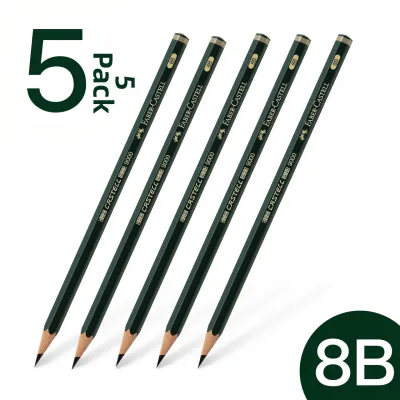
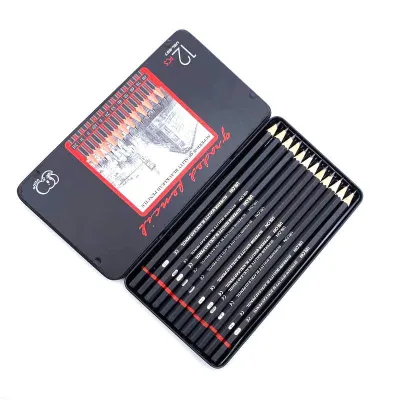
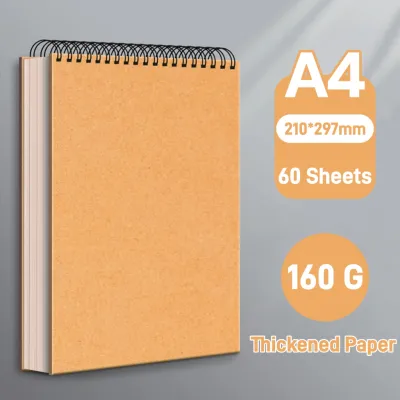
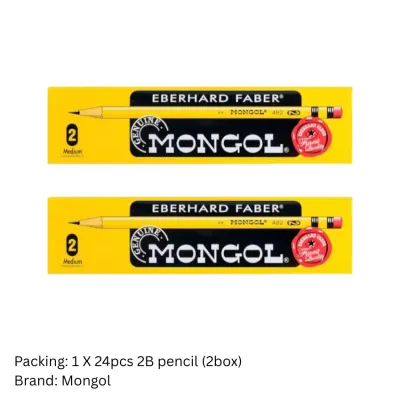
Prices are valid at publication and may change. Please refer to the product page for the latest price.
The grading scale extends in both directions, typically ranging from 9H at the hardest extreme to 9B at the softest. While this full spectrum exists, most artists do not need every single grade. Instead, they rely on a selected range of these pencils to achieve the necessary contrast, texture, and detail in their drawings.
How Pencil Grades Affect Your Sketching and Shading
Transitioning from the initial layout of a drawing to the final rendering requires a deliberate shift in the pencil grades you use. Understanding how these grades behave allows you to move smoothly from light, precise structural lines to deep, expressive tonal values. Rather than ranking them by quality, view them as specialized tools for different stages of your workflow.
Hard Pencils (H Grades) for Outlines and Details
Hard pencils, ranging from H to 9H, are defined by their high clay content. This composition allows the pencil to hold a sharp, fine point for a long time without wearing down, making it excellent for rendering crisp, clean lines that resist smudging. These characteristics make H grades ideal for technical drawings, architectural perspectives, and the initial light guidelines of a sketch.
However, because the core is hard, these pencils require more physical pressure to leave a visible mark on the page. If you press too hard, the sharp point can easily slice into or permanently dent the paper fibers. In humid tropical climates like the Philippines, paper can absorb moisture from the air, making the sheets softer and even more vulnerable to these permanent indentations.
Medium Pencils (HB to 2B) for General Sketching
The medium range, encompassing HB, B, and 2B pencils, features a balanced ratio of graphite and clay. This balance produces a moderate darkness that is easy to erase and highly responsive to layering. These grades are incredibly versatile, making them the standard choice for quick gesture drawings, everyday note-taking, and establishing the foundational mid-tones of a sketch.
For beginners, medium pencils are the most forgiving tools to work with. They allow you to practice controlling your hand pressure and line weight without the risk of carving deep grooves into the paper or creating uncontrollable smudges. They provide a reliable starting point before you transition to more extreme grades.
Soft Pencils (4B to 9B) for Deep Shading and Blending
Soft pencils, from 4B up to 9B, contain a high concentration of graphite and very little clay binder. This allows them to deposit a thick, rich layer of dark carbon onto the paper with minimal pressure, making them indispensable for creating deep shadows, high contrast, and smooth gradients.
Because the graphite is so soft, these marks smudge very easily and the pencil point dulls rapidly, requiring frequent sharpening. To prevent a shiny, burnished effect where the paper’s texture becomes completely flattened and reflective, you should apply these grades with a light touch and build up darkness through gradual layering. Utilizing tools like a kneaded eraser or a paper blending stump helps you control and manipulate this loose graphite without making a mess.
Building a Versatile Sketch Pencil Set
You do not need to purchase a massive, 24-piece pencil set to start sketching effectively. A highly versatile starter set can be built with just five core grades: 2H, HB, 2B, 4B, and 6B. This selection provides a wide enough tonal range to handle everything from the lightest structural guidelines to the deepest, darkest shadows.

When assembling your kit, it is often more practical to buy individual pencils rather than pre-packaged sets. This approach allows you to test the physical feel of the graphite on paper before committing to a purchase. It also prevents you from paying for extreme grades, like 9H or 9B, which you may rarely use in your daily drawing practice.
In local stationery stores or online marketplaces in the Philippines, individual sketching pencils typically cost between ₱15 and ₱80 each, depending on the brand. Buying open-stock pencils lets you easily replace the grades you use most frequently, such as 2B or 4B, without having to buy an entire new set. This keeps your hobby cost-effective while ensuring your pencil case only contains tools you actually use.
Paper Texture and Pressure: Variables That Change Pencil Performance
A pencil’s performance is not determined solely by its grade; it is part of a system that includes your paper and your physical technique. The “tooth,” or surface texture, of the paper plays a massive role in how much graphite is scraped off the pencil core. Rough sketch paper pulls more graphite from the pencil, making marks darker but wearing down the point faster than smooth paper.
Your hand pressure is another critical variable that can alter how a grade behaves. A light touch with a 2B pencil can mimic the soft lines of an HB, while heavy pressure can make it look as dark as a 4B. However, relying on heavy pressure to force a lighter pencil to look dark risks damaging the paper surface and making the graphite impossible to erase cleanly.
To achieve the best results, always test your pencils on a small scrap piece of your intended drawing paper before starting a final piece. This quick trial allows you to calibrate your hand pressure to the specific paper texture and observe the actual tonal range your pencils can produce under your current environmental conditions.
Frequently Asked Questions (FAQ)
Do pencil grades differ between brands?
Yes, pencil grades can vary significantly between different manufacturers because there is no universal, strictly enforced industry standard for graphite grading. A 2B pencil from a European brand might feel noticeably harder and write lighter than a 2B from a Japanese brand, which often runs softer and darker. To avoid surprises, it is best to test new brands on a scrap sheet to map out their specific grading quirks and find the formulation that matches your drawing style.
Can I use standard writing pencils for sketching?
You can absolutely use standard writing pencils, which are typically graded as HB or No. 2, for sketching. They are excellent for quick layouts, gesture drawings, and planning your compositions. However, they will limit your ability to achieve very deep, rich shadows or smooth, wide-area blending, as their higher clay content prevents them from getting dark enough without damaging the paper.
Community discussion
Share your experience or ask a question. Comments are reviewed before publication.