
Selecting the right packaging materials requires understanding the technical specifications that dictate their performance. In the world of stretch film, the term ‘micron’ refers to the unit of measurement used to express the thickness of the plastic material. A single micron is one-millionth of a meter, and this seemingly tiny dimension plays a massive role in determining how well a film can secure, contain, and protect your goods during transit or storage. Understanding this measurement helps businesses optimize their packaging processes, reduce material waste, and prevent costly product damage.
What Micron Thickness Actually Measures in Stretch Film
A micron, short for micrometer, is a metric unit of measurement equal to one-thousandth of a millimeter. When applied to stretch film, this number describes the thickness of the plastic membrane itself, completely independent of other roll dimensions such as the roll’s width or total linear length. While a roll might be 500 millimeters wide and 300 meters long, its thickness is what ultimately dictates its physical behavior under tension.
Manufacturers measure this thickness using precise electronic or mechanical gauges during the extrusion process. Maintaining a consistent thickness across the entire roll is critical because even minor variations can create weak spots. If a film has thin patches, it is highly likely to tear prematurely when subjected to the high tension of wrapping, leading to wasted material and interrupted packaging workflows.
Products mentioned in this guide
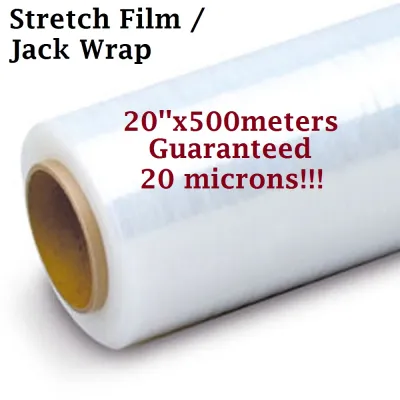
122 Lazada user ratings
Antagal dumating. Wala sa expected delivery date.I’ve seen it on the delivery history namasyal sa bulacan from QC bago nakarating sa Mandalu…Read full reviewShow less
Antagal dumating. Wala sa expected delivery date.I’ve seen it on the delivery history namasyal sa bulacan from QC bago nakarating sa Mandaluyong
Durability: .......................looks durable......... Clarity: very clear....................... Ease of Use: easy
Ease of Use:good Durability:good Clarity:good nice ang item nagustuhan ng asawa ko sya kc gagamit nyan legit seller
great value for money Clarity:should last me a very long time. pretty strong also dkes not tear easily
Received my order on time and in good condition, well packed 👍👍👍 Thank you seller and delivery rider 👍 👍👍👍👍
1,119 Lazada user ratings
Efficient packaging solution., Great value for the price., Convenient size for various packaging needs., Provides a tight and secure wrap., …Read full reviewShow less
Efficient packaging solution., Great value for the price., Convenient size for various packaging needs., Provides a tight and secure wrap., High-quality material for reliable protection., Ideal for shipping and storage., Durable stretch film for secure packaging., Perfect for pallet wrapping.,
Durable stretch film for secure packaging. Efficient packaging solution. Easy to use and handle. Perfect for wrapping of many files and stor…Read full reviewShow less
Durable stretch film for secure packaging. Efficient packaging solution. Easy to use and handle. Perfect for wrapping of many files and storybooks.
Received package just in time well package with bubble wrappers intact start to use it good as of now value for the money
Provides a tight and secure wrap., Efficient packaging solution., looks okey. Good for packaging items for shipping.
Strong adhesive for a secure wrap., Efficient packaging solution., Durable stretch film for secure packaging.,
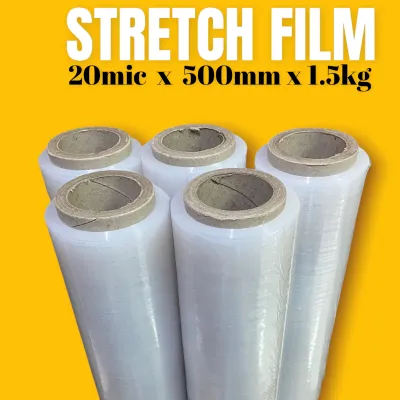
7,066 Lazada user ratings
Strong and tear-resistant, Easy to use and handle, Securely wraps and protects items, Convenient size for wrapping, Yahweh mush njgbah nugah…Read full reviewShow less
Strong and tear-resistant, Easy to use and handle, Securely wraps and protects items, Convenient size for wrapping, Yahweh mush njgbah nugah mga nvhha nbhah
Ease of Use:10/10 Durability:0/10 Clarity:10/10 what you see is what you get certainly will order again fast delivery and well packed
what you see is what you get,, super affordable ang price, fair pricing, fast delivery, courteous ang courier. more sales
napakaayos ang package ng items .medyo manipis yung na order ko ..pero ok n yun nextime nlang ulit .salamat seller
Useful tlga sya..maganda at mura dto sa shop na to..Salamat po
Prices are valid at publication and may change. Please refer to the product page for the latest price.
It is also vital to distinguish between nominal thickness and usable thickness. The nominal thickness is the measurement of the film in its relaxed, unstretched state as printed on the product label. Once you apply the film to a pallet or package, the material stretches—often by 50% to over 150% depending on whether you are wrapping manually or using a machine. This stretching thins the film, meaning the actual protective barrier securing your goods is thinner than the nominal micron rating on the packaging.
How Thickness Influences Strength, Stretch, and Puncture Resistance
The thickness of a stretch film directly influences its physical performance, particularly its load containment force. Containment force is the pressure the wrapped film exerts on the load to hold it together. Generally, thicker films provide a higher baseline tension, which means they can hold heavier or more unstable loads securely without stretching to their breaking point. This makes higher-micron films a standard choice for securing heavy industrial goods or dense office supplies.

Puncture resistance is another critical performance factor heavily influenced by thickness. Thicker films naturally offer greater resistance to sharp corners, protruding wooden pallet splinters, or irregular cardboard edges. However, modern manufacturing techniques have introduced high-performance thin films that utilize advanced resin formulations and pre-stretch technology. These engineered films can sometimes match the puncture resistance of traditional, thicker films while using less raw material, though they require careful application to avoid over-stretching.
Because thickness is not the sole indicator of performance, you should always consult the manufacturer’s technical data sheets or product labels for specific tear and puncture ratings. Two films with the exact same micron rating can perform differently if one is made from standard low-density polyethylene and the other uses advanced multi-layer co-extrusion. Verifying these technical specifications ensures you select a film that matches the physical demands of your specific packaging tasks.
Matching Micron Levels to Your Specific Packaging Scenarios
Selecting the right micron level involves analyzing the physical characteristics of the items you need to wrap. For light-duty applications, such as securing uniform cardboard boxes, lightweight office supplies, or neatly stacked documents, a thinner film ranging from 8 to 12 microns is often highly effective. These loads have flat surfaces and minimal sharp corners, meaning they do not require heavy-duty puncture resistance to remain stable during storage.
In contrast, heavy-duty applications demand a much more robust material. If you are wrapping heavy palletized goods, irregular shapes, metal components, or items with sharp, protruding corners, you will generally need a film between 15 and 23 microns or higher. The extra thickness provides the necessary tensile strength to prevent the load from shifting and resists punctures from sharp edges that would easily slice through thinner materials.
Transit conditions also play a major role in this decision. If your packages are destined for long-distance shipping, multiple transit transfers, or frequent manual handling by logistics personnel, they will experience significant vibration and shifting. In these scenarios, a thicker film ensures the integrity of the wrap remains intact throughout the journey. Conversely, items that will remain stationary in a local warehouse can often be secured with a lower-micron film.
Finally, you must align the film thickness with your application method. Manual hand-wrapping is physically demanding; using excessively thick, stiff films can quickly cause operator fatigue, leading to inconsistent wrapping tension. On the other hand, automatic wrapping machines can handle stiffer, thicker films with ease, but using a film that is too thin or poorly suited for the machine’s pre-stretch settings can lead to frequent film breaks and equipment jams.
Secondary Specifications to Simplify Your Purchasing Decision
When purchasing stretch film, it is easy to get distracted by specifications that have little to do with actual performance. Marketing terms describing proprietary roll designs, minor variations in the weight or material of the cardboard core, or the color of the film packaging rarely impact the material’s core containment capabilities. Focus your evaluation on the actual micron thickness, width, and material composition rather than these secondary aesthetic or packaging details.
Another common pitfall is focusing entirely on the upfront price per roll. A cheaper, low-micron roll might seem like a cost-effective choice initially, but if it lacks sufficient stretch yield, you will end up using significantly more material to secure each pallet. If a higher-quality, slightly more expensive film can stretch up to 150% or 200% without tearing, you will use far fewer meters of film per package, resulting in a lower cost per wrapped unit over time.
To make an informed decision, it is highly recommended to test a small batch of the stretch film in your actual working environment before committing to a bulk purchase. This hands-on trial allows you to observe critical, non-quantifiable traits such as the film’s cling (how well it sticks to itself without leaving adhesive residue), its clarity for barcode scanning, and its real-world tear resistance when applied by your staff or machinery. Testing ensures the film performs reliably under your specific handling conditions.
Frequently Asked Questions (FAQ)
Is a higher micron count always better for stretch film?
No, a higher micron count is not always the best choice. While thicker film offers superior puncture resistance and higher containment force, it also reduces the overall stretch yield of the roll, meaning you get less coverage per roll. Thicker films are also stiffer, which can cause rapid operator fatigue during manual wrapping and increase your overall material costs. It is far more efficient to match the film’s thickness to the specific weight, shape, and transit requirements of your load rather than defaulting to the thickest option available.
How can I verify the micron thickness of my current stretch film?
You can verify the thickness of your stretch film by checking the product label, original packaging, or the manufacturer’s technical data sheet, where the nominal gauge is typically listed. If you need to physically verify the thickness of an unlabelled roll, you can use a calibrated digital micrometer. To get an accurate reading, cut a small, flat section of the film from the roll, ensure it is completely unstretched and free of wrinkles, and measure it with the micrometer in several different spots to find the average thickness.

Community discussion
Share your experience or ask a question. Comments are reviewed before publication.