
Choosing the perfect gel pen is a highly personal decision that can elevate your daily writing experience, whether you are taking notes in a humid classroom, signing official documents in an office, or sketching in a personal journal. The ideal choice among the Uni-ball 207, Pilot G2, and Zebra Sarasa Clip depends on your specific writing habits, grip preference, and the paper stock you use most frequently. In the tropical climate of the Philippines, where high humidity can affect how paper absorbs ink and how quickly it dries, finding a reliable writing instrument is essential to prevent smudging and ensure clean, legible lines.
Each of these three contenders has earned a dedicated global following, yet they approach the writing experience from distinct design philosophies. By understanding how their ink formulations, barrel designs, and clip mechanisms perform under real-world conditions, you can select the pen that feels like a natural extension of your hand. Before making a purchase, it is always wise to verify the specific tip sizes and ink types available on the packaging, as manufacturers frequently update their product lines to suit different writing styles.
Comparing the Contenders: Uni-ball 207, Pilot G2, and Sarasa Clip
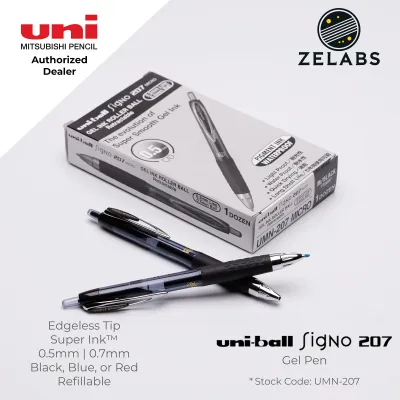
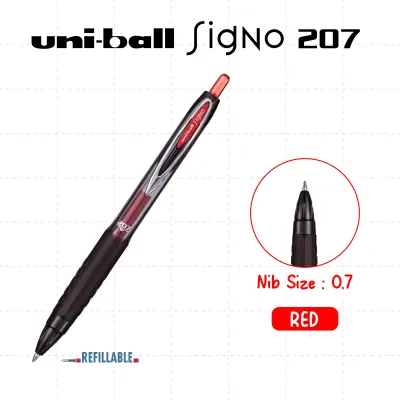
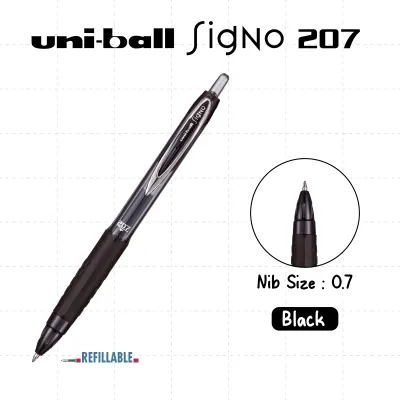
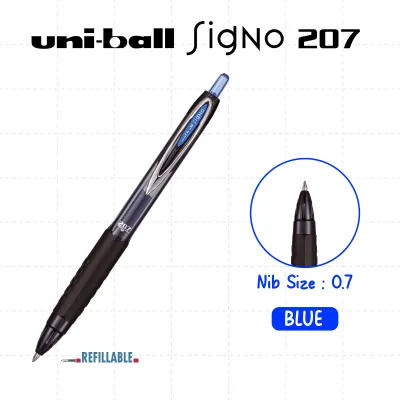
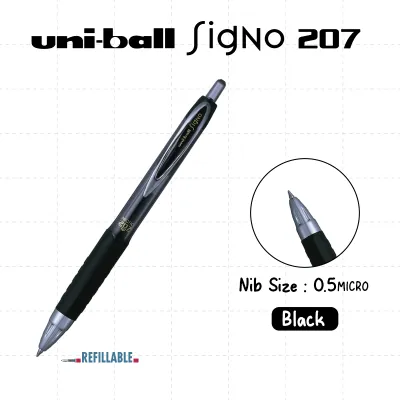
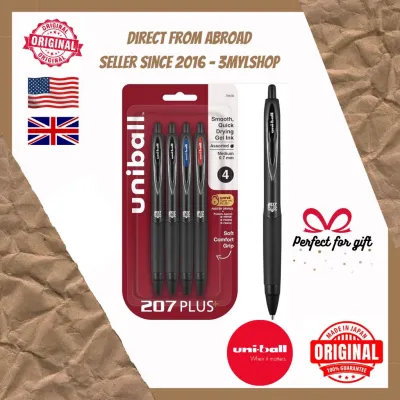
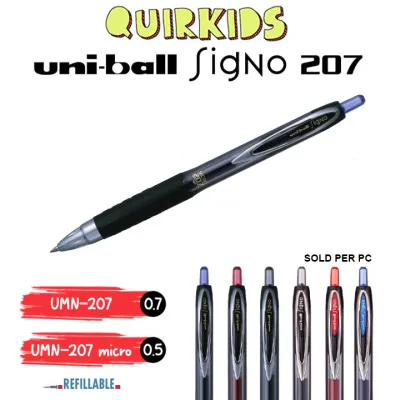
To find the pen that best fits your daily routine, it helps to understand the official design focus of each model. The Uni-ball 207 is widely recognized for its emphasis on document security. The manufacturer designs this pen with a specialized ink formulation engineered to bind with paper fibers, helping to prevent check washing and unauthorized document alteration. If you frequently sign contracts, write checks, or handle official paperwork, this security-focused ink provides peace of mind. The physical design of the Uniball 207 features a classic, textured rubber grip and a professional metallic-accented barrel that fits comfortably in corporate environments.
Products mentioned in this guide
![Uni-Ball Signo 207 [8pcs/Pack] Gel Pen Retractable Medium 0.7 Mm Black Ink](https://img.lazcdn.com/g/ff/kf/S29d613a37e674fb398aeccb87b6303c2v.jpg_400x400q80.jpg_.webp)
Prices are valid at publication and may change. Please refer to the product page for the latest price.
In contrast, the Pilot G2 is built for endurance and comfort during long, continuous writing sessions. Its primary design focus is a contoured, cushioned rubber grip that minimizes finger fatigue, making it a favorite among students and professionals who write pages of notes at a time. The Pilot G2 is also celebrated for its high ink capacity, allowing you to write longer before needing a refill. The ink flow is notoriously generous, producing bold, dark lines that stand out clearly on the page, though this high flow rate requires a matching paper quality to prevent feathering.
The Zebra Sarasa Clip takes a highly functional and customizable approach to writing. Its standout feature is a sturdy, spring-loaded binder clip—often referred to as an alligator clip—that opens wide to secure the pen to thick notebook covers, clipboards, or planners. Beyond its mechanical utility, the Sarasa Clip series is famous for its extensive palette of vibrant colors and specialized ink variants, including quick-drying formulations. This makes it an exceptional tool for color-coding notes, bullet journaling, and creative writing.
When browsing options at your local stationery shop, remember to verify the specific tip sizes and ink formulations printed on the packaging. A 0.5mm extra-fine tip will behave very differently from a 0.7mm medium tip, and some specialized sub-series may offer different drying speeds or water-resistance levels than the standard models.
Key Dimensions to Evaluate Before Buying
Before committing to a specific pen model, conducting a physical test on your preferred paper stock is the most reliable way to evaluate performance. Because paper quality, thickness, and moisture absorption vary wildly, a pen that writes smoothly on premium journal paper might feather or bleed on thin school notebook paper.

To evaluate the tip and ink flow, observe how the pen behaves when it first touches the paper. A high-quality gel pen should deliver consistent ink without skipping or pooling. When testing the Uniball 207, Pilot G2, or Sarasa Clip, write a series of quick loops and long straight lines. Check if the ink spreads outward into the paper fibers—a phenomenon known as feathering. If you notice feathering, you may need to switch to a finer tip size, such as a 0.5mm or 0.38mm, or use a heavier, more ink-friendly paper stock.
The physical comfort of a pen determines how long you can write without experiencing hand cramps. Compare the rubberized, textured grip of the Uniball 207 with the contoured, cushioned grip of the Pilot G2 and the smooth, minimalist rubber grip of the Sarasa Clip. If your hands tend to sweat in warm weather, a textured or firmer grip like the Uni-ball 207 may offer better control. Conversely, if you apply heavy pressure when writing, the softer cushion of the Pilot G2 can help absorb some of that force, reducing strain on your fingers.
Drying speed is a critical factor, especially for left-handed writers whose hands glide across freshly written text. To test drying time, write a single word and immediately swipe your finger across it after one, three, and five seconds. Note how long it takes for the ink to set completely. Gel inks naturally take longer to dry than ballpoint inks because they are water-based, but some formulations are specifically optimized for rapid drying. If you write quickly or use left-handed writing angles, a faster-drying variant will help keep your pages clean.
Consider how you plan to carry your pen throughout the day. If you frequently clip your pen to a shirt pocket, a standard molded plastic clip like the one on the Pilot G2 is lightweight and unobtrusive. However, if you need to attach your pen to a thick leather planner, a heavy spiral notebook, or a clipboard, the mechanical binder clip of the Sarasa Clip is far more durable and versatile. It reduces the risk of the clip snapping off when flexed over thicker materials.
Decision Framework: Which Gel Pen Should You Choose?
To simplify your decision, you can match your writing habits and environment to the unique strengths of each pen. No single gel pen is universally superior; instead, the best choice is the one that aligns with your daily tasks and ergonomic preferences.
You should choose the Uni-ball 207 if you prioritize document security and need ink that resists fraud, check washing, and fading over time. It is also the ideal choice if you prefer a traditional, firm grip that provides precise control without feeling overly soft or mushy, making it excellent for signing contracts and official forms on standard office paper.
You should choose the Pilot G2 if you write for extended periods, such as during exams, lectures, or long journaling sessions, and require a soft, contoured grip. It is perfect for those who prefer a bold, dark, and highly saturated line with a generous ink flow, and who want a widely available pen with a high ink capacity that minimizes the frequency of refill replacements.
You should choose the Zebra Sarasa Clip if you need a highly portable pen with a robust, wide-opening clip that securely attaches to planners, clipboards, or thick folders. It is also the best fit if you enjoy color-coding your notes, bullet journaling, or expressing yourself through a wide variety of vibrant ink shades, or if you are left-handed and require quick-drying ink options to prevent smudging.
Before making your final choice, verify the exact ink formulation on the packaging if you have specific archival, waterproof, or lightfast requirements. While many gel pens offer water-resistant properties, specialized archival lines provide the highest level of protection for historical records and artistic works.
Evaluating Price and Refill Value
When choosing a daily writing instrument, considering the long-term cost of ownership is just as important as the initial purchase price. Gel pens tend to consume ink faster than traditional ballpoints, meaning you will likely need to replace the ink cartridge more frequently.
To evaluate the overall value, compare the single-unit price of the pen body against the cost of compatible refill cartridges. In the Philippines, a complete gel pen typically costs between ₱60 and ₱120, depending on the model and retail outlet. In contrast, high-quality refill cartridges are often available for a fraction of that price, usually ranging from ₱40 to ₱70. By purchasing refills instead of entirely new pens, you not only save money over time but also reduce plastic waste.
Before buying refills, check current prices and availability at local office supply stores or trusted online marketplaces. Multi-packs of pens or refills often provide the best value per unit. Most importantly, always verify the exact refill model numbers on the manufacturer’s label or packaging. While some gel pen refills are physically interchangeable between different brands, subtle differences in spring placement, tip length, or barrel diameter can cause compatibility issues. Checking the manufacturer’s compatibility chart ensures your new cartridge will fit perfectly and write smoothly.
Frequently Asked Questions (FAQ)
Do gel pens leak in hot weather?
Gel pens can occasionally experience leakage or ink drooling when exposed to extreme temperature fluctuations and high humidity. Warm environments cause the air inside the pen barrel and the gel ink itself to expand, which can push the ink out of the tip or the back of the cartridge. To prevent this, store your pens horizontally or tip-up in a cool, dry place away from direct sunlight. Avoid leaving your stationery in hot vehicles, unventilated bags, or near heat-emitting electronic devices.
Can I use these gel pens on glossy or coated paper?
Standard gel inks rely on the porous nature of paper to absorb the water-based liquid and bind the pigments to the surface. On glossy, coated, or non-porous surfaces—such as photo paper, thermal receipts, plastic-coated labels, or some high-sheen planner pages—the ink cannot penetrate the material. This results in pooling, extremely slow drying times, and severe smudging. If you must write on coated surfaces, it is best to test the pen on a small, inconspicuous corner first, or switch to a permanent marker or specialized ballpoint pen designed for non-porous mediums.
Community discussion
Share your experience or ask a question. Comments are reviewed before publication.