
Choosing between the Uni-ball Signo RT1 and other popular gel pens comes down to your writing angle, paper preferences, and how your hand handles humidity during long writing sessions. There is no single pen that reigns supreme for every writer. Instead, the RT1 serves as a highly specialized tool designed to address specific pain points like tip snagging and grip discomfort, while other alternatives focus on rapid drying times or ultra-minimalist aesthetics. Finding the right fit requires looking closely at how different ink formulations and barrel designs interact with your daily writing habits.
In tropical climates where high humidity can affect both paper texture and ink drying behavior, selecting a reliable writing instrument is essential for keeping clean, smudge-free notes. Whether you are a student preparing for board exams, an office professional signing official documents, or a journal enthusiast, understanding the mechanical and chemical differences between these pens will help you make an informed decision. By evaluating your typical writing speed, grip style, and paper quality, you can easily determine if the RT1 or a different gel pen category best suits your needs.
The Uni-ball Signo RT1: Baseline Features and Direct Comparison
The Uni-ball Signo RT1 is distinguished by its refined physical design, which focuses heavily on user comfort and smooth ink delivery. Unlike traditional retractable gel pens that feature a noticeable ridge where the rubber grip meets the plastic tip, the RT1 utilizes a seamless barrel design. This integrated grip transition ensures that writers who hold their pens close to the tip do not experience friction or discomfort from sharp plastic edges during extended writing sessions.
Products mentioned in this guide
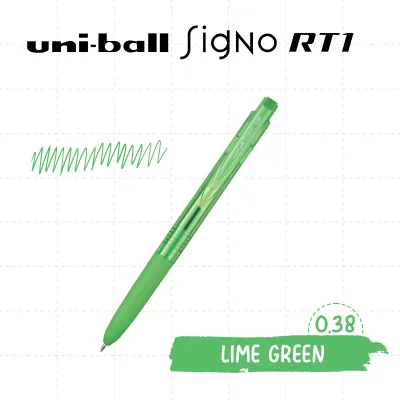
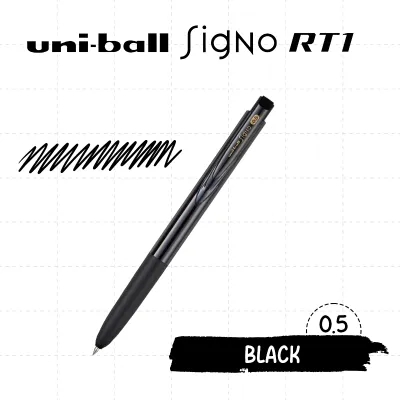
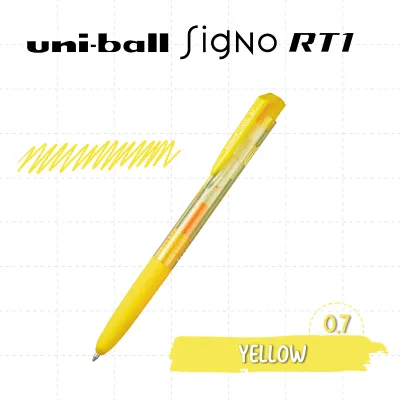
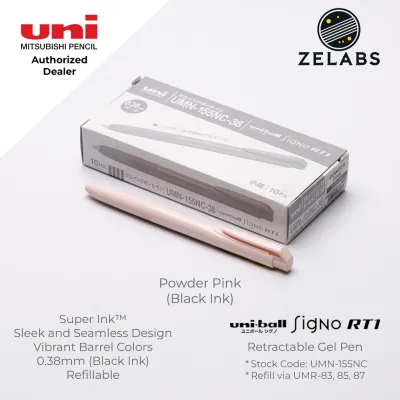
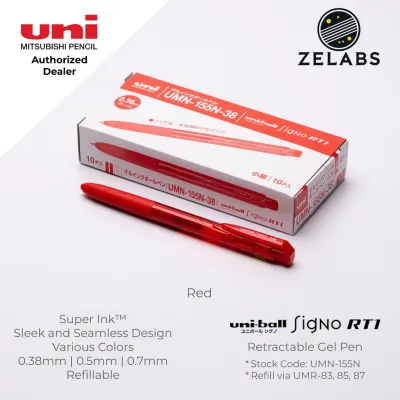
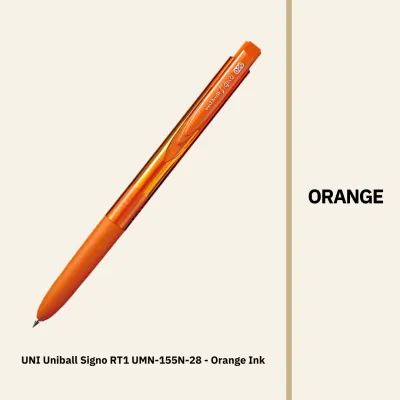
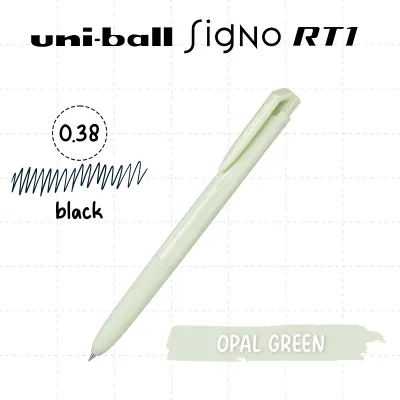
Prices are valid at publication and may change. Please refer to the product page for the latest price.
Another key mechanical feature of the RT1 is its edgeless tip design. The metal cone holding the tungsten carbide ball is rounded off at the edges to prevent the pen from scraping against paper fibers. When writing at a steep or low angle, traditional sharp-edged tips can shave off microscopic paper fibers, which eventually clog the ball mechanism and cause skipping. The RT1’s rounded tip glides smoothly across various paper types, reducing paper drag and maintaining a consistent ink flow.
In terms of ink formulation, the RT1 utilizes Uni-ball’s pigment-based gel ink, which is formulated to resist water, fading, and chemical washing once fully cured. This makes it a popular choice for signing official documents and keeping permanent records. However, because pigment ink consists of solid color particles suspended in a gel medium, it tends to sit on top of the paper fibers rather than soaking deep into them. Writers should verify the specific water-resistance and archival claims directly on the product packaging, as performance can vary based on the paper’s composition and environmental humidity.
Essential Comparison Dimensions for Gel Pens
To objectively compare the RT1 against other gel pens on the market, you must evaluate several practical performance dimensions under real-world conditions. The first and most critical dimension is drying speed and smudge resistance. In humid environments, gel inks naturally take longer to dry because the moisture in the air slows down the evaporation of the liquid carrier. Testing a pen on your standard notebook or copy paper by running a finger across a written line at one-second intervals is an excellent way to observe its real-world drying profile.

The second dimension is line consistency, which encompasses skipping, blobbing, and railroading. A high-quality gel pen should deliver a uniform line from the beginning of a stroke to the end, regardless of writing speed. Some pens tend to pool ink at the end of letters or skip when writing rapidly, which can ruin the neatness of your notes. Observing how the ink flows during quick cursive writing or fast print lettering will reveal whether the pen’s internal spring mechanism and ball-and-socket design can keep up with your pace.
The third dimension is ergonomic comfort and weight distribution. The physical shape of the pen barrel, the softness of the grip, and the overall weight balance determine how much physical strain is placed on your hand. A pen that is too thin or lacks a cushioned grip can cause you to squeeze tighter, leading to rapid hand fatigue. Conversely, a well-balanced pen with a subtle texture allows for a relaxed grip, which is essential for maintaining neat handwriting during long lectures or intensive office tasks.
Uni-ball Signo RT1 vs. Common Gel Pen Alternatives
To help you visualize how the Uni-ball Signo RT1 stacks up against other common gel pen categories, the following matrix outlines the key trade-offs in design and performance:
| Pen Category | Grip Style | Ink Drying Profile | Best Use Case |
|---|---|---|---|
| Uni-ball Signo RT1 | Seamless Integrated Rubber | Moderate (Pigment-based) | Smooth, skip-free writing at various angles |
| Quick-Drying Gel Pens | Standard Rubber Sleeve | Very Fast (Dye-blend) | Left-handed writers and rapid note-taking |
| Minimalist Gel Pens | Hard Plastic / No Grip | Moderate to Fast | Aesthetic appeal and precise, fine-line drafting |
| Classic Cap-Style Gel Pens | Textured Rubber Grip | Moderate (High-viscosity) | Official document signing and archival use |
When contrasting the RT1 with standard rubber-grip gel pens, the primary difference lies in the grip transition and clip design. Many standard gel pens feature a pronounced step-down between the barrel and the grip section, which can pinch the fingers of writers with a high grip style. The RT1’s completely flush transition offers a more uniform feel. Additionally, while many popular gel pens use heavy spring-loaded binder clips, the RT1 opts for a streamlined, low-profile plastic clip that reduces bulk when carried in a shirt pocket or a pencil case.
There is also an inherent trade-off between quick-drying ink formulations and overall writing smoothness. Quick-drying gel pens often use dye-based or hybrid ink formulations that penetrate paper fibers almost instantly to prevent smudging. While this is highly beneficial for left-handed writers, these fast-absorbing inks can sometimes feel slightly scratchier on the page and may exhibit minor feathering on cheaper, highly porous paper. The RT1’s pigment-based ink, by contrast, provides a richer, more vibrant line with exceptionally sharp edges, but it requires a few extra seconds to dry completely on smooth, non-porous paper surfaces.
Decision Framework: Which Pen Should You Buy?
Your final choice should align with your specific writing style, paper choices, and daily tasks. You should choose the Uni-ball Signo RT1 if you prioritize a seamless grip design and prefer a highly consistent, skip-free writing experience. The edgeless tip is particularly beneficial if you write at a low angle or find that traditional fine-tip pens feel too scratchy on your favorite notebooks. Furthermore, if you appreciate deep, vibrant lines that maintain their sharp edges over time, the RT1’s pigment-based ink formulation is an excellent match.
On the other hand, you should choose a quick-drying alternative if you write at a rapid pace, have a heavy hand, or frequently write on slick, coated papers. Left-handed writers, in particular, will benefit greatly from a fast-drying ink formulation that eliminates the risk of smudging as the hand moves across the page. If your daily work involves writing on glossy thermal receipts or highly treated planner pages, a quick-drying dye-blend ink will save you from frustrating ink smears.
If you prefer an ultra-lightweight pen barrel and need to write extremely small characters, a minimalist or needle-tip alternative might be your best option. These pens often feature very slim, grip-free barrels that appeal to those who prefer a clean, modern aesthetic. Needle-tip pens also provide an unobstructed view of the paper, making them ideal for precise drafting, ruler work, and fitting detailed notes into compact grid layouts.
Before making a final decision, always verify if you have strict archival or document-signing requirements. If you are signing legal contracts, checks, or official government forms, check the manufacturer’s official specifications on the packaging to ensure the ink is certified as tamper-resistant and fade-resistant. While many pigment-based gel pens offer these properties naturally, verifying the official labels ensures your important signatures remain secure and legible for years to come.
Purchasing Tips and Verification in the Philippines
When sourcing genuine gel pens and refills in the Philippines, it is best to visit authorized stationery retailers, established physical bookstores, or official brand storefronts on reputable online marketplaces. Purchasing from authorized channels protects you from counterfeit products that often suffer from poor ink flow, scratchy tips, and brittle plastic barrels. Genuine pens will always feature clean, crisp branding and clear labeling on their packaging.
Before finalizing your purchase, carefully check the physical or digital packaging for exact tip sizes and refill compatibility. Gel pens are typically available in tip sizes ranging from ultra-fine 0.28mm to bold 0.7mm, and choosing the right size is crucial for your writing style. Additionally, verify the specific refill model code (such as the UMR-83i for the RT1) to ensure you can easily replenish your pen when the ink runs out. Opting for refills is not only more environmentally friendly but also highly cost-effective over time.
Because writing comfort is entirely subjective, it is highly recommended to purchase a single unit—typically ranging from ₱60 to ₱90—to test on your preferred paper before committing to bulk purchases for school or office use. Testing a single pen allows you to evaluate how the grip feels in your hand and how the ink behaves under your local environmental conditions. Once you are satisfied with the performance, you can confidently invest in larger quantities or multi-color packs.
Frequently Asked Questions (FAQ)
How can I prevent my gel pen from skipping on glossy paper?
Standard gel inks require a porous paper surface to absorb the liquid carrier and allow the ball to roll smoothly. Glossy or heavily coated papers prevent this absorption, which can cause the ball to slide without rotating, resulting in skipping. Additionally, natural oils from your hands can transfer to the paper surface and create a barrier that disrupts ink flow. To prevent skipping, place a clean sheet of scrap paper under your hand while writing to block oil transfer, and try holding the pen at a slightly more vertical angle to encourage the ball to rotate.
Are pigment-based gel inks completely waterproof?
While pigment-based gel inks offer significantly higher water resistance than dye-based inks, they are not always completely waterproof under all conditions. Once the pigment particles bind to the paper fibers and dry completely, they resist bleeding when exposed to light moisture or high humidity. However, heavy water exposure, prolonged soaking, or vigorous rubbing while wet can still cause some surface ink to lift or smudge. It is always best to perform a quick test on a scrap piece of your specific paper to observe how the ink holds up before using it for critical, permanent documents.

Community discussion
Share your experience or ask a question. Comments are reviewed before publication.