
Spotting your suitcase on a crowded airport baggage carousel can be a stressful experience, especially when dozens of identical dark bags roll past. Using unique bag tag designs is one of the most effective ways to instantly identify your luggage from a distance, saving you time and preventing another traveler from accidentally taking your belongings. The right tag serves as a distinct visual marker that breaks the monotony of standard luggage shapes and colors.
When you travel, your luggage undergoes a rigorous journey through automated conveyor belts, sorting chutes, and outdoor baggage carts. A standard paper tag provided at the check-in counter rarely survives these high-friction environments. Investing in a dedicated, visually striking bag tag ensures that your suitcase remains identifiable even if it is separated from you during transit. By choosing a design that reflects your personal style, you also add a touch of personality to your travel gear.
Key Features to Look for in Unique Bag Tags
To evaluate bag tags effectively before purchasing, you should establish a clear set of visual and functional criteria. The primary goal of a unique tag is immediate recognition, which relies heavily on color contrast. If your suitcase is black, navy blue, or dark gray—which represents the vast majority of luggage—a tag in a matching dark shade offers little help. Instead, look for high-contrast colors like bright yellow, electric orange, or vibrant teal that stand out sharply against dark fabrics and hard shells.
Products mentioned in this guide
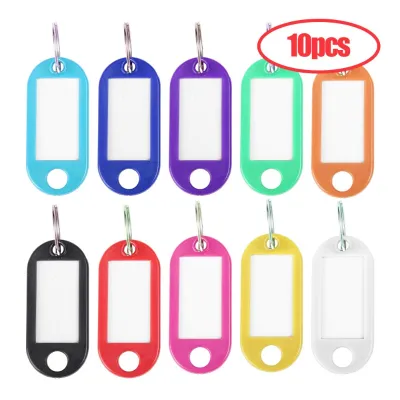
940 Lazada user ratings
Effortless organization with these key tags., Convenient key identifiers., Simple design, effective function., Durable plastic casing., Perf…Read full reviewShow less
Effortless organization with these key tags., Convenient key identifiers., Simple design, effective function., Durable plastic casing., Perfect for keeping keys organized.,
Easy to label and use!, Convenient key identifiers., Perfect for keeping keys organized., No more smudged or faded labels., Effortless organ…Read full reviewShow less
Easy to label and use!, Convenient key identifiers., Perfect for keeping keys organized., No more smudged or faded labels., Effortless organization with these key tags.,
Durable plastic casing., No more smudged or faded labels., Perfect for keeping keys organized., Effortless organization with these key tags.…Read full reviewShow less
Durable plastic casing., No more smudged or faded labels., Perfect for keeping keys organized., Effortless organization with these key tags.,
bilis dumating maayos ang packaging maganda lahat at walang damage ... thank you sa Lazada kasi hindi ako nabibigo sa mga orders ko .
Prices are valid at publication and may change. Please refer to the product page for the latest price.
Size, silhouette, and thickness are equally important for distance recognition. A standard business-card-sized rectangular tag can easily flip over or get tucked under a handle, hiding it from view. Choosing a tag with an oversized profile, a non-traditional geometric shape, or a thicker molded construction ensures that it remains visible from several meters away, even when the bag is moving on a carousel. The added thickness also prevents the tag from curling or bending over time.
Privacy is another critical factor. Look for designs that feature a built-in privacy flap, a sliding cover, or a secure sleeve that conceals your information card. This setup allows airport staff to access your details if necessary while keeping them hidden from casual onlookers standing behind you in check-in or security lines.
Finally, pay close attention to the attachment loop strength and clearance. A strong loop made of braided stainless steel, thick silicone, or reinforced leather is essential to withstand the pulling forces of conveyor belts. Additionally, the loop clearance should be short enough to keep the tag close to the luggage handle, reducing the risk of it snagging on sorting machinery.
Distinctive Bag Tag Design Styles to Consider
Selecting a distinctive style is where you can truly personalize your luggage while optimizing its visibility. Bag tag designs generally fall into several categories based on how they catch the eye, whether through bold typography, vibrant colors, unique shapes, or light-reflecting materials. The best choice for your gear depends heavily on the base color of your suitcase and the typical environments in which you travel. For instance, a sleek, minimalist suitcase pairs well with a bold typographic design, while a rugged duffel bag might benefit from a highly flexible, brightly colored silicone tag.

Bold Typography and Custom Monograms
For travelers who prefer a clean, sophisticated aesthetic over bright neon colors, bold typography and custom monograms offer an excellent solution. These designs rely on large, high-contrast lettering—such as a single oversized initial or a clearly printed surname—to catch the eye. A stark white monogram on a solid black or deep navy tag creates a classic, high-contrast look that is incredibly easy to read from a distance.
This style is particularly effective for business travelers and minimalists who want their luggage to look professional while remaining easily identifiable. Because the design relies on clean lines and sharp contrast rather than loud colors, it coordinates seamlessly with premium leather bags and sleek aluminum suitcases.
However, typographic designs have limitations in low-light environments. In dimly lit baggage claim areas or outdoor transit hubs at night, text-based designs can lose their legibility if the contrast between the lettering and the background is not sharp enough. To mitigate this, ensure the lettering is printed in a highly contrasting, crisp color.
Vibrant Silicone and Brightly Colored Tags
If your primary goal is to spot your bag the instant it emerges from the baggage chute, vibrant silicone tags in bright solid colors are an outstanding choice. Colors like neon pink, lime green, electric blue, and sunny yellow create an immediate visual disruption against the sea of dark suitcases. This high level of contrast is especially useful if you travel with standard black or navy blue soft-sided luggage.
Silicone is highly favored for these colorful designs because it is incredibly flexible, allowing the tag to bend and twist without cracking when squeezed between heavy bags. Furthermore, silicone has a naturally matte, scuff-resistant surface that does not scratch easily, ensuring that the bright color remains clean and visible even after rough handling.
When shopping, check the product labels for UV resistance. Over time, prolonged exposure to sunlight on outdoor tarmacs can cause bright pigments to fade. A UV-resistant silicone tag will maintain its vivid hue for years, ensuring that your bag remains easy to spot on every trip.
Quirky Shapes and 3D Molded Figures
To break away from the traditional rectangular tag silhouette, you can opt for quirky shapes and 3D molded figures. These tags are shaped like animals, food items, travel icons, or geometric patterns. By altering the physical outline of the tag, you make your suitcase recognizable by its unique shape rather than just its color, adding a playful and highly personalized touch to your gear.
Molded 3D tags are excellent for family travel, as children can easily identify their own bags by recognizing a specific shape. This visual recognition works instantly, even from across a crowded terminal. The textured surface of a 3D molded tag also provides a tactile element, allowing you to identify your bag by touch if you are retrieving it from a dark overhead bin.
Before choosing a shaped tag, verify that the 3D molding does not obscure the clear ID window or make the tag excessively bulky. A tag with many protruding edges can get caught in the narrow gaps of conveyor belt systems. Ensure the connection point where the attachment loop passes through is reinforced so the unique shape does not create a weak point.
Reflective and High-Visibility Materials
For those who frequently travel on red-eye flights, arrive at their destinations late at night, or utilize outdoor baggage drop-offs, reflective and high-visibility materials are invaluable. These tags incorporate retroreflective strips or micro-prismatic coatings similar to those used on safety apparel. When light hits the surface of the tag, it reflects directly back to the source, creating a bright, glowing effect.
This reflective quality is highly effective in low-light conditions, such as poorly lit parking lots, shuttle buses, or outdoor tarmacs during rainy weather. If you are searching for your bag in a dark cargo hold or on a dimly lit carousel, a quick sweep with your smartphone flashlight will cause a reflective tag to shine brightly, instantly revealing its location.
Because reflective materials rely on an external light source, they do not emit light on their own in complete darkness. To maximize their utility, look for tags that combine a reflective strip with a bright, high-visibility base color. This hybrid design ensures your tag remains visible during the day while providing excellent low-light performance when illuminated by artificial light sources at night.
Choosing the Right Material for Your Travel Needs
Selecting the right material for your bag tag involves matching the physical properties of the tag to your travel frequency, handling conditions, and maintenance preferences. The most common materials are leather, silicone, metal, and hard plastic, each offering distinct advantages and trade-offs.
Leather tags offer a classic, sophisticated appearance that complements business travel gear. Genuine leather is highly durable but susceptible to water damage if exposed to heavy rain on an open tarmac, which can cause it to stiffen or crack. If you choose leather, look for treated, water-resistant varieties and check the manufacturer’s care instructions, as natural leather may occasionally require conditioning to maintain its flexibility.
Silicone tags are arguably the most versatile option for the average traveler. They are completely waterproof, lightweight, and highly resistant to scuffs, tears, and impacts. A silicone tag can survive being crushed under a stack of heavy suitcases without sustaining any structural damage. Cleaning a silicone tag is as simple as wiping it down with a damp cloth, making it an incredibly low-maintenance choice for frequent flyers.
Metal tags, typically made of anodized aluminum or stainless steel, are virtually indestructible and offer a modern, industrial look. They are highly resistant to bending and tearing, ensuring that your contact information remains securely attached. However, metal tags are heavier than silicone or plastic. If attached with a long, loose loop, they can swing violently during transit, potentially scratching the hard shell of your suitcase. To prevent this, choose metal tags with short, snug attachment cables.
Regardless of the outer material you choose, the tag must protect the paper information card inside from moisture. Since luggage is frequently exposed to rain, snow, and high humidity during loading and unloading, water resistance is a critical consideration. Look for tags that feature a tight-fitting rubber seal or a clear plastic protective sleeve that fully encloses the paper insert.
When writing your contact details on the paper insert, keep in mind that ink drying speed, bleed resistance, and water resistance depend entirely on the exact combination of the paper card and the pen you use. To prevent your details from smudging if water penetrates the tag, perform a quick observable trial: write on a spare corner of the card, let it dry completely, and apply a drop of water to verify that the ink remains legible. Using a permanent pigment pen or a waterproof gel pen is highly recommended.
Tips for Attaching and Positioning Your Luggage Tag
Properly securing and positioning your unique bag tag is just as important as choosing the right design. Even the most visible tag is useless if it gets torn off during the first leg of your journey. To ensure your tag remains intact and functional, you must pay close attention to the attachment hardware and where you place it on your suitcase.
When comparing attachment options, braided steel cable loops with screw-on brass barrels offer the highest level of security. These cables are incredibly difficult to cut or tear, ensuring that the tag remains firmly attached. Leather straps with metal buckles provide a classic look, but you must ensure the buckle is fastened tightly and that the excess strap length is tucked away. Plastic loops are convenient but can become brittle and snap in cold temperatures, making them less suitable for long-haul flights.
For primary visibility, attach your main luggage tag to the top grab handle of your suitcase, as this is the most visible angle when bags are stacked or lying flat on a conveyor belt. To provide an extra layer of security, attach a secondary, matching tag to the side handle. This backup tag ensures that if your primary tag is somehow torn off or obscured, baggage handlers can still easily identify your bag from another angle.
Before you head to the airport, inspect your luggage for old airline routing stickers or barcode decals from previous trips. Leaving these old markers on your bag can confuse automated optical scanners, potentially leading to delayed or misrouted luggage. Ensure the only visible barcode on your suitcase is the one issued for your current flight, alongside your unique personal bag tag.
Frequently Asked Questions (FAQ)
What information should I put on my luggage tag?
To balance easy identification with personal privacy and security, you should be selective about the information you display on your luggage tag. It is highly recommended to include only your first initial, your last name, your mobile phone number (including the country code), and a professional email address. Avoid listing your full home address on the exterior of the tag, as this can alert dishonest individuals at the airport that your home is currently unoccupied. Instead, consider using your business address or the address of your destination hotel. Always choose a tag design that features a privacy flap or a sliding cover to keep these details hidden from casual observers while keeping them accessible to airline staff if your bag is lost.
Can I use multiple bag tags on one suitcase?
Yes, using multiple tags can be a highly effective strategy, provided it is done correctly. A smart approach is to place one highly visible, unique tag on the exterior top handle of your suitcase to aid in quick visual spotting on the carousel. You can then place a secondary, identical tag inside the suitcase—either tucked into an outer zippered pocket or placed directly on top of your belongings inside the main compartment. This internal tag serves as a reliable backup in case the external tag is torn off during rough handling. However, avoid attaching multiple dangling tags to the exterior handles of a single bag, as this creates visual clutter and significantly increases the risk of the straps tangling and snagging on automated conveyor belt machinery.
Community discussion
Share your experience or ask a question. Comments are reviewed before publication.