
Quick Answer: Is Valiant the Right Index Card for You?
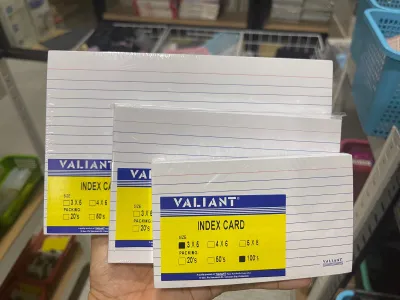
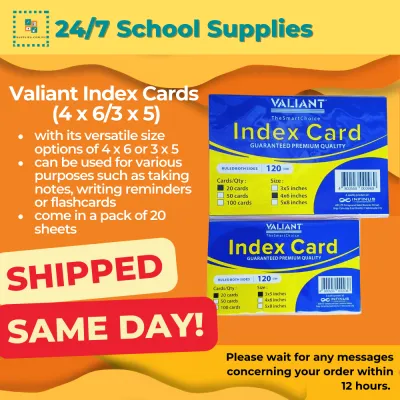
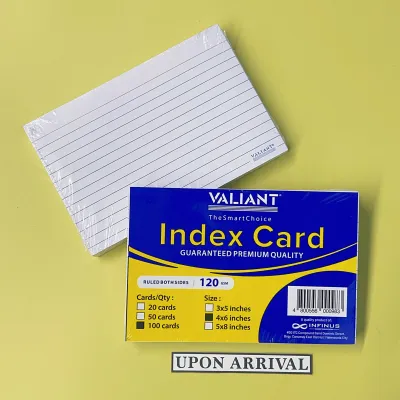
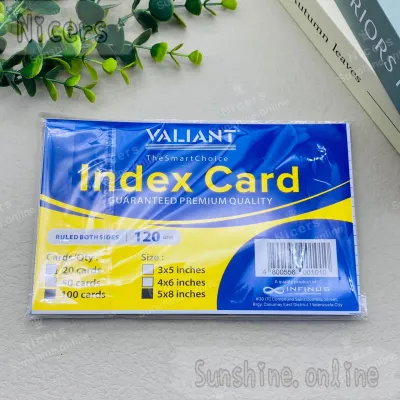
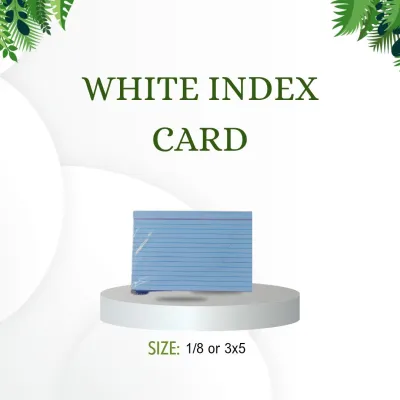
Choosing the right stationery is essential for maintaining an organized study routine or a productive office workflow. When evaluating the market in the Philippines, a Valiant index card generally offers an exceptional balance of affordability, structural rigidity, and reliable paper quality for everyday tasks. Whether you are a student preparing flashcards for board exams or an office professional sorting physical archives, this brand provides consistent performance without straining your budget.
However, the absolute best brand for your desk depends entirely on your choice of writing tools and your overall usage volume. While Valiant performs beautifully with standard ballpoint pens, fine gel pens, and graphite pencils, users who rely heavily on wet fountain pen inks, broad felt-tip markers, or heavy alcohol-based highlighters may need to evaluate paper thickness against premium, high-GSM alternatives. Matching your specific writing medium to the card’s paper properties ensures clean, legible notes on both sides of the sheet.
Key Comparison Dimensions for Evaluating Index Cards
To determine which brand truly earns a spot in your desk organizer, you must look beyond the brand name and analyze the physical properties of the cardstock. In the tropical climate of the Philippines, where high relative humidity can quickly turn flimsy paper limp and warped, these structural details become even more critical to long-term usability.
Products mentioned in this guide
![[LSC] Valiant Index Cards White ( 100 sheets )](https://img.lazcdn.com/g/p/d565c4e14c5269bfd584139630938dfb.jpg_400x400q80.jpg_.webp)
Prices are valid at publication and may change. Please refer to the product page for the latest price.

Paper Thickness, Weight, and Opacity
Paper weight, typically measured in grams per square meter (GSM), directly dictates how durable an index card will be over weeks of repeated handling. A higher GSM indicates a thicker, more rigid cardstock that resists bending, tearing, and curling in humid conditions. Opacity is closely linked to this weight; thicker cards prevent “shadowing” or “ghosting,” where writing on the front side is visible on the back. For students utilizing double-sided flashcards or offices creating two-sided reference files, high opacity is non-negotiable for readability.
Surface Smoothness and Ink Compatibility
The texture of the cardstock determines how smoothly your pen glides across the surface and how quickly the ink dries. Extremely smooth, coated papers can cause slow drying times, leading to smudges when you flip the cards quickly. Conversely, overly rough or porous paper fibers can cause “feathering,” where the ink bleeds outward from your pen strokes, making fine text illegible. Finding a card with a balanced, semi-matte finish ensures clean lines, fast drying speeds, and minimal hand fatigue during long writing sessions.
Ruling Options and Print Clarity
Index cards are available in three primary layouts: ruled (lined), grid (graph), and blank. When evaluating ruled options, the precision and color of the printed lines matter significantly. Faint, clean, and consistently spaced lines help keep your handwriting aligned without visually overpowering your notes. Dark, thick, or smudged lines can distract your eyes and clash with colored inks, reducing the visual clarity of your diagrams or key terms.
Size Standardization and Cutting Precision
Standard index card sizes in the Philippines typically include 3×5 inches, 4×6 inches, and 5×8 inches. High-quality manufacturing ensures that every single card in a pack is cut to these exact dimensions with perfectly square, clean edges. Inconsistencies in cutting can prevent cards from fitting neatly into standard index boxes, desktop organizers, or binder rings. Furthermore, clean edges prevent paper fibers from fraying over time, keeping your archive looking professional and orderly.
Packaging and Environmental Protection
Because paper is highly hygroscopic—meaning it readily absorbs moisture from the surrounding air—the way index cards are packaged is vital. Loose paper bands or thin, open-ended paper wraps offer minimal protection against the humid Philippine atmosphere. Secure, heavy-duty plastic shrink-wrapping or resealable boxes help preserve the paper’s original crispness and prevent premature warping before you even open the pack.
Valiant Index Cards: Quality and Value Profile
Valiant has established itself as a household name in Philippine schools and workplaces, offering a dependable product line tailored to practical, high-volume usage. Understanding its specific material profile helps clarify why it remains a staple on local stationery shelves.
Material Composition and Writing Performance Valiant index cards feature a reliable, medium-weight cardstock that provides a satisfying snap and structural integrity. The surface texture is optimized for standard writing instruments, offering a slight tooth that grips graphite and ballpoint ink effectively. When writing with standard black or blue ballpoint pens, the ink dries almost instantly, making these cards highly practical for quick note-taking. The paper fibers are tightly bound, which minimizes feathering when using standard gel pens with 0.5mm or 0.7mm tips.
Ideal Student and Office Use Cases For students, Valiant cards are exceptionally well-suited for high-volume study techniques. They serve as excellent raw material for the Leitner flashcard system, vocabulary drills, formula sheets, and historical timelines. The cards are light enough to carry in a backpack pocket but sturdy enough to survive being flipped repeatedly during a daily commute on a jeepney or LRT. In an office setting, these cards excel at temporary task tracking, quick desk reminders, meeting outlines, and physical inventory tagging where cards are attached to shelves or bins.
Cost-Efficiency and Market Availability One of Valiant’s strongest advantages is its cost-to-quantity ratio. Typically sold in packs of 100 sheets, these cards are highly affordable, allowing students to create hundreds of study aids without a significant financial investment. They are widely accessible across the Philippines, stocked reliably in major national bookstores, local neighborhood school supply shops, and popular online marketplaces. This widespread availability means you can easily replenish your supply mid-semester or during a busy office quarter without searching for specialty importers.
How Valiant Compares to Other Market Alternatives
To make an informed purchase, it is helpful to contrast Valiant’s mid-range positioning with the other tiers of index cards available in the local market. Rather than looking for a single winner, consider which tier aligns with your specific tools and durability requirements.
Premium Brand Alternatives
Premium index cards—often imported from international brands or specialized stationery manufacturers—prioritize heavy, high-GSM cardstock, archival-quality acid-free paper, and specialized surface treatments. These cards are significantly thicker, sometimes feeling like heavy watercolor paper or premium invitation stock.
- Writing Compatibility: These options are the gold standard for fountain pen enthusiasts, calligraphers, and those who use alcohol-based markers or heavy highlighters. The dense paper structure prevents wet inks from bleeding through to the opposite side, allowing you to use both sides of the card with complete confidence.
- Durability: Premium cards resist yellowing, degradation, and environmental warping over several years, making them ideal for permanent archives, recipe collections, or long-term reference guides.
- The Trade-Off: The cost per card is substantially higher than Valiant. Additionally, because they are often imported, finding them in physical retail stores outside of major metropolitan areas can be challenging, requiring you to order online and pay shipping fees.
Budget and Bulk Alternatives
On the other end of the spectrum are unbranded, generic, or local store-brand bulk packs. These are often sold in simple paper bands or loose plastic bags in wholesale markets or discount office supply outlets.
- Material Profile: Budget alternatives generally use much thinner paper, often closer to standard 80 GSM copy paper than true cardstock. They are highly susceptible to absorbing moisture from the air, which can cause them to curl, warp, or feel limp within days of opening the package.
- Writing Limits: Writing on budget cards with gel pens or liquid ink almost always results in significant feathering and bleed-through. This effectively limits you to using only one side of the card and restricts your tool choice to dry ballpoints or light pencils.
- Best Use Cases: Despite these limitations, budget cards are highly practical for low-cost, disposable tasks. They are perfect for temporary labels, quick brainstorming sessions where cards are discarded immediately after, basic children's crafts, or high-volume event sorting where long-term durability is irrelevant.
Decision Framework: Which Brand Should You Buy?
To help you finalize your purchase, use this practical decision framework based on your primary writing tools, storage needs, and budget constraints.
- Choose Valiant if: You are looking for a reliable, cost-effective everyday card for standard study and office tasks. If your pen case is filled with standard ballpoint pens, gel pens, and pencils, and you want a balanced card that offers good rigidity and clean ruling at an affordable price, Valiant is your best match. It is the practical choice for high-volume flashcards and daily office filing.
- Choose Premium Alternatives if: You primary write with fountain pens, heavy markers, or wet gel inks and require zero bleed-through. If you are building a permanent, multi-year reference system—such as a personal recipe catalog, a professional contact index, or archival study notes—and are willing to pay a premium price per card for exceptional paper weight and acid-free longevity.
- Choose Budget Alternatives if: You are purchasing stationery in massive bulk for single-use, temporary tasks. If you need disposable shipping tags, rapid brainstorming cards for a single workshop, or raw materials for basic classroom crafts where paper thickness, cutting precision, and long-term durability do not impact the outcome.
- Verify first if you plan to print: If you intend to run your index cards through a home or office printer (laser or inkjet) to print custom templates or grids, always check your printer's manual first. Look for the maximum paper weight or thickness the paper tray can handle. Heavy cardstock can cause persistent paper jams, especially in printers with tight, curved paper paths. For best results, use the manual feed or rear slot of your printer and test a single card before attempting a large print run.
Frequently Asked Questions (FAQ)
Are Valiant index cards thick enough for highlighters and markers?
Standard Valiant index cards are optimized primarily for dry ballpoint pens, standard gel pens, and pencils. While they can handle light highlighting with standard water-based highlighters, heavy ink saturation from broad felt-tip markers or alcohol-based coloring markers may cause shadowing or bleed-through on the reverse side. To ensure your study notes remain clean and legible on both sides, it is highly recommended to perform a quick ink swatch test on a single card. Simply apply your favorite markers and highlighters on one corner and check the back for ghosting before writing on your entire batch.
What are the standard index card sizes available in the Philippines?
The most common index card dimensions widely available across the Philippines are 3×5 inches (small), 4×6 inches (medium), and 5×8 inches (large). The 3×5-inch size is the traditional choice for vocabulary flashcards and quick formulas, while the 4×6 and 5×8-inch sizes offer more surface area for detailed study summaries, meeting outlines, or office records. Before purchasing a large supply, always measure your existing index card storage boxes, desktop organizers, binder rings, or flip-chart slots to guarantee a perfect physical fit.
Community discussion
Share your experience or ask a question. Comments are reviewed before publication.