
Choosing the right brush marker depends entirely on your creative goals, your budget, and the paper you use. Water-based brush markers use water as their primary solvent, resulting in a slower drying time, minimal bleed-through on standard paper, and the ability to reactivate the ink with water. In contrast, alcohol-based brush markers rely on fast-evaporating alcohol solvents, allowing for rapid drying, permanent layering, and seamless, streak-free color blending.
For bullet journaling, modern calligraphy, and everyday sketching on standard notebook pages, water-based markers are generally the most practical choice. For detailed illustrations, manga art, and professional design work where smooth gradients are essential, alcohol-based markers are the industry standard. Understanding how these two ink formulations interact with different paper types will save you from ruined pages and frayed brush tips.
Understanding Water-Based Brush Markers
Water-based brush markers are highly popular among journal enthusiasts, calligraphers, and casual crafters. Because the ink solvent is water, these markers behave similarly to watercolors. When applied to paper, the ink remains water-soluble even after it dries. This means you can touch a wet paintbrush or a specialized blending pen to the dried ink to reactivate it, creating soft washes and painterly gradients.
Products mentioned in this guide
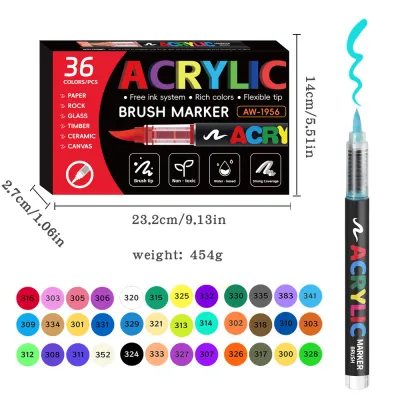
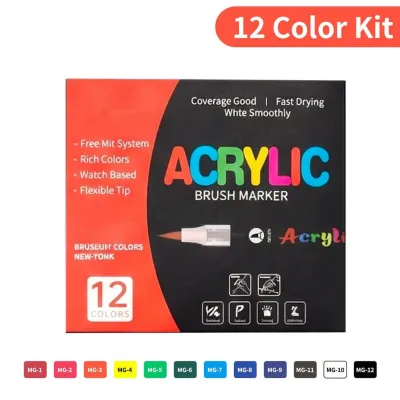
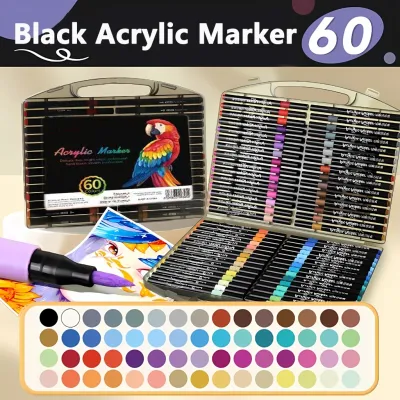
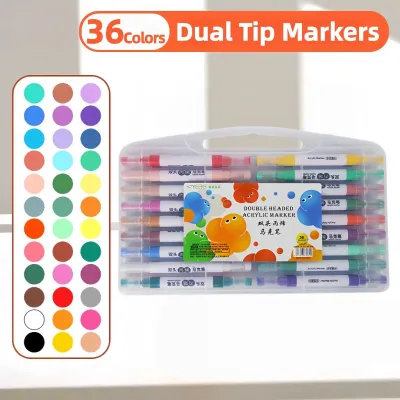
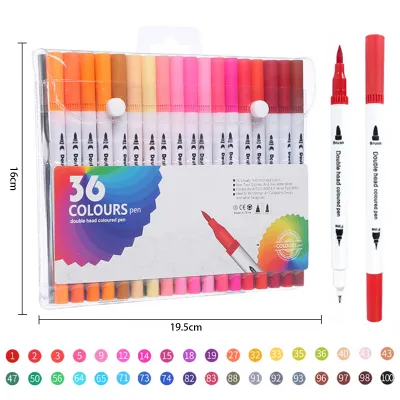
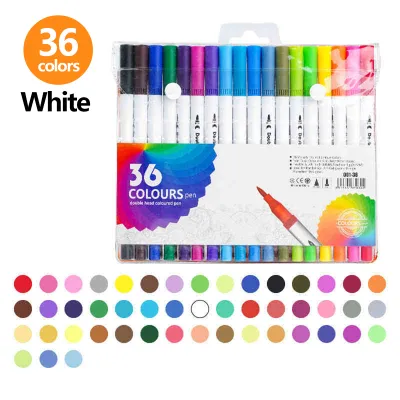
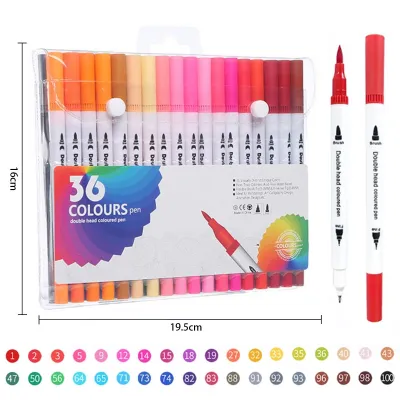
Prices are valid at publication and may change. Please refer to the product page for the latest price.
One of the greatest advantages of water-based ink is its gentle behavior on standard paper. If you enjoy writing in a bullet journal, planner, or standard notebook, these markers rarely bleed through to the back of the page. They allow you to create crisp, sharp edges that are perfect for hand-lettering and decorative borders, keeping your layouts clean and legible.
However, water-based markers have distinct limitations when it comes to heavy coloring. Because water saturates paper fibers, applying multiple layers of ink in the same spot will cause the paper to warp or pill, creating tiny, unsightly clumps of paper pulp. This effect is especially pronounced in humid tropical climates, where paper naturally retains more ambient moisture from the air. Additionally, coloring large areas with water-based markers often results in visible overlap lines or streaks, as the wet edges dry relatively slowly.
To get the best performance from your water-based brush markers, always verify your paper weight and texture. Smooth, heavy cardstock or mixed-media paper of at least 120 gsm is ideal. Avoid rough watercolor papers unless you are using a highly durable nylon brush tip, as textured surfaces can quickly wear down and split delicate felt nibs.
Understanding Alcohol-Based Brush Markers
Alcohol-based brush markers are the preferred tool for professional illustrators, comic artists, and designers. The alcohol solvent evaporates almost instantly upon contact with the paper, which prevents the ink from warping or pilling the page. This rapid drying time allows you to layer colors quickly without waiting, making it easy to build up depth and shadow in a short amount of time.

The defining feature of alcohol ink is its ability to blend seamlessly. Because the solvent keeps the pigment active on the page for a brief window, you can overlay two different shades to create smooth, streak-free gradients and realistic skin tones. This makes them indispensable for character design, fashion rendering, and high-fidelity concept art.
These performance benefits come with specific practical trade-offs. Alcohol ink is highly prone to bleeding through standard paper, meaning it will easily soak through to the next page of a notebook. To use these markers successfully, you must invest in specialized, bleed-proof marker paper or heavy, smooth cardstock. It is also highly recommended to place a protective silicone mat or a thick sheet of scrap paper underneath your work surface to prevent permanent stains on your desk.
Furthermore, alcohol markers emit a distinct chemical odor due to the evaporating solvent. Working with them requires a well-ventilated space, which is an important consideration if you typically create art in small, enclosed, air-conditioned rooms. They also tend to represent a higher financial investment, with professional-grade markers often ranging from ₱100 to over ₱300 per individual pen.
How to Choose the Right Brush Marker for Your Needs
To decide which brush marker type to buy, evaluate your primary art style alongside your workspace and budget. If your creative outlet consists of writing, planning, or casual sketching in a pre-bound journal, water-based markers are the logical choice. They are widely available in local bookstores, highly affordable, and compatible with the notebooks you likely already own.
If your goal is to create rich, multi-layered illustrations with smooth color transitions, alcohol-based markers are worth the extra investment. However, remember to factor in the secondary costs. Buying alcohol markers also means purchasing specialized marker paper and ensuring you have a workspace with adequate airflow to handle the solvent fumes.
| Feature | Water-Based Brush Markers | Alcohol-Based Brush Markers |
|---|---|---|
| Primary Solvent | Water | Alcohol |
| Drying Speed | Slow to moderate | Near-instant |
| Paper Bleed-Through | Minimal on standard paper | High; requires specialized paper |
| Blending Style | Painterly (requires water) | Seamless, streak-free gradients |
| Best Paper Fit | Smooth cardstock, mixed-media | Bleed-proof marker paper, Bristol |
| Typical Use Cases | Calligraphy, journaling, lettering | Illustration, manga, design rendering |
You can also mix both marker types within a single creative workflow, though you must pay close attention to the layering order. Applying alcohol-based ink over dried water-based ink can sometimes work well, as the alcohol solvent does not easily reactivate water-based pigments. However, applying water-based ink over alcohol ink can result in pooling, as the water-based ink struggles to adhere to the alcohol-saturated fibers. Always run a quick test on a scrap piece of your chosen paper to observe how the specific formulations interact.
When shopping, always read the product labels carefully. Some markers are marketed as “water-resistant” or “pigment-based,” which can alter how they behave compared to standard dye-based formulas. Checking the manufacturer’s specifications on the packaging will ensure you do not accidentally purchase a hybrid ink that behaves differently than expected.
Practical Tips for Using and Maintaining Brush Markers
Proper maintenance is essential to protect your investment and extend the lifespan of your brush markers. For dual-tip markers—which typically feature a flexible brush tip on one end and a fine or chisel tip on the other—always store them horizontally. Storing dual-tip markers vertically causes gravity to pull the ink toward the bottom tip, leaving the top tip dry and prone to fraying, while oversaturating the lower tip.
If you notice a water-based brush tip starting to dry out or clog, you can often revive it by touching a single drop of distilled water to the nib, or by dipping the very tip into clean water for a few seconds. For alcohol markers, a drop of isopropyl alcohol or a colorless blender marker applied directly to the nib can help dissolve dried pigment and restore smooth ink flow. If a nib becomes permanently split or frayed from rough paper, check if the manufacturer offers replaceable nibs, which can save you from buying an entirely new marker.
Finally, develop safe capping habits. Always press the cap firmly until you hear a distinct click. In warm, tropical environments, unsealed alcohol markers can dry out completely in a matter of hours due to rapid evaporation. Keeping your markers tightly capped when not in active use ensures the ink remains fluid and ready for your next project.
Frequently Asked Questions (FAQ)
Can I use water-based and alcohol-based markers together?
Yes, you can combine both types in a single piece of art, but you must test your layering order first. Generally, dried water-based ink is resistant to alcohol solvents, meaning you can use a water-based fine liner for your line art and color over it with alcohol markers without smudging. However, applying water-based ink directly on top of alcohol-saturated paper can cause the ink to bead up or dry unevenly. Always perform a trial run on scrap paper to verify compatibility.
Why is my brush marker tip fraying or splitting?
Fraying is usually caused by using paper with too much texture, such as rough watercolor paper or cheap copy paper, which acts like sandpaper on delicate nibs. To prevent this, stick to ultra-smooth papers like Bristol board or specialized marker sheets. Additionally, check your hand positioning; holding the marker at a 45-degree angle rather than holding it vertically reduces the stress on the very tip of the brush, preserving its shape.
Are alcohol markers safe for children to use?
While many alcohol markers are certified as non-toxic, they emit strong solvent fumes that can cause headaches or dizziness in enclosed spaces, making them less ideal for young children. Water-based markers are the recommended default for kids because they are virtually odorless, completely washable from skin and most fabrics, and do not require specialized paper. If older children are using alcohol markers, ensure they work in a highly ventilated room with open windows.
Community discussion
Share your experience or ask a question. Comments are reviewed before publication.