
Selecting the right paint medium is one of the most critical decisions you will make as an artist, directly shaping your creative process, your workspace requirements, and the final appearance of your artwork. Meeden offers a diverse selection of watercolor, acrylic, and oil paints, each designed to cater to different artistic styles and technical needs. Finding the right match requires looking beyond the colors on the palette to evaluate how each medium behaves under your brush, how it responds to your local environment, and how it fits into your daily routine.
Your choice ultimately hinges on a balance between your personal workflow, your patience for drying times, and the physical space you have available for painting. By understanding the unique characteristics of watercolors, acrylics, and oils, you can select a paint set that supports your current skill level while allowing room for artistic growth.
Diagnose Your Skill Level and Workflow Tolerance
Every painting medium imposes its own rhythm on your creative process, making it essential to align your choice with your natural workflow and patience. If you prefer a fast-paced, spontaneous session where you can complete a piece in a single afternoon, your needs will differ vastly from an artist who enjoys spending weeks slowly building up layers and blending transitions. Meeden’s paint formulations cater to these distinct working styles, but you must first diagnose your own tolerance for drying times, mistakes, and cleanup.
Products mentioned in this guide
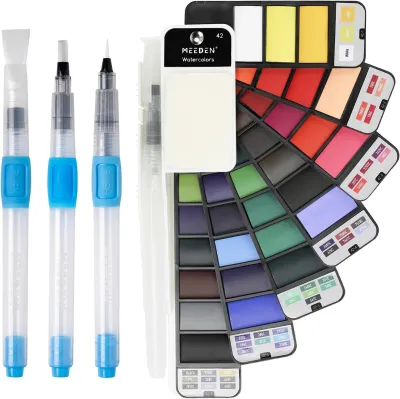
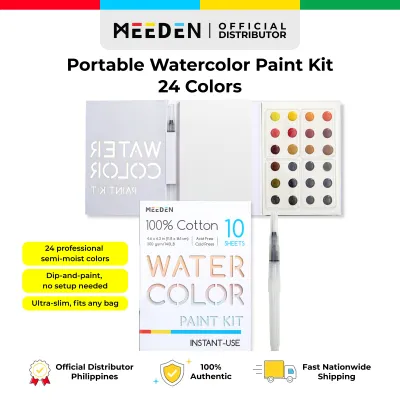
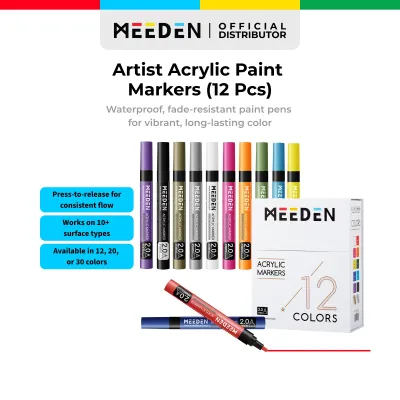
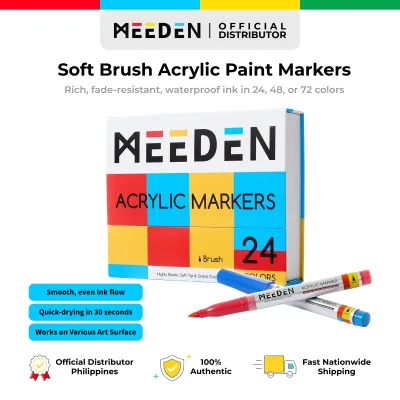
Prices are valid at publication and may change. Please refer to the product page for the latest price.
Forgiveness and reworkability vary dramatically across the three mediums. Oil paint is highly forgiving when it comes to correcting mistakes on the canvas, as its slow drying time allows you to scrape away errors, blend out harsh lines, or re-work an entire section days after applying the initial brushstrokes. Acrylic paint, by contrast, dries rapidly into a permanent, water-resistant film, meaning you must work quickly to blend colors, though you can easily paint over mistakes once the surface is dry. Watercolors represent a different challenge altogether; their transparent nature means that once a dark pigment is laid down on paper, it cannot be easily covered or erased, requiring careful planning and a high tolerance for unexpected pigment blooms.
The complexity of your setup and cleanup routine is another practical factor to weigh before purchasing. Watercolor painting requires minimal preparation, needing only a cup of water, a palette, and a few sheets of paper, making it easy to set up on a dining table and pack away in minutes. Acrylics are similarly straightforward, cleaning up easily with soap and water while wet, though you must be diligent about washing your brushes immediately to prevent the paint from drying and ruining the bristles. Oils demand a more complex setup, requiring dedicated mediums, oils to thin the paint, and specialized brush cleaners to safely remove the pigment without damaging your tools.
Your learning curve and technical barrier to entry should also guide your decision. For beginners, acrylics often provide an intuitive starting point because they behave predictably, dry quickly, and do not require complex chemical mediums to use safely. Watercolors have a low physical barrier to entry but a steep learning curve, as mastering water control and predicting how pigments will flow on wet paper takes significant practice. Oils require an investment of time to understand the rules of fat-over-lean layering and the chemistry of drying times, making them highly rewarding for patient artists who are willing to study traditional techniques.
Align the Medium With Your Target Visual Effects
The visual language of your artwork is deeply tied to the physical properties of the paint you choose. Each medium interacts with light, texture, and the painting surface in distinct ways, producing characteristic finishes that are difficult to replicate with other paint types.

If your artistic vision leans toward luminous, delicate washes and soft, organic transitions, watercolor is an excellent choice. The beauty of watercolor lies in its transparency, which allows light to pass through the pigment layers, reflect off the white paper underneath, and create a glowing effect. This medium excels at capturing spontaneous blooms, atmospheric skies, and delicate botanical details, where the natural texture of the paper becomes an active element of the composition.
For artists who value versatility and physical texture, acrylics offer a broad range of possibilities. Because acrylic binders are highly flexible, you can dilute the paint with water or acrylic mediums to achieve fluid, transparent washes that mimic watercolor, or apply it straight from the tube for thick, sculptural impasto strokes. Acrylics dry to a consistent, uniform finish—typically matte or satin depending on the specific Meeden line—and maintain their vibrant color without yellowing over time, making them excellent for graphic designs, modern abstracts, and textured landscapes.
When your goal is to achieve seamless gradients, rich optical depth, and realistic skin tones, oil paint remains highly favored. The slow drying time of oils allows you to blend colors directly on the canvas for hours, creating smooth transitions that are difficult to achieve with fast-drying acrylics. Furthermore, oil paint possesses a unique refractive index that gives dried paint layers a deep, lustrous quality, allowing you to build up rich, glowing shadows and complex glaze layers that bring a sense of life and dimension to portraiture and classical still-life paintings.
Check Your Workspace Constraints and Project Needs
Before finalizing your purchase, it is crucial to evaluate where you will be painting and how your local environment might affect your chosen medium. In tropical climates like the Philippines, high humidity and warm temperatures can significantly influence how paints dry, cure, and preserve over time.
Ventilation and physical space are primary considerations when setting up your creative corner. Traditional oil painting often relies on mineral spirits, turpentine, or other solvents to thin the paint and clean brushes, necessitating a dedicated studio space with excellent ventilation or open windows to disperse fumes safely. If you live in a compact apartment or paint in a shared family space where closing windows for air conditioning is common, water-based acrylics and watercolors offer a low-odor, solvent-free alternative that keeps your indoor air clean.
Surface compatibility also dictates which paint type is practical for your projects. Watercolors require heavy, specialized cotton or wood-pulp paper to absorb water without warping or buckling. Acrylics are highly adhesive and can be applied to almost any non-greasy surface, including primed canvas, wood panels, paper, cardboard, and even terracotta pots. Oils are much more demanding, requiring a substrate that has been thoroughly primed with gesso to prevent the oil binders from seeping into and slowly rotting the canvas fibers or wood over time.
Long-term durability and display requirements should influence your choice as well. Dried acrylics and oils form tough, water-resistant barriers that can withstand ambient humidity, making them highly durable options for tropical environments, though oil paintings must cure for several months before receiving a protective varnish. Watercolors remain water-soluble even after drying, meaning they are highly sensitive to moisture, spills, and high humidity; consequently, watercolor paintings must be framed behind glass with a mat board to prevent the paper from touching the glass and absorbing ambient moisture.
Verify Meeden Product Specifications Before Checkout
When browsing Meeden paints on your preferred e-commerce platform, understanding how to read the product listings and packaging labels will ensure you select a set that matches your expectations and budget. Paying close attention to these technical details helps you avoid common purchasing mistakes.
First, distinguish between student-grade and artist-grade formulations. Student-grade paint sets are highly budget-friendly, making them excellent for practice, color mixing exercises, and large-scale projects where you need to use a high volume of paint without worrying about the cost in ₱. However, they contain more fillers and synthetic alternatives to expensive pigments. Artist-grade paints feature a higher concentration of genuine pigments and minimal fillers, resulting in richer color saturation, better mixing capabilities without turning muddy, and superior coverage.
Next, check the packaging or online product descriptions for lightfastness ratings and pigment codes. Lightfastness indicates how resistant a paint is to fading when exposed to light over time, which is vital if you plan to sell your artwork or display it in sunlit rooms. Look for standard ratings such as ASTM I (excellent) or ASTM II (very good), and verify the specific pigment codes (such as PB29 for Ultramarine Blue or PY43 for Yellow Ochre) to ensure you are getting single-pigment colors that mix cleanly rather than multi-pigment convenience blends.
Finally, select the format and volume that best fits your painting habits. Watercolors are available in dry pans, which are highly portable and excellent for outdoor sketching, or in tubes, which allow you to easily squeeze out fresh, concentrated paint for large washes. Acrylics and oils are typically sold in tubes of varying sizes, such as 12ml tubes for testing a wide range of colors, or larger 120ml tubes and jars for primary colors and white, which you will inevitably use in larger quantities.
Frequently Asked Questions (FAQ)
Can I mix Meeden acrylic and oil paints together?
No, you cannot mix wet acrylic and oil paints together on your palette or canvas because their chemical binders are incompatible. Acrylic paint is water-based, while oil paint is oil-based, and as the basic rule of chemistry dictates, water and oil repel each other. However, you can safely layer them by applying acrylic paint first as an underpainting, letting it dry completely, and then painting over it with oils. You must never apply acrylic paint over a dried oil painting, as the acrylic layer will fail to adhere to the oily surface and will eventually crack, peel, and flake off.
Which Meeden paint is easiest to clean up after a painting session?
Watercolor is by far the easiest paint to clean up, as it remains completely water-soluble even after it dries on your palette or brushes. You can easily wash your brushes with plain tap water, and any dried paint on your plastic or ceramic palette can be re-wetted and used again in your next session. Acrylics are also relatively easy to clean with soap and water, but you must wash your brushes immediately before the paint dries, as dried acrylic turns into a water-resistant plastic that is incredibly difficult to remove from bristles. Oil paint requires the most intensive cleanup, requiring specialized brush soaps, vegetable oils, or odorless mineral spirits to thoroughly dissolve the oil binders and protect your brushes from stiffening.
Community discussion
Share your experience or ask a question. Comments are reviewed before publication.