
A 4B pencil lead represents a highly versatile, soft, and dark grade of graphite that sits comfortably on the artistic end of the hardness scale. The “B” stands for blackness, and the number 4 indicates a high concentration of graphite relative to clay binder, making it significantly darker and softer than a standard HB or 2B pencil. While it is a favorite for sketching, shading, and expressive drawing, its soft texture means it wears down quickly and smudges easily under hand pressure. Understanding how this specific grade behaves on different paper types is key to deciding whether it belongs in your writing kit or your art portfolio.
The Graphite Scale and What 4B Means
To understand the 4B pencil lead, it helps to look at the standard scale used for grading graphite hardness. This scale runs from “H” (Hard) to “B” (Black), with “HB” sitting right in the middle as the balanced standard for everyday writing. As the numbers next to the “B” increase—from 2B up to 9B or higher—the lead becomes progressively softer and darker because the manufacturer mixes more graphite and less clay into the core.
A 4B lead sits firmly in the soft, dark territory. It is not the absolute softest grade available, but it represents a major transition point where the graphite behaves more like a rich drawing medium than a precise writing tool. Because there is no universal industry standard for exact chemical formulations, a 4B pencil from one manufacturer may feel slightly softer or darker than a 4B from another. This variation makes it important to test different brands to find the exact tactile feedback you prefer.
Products mentioned in this guide
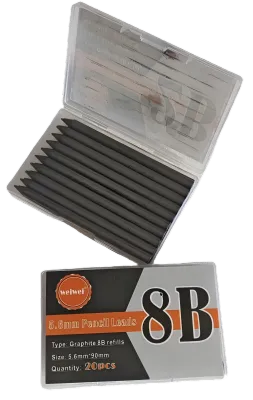
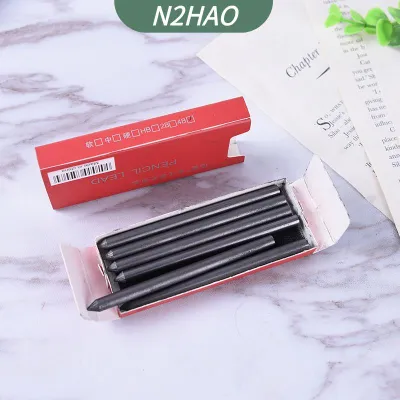
![[COD] SHPYHT TOY 5.6mm Mechanical Lead Auto Clutch Pencil Holder Refill HB 2B 4B 6B 8B 6Pcs/1 Box](https://img.lazcdn.com/g/p/cc27e2e790e850c90b94031cb03aec24.jpg_400x400q80.jpg_.webp)
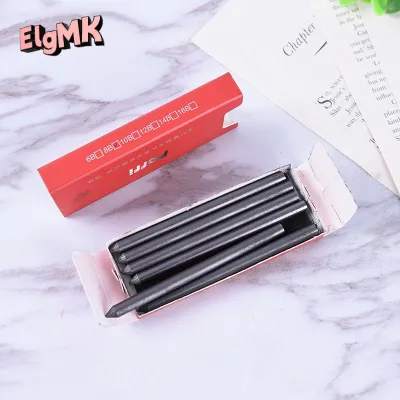
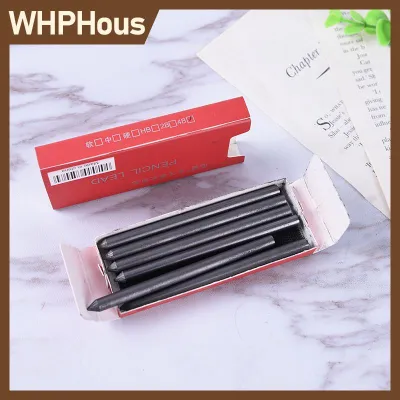
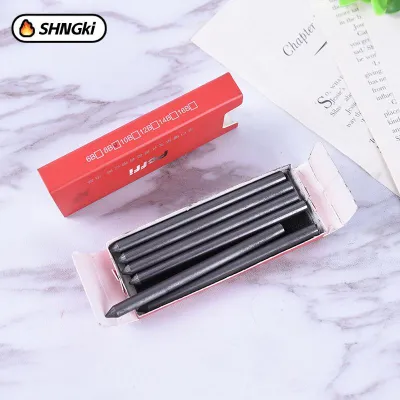
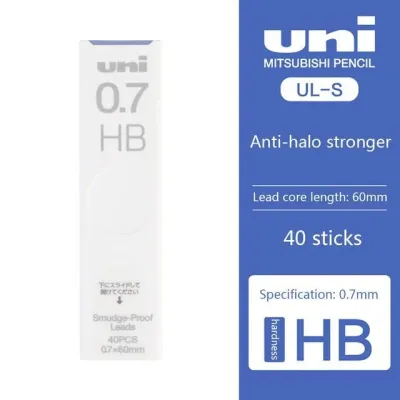
Prices are valid at publication and may change. Please refer to the product page for the latest price.
How 4B Lead Behaves on Paper
The physical composition of 4B graphite directly dictates how it interacts with paper. When you press a 4B pencil to a page, the high ratio of graphite allows the core to shear away easily, leaving a thick, dark deposit. This behavior can be analyzed through three primary performance dimensions: darkness, softness, and smudge resistance. Each of these traits plays a critical role in how your lines look, how often you need to sharpen your pencil, and how clean you can keep your workspace, especially when working in warm, humid environments.

Darkness and Line Quality
The defining characteristic of 4B lead is its ability to produce deep, opaque, matte black marks with minimal hand pressure. Because the core contains less clay binder to hold the graphite particles together, the lead releases a generous amount of material onto the paper fibers. This makes 4B exceptionally effective for laying down bold outlines, creating rich gradients, and establishing deep shadows in a drawing.
However, the quality of this dark line depends heavily on the paper’s surface texture, often referred to as its “tooth.” If you use a paper that is too smooth, the heavy graphite deposit has nothing to cling to, which can result in a shiny, reflective sheen that looks patchy or uneven. Conversely, a paper with a moderate tooth will catch and hold the soft graphite beautifully, allowing for consistent, rich coverage.
Softness, Wear, and Blunting
Because 4B lead is physically soft, the point of the pencil blunts rapidly during use. If you are drawing fine details or attempting to write consistent text, you will find yourself needing to sharpen the pencil frequently. Artists often manage this rapid wear by keeping a sandpaper block nearby to quickly reshape the tip without shaving away the wood casing, or by rotating the pencil in their fingers as they draw to utilize the naturally wearing edges of the lead.
Applying heavy hand pressure to a 4B pencil is rarely necessary and can actually be counterproductive. Excessive force can cause the soft core to crumble, leaving loose graphite dust across your page, or it can physically dig into softer paper stocks, leaving permanent indentations that are difficult to erase. Adjusting your grip to a lighter, more relaxed hold helps maximize the lifespan of the lead and gives you better control over line consistency.
Smudge Resistance and Cleanliness
One of the biggest challenges when working with 4B graphite is its high susceptibility to smudging. Because the soft graphite sits loosely on top of the paper fibers rather than embedding deeply into them, any friction can easily smear your work. In tropical climates with high humidity, such as the Philippines, moisture on your hands can exacerbate this issue, turning a small smudge into a stubborn, dark smear that ruins the clean areas of your page.
To maintain a clean workflow, you can employ several practical techniques. Placing a clean sheet of scrap paper under your drawing hand acts as a protective barrier, preventing your palm from dragging graphite across the paper. Working from the top-left to the bottom-right (for right-handed users) also minimizes contact with completed sections. Once your work is finished, applying a high-quality artist’s fixative spray is highly recommended to lock the loose graphite particles in place.
Matching 4B Pencils to Your Specific Tasks
Deciding whether to use a 4B pencil depends entirely on your primary task. For everyday writing, note-taking, or filling out forms, a 4B pencil is generally impractical. The soft lead dulls too quickly, requiring constant maintenance, and the written text is highly likely to smudge when pages rub together inside a notebook or binder. If your goal is clean, legible handwriting, stepping down to a firmer 2B or a standard HB pencil is a much more reliable choice.
For sketching, figure drawing, and expressive art, however, the 4B pencil is an outstanding tool. It allows for rapid value changes, enabling you to transition from a light gray to a deep shadow simply by slightly altering your hand pressure. It is perfect for quick gesture drawings where bold, sweeping lines are needed to capture movement.
If you find that 4B does not quite meet your needs, you can easily adjust your tools. If you need to render fine, crisp details or write occasionally, a 2B or B pencil offers a better balance of darkness and point retention. On the other hand, if you are working on large-scale drawings that require pitch-black backgrounds or ultra-dark, dramatic shadows, stepping up to a 6B or 8B pencil will provide the extra softness and depth you need.
Verifying Quality and Paper Compatibility
Before committing to a major drawing or project, it is wise to verify how your specific 4B pencil performs on your chosen paper. Start by drawing a simple test swatch on a scrap piece of the same paper. Shade a small square from light to dark to check for consistency in the graphite deposit. Watch out for any unexpected grittiness or hard spots in the core, which can indicate lower-quality manufacturing. You should also test how easily the graphite can be lifted with both a standard vinyl eraser and a kneaded eraser, as some highly concentrated graphite formulas can leave stubborn stains.
To ensure you are getting genuine, high-quality graphite, purchase your drawing supplies from reputable stationery stores or authorized online distributors rather than unverified sellers on general online marketplaces. Finally, always check the specifications of your paper. A smooth, lightweight paper may buckle or smudge excessively under 4B graphite, whereas a heavier, medium-texture sketching paper or Bristol board with a vellum finish will provide the ideal support for soft lead.
Frequently Asked Questions (FAQ)
Can I use a 4B pencil for standardized tests or scantron sheets?
While a 4B pencil is certainly dark enough to be detected by optical mark recognition scanners, it is highly impractical for standardized tests. The soft lead smudges very easily, meaning that as you handle the test sheet, graphite can smear onto adjacent answer bubbles or create dark streaks across the page. These smudges can confuse the optical sensors, leading to grading errors or rejected sheets. For any standardized exam, it is always best to stick to the recommended HB or No. 2 pencil, which provides clean, smudge-resistant marks that scan reliably.
Why does my 4B pencil feel scratchy instead of smooth?
A quality 4B pencil should glide smoothly across the paper with almost no resistance. If your pencil feels scratchy, it is usually due to one of two issues. First, lower-quality pencils often suffer from poor manufacturing where the clay and graphite are not mixed thoroughly, leaving hard, unrefined clay impurities in the core. Second, the issue could be your paper. If you are using a paper with an extremely rough tooth or a heavy chemical sizing, it can create a scratchy sensation as the soft lead drags across the uneven surface. Try testing the pencil on a known smooth, high-quality sketching paper to determine if the core itself is flawed.

Community discussion
Share your experience or ask a question. Comments are reviewed before publication.