
A 2H pencil is a specialized tool designed to produce light, thin, and exceptionally clean lines. The “H” stands for hardness, while the number “2” indicates its position on the grading scale, showing that it is two steps harder than a standard medium pencil. Because of this hardness, the lead wears down slowly and resists smudging, making it a staple for technical drawing and initial sketching. Whether you are a student drafting a layout, an artist laying down guidelines, or a stationery enthusiast, understanding this grade will help you choose the right tool for your project.
Decoding the Graphite Hardness Scale
To understand what makes a 2H pencil unique, it helps to look at how manufacturers grade pencil lead. The core of a modern pencil is a mixture of non-toxic graphite and binding clay. The ratio of these two ingredients determines how hard or soft the pencil will be, which directly influences how dark or light the marks appear on paper.
The standard grading system uses the letters H and B. “H” stands for hardness, indicating a higher proportion of clay, which results in a lighter line. “B” stands for blackness, indicating a higher proportion of graphite, which produces a darker, softer line. There is also an “F” grade for a fine point, and “HB,” which sits right in the middle as the standard utility grade.
Products mentioned in this guide
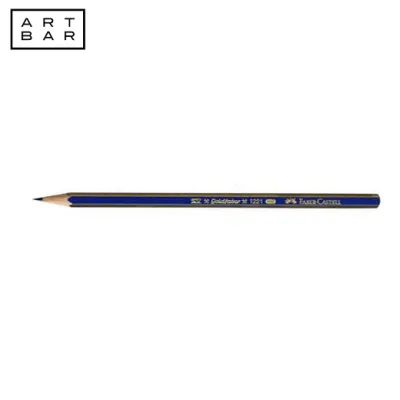
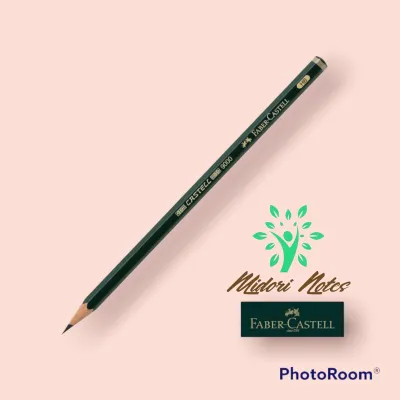
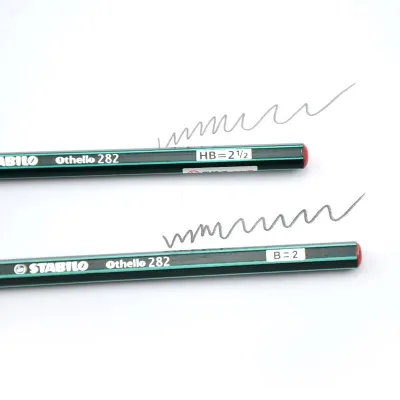
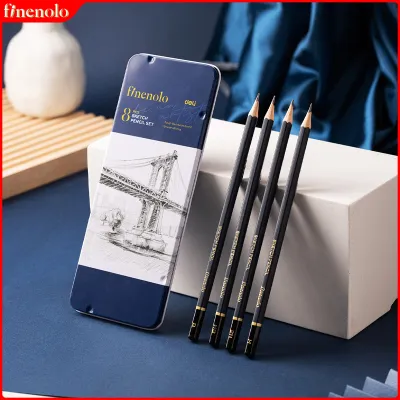
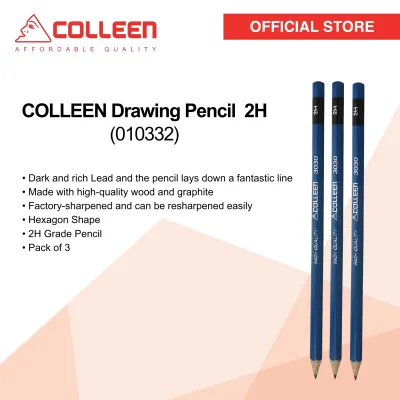
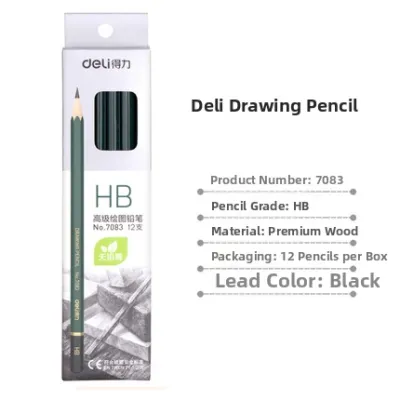
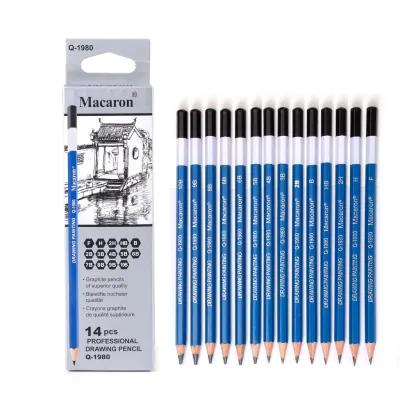
Prices are valid at publication and may change. Please refer to the product page for the latest price.
On this scale, 2H occupies a specific position on the harder side of the spectrum. It is harder and lighter than both H and HB, but it is softer and darker than a 3H pencil. The number “2” represents a relative step in hardness within the H category. As the numbers next to the “H” increase, the lead becomes progressively harder and the lines become lighter.
What to Expect When Using a 2H Pencil
When you put a 2H pencil to paper, the physical feedback is noticeably different from a standard school pencil. Because of the higher clay content, the tip feels firm and scratchy rather than smooth and buttery. You will find that it requires slightly more downward pressure to leave a visible mark, though applying too much force can easily indent your paper.

The lines produced by a 2H pencil are light gray and highly controlled. Because the hard lead does not crumble easily, it deposits very little loose carbon dust onto the page. This lack of excess dust gives the 2H pencil excellent smudge resistance. In warm, tropical climates like the Philippines, where high humidity and hand sweat can easily ruin a drawing, using a smudge-resistant 2H lead helps keep your work surface pristine.
Another key characteristic is point retention. A 2H pencil holds its sharp point far longer than softer grades, meaning you do not have to sharpen it constantly during detailed work. When it comes to erasing, the light lines are generally easy to remove without leaving dark ghost images. However, because the lead is hard, heavy-handed pressure can leave physical grooves in the paper fibers that remain visible even after the graphite is gone. To verify how the lead behaves, perform a quick trial on a scrap piece of your chosen paper to check both the erasability and the smoothness of the line.
Best Tasks and Surfaces for 2H Pencils
The unique properties of the 2H pencil make it highly suited for specific technical and artistic tasks. In professional and academic settings, it is a preferred choice for manual drafting, architectural sketching, and engineering diagrams. The fine, light lines allow for extreme accuracy when drawing grid lines, margins, and geometric shapes that must remain sharp and clean.
For fine artists, a 2H pencil is indispensable for creating underdrawings. If you plan to paint over your sketch with watercolors, a soft pencil can dissolve and muddy the paint, whereas a 2H pencil leaves a faint, stable guideline that will not bleed. It is also highly effective for detailed pen-and-ink illustrations, allowing you to map out your proportions before committing to permanent ink.
The choice of paper surface also plays a significant role in how a 2H pencil performs. It excels on smooth, high-density papers, bristol board, and tracing paper. On highly textured or soft papers, the hard tip can catch on the fibers, which may lead to uneven lines or tearing. In humid environments, paper naturally absorbs moisture from the air, making the sheets slightly softer. When working under these conditions, a light touch is essential to prevent the sharp 2H point from gouging the damp paper fibers.
When to Skip 2H and Choose Another Grade
While the 2H pencil is an excellent tool for precision, it is not a universal solution for every writing or drawing task. If your primary goal is everyday writing, journaling, or taking notes, a 2H pencil is generally not recommended. The light gray lines can be difficult to read under standard room lighting, and the extra pressure required to write legibly can quickly cause hand fatigue. For these tasks, an HB or F grade pencil is a much better choice, offering a balanced contrast and a smoother writing experience.
For artistic shading, sketching, and figure drawing, you should skip the 2H entirely and reach for softer grades like B, 2B, or 4B. These softer leads allow you to create deep shadows, rich gradients, and expressive, variable line weights with minimal effort. Trying to shade a large area with a 2H pencil will often result in a shiny, metallic sheen and visible scratch marks rather than a smooth, dark gradient.
Conversely, if you need guidelines that are virtually invisible and must disappear completely under ink or paint, you might want to step up to a 3H or 4H pencil. These ultra-hard grades produce even fainter lines than the 2H, making them ideal for complex perspective grids and layout guides that do not need to be erased afterward.
Frequently Asked Questions (FAQ)
Is a 2H pencil good for everyday school writing?
Generally, a 2H pencil is not ideal for everyday school writing or note-taking. The light line it produces can strain the eyes during long reading sessions, and the hard lead requires more hand effort, leading to fatigue during fast-paced lectures. Furthermore, standard school exams and optical mark recognition (OMR) scanners used in the Philippines typically require a darker HB or No. 2 pencil to ensure the machine can read the filled-in bubbles accurately. While standard HB pencils are highly affordable at local bookstores for just a few pesos (₱), a 2H pencil is a specialized tool that you should keep in your art or drafting kit rather than your daily pencil case.
How do I sharpen and maintain a 2H pencil?
Because 2H lead contains more clay, it can be surprisingly brittle when subjected to sudden impacts. If you drop a 2H pencil onto a hard floor, the internal graphite core can shatter into small pieces, causing the tip to fall out repeatedly when sharpened. To maintain your pencil, use a high-quality manual sharpener with a sharp blade, or carefully shave the wood casing with a utility knife if you prefer a custom chisel point. Avoid applying excessive downward pressure while writing or drawing, as this can snap the fine point and damage the paper surface.

Community discussion
Share your experience or ask a question. Comments are reviewed before publication.